Cinema
Anatomy of a Fall, and a Marriage Entered Into Evidence
A man falls from his own house and a court spends two hours failing to establish how. That failure is the design. What the trial actually examines is not a death but a marriage: its accounting of hours, its record of whose work was interrupted, who moved countries, who gave up a language, who took the child. A reading of Justine Triet’s film as an account of what happens when the private ledger two people keep is read aloud by strangers who have the authority to rule on it.
A chalet above the snowline in the mountains near Grenoble. A woman is giving an interview to a graduate student in the downstairs room. Upstairs, her husband is playing an instrumental cover of a pop song at a volume that makes conversation impossible, and keeps playing it. The interview is abandoned. An eleven-year-old boy goes out to walk the dog, and when he comes back his father is lying in the snow below the house with his head broken open.
This essay is about Anatomy of a Fall, released in French as Anatomie d’une chute in 2023, directed by Justine Triet and written by Triet with Arthur Harari. It describes the premise openly and discusses the whole film, including the verdict. A reader who would rather meet it cold should come back afterwards.
The film is built like a mystery and reviewed like one. Did she kill him. Two and a half hours later the court answers a legal question and the film answers nothing, and a great deal of the writing about it has treated that as its distinguishing trick — the thriller that withholds its solution. That reading is not wrong, and it is small. The withholding is not a flourish at the end. It is the load-bearing decision, and it is made in order to free the court, and the audience, to spend the running time on something else entirely.
Here is what the trial actually does. It takes a marriage of fifteen years and enters it into evidence. Not the death: the marriage. How the hours of the week were divided. Whose book got written and whose did not. Who moved to whose country. Who stopped speaking their own language at their own kitchen table. Who was at the school gate, and who was not, on the afternoon that cost a child most of his sight. Every one of those is produced, examined, contested and weighed by people with the authority to convert the answer into a sentence of imprisonment. The film is devastating not because it exposes a crime but because it does not need one. What it exposes is the ordinary interior accounting of two people who were tired of each other, and the discovery that this material, read aloud in a room organised to find motive, looks exactly like motive.
The record, stated precisely
Anatomie d’une chute is a French production of 2023, directed by Justine Triet and written by Triet and Arthur Harari. Sandra Hüller plays Sandra Voyter, a German novelist living in France; Samuel Theis plays her husband Samuel Maleski; Milo Machado-Graner plays their son Daniel; Swann Arlaud plays the defence lawyer Vincent Renzi; Antoine Reinartz plays the prosecuting advocate; Jehnny Beth plays Marge Berger, the court-appointed minder assigned to the boy; and the border collie Messi plays the dog, Snoop. The festival’s own record gives the running time as 151 minutes; other catalogues give 152.
It screened in competition at the 76th Festival de Cannes, held from 16 to 27 May 2023, and won the Palme d’Or from a jury presided over by Ruben Östlund. This Library has written on Östlund’s own Force Majeure, and the coincidence is worth noting without being made to mean anything: the director of the most exacting film about a couple who cannot agree on a description handed the top prize to the most exacting film about a couple whose description is taken away from them. At the same festival Messi took the Palm Dog, the unofficial prize given at Cannes for a canine performance.
At the 96th Academy Awards the film received five nominations — Best Picture, Best Director, Best Actress for Hüller, Best Original Screenplay and Best Film Editing — and won one, Best Original Screenplay, for Triet and Harari. It was not nominated for Best International Feature Film, and could not have been, because France did not submit it. On 21 September 2023 the French selection committee chose The Taste of Things instead. That film received no nominations.
Elsewhere: at the 81st Golden Globe Awards it won Best Screenplay and Best Motion Picture in a Non-English Language, from four nominations. At the 77th British Academy Film Awards it won Best Original Screenplay from seven nominations, among them Best Film, Best Director, Best Actress and Best Film Not in the English Language. At the 49th César Awards it took six awards from thirteen nominations, including Best Film, Best Director, Best Actress, Best Original Screenplay, Best Supporting Actor for Swann Arlaud and Best Editing for Laurent Sénéchal. It also won a set of European Film Awards including best film. In Japan it opened on 23 February 2024 as Rakka no Kaibougaku, distributed by Gaga.
One item of context belongs here and must be stated carefully. In her acceptance speech at Cannes, Triet criticised the French government’s handling of that year’s pension protests and what she described as the commodification of culture, and the then Culture Minister responded publicly that the speech was unjust given the French financing model the film had benefited from. When the selection committee later passed over the film, a number of commentators connected the two. That connection was asserted in the press. It was not established, the committee’s deliberations are not public, and this essay does not assert it either.
The fall is not the question the film is asking
Watch what the film does with its forensic material, because the handling is the argument.
There is a head wound. The prosecution says it was inflicted before the body reached the ground, by a blow, and that the man was then pushed from an opening in the upper storey. The defence says he went out of the attic window by himself. There is blood on the shed below, and two irreconcilable accounts of how it got there. There is a reconstruction with a weighted dummy, filmed and replayed in court, which produces a trajectory that is compatible with both stories. There are experts on each side, competent and sincere, arriving at opposite conclusions from the same physics.
A conventional thriller uses this apparatus to narrow. Here it does the reverse. Every forensic exhibit is built to be genuinely two-sided, and the effect is cumulative: by the midpoint of the trial the physical evidence has been exhausted and has produced nothing. It is not that the court is incompetent. It is that the event left no record capable of deciding between the two stories, which is the ordinary condition of a death with one living witness who was not present and one who cannot see.
And because the physical record is exhausted, the room must turn somewhere else to find a decision. It turns to the marriage. This is not a failure of the proceeding; it is the proceeding working as designed. When a prosecution cannot show the act, it shows the person, and showing the person means showing what she was like to live with. The film understands that this turn is where the real trial begins, and it gives it the second half.
Triet has said in interviews that she never intended the film to disclose what happened, and that she asked Hüller to play the character without signalling innocence or guilt to the audience. Taken at face value, and it should be, that means the whodunit is not a puzzle the film has an answer to and is teasing. It is a vacancy left open so that the audience is put in the same position as the jurors: unable to settle the act, and therefore obliged to judge a life.
What the recording actually is
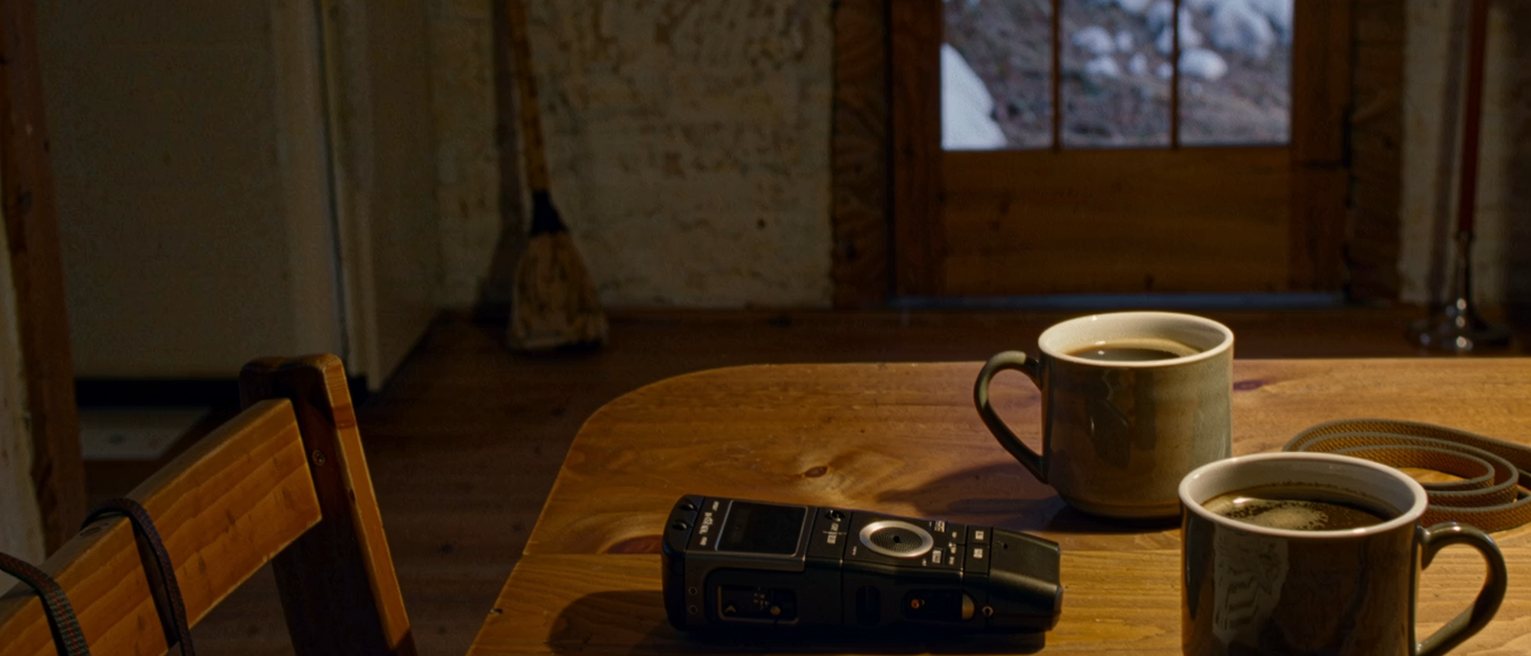
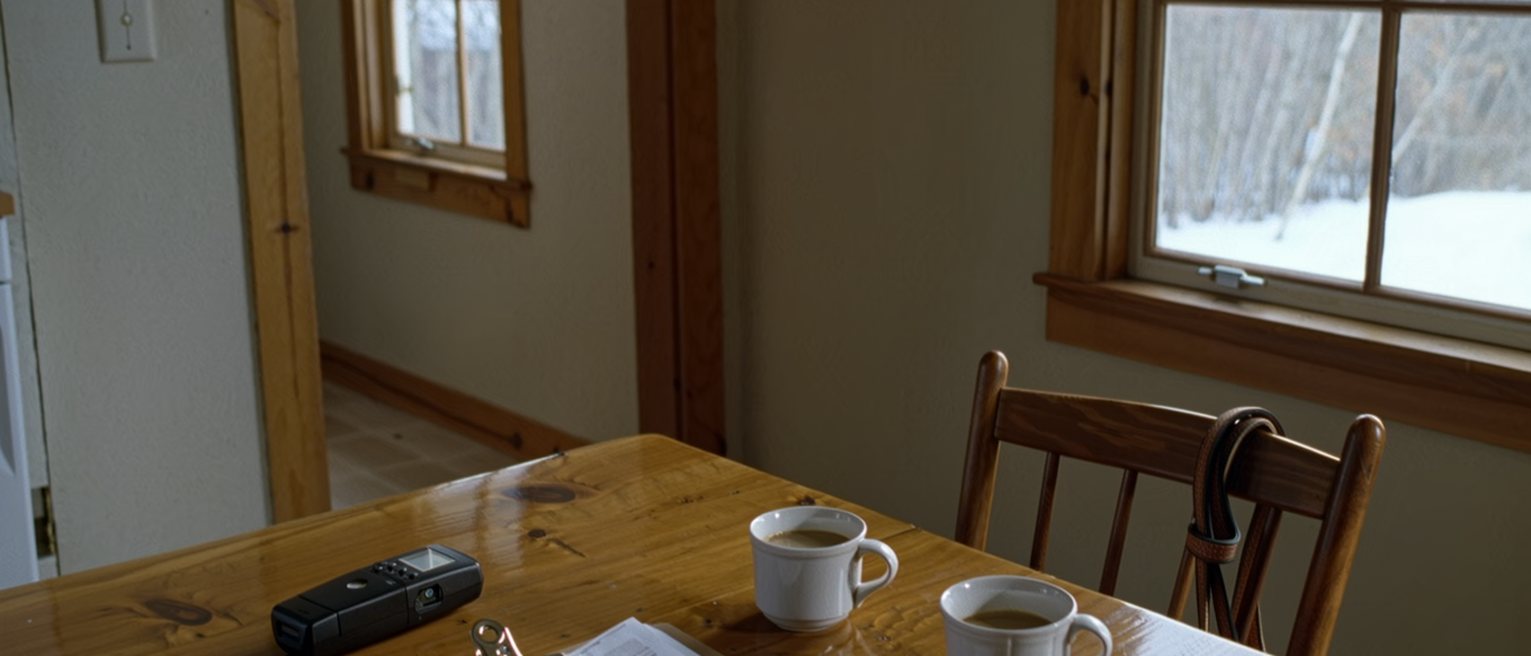
The centre of the film is an audio recording of an argument between Sandra and Samuel made the day before he died, which the prosecution obtains and plays in open court.
The first thing to understand about it is its provenance. Samuel recorded conversations in the house habitually, without telling anyone, as raw material for the writing he was not managing to do. So the single most intimate document of this marriage exists because one of its two members was quietly harvesting the other. Sandra says as much in court, and goes further: with hindsight, she says, he may have provoked that particular fight in order to have it on tape. Whether or not that is true, the observation stands. The record is not neutral. It was made by one party, for his own use, and it survives him.
The second thing is the fight itself, and it is ordinary. That is the point and it is easy to miss under the pressure of the plot. Samuel says she took an idea he had abandoned and built a book out of it. He says she has arranged their life to suit her: the language spoken at home, where the child’s schooling happens, what he has had to carry so that she could work. He says she imposes. She says he chose every one of those things and is now presenting them as debts; that he has been paralysed for years by his own standards; that he has converted his failure to write into a grievance against her productivity. Her infidelities come into it, including one she had not disclosed. The accident that damaged the boy’s sight comes into it, and so does the fact that she has not forgiven him for it. It escalates. Objects are struck. The prosecution says every blow on the tape came from her; she says she slapped him once and the rest of the noise is a man hitting himself and breaking things.
Triet stages the tape twice over: the court listens, and the audience is also shown the argument played out by the actors, and then returned to the courtroom and the faces of people listening. It is a precise piece of construction. The viewer gets the scene and the reception of the scene at once, and learns that they are not the same object at all.
Because what a couple hears in that recording is a bad night, and what a court hears in it is a state of mind six hours before a death. The material has not changed. The room has.
The ledger every couple keeps
Here is the thing the argument is actually made of, and it is not the plagiarism and not the affairs.
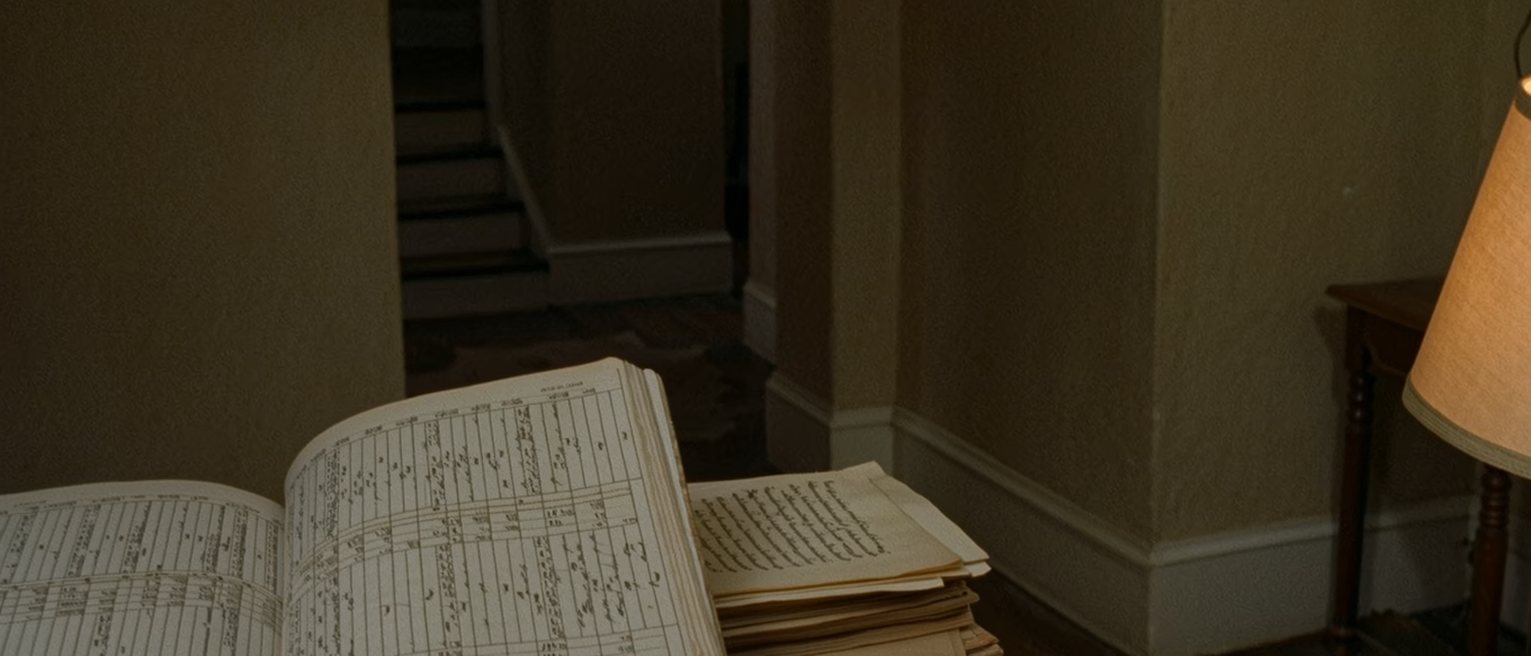
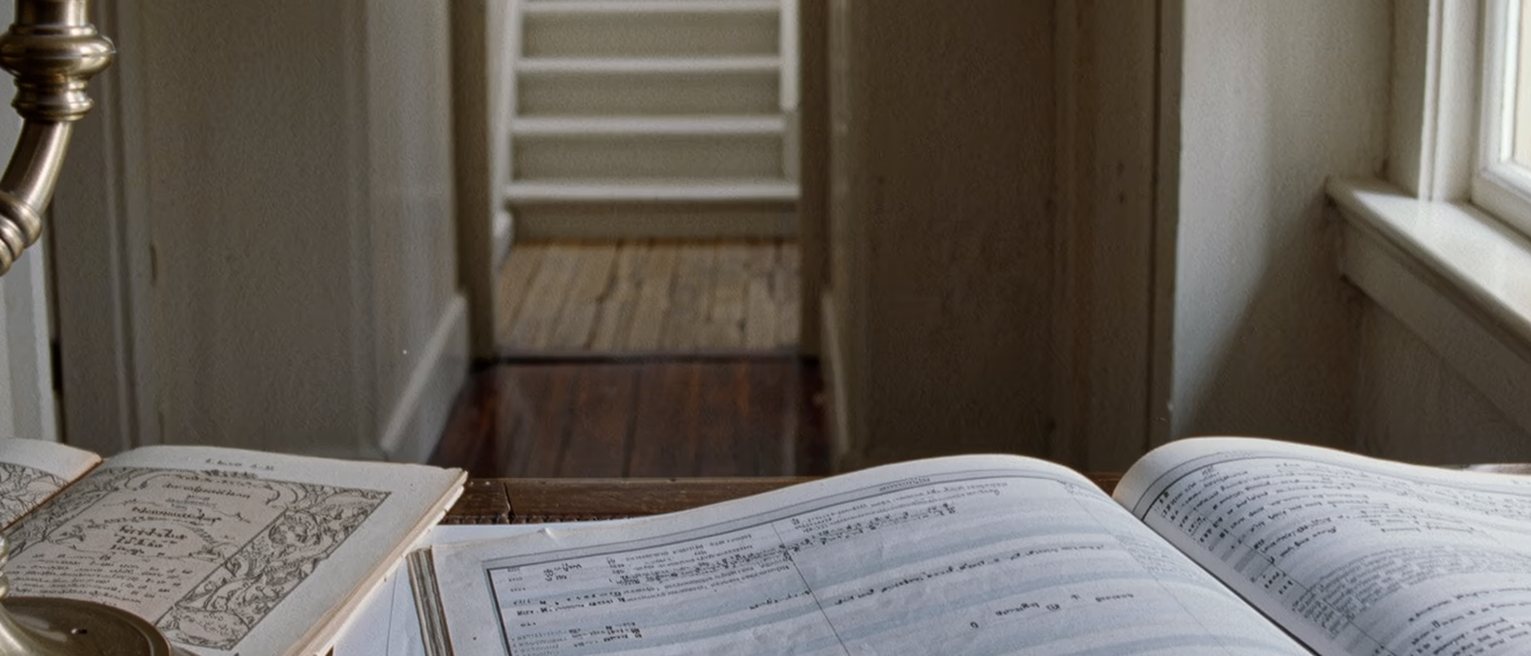
Two people who have been together for years keep an account. It is never written down and is almost never stated in full, and both of them know their own balance to the day. It runs on time: the hours one of them did not get, the years one of them spent somewhere they would not have chosen, the career that took the slower road, the language given up, the illness sat with, the child collected. It also runs on interruption, which is the most valuable and least visible currency in the account, because a person whose work is interrupted cannot show what the interruption cost, and a person who was not interrupted has a book to show.
The ledger is not a pathology. It is the ordinary bookkeeping of a shared life, and it is how two people know they are in something rather than merely near each other. Most of the time it stays closed. It is opened at intervals, in a specific tone of voice, usually late, and usually about something else — a forgotten errand, a tone at dinner — and what is really being audited is the balance. Then it closes again, and the marriage continues, and neither of them would be able to produce the document if asked.
What Samuel and Sandra are doing on that tape is auditing. He is entering items: the move, the house he has been renovating, the boy’s lessons he took on, the idea she used. She is disputing the entries and entering her own: that he chose the house, chose the teaching, chose to stop; that she has never asked him to be less; that she is not the reason his book does not exist. This is the fight. It is not a rare fight, and that is precisely why the film is frightening rather than exotic. Most people watching it have had a version of it, with different items, in a kitchen, and it did not lead anywhere at all.
And one entry in that account deserves its own name, because the film is careful with it. Samuel’s deepest item is not a thing she did. It is the life he did not have: the writer he was going to be, the book that stayed at forty pages, the version of himself that the arrangement was supposed to be protecting. A ledger entry of that kind cannot be settled, because the other party cannot pay it. There is nothing she can hand over that produces the book he did not write. The couple who are arguing about hours are arguing about something for which no number of hours is the answer.
A private account read aloud by strangers with the power to rule on it
Now put the two halves together, because this is the film’s contribution and it is worth stating flatly.
Every couple has the ledger. Almost none of them could survive it being read as evidence. That is the sentence the film earns, and it is not a metaphor about how relationships feel scrutinised. It is a description of an actual transformation that occurs when private material changes rooms.
Consider what a courtroom is for. It exists to take a disputed matter and produce a binding answer, and to do that it must convert everything it receives into material that bears on a proposition. A prosecutor is not permitted to submit that a marriage was unhappy; a prosecutor must submit that the accused had a reason. So the ledger arrives, and is read, and every line of it is recategorised on the way in. Resentment becomes motive. An argument becomes a rehearsal. An affair becomes a life the accused wanted instead of this one. A bad marriage, which describes a very large number of marriages that end in nothing worse than exhaustion, becomes a condition from which a killing plausibly follows.
Nothing about the material has to be false for this to work. In fact the process is most effective when everything in it is true. Sandra did take the idea. She did have the affairs. She was harder and quicker and better at her work than he was, and she did not always hide it. Each of those is an accurate line in the account, and each of them was survivable inside the marriage, because inside a marriage the ledger is read by the only two people who know what is on the other pages. Read by strangers, without the other pages, with a death at the end of the volume, the same lines read as a case.
This is why the film does not need to resolve the fall. The reader of this essay probably could not be convicted of anything either, and could be made to look extremely poor in a room with a transcript of their worst evening and no access to the ordinary week around it. The film is not saying that courts are traps. It is saying something narrower and harder: that the private account is not built to be read by anybody except the two people keeping it, that it has no defence against a reader who is looking for something, and that this is true of the account whether or not the person keeping it has done anything at all.
Force Majeure, and what changes when a third party decides
This Library has written on another marriage put on trial without a court. Reading Ruben Östlund’s Force Majeure, we argued that the film is not really about a man running from an avalanche but about a couple who cannot agree on the description of an event they both witnessed; that the injury is done by the disagreement rather than by the act; and that between intimates there is no procedure — no neutral party with standing, no allocated burden, no finding that binds a party who refuses it — so the matter simply stays open, for years, attaching itself to whatever new material the marriage supplies.
Anatomy of a Fall is the same problem with the missing institution suddenly installed, and the difference is the whole distance between the two films.
In Force Majeure the account is contested between the two people who hold it. Nobody outside can settle it, and the wife’s only instrument is the socially costly one of calling witnesses at dinner. What she cannot get is a ruling. In Anatomy of a Fall, a ruling is exactly what is coming. The account is no longer the couple’s to keep or to fight over; it has been taken into custody by an institution with rules of evidence, an allocated burden, a presiding judge, a panel that will vote, and a verdict that will bind. The surrender is not voluntary and it is not reversible. One of the two parties is dead and the other is in the dock, and the marriage will now be described by people who were not in it.
So the earlier essay’s complaint — that intimates have no procedure — gets its answer in this film, and the answer is not a relief. A procedure exists. It is competent, it is careful, it hears both sides, and it is constitutionally incapable of producing the thing a marriage would actually want from it, which is an accurate account. It can only produce a legally sufficient one. A court can establish that the case is not proved. It cannot establish that the two of them loved each other and were exhausted, that the ledger was real and was also not a plan, that a man can accuse his wife of ruining his life on a Tuesday and be dead on Wednesday for unrelated reasons. Those are the findings the marriage needs and there is no forum on earth authorised to issue them.
Put the two films side by side and what emerges is not a lesson but a shape. Between two people, no procedure and therefore no closure. Before a third party, a procedure and therefore a closure that answers a different question than the one asked. There is no third option in which the account is both settled and true.
What the courtroom does with a woman whose work went well
The film has a second argument running under the first, and it should be reported as the film reports it: as a set of things this courtroom does in this case, not as a thesis about courts.
The prosecuting advocate builds his case out of her success. She published; he did not. She worked quickly; he stalled. She wrote the book out of the abandoned idea, which is offered less as theft than as evidence of appetite — a woman who takes what she wants and converts it into output. Her productivity is set against his blocked manuscript, and the ratio between them is presented as a pressure that had to go somewhere. Ambition is not named as a crime. It is simply allowed to sit next to a death, at the end of a long day, in front of people who must decide something.
Her sexuality is entered in the same way. She has had affairs, some with women, one of them undisclosed to her husband until the argument. In a room deciding what she is capable of, this material is admitted as character: not as a fact about her marriage but as a fact about her nature, an appetite that took and concealed. It is put to her as duplicity. The film does not editorialise about this. It stages it and holds on her face.
And her language is used against her twice over. Sandra is German, her husband was French, and they spoke English at home — a neutral ground, she explains in court, chosen so that neither had to live inside the other’s tongue. On the tape, Samuel has entered that arrangement in the ledger as evidence of her dominance: they live in his country and speak neither his language nor hers. In the courtroom, the same arrangement reappears as a liability of a different kind. She must testify in French, her third language, and her French is good but not native; she hesitates, she reaches, she switches to English. And hesitation in a witness box does not read as translation. It reads as calculation. A woman looking for a word looks exactly like a woman looking for an answer.
Set those three side by side and a pattern is visible without a word of commentary. The prosecution does not have to argue that a successful, bisexual, foreign woman is the sort of person who kills her husband. It only has to keep producing her success, her sexuality and her foreignness in a room whose whole purpose is to decide what sort of person she is. The film’s restraint here is its sharpest instrument. It never has anyone say the thing. It simply lets the material accumulate, and trusts the viewer to notice what would have been produced instead if the dead writer had been the wife.
The child who has to close the account
The person the film is hardest on is the boy.
Daniel is eleven and has been severely visually impaired since an accident when he was four, an accident the film accounts for in a way that puts his father at the edge of it: Samuel, absorbed in his work, did not collect him, the arrangement he made instead failed, and the child was struck in the road. That item is in the ledger. Sandra says on the tape that she has not forgiven him for it. Samuel’s guilt over it is, by every account given in court, one of the organising facts of his adult life.
During the trial Daniel is both a material witness and a child who lives with the accused, so the court sends a person to live in the house with them — Marge Berger, appointed to be present so that mother and son are never alone together. It is a humane arrangement and it is also a strange and total intrusion: a state employee in the kitchen, ensuring that a boy and his mother cannot have a conversation the court has not sanctioned.
What Daniel then does is the film’s bleakest move. He experiments. He remembers his father being ill after taking aspirin, and he gives aspirin to the dog to see whether the symptoms match, which is the act of a child trying to build a fact he can stand on. And at the end he asks to be allowed to speak again, and he tells the court that he can conceive of his father having taken his own life. The advice he has been given, by the woman the court put in his house, is that when you cannot know what is true you may have to decide what you believe.
That sentence is the whole cost of the film. A child is placed in a position where the adult institutions have exhausted themselves, and the last available act of judgement falls to him. He does not discover the truth; he elects it, and he will live inside the election. Sandra is acquitted. She comes home. The film gives them an embrace and no relief, because both of them know what the acquittal consisted of: not a finding that she did not do it, but the absence of a finding that she did. The account was opened, read, argued over and closed by a vote. Nobody in that house will ever know what was in it.
The strongest case against the film, and against this essay
Three objections stand, and they should be built at full strength rather than gestured at.
The first is about the ambiguity, and it is the most common serious complaint about the film. Refusing to say what happened is not automatically a moral position; it can be a device for having it both ways. A film that declines to decide gets to stage a woman’s persecution by a misogynist prosecution and also gets to leave open the possibility that she is a murderer, and it never has to pay for either. The viewer who leaves convinced of her innocence and the viewer who leaves convinced of her guilt have both been served, and the film has risked nothing. On this reading the withheld solution is not rigour but a refusal of authorial responsibility dressed as sophistication, and the prizes are partly a reward for the comfort of it.
The second is aimed at readings like this one, and it is the sharpest. A man is dead. He fell from his own house, or he was struck, and either way his life ended at the bottom of it, and he was by every account a person in serious distress whose distress had been dismissed, minimised and turned into material by the person closest to him. To respond to that by writing an essay titled around a marriage is to perform a quiet substitution: the corpse becomes the occasion for a discussion of domestic bookkeeping. It is precisely the move that makes an audience comfortable with a death — treat it as a lens. And it does the dead man the specific injustice of making his last recorded hours interesting rather than terrible.
The third is aimed squarely at this essay and it cannot be deflected. An essay that is sympathetic to Sandra is doing the same work her defence counsel does. It takes the damaging material and recontextualises it: the argument becomes ordinary rather than incriminating, the ambition becomes competence rather than appetite, the affairs become a life rather than a character, the ledger becomes universal rather than hers. That is the defence case. It was persuasive in the film and it is persuasive here, and persuasiveness is not the same as correctness. A reader is entitled to notice that this Library has produced, at some length, an argument whose practical effect is to make the acquitted defendant more sympathetic, and to notice that we did it without any of the information that would be required to be entitled to the conclusion.
The honest response to the second and third objections is not a rebuttal. It is a concession and a limit. The concession: yes, this reading is a defence-shaped reading, produced by a house that found the general question more interesting than the particular verdict, and no, we do not know what happened in that chalet and neither does anyone reading this. The limit: holding the structural point does not license anyone to stop noticing that a man died, that his complaints were not imaginary, that the film gives his side of the ledger only through a tape he made himself and cannot supplement, and that being unconvicted is not the same as being innocent. If the general observation about ledgers can only be purchased by letting the specific death recede, it is not worth the price. The position taken here is that it can be held alongside the death, and a reader is entitled to find that convenient. On the first objection, about ambiguity, there is a real answer: the film is not withholding a solution it possesses, because on the director’s own account there is no solution to withhold. Whether that is rigour or a very elegant evasion is a question this essay cannot settle, and it is worth saying that the two are not always distinguishable from outside.
What this house sells, and what it cannot claim
The interest is declared here rather than left for a reader to work out.
This house sells private companionship: paid, bounded, scheduled evenings in which a person is listened to with attention. An essay arguing that the account of a life is dangerous in the wrong room, and that most people have nowhere safe to set theirs down, runs in our commercial favour at every step. We believe the argument. That does not cancel the interest, and the declaration belongs before the closing rather than after it.
So the constraints, stated as refusals. We do not claim that a bought evening is a safe room in any legal or lasting sense. Nothing said here is privileged, nothing is confidential in the way a lawyer or a clinician is bound, and anybody with a genuine legal exposure should be talking to a lawyer rather than to us. We offer no counselling, no mediation and no couples work of any kind, and we are not qualified to and do not pretend to be.
And we will not blur the most tempting line, which this film makes unusually visible. Being paid to listen without judging is not the same as being someone whose judgement matters. The first is a service and it is the one we sell. The second is what a marriage is, which is why the ledger is dangerous there and inert here: nothing a person says in this house can be entered anywhere. That is a genuine relief and it is also exactly the measure of how little it settles. An evening in which the account is spoken aloud and nothing follows from it is not a hearing. It should not be sold as one.
What this does not claim
This is a reading of one film. It is not legal analysis, not advice, not therapy, not couples guidance, and not a diagnosis of anybody.
Sandra Voyter, Samuel Maleski and Daniel are characters in a screenplay by Justine Triet and Arthur Harari. They are not real people, no real case is being commented on, and nothing here assigns a psychological condition to any of them. The film ends without establishing how Samuel Maleski died, and this essay makes no claim about it: not that Sandra Voyter killed him, not that she did not, and not that the acquittal establishes anything beyond its own legal terms.
Nothing is claimed about marriages in general, about women in general, about men in general, or about writers. No proportion, prevalence or rate is asserted anywhere about how commonly couples keep the kind of account described here. The claim that the ledger is near-universal is an argument offered for recognition or rejection, not a measurement, and no reader is being described.
The passages about what the courtroom does with the defendant’s success, sexuality and language describe what happens in this film, to this character, at the hands of this prosecution. They are not a claim about the French judiciary, about criminal courts generally, or about how any real trial has been or would be conducted.
The procedural background is thin on purpose. That a French assize court at first instance is composed of three professional judges and six jurors, and that the procedure is oral and inquisitorial with the presiding judge directing the questioning, is taken from reference summaries of French criminal procedure read for this essay rather than from the code itself. The observation that a treating psychiatrist appearing as a witness raises questions about relying on a patient’s self-report is taken from a published review of the film in a forensic psychiatry journal, and is reported as that review’s comment on the film, not as a finding about the film’s accuracy.
The factual record is limited to what the evidence ledger holds: production year and country, writer-director and co-writer, principal cast, the Cannes competition and Palme d’Or and the jury president, the Palm Dog, the Academy Award nominations and the single win, the Golden Globe, BAFTA, César and European Film Award outcomes, France’s selection of another film for the international feature submission, and the Japanese release date and distributor. Each is taken from a festival, academy, encyclopaedic or trade record read for this essay rather than from an original document, and running times differ between sources by one minute.
Where the director’s views appear, they are attributed to published interviews and reported as what she is quoted as saying. What a filmmaker intends and what a film does are separate questions and this essay answers only the second. The suggestion, made by commentators, that the French submission decision was connected to the director’s Cannes speech is reported as an allegation that circulated and is not asserted here.
No dialogue from the film is reproduced. The plot and the contents of the recorded argument are described rather than transcribed. No filmmaker, performer, production company, distributor, festival, committee, publication or researcher named in this essay is connected to this house, knows of it, or endorses it.