Cinema
A Girl Missing, and a Life Dismantled by Association
A visiting nurse is charged with nothing, suspected of nothing, and ruined anyway, because the man arrested for taking a child is her nephew. Fukada Koji cuts between her before and her after without signalling which is which, so that the audience assembles a person out of fragments — the same operation everyone in the film performs on her. A reading of what it means that reputation is not a possession you hold but a permission other people extend, written by a house that sells discretion and therefore profits from the fear.
A woman who calls herself Uchida Risa books an appointment with a hairdresser she has never met. She is not the person that name belongs to. That is the first thing the film hands its audience, and it withholds for a long stretch the account of how a person arrives at an assumed name and a stranger’s chair.
When the account comes, it contains no crime of hers. Shirakawa Ichiko is a visiting nurse. For about a year she has attended a household where an elderly woman is dying, and she has also been tutoring the daughters. Then the younger daughter disappears. She is recovered alive a week later. And the man arrested for taking her is Ichiko’s nephew, her sister’s son, a person she did not send, did not shelter, and did not know had done it.
Her life comes apart regardless. She loses the nursing post. She loses her home, because reporters come to it. She loses her engagement. And she loses the standing that allowed her to enter other people’s houses in the first place, which for a woman in her profession is not a comfort but the whole of her working capital.
Nothing was ever alleged against her. That is where this essay begins. A Girl Missing is the most exact film that has been made about guilt by association as a social mechanism, and about what happens to a woman whose position was always contingent on being unremarkable. What destroys Ichiko is not an accusation that could be answered. It is that she became a story, and there is no procedure anywhere for ceasing to be one.
What the film is, and how it travelled
A Girl Missing was written and directed by Fukada Koji and released in Japan by KADOKAWA on 26 July 2019. It runs 111 minutes and is a Japan-France co-production, made by YOKOGAO FILM PARTNERS with Kadokawa Daiei Studio and the French company Comme des Cinémas. The Japanese title, Yokogao, is the ordinary word for a face seen in profile: one side visible, the other turned away. Fukada has said in an interview that the title came before the story, prompted by a newspaper photograph of his lead actress facing a window with her profile caught in the glass.
The film had its world premiere in the International Competition of the Locarno Film Festival in August 2019, one of eighteen titles in contention, and it did not take a prize there; the Golden Leopard that year went to Pedro Costa’s Vitalina Varela. It went on to Toronto and to the New York Film Festival. It is worth stating plainly that it was not at Cannes and was not in Un Certain Regard, because the Cannes credit that attaches to this director belongs to a different film. Harmonium took the Un Certain Regard Jury Prize in 2016, and the two are frequently run together.
The lead is Tsutsui Mariko, who plays both Shirakawa Ichiko and the woman she later calls Uchida Risa. She had worked with Fukada before, on Harmonium, for which she won the Mainichi Film Award for best actress along with prizes at the Yokohama and Takasaki festivals. For A Girl Missing, and for other work of the same period, she received the Minister of Education’s Art Encouragement Prize in the film division for the 2019 fiscal year, announced in 2020, together with the actress prize of the Zenkoku Eiren federation. The ministry citation names this film among others rather than alone, and that distinction is kept here rather than smoothed over.
Around her: Ichikawa Mikako as Oishi Motoko, the elder daughter of the household; Ikematsu Sosuke as the hairdresser; Sudo Ren as the nephew; Fukikoshi Mitsuru as the man Ichiko is engaged to. Fukada also wrote a novelisation, published by KADOKAWA a week before the film opened, which is reported to end differently. The publicity carried a single line: a certain woman’s modest revenge.
An accusation can be answered.A story cannot.
Begin with what does not happen to Ichiko. She is not charged. She is not questioned as a suspect. Nobody at any point asserts that she took part in the abduction, because nobody believes she did and there is nothing on which to believe it. The film is scrupulous about this, and the scruple is the whole design. The harm that arrives is not a false accusation, and the difference matters, because a false accusation is a thing with a shape.
A shape means procedure. An accusation has a claimant, a content, a burden, and at least in principle a discharge. You can meet it. You can be found not to have done it, and the finding exists somewhere, and the record can be produced later by somebody who wants to be fair to you. Even an accusation that is never formally resolved gives its target something to hold: a sentence to deny.
What happens to Ichiko has none of that. A weekly magazine prints that she is a relative of the man arrested. This is true. It is also the entire content. There is no proposition to rebut, because the only proposition is a fact about a family and the fact is correct. She is his aunt. What is being held against her is not an act but a relation, and a relation cannot be disproved by anybody, ever, by any means.
This is the mechanism the film is precise about, and it deserves a name that does not soften it. Guilt by association is not a weak or diluted form of guilt. It is a different instrument altogether. Guilt requires a finding. Association requires only that somebody notice. And because it requires no finding, it offers no acquittal: there is no office to apply to, no form, no hearing, no threshold at which the matter is closed and a person is restored. Someone in this position is not fighting a charge. She is waiting for other people to lose interest, and the timing of that belongs to them.
Reputation is a permission other people extend
Here is the proposition this Library takes from the film, and it is a claim about how reputation is held rather than a claim about a country or about the press.
Most people carry an unexamined belief that their reputation belongs to them. It feels like property: accumulated by conduct over years, held in a personal account, drawn down only by one’s own mistakes. On that model a good name is a possession and a bad name is a debt, and both are earned by the person carrying them.
The film makes a different model visible, and once it is visible the property model looks naive. A reputation is not held by its subject at all. It is a standing permission, extended by other people, to keep treating you as the person they had been treating you as. It lives in them. You have no access to it, you cannot audit it, and you cannot defend it, because it is not in your possession to defend.
A permission has one property that a possession does not. It can be withdrawn without cause. A possession has to be taken from you, and taking is an act, and acts have authors and consequences. A permission simply stops being extended. Nobody has to do anything at all; they only have to stop. And because nothing was done, there is nothing to appeal, nobody to appeal to, and frequently nobody who would even recognise that an event had occurred.
This Library has come at the edges of this before, and the earlier work should be credited rather than quietly reused. An essay here on what a trip to a strange city can and cannot do argued that a role is not a thing inside a person but a system of expectations held by others close enough to notice, in real time, whether you met them, and that distance puts you outside the range of that system without dissolving it. Another, on looking at a body against living inside one, separated the verdict others produce about you from the report you produce about yourself. A third, on a movement built entirely of disclosure, described a moral order in which the cardinal failure is not the act but its becoming visible, and in which the withdrawal of social permission is administered by nobody in particular.
This essay is the case those three do not cover. In each of them the person has done something: she travelled, she aged, she spoke. Ichiko does nothing, says nothing, and asks for nothing, and the permission is withdrawn anyway. That is the limit case, and it is why the film is worth this much attention.
The cut is the argument
Now the formal matter, which is not decoration and is not a flourish laid over a message.
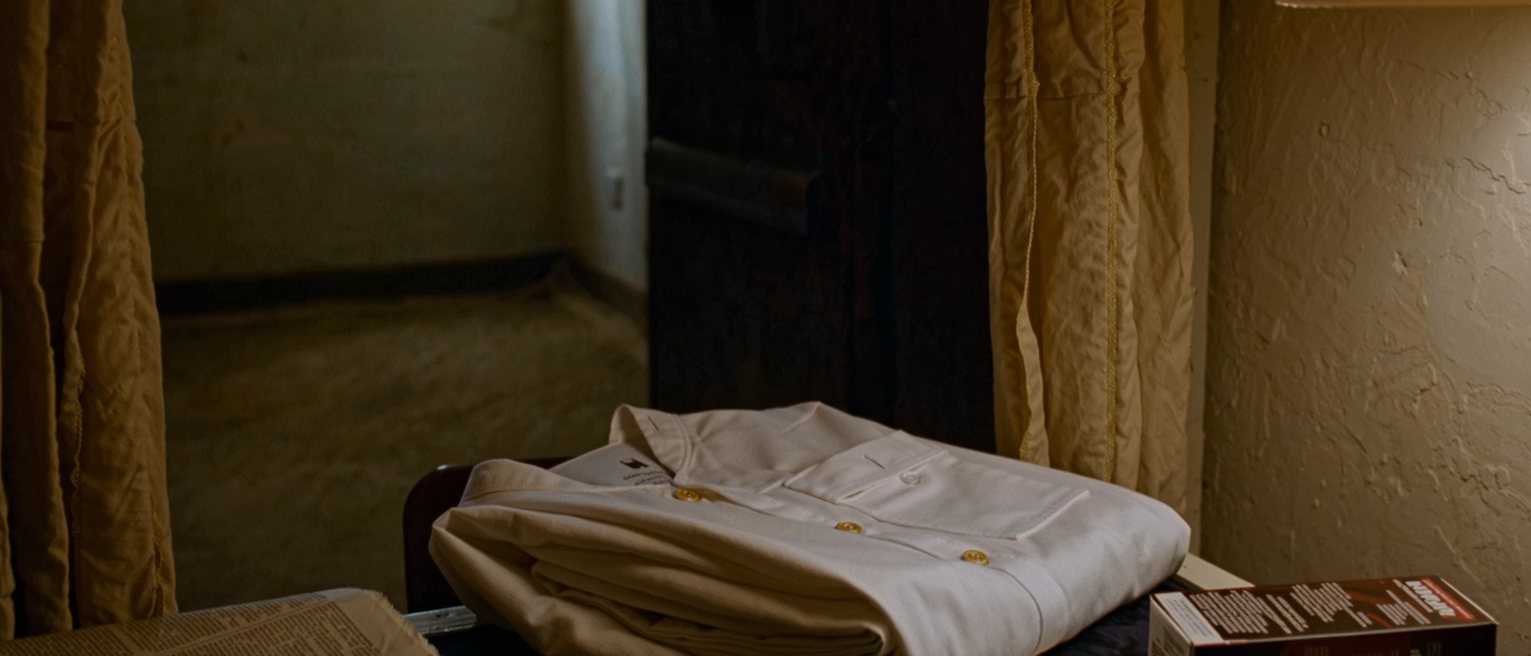
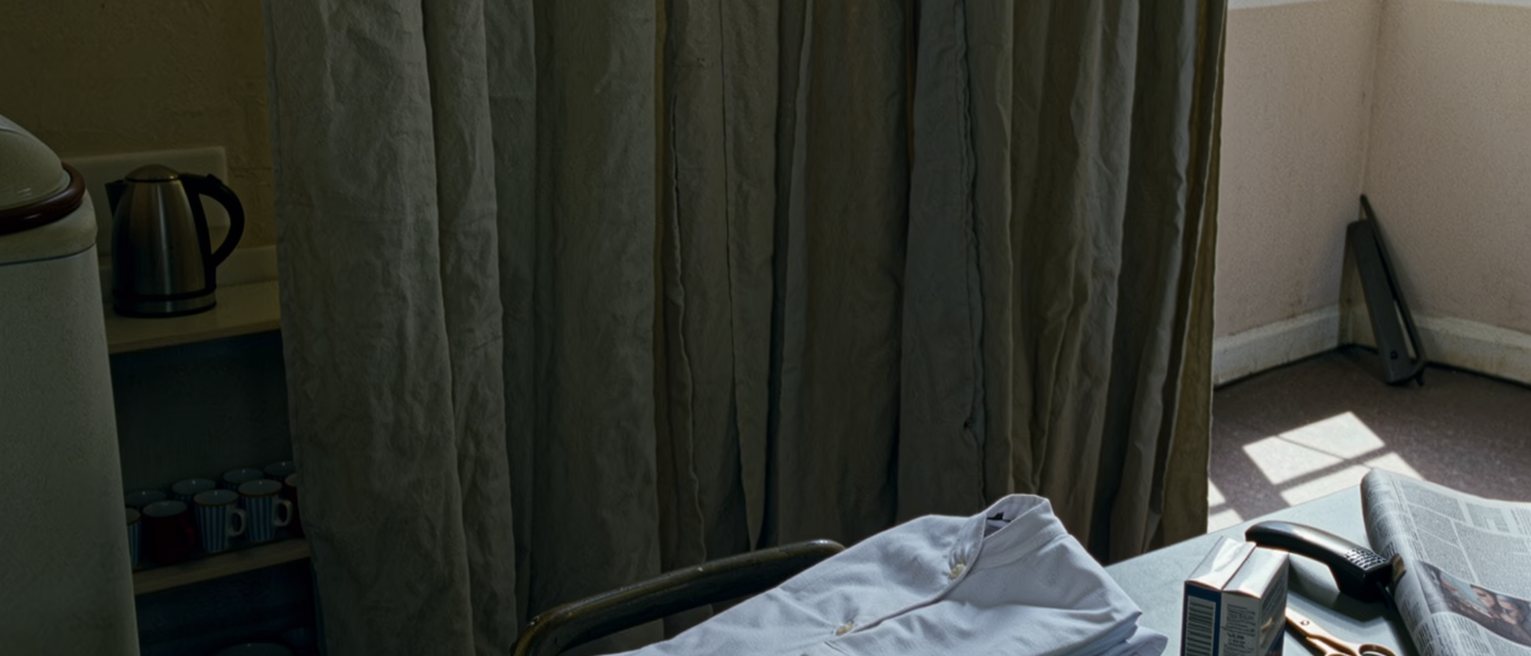
The film runs two periods side by side. In one, Ichiko is a visiting nurse with a fiancé and a household that trusts her. In the other, some unstated length of time later, she is a woman with another name, another look and an intention she does not explain, sitting in a hairdresser’s chair. Fukada does not label these. There are no captions, no dissolves, no change of grade to tell a viewer which is which. Critics writing about the film have consistently reported that the principal cue available is the character’s hair, with her clothes and the register of the performance doing the rest of the work.
The director has described the double structure as the hardest problem of the writing. He has named Milan Kundera’s novel The Joke as the model. He has said that the opening stretch is built to leave the protagonist’s identity unresolved because he wanted the audience’s imagination engaged rather than instructed. And he has said, about the press material in the film, that he did not set out to make a criticism of media conduct; the reporters arrived because he was tracing a process in which a character’s social attributes are stripped away, and such a process pulls them in.
Take those together and the form stops being a stylistic preference. For the length of the film a viewer is doing a specific job: holding two non-contiguous pieces of a woman and trying to work out what joins them. You have her before. You have her after. You do not have the passage between, and so you assemble a person out of the fragments you are given, in the order you are given them, filling the gaps with inference because there is nothing else to fill them with.
That is exactly what the people around Ichiko do to her. The magazine has a fragment. The television has a fragment. The neighbours have a fragment and a photograph. Nobody has the passage. Everybody assembles. And the assembled figure is coherent, and is not her, and is the one on which everybody then acts.
The word in the title is the word for a face in profile, half of it turned away. A film about a person being constructed out of partial views has been built so that the audience performs the construction. This Library’s reading is that the structure is not withholding for suspense. It is the argument made in the one register where it cannot be argued with, because the viewer has already done it before being told what she was doing.
A standing that depended on being unremarkable
There is a second thing the film is exact about, and it concerns the particular kind of position Ichiko occupies before any of this begins.
She is a visiting nurse. The work takes her into other people’s homes, at the end of a life, among their private arrangements and their unwashed things. It is intimate work that is not permitted to be personal. And the whole of her professional standing rests on a quality that is hard to describe without sounding as though one is paying a compliment: she is unremarkable. Trustworthy, competent, present, and not a subject in her own right. Nobody in that household is interested in her as a person. That lack of interest is the condition of her being let in.
A position like that has an unusual failure mode. It cannot survive attention of any kind. It is not merely that scandal damages it, which would be true of almost any position. It is that becoming legible at all damages it. The moment anyone in that family has a view about Ichiko as a person — sympathetic, curious, hostile, it makes no difference which — the arrangement that let her work has already ended. Her capital was invisibility, and invisibility cannot be partially spent.
This is worth separating from the usual account of how a woman loses her reputation, which runs through sex, or money, or an allegation of dishonesty, and which at least imagines some judgement about her conduct. Ichiko’s loss goes through none of those. She becomes a topic. That is the entire event. And a woman whose working life was built on not being a topic has no reserves for it, because the thing she was good at was precisely not having a public face.
The film also notices, without underlining it, who ends up carrying the relation. The nephew is arrested and processed, and what follows for him is a procedure with dates in it and an end. The aunt has no procedure at all. She has the rest of her life, and a telephone number that is now in circulation.
What is known about the position she is in
This is the point at which an essay of this kind can slide into a claim about a national character, and no such claim is made here. What follows is about an arrangement, drawn from sources that describe that arrangement, and it describes no individual and no people.
The film’s director has said that he drew on published reportage about the families of people arrested for crimes, and he has described what that reportage contained: reporters arriving at the wife when a husband is arrested, coverage spreading outward as far as the neighbours, households obliged to move. Those are his stated sources rather than this Library’s findings, and they are reported here as his.
Beyond the film there is a small body of work by people who do this as an occupation. An organisation in Sendai, World Open Heart, begun as a voluntary body in 2008 and incorporated in 2011, describes itself as the first in Japan to provide direct support to the families of criminal offenders. Its director, Abe Kyoko, has written on the subject across several books. One of them, a short Iwanami booklet published in June 2020, is described by its publisher as covering the employment and economic burden such families carry, the reporting practices that harm them, their access to information within the criminal process, comparison with arrangements in other countries, and the question of whether holding a family responsible deters anything at all.
That is a modest evidentiary base and it is offered as one. It establishes that the situation the film depicts is a recognised category with practitioners and a literature rather than a dramatic invention. It does not establish frequency, it does not establish severity in any given case, and none of it was gathered by this Library. Where the essay above has described a mechanism, that description is a reading of a film and of this material. It is not a measurement of anything.
And the mechanism itself is not local to anywhere. A relation that cannot be disproved, a permission that can be withdrawn without cause, and a public holding a fragment and not the passage: those are features of how reputation works among human beings, not features of a country. What differs between places is how fast the fragment travels and what the sanction costs when it lands. To say more than that would require evidence this essay does not have and will not pretend to.
Ichiko is not a bystander, and this essay would be dishonest to pretend otherwise
An essay arguing what this one has argued would very much like Ichiko to be innocent in the flat sense. She is not, the film does not permit it, and the reading has to be revised in front of the reader rather than protected from her.
Two things complicate her. The first happens early. When she recognises her nephew in a news broadcast, she does not go immediately to the family or to the authorities with what she knows about his connection to that household. Published accounts of the film describe her as initially inclined toward openness and then persuaded into silence by another party with an interest of her own, and describe that withholding as the decision which later does the most damage. Whatever one makes of the pressure she was under, and it was considerable, the withholding is hers.
The second happens late. Under an assumed name she deliberately approaches a man attached to the person who put her telephone number into circulation, and what she does then is done in order to injure through him. The film’s own publicity called it a modest revenge. It is a considered, sustained and cold sequence of actions, taken by a woman who has been very badly used and who is now using somebody who has not used her.
So the tidy version — blameless woman, unearned ruin — is not available, and this Library will not pretend to have watched a different film. What survives the revision is the sequence, and the sequence is where the argument lives. The withholding did not cause the ruin; the ruin was already in motion the moment a magazine printed a relation that was simply true. And the revenge comes after. It is what a person does once she has understood that there is no procedure and no restoration, and it is available as an explanation of her conduct without being available as a justification of it.
If anything, her later choices strengthen the claim about mechanism rather than weakening it. A machine that ruined only the blameless would be easy to describe and easy to oppose. This one does not check. It takes a relation, produces a story, withdraws a permission, and leaves behind a person who must then live, with whatever is left of her judgement, in the position it made for her.
One thing this essay will not do is explain her. The film declines to state what she feels, holds her in profile for much of its length, and leaves substantial parts of her conduct unaccounted for. Where this reading describes an intention, it is describing an interpretation of a performance and a structure. It is not a finding about a person. It would be a poor essay about being reduced to a legible story that ended by producing one.

What this Library takes from it
Strip the plot away and one usable proposition is left standing.
Reputation is not a possession. It is a permission that other people extend, and it can be withdrawn without any finding of fact, without a claim you could answer, and without anybody involved believing you did anything wrong. Conduct affects it. Conduct does not control it, and the belief that it does is the belief that fails hardest at the moment it is tested.
For readers of this Library, many of whom conduct some part of their private lives out of view, that proposition has a practical edge and it is not the comfortable one. The comfortable version says: behave well and your standing is secure. The film’s version says: your standing holds while people continue to extend it, and what they extend it on is not only your conduct. It is also proximity, coincidence, and whether a fragment about you has entered circulation.
The right conclusion from that is not vigilance, and it is certainly not fear. A life arranged around the prevention of exposure is a life already governed by the thing it fears, and there is no evidence offered here that such arrangements even work. The more useful conclusion is smaller and mostly about accuracy. If a person believes her good name is property, she will experience its loss as a judgement about her, and she will look for the fault inside herself, because property is lost through error. If she understands it as a permission, she will experience the same loss as what it actually is: other people, acting on a fragment, declining to keep extending something they were never obliged to extend. That is a colder world and a more accurate one, and the accuracy is worth something, because the search for a fault that is not there is a second injury laid on top of the first.
This Library has argued before that a verdict is not a report. What the film supplies is the structural form of the same point. The verdict others reach about you is produced out of material you do not control, by a process you are not party to, and its conclusion is not information about who you are.
This house sells discretion, which means it sells this fear
Now the declaration, before the argument above is allowed to sound disinterested.
This house arranges paid private companionship, and a substantial part of what it actually sells is discretion. Confidentiality is not a courtesy attached to the service. It is a large share of the price, and every client understands that without being told. Which means the fear this essay has spent several thousand words describing — that a fragment escapes, circulates, and takes a life apart with no finding of fact anywhere in the process — is a fear this house is in the business of. What we sell is, among other things, reassurance against precisely the mechanism this film depicts.
That is an uncomfortable position from which to write admiringly about a work that makes the mechanism vivid, and it should be uncomfortable. An essay establishing that exposure is catastrophic and unappealable functions as an advertisement for discretion whether or not it contains one. This one contains none. It does not need to, which is the point of saying so here.
Three constraints follow, stated as limits on what may be claimed rather than as a disclaimer.
We do not claim that discretion is protection. No arrangement, ours included, can guarantee that information stays where it was put. Anybody in this trade who tells a client otherwise is selling a promise they cannot keep, and the promise is worth more than the service, which is exactly why it gets made. What can honestly be offered is a practice and a set of habits, maintained consistently. That is not the same thing as a guarantee and will not be described as one here or anywhere else by this house.
We do not claim that the fear is proportionate. Nothing in this essay establishes how likely any of this is for any reader. The film is fiction. The supporting material describes a recognised category, not a rate. A house that profits from anxiety has an obvious interest in its readers overestimating risk, and we are naming that interest rather than quietly relying on it.
And we do not claim that this reading is disinterested. It is not. It was produced by a party with a commercial stake in its conclusion, and the section that follows gives the objection more room than the answer.
The strongest case against this essay
Four objections, in ascending order of how much damage they do.
First: the film’s coldness may be cruelty rather than clarity. Fukada holds Ichiko at a considerable distance, declines to give her the scene in which she says out loud what has been done to her, and arranges her humiliations with an evenness that a number of viewers have found airless. Critics have said so in print. One writing in 2020 judged that formal and structural invention could only do so much for the script beneath it and called the result a pointless tale of ruined innocence; the Variety and Slant notices are titled in the same key, faulting the film as clumsy and unmoving and as an art object drained of humanity. The objection is not that the film is unkind to its protagonist in the way that all tragedies are unkind to theirs. It is that the distance may be serving the director’s design rather than her situation, and that a woman being taken apart is being used as a demonstration of something. This essay has no clean answer. It can say only that the same distance is what keeps the film from resolving into the consolation of a victim narrative, and that a viewer who finds the film cruel has taken a position this essay cannot disprove.
Second: Ichiko’s own choices are more load-bearing than this essay’s framing wants them to be. That was stated at length above and is not withdrawn here. She withheld what she knew. She took a considered revenge on a man who had not injured her. A reading that opens with a woman who has done nothing is describing the first act of the film and then extending it quietly over the rest. Somebody could write a defensible essay arguing that A Girl Missing is about what a person does after being ruined, and that the ruin is the premise rather than the subject, and this essay could not refute it.
Third: the fragmented structure may be withholding for effect rather than for argument. The claim that the cutting enacts the mechanism is elegant, and elegance is the standard warning sign in criticism of this kind. A simpler account is available. Ambiguity generates interest; an audience that does not know what it is watching keeps watching; and the withholding is a device for holding attention in a film whose plot would otherwise arrive too early to sustain the running time. The director’s remarks about Kundera and about the audience’s imagination are consistent with the reading offered here, but they are equally consistent with the simpler one, and an artist’s account of his intentions is not evidence about the effect his film has. This essay’s reading remains a reading.
Fourth, and this one is conceded rather than answered: a house that sells discretion has written an essay establishing that exposure destroys lives without warning and without remedy. That is not a coincidence and it is not a subtle bias; it is the shape of the whole piece. Nor is the care taken elsewhere here a defence against the objection — the wins separated from the work they were given for, the refusal to let the film be at Cannes, the fencing around anything that might read as a claim about a country. That care is a more sophisticated version of the thing being objected to. We have no reply. We have only the practice of putting it in the body of the essay, where it costs something, rather than in a line at the bottom where it would cost nothing at all.
What this does not claim
This essay is a reading of a film. It is not clinical guidance, it describes no treatment, it promises no outcome, and it diagnoses nobody. Nothing here should be read as a statement about any reader’s circumstances or as a claim that anything sold by this house affects them.
A Girl Missing is a work of fiction. Nothing here presents its characters as real people or their interior lives as established fact. Where this essay describes what a character intends, withholds or feels, it is describing an interpretation of a performance and a structure, and the film itself declines to state it. No dialogue from the film is quoted anywhere, and no passage of the director’s novelisation is reproduced.
The festival record is stated carefully because the loose version of it is wrong. The film had its world premiere in the International Competition at Locarno in August 2019 and did not win a prize there. It was not selected for Cannes and was not in Un Certain Regard. The Cannes credit belongs to Harmonium, which took the Un Certain Regard Jury Prize in 2016.
The awards record for Tsutsui Mariko is stated with wins kept separate from the work they were given for. The Art Encouragement Prize she received in the film division for the 2019 fiscal year is recorded as being for this film among other work rather than for this film alone. Her Mainichi Film Award for best actress was for Harmonium and not for this film. Where no award or nomination is claimed, it is because none was found in the records consulted, which is not the same thing as none existing.
Production details, the release date, the running time, the co-production arrangement and the credits are taken from published reference and distributor records rather than from inspection of the film’s own titles. The account of the film’s structure and of the cues available to a viewer draws on published criticism as well as on this Library’s viewing, and where critics are described they are described in summary rather than quoted. The director’s remarks are taken from published interviews and are attributed to him as remarks, not as established fact about his film.
The material on the families of people arrested for crimes is drawn from the stated sources of the film’s director, from an organisation’s description of its own work, and from a publisher’s description of a short book. This Library has examined no caseloads and no statistics and makes no claim about how common any of it is. Nothing here is a statement about Japanese people, about Japanese reserve, or about national character of any kind. The mechanism described — a relation that cannot be disproved, a permission withdrawn without cause — is offered as a feature of how reputation works among people, and a reader who takes it as a description of a country has taken more than is offered.
This house’s commercial interest in the essay’s conclusion is stated in the body rather than only here, because a declaration made after the argument has done its work is not a declaration. Neither the director, the performers, the production companies, the distributor, the festivals named, the organisation and author named in connection with support for offenders’ families, nor any critic or publication described has any connection to this house, knows of it, or endorses it.