Moonlight Journal
Travel Lets You Become Different Because Your Roles Cannot Follow as Quickly
Travel does not reveal a truer self — it changes which self is required, for a while, before the old roles catch up.
Travel does not necessarily reveal a truer self. It changes which self is immediately required. At home, a person enters a room already annotated: dependable, difficult, mother, executive, foreigner, wife, the one who never gets lost. Elsewhere, the annotations load more slowly. For a few hours, behavior can arrive before reputation.
That delay can feel like becoming someone else. You speak to a stranger without managing the history between you. You eat when hungry rather than when the household schedule permits. You wear the dress that has no established meaning. None of this proves that the travelling self is more authentic. It proves that identity is partly summoned by context.
The language of escape often makes this sound dishonest. But a role can be real and still be incomplete. The woman who is competent at home is not pretending; neither is the woman who allows herself to be guided in an unfamiliar city. Contradictory capacities can belong to one person without requiring a crisis or a permanent reinvention.
A role can be real and still be incomplete
James Sexton’s warning about losing individuality inside partnership belongs here, but it needs expansion. The answer is not to remain perpetually unavailable so desire survives. Nor is independence valuable only because it makes someone attractive. A private interior life is valuable even when nobody is watching and no partner benefits from it.
Place also deserves subjecthood. Tokyo, Kyoto, Paris or Bangkok cannot be used merely as therapeutic scenery for a visitor’s self-discovery. People live and work inside the surfaces a traveller consumes as atmosphere. Ethical travel notices the city’s language, labor, rules and inconvenience—not only the flattering version of oneself reflected there.
The useful question comes after returning. Which freedom depended on distance, and which can be brought home as a small structural change? Perhaps it is an evening without reporting, a meal chosen without consensus, a separate interest, the right to ask for guidance, or the courage to let somebody else hold the map. Reintegration turns travel from exception into information.
You may not become another person abroad. You may become less immediately edited. The gift is not the fantasy that obligations disappear; they are waiting. The gift is evidence that the self exceeds them—and that some portion of that excess deserves a room in ordinary life.
The self was never a single fixed thing
Contemporary social psychology has largely abandoned the idea of a single fixed self waiting to be discovered underneath everyday performance. What a person does depends heavily on which roles, expectations, and relationships are actively present in a given room — so a woman genuinely behaves differently at her mother's table than she does at a conference podium, and neither version is the costume. Travel doesn't strip away a disguise to reveal what was underneath; it simply removes the contextual triggers that normally summon the familiar performance, leaving room for other, equally real parts of her to surface — not because anything in her changed, but because nothing in the new environment is asking for the usual one.
The social structure underneath this deserves direct naming: a woman's identity at home is rarely self-authored in isolation; it's substantially co-constructed by everyone who has known her long enough to have fixed expectations — family who remember her at twelve, colleagues who know her only as competent and reliable, a social circle that has quietly assigned her a specific role within its dynamics. None of these people are wrong about who she is; they're each accurately describing one real, partial version of her, built and maintained collaboratively, that travel simply doesn't require her to keep performing.
In Japan, where social role and context-appropriate behavior carry particularly explicit cultural framing — the recognized distinction between honne (true feelings) and tatemae (socially presented behavior), and between uchi (in-group) and soto (out-group) contexts — the essay's core observation about travel and identity maps onto an existing, culturally native framework rather than needing to import a foreign psychological concept: travel functions, in this framework, as an unusually complete shift from uchi to a temporary, low-stakes soto, where tatemae's usual social cost temporarily drops away.
For an international woman, the dynamic runs in reverse. Her adopted country can itself become the 'travel' context, loosened and unscripted, set against the fixed expectations still waiting for her in the country she left. She may be living, semi-permanently, inside the very identity state this essay treats as a temporary weekend effect — which raises a stranger question than the one about vacation: what happens to a self when the 'travel' context stops being an exception and becomes the actual, ongoing address of a life?
The sceptical reading, and where Moonlight stands
A skeptical reading worth including: the essay's reframe — that travel reveals a different self rather than a truer one — while psychologically accurate, can also function as a comfortable way to avoid a harder question: if a woman consistently prefers who she is while traveling to who she is at home, that preference is itself meaningful information worth examining directly, rather than being fully neutralized by the observation that neither self is more “real” than the other. Some contextual selves are worth building a life around more than others.
Research on state versus trait personality consistently finds that behavior varies meaningfully across contexts even as underlying traits remain relatively stable, supporting the essay's core claim — though this research describes general patterns of contextual variation and cannot determine, for any one specific woman, whether her travel self represents a genuinely preferable configuration worth pursuing further or simply a pleasant temporary reprieve from ordinary responsibility.
Moonlight's position: no version of you produced by a different context is less authentic than the one your regular life requires. But the goal isn't to treat every contextual self as equally worth building toward — it's to notice, honestly, which context lets you access a version of yourself worth wanting more of, and to ask what, specifically, about that context could be deliberately built into an ordinary life rather than reserved for vacation.
Which version of yourself have you met while traveling that you haven't found a way to bring home yet — and what, specifically, about the context made her possible?
Not every travel self deserves to be chased home
Not every travel self deserves to be chased home. Some of what feels like freedom abroad is simply the plain absence of responsibility — no job, no household, no relationship requiring daily maintenance — and it feels good precisely because it is temporary; it would likely feel very different as the permanent condition of an ordinary Tuesday. The sharper question isn't which self you prefer but which of that self's freedoms could survive contact with real, ongoing responsibility, and which ones only existed because responsibility had been switched off for a week.
And it's worth closing with an honest acknowledgment: some women return from travel and successfully import small, real changes into ordinary life — a boundary held more easily, a hobby resumed, a friendship approached with more directness — while others find the contrast between their travel self and home self simply fades within days of returning, the old context reactivating the old patterns almost immediately. Neither outcome is a personal failure; context is genuinely powerful, and importing a preferred self into an unchanged environment is real, effortful work, not a matter of simply deciding to.
A last thought worth holding: you don't necessarily need another country to test this. The same contextual shift, in smaller form, is available in a new city for a weekend, a solo trip a few hours from home, even a deliberately unfamiliar part of your own city — the mechanism that matters is novelty and reduced social surveillance, not distance for its own sake.

The genre this resembles, and does not belong to
This essay's observation resembles, without quite belonging to, a more familiar genre: travel-as-self-discovery writing, and Elizabeth Gilbert's Eat, Pray, Love remains its most commercially successful example. The sustained criticism of that book was never really about the claim that travel changed her; it was about what the claim quietly required — a year of unstructured travel funded by a book advance, taken by a woman with the professional flexibility, financial cushion, and passport privilege to leave an entire life behind without losing her footing in it. That criticism is fair, and it lands hard on a strand of travel writing that markets self-discovery as a purchasable experience available to anyone who books the flight. But the genre's marketing problem is a separate matter from the narrower psychological claim actually being made here, one that requires no year abroad, no book advance, and no particular financial position to be true.
The narrower claim — that context activates different aspects of a person, and that travel is simply an unusually complete context shift rather than a moral achievement or a purchasable transformation — survives the genre's critique because it does not depend on the specific luxury version of travel the critique is actually aimed at. A weekend away, a work trip extended by two days, even a long solo walk through an unfamiliar part of one's own city produces a version of the same mechanism at a smaller scale, without requiring the financial independence a year of travel presupposes. Conflating the mechanism with its most expensive, most heavily marketed expression has done real damage to how this idea gets discussed publicly, making a genuinely accessible psychological observation sound like a luxury good available only to women with the resources for extended travel, when the actual mechanism — reduced social surveillance, reduced reputational history, genuine novelty — scales down to considerably smaller and more available versions of the same experience.
The phrase 'finding yourself through travel' carries a gendered history, and it lands differently depending on who says it. A man's gap year or extended backpacking trip is typically framed as adventure, competence-building, simple curiosity about the world. The same behavior in a woman is more often received as therapeutic necessity — a woman traveling alone gets assumed to be recovering from something, running from something, working through something, rather than simply curious and competent and interested in a different part of the world on her own terms. The asymmetry matters on its own terms: it means a woman's travel self gets pre-interpreted by observers as diagnostic, evidence of what she lacked at home, before she has said a word about her actual reasons.
Deliberate liminality, and the onsen ryokan
Distinct from the honne/tatemae framework already discussed, Japan offers a second, more recent angle: the rise of what is popularly called ohitorisama culture, the roughly two-decade normalization of women dining, traveling, and attending entertainment alone. Solo activity, especially for women, once carried a stronger whiff of isolation or misfortune than it does now. The travel industry has responded in kind, building single-occupancy ryokan rooms, solo-friendly dining counters, marketing aimed explicitly at women traveling without companions — evidence that the loosening this essay describes has stopped being, for a meaningful number of Japanese women, an accident of the occasional trip and become a deliberate, sought-after, commercially recognized practice.
That deliberateness changes the essay's core claim. Some women are no longer encountering the loosened self by accident, the way a work trip or family obligation might produce it incidentally — they are choosing solo travel because they have already identified which version of themselves shows up under those conditions and decided she is worth visiting again. Japan's persistently low rate of paid-vacation-day usage complicates how available this actually is, though: a culture that has normalized solo travel as a destination experience has not, at the same pace, normalized the leave required to reach it. The ohitorisama shift may describe what is now culturally desired well ahead of what most working women can practically access.
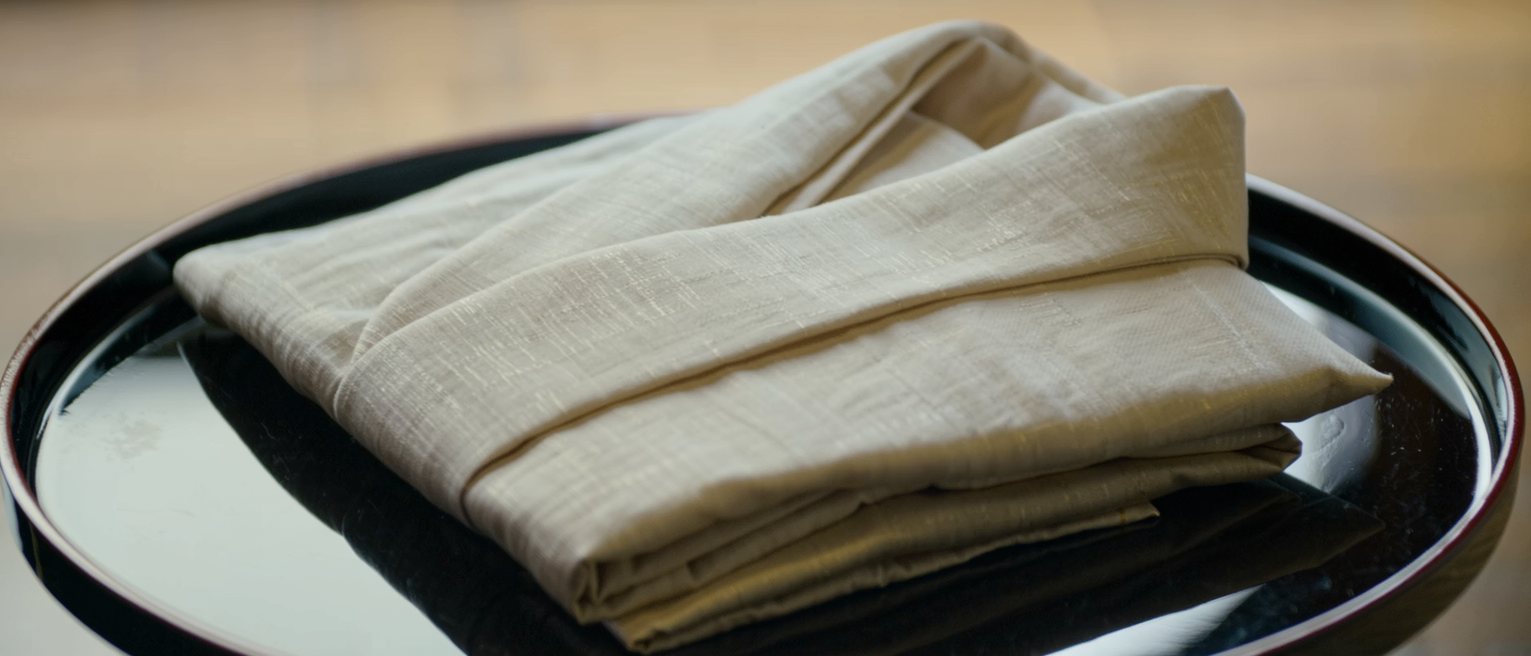
The onsen ryokan deserves particular mention as a specifically Japanese version of the liminal space this essay describes more generally, since it compresses the mechanism into an unusually concentrated and culturally sanctioned form: a woman traveling to a hot-spring inn enters a space with its own explicit rules, its own temporary uniform in the yukata provided at check-in, its own schedule organized around bathing and meals rather than household or work obligations, and a strong cultural permission, already built into the destination's whole purpose, to do essentially nothing productive for the duration of the stay. Few other widely available, culturally unremarkable travel experiences build the loosening this essay describes so explicitly into the destination's actual design — the ryokan is not incidentally liminal; it is architecturally and ritually built to produce exactly the suspension of ordinary role and obligation this essay treats as travel's general mechanism, which may partly explain why the ryokan stay occupies such a specific, beloved place in Japanese domestic travel culture.
The bind, and what repatriation clarifies
A further international-women's reading, distinct from the earlier point about an adopted country functioning as permanent 'travel' context, concerns what happens on the return trip in the other direction — repatriation, when an international woman who has lived in Japan for years returns, temporarily or permanently, to her country of origin. Repatriation is frequently harder than the original move abroad, and less anticipated, precisely because it is assumed to be a return to the familiar rather than a genuine transition requiring its own adjustment; friends and family at home expect the returning woman to simply resume her old role, without recognizing that years spent inhabiting a different, loosened self in Japan may have made the old role fit considerably less comfortably than it once did, producing a specific, disorienting grief — missing a country that was never fully home, while finding the country that was supposed to be home no longer quite fits either.
The bind is specific. A woman in this position may genuinely prefer a version of herself only Japan makes available — freer from fixed family expectations, defined less by a reputation built over decades, moving through a city with an anonymity her hometown never granted — while carrying the ordinary costs of expatriate life this essay's earlier gesture toward ethical travel never fully developed: language fatigue, distance from aging parents, uncertain residence status, a social network built in a language she still translates into and out of daily. The preferred self and the costly context are not two separate things. They are frequently produced by the identical circumstances, and that fact deserves to be sat with rather than resolved quickly in either direction.
Repatriation clarifies, more sharply than the original move abroad usually does, exactly how much of a preferred self was context-dependent rather than portable. A woman who genuinely thrived in Japan sometimes discovers, on returning home, that the freedom she valued does not survive the flight back intact — not because it was fake, but because it depended on conditions (anonymity, distance from inherited reputation, a different social contract around solitude and directness) her country of origin was never built to reproduce. That is not evidence the Japan self was false. It confirms this essay's central claim: some selves genuinely require their originating context, and losing access to a preferred self through geography, rather than through any failing of her own, is a real and specific grief. It deserves a name, not a minimization.
Who can afford it, and when exploring is avoiding
A more structural counterargument to this essay's entire framework deserves direct airing: travel-based self-discovery discourse, even in its more modest, non-Eat-Pray-Love form, remains meaningfully unavailable to a large share of women for reasons that have nothing to do with psychological insight and everything to do with material constraint — insufficient paid leave, caregiving responsibilities that cannot be handed off, visa and passport limitations, financial precarity that makes even a modest weekend trip a genuine sacrifice rather than a minor indulgence. An essay built entirely around the loosening travel provides risks quietly implying that a woman who cannot access this mechanism is simply failing to prioritize her own interior life, when the actual barrier is frequently structural rather than attitudinal, and no amount of psychological reframing changes a household budget or a leave balance.
A harder counterargument, aimed less at access than at the discourse's psychological premise: for some women, the appeal of a context-shifted travel self isn't evidence of an authentic self worth cultivating — it's a genuinely convenient way to avoid the harder, less escapable work of changing an unsatisfying context at home. Becoming lighter and freer for a week is easier than the slow, often confrontational work of renegotiating an actual role inside an actual marriage, family, or job. A pattern of repeatedly seeking the travel self while never attempting the domestic renegotiation this essay's own 'reintegration' section recommends deserves to be named honestly as a possible form of avoidance, not filed automatically under self-discovery.
Healthy exploration and avoidance rarely look different from inside the pattern itself, which is exactly why the distinction can't be assumed self-evident. A more honest test looks less at the travel than at what happens on return. A woman using travel as genuine information brings something back and attempts, however imperfectly, to build it into an unsatisfying context. A woman using travel primarily as escape tends to find home increasingly unbearable with each return, with no corresponding attempt to change the conditions that make it so — treating the next trip as the solution rather than as a diagnosis pointing toward a domestic problem travel alone cannot resolve.

What the research actually supports
On the research itself, self-construal theory and work on situational versus dispositional behavior offer genuine support for this essay's core mechanism without settling the harder evaluative questions layered on top of it. Cross-cultural psychology has documented, with reasonable consistency, that self-concept is neither purely fixed nor purely fluid but substantially responsive to which social relationships and expectations are contextually active — a finding that supports the essay's claim that travel activates a genuinely different, not merely performed, configuration of a real person. What this research cannot determine, for any specific woman, is whether her particular travel self represents a configuration worth deliberately building toward, a pleasant but non-generalizable escape from ordinary constraint, or some combination the research's group-level findings are simply not built to distinguish at the level of one individual life.
Precision matters about what novelty research does and doesn't add here. Studies on novelty-seeking and its relationship to mood, creativity, and openness consistently find real short-term psychological benefits to unfamiliar environments — a partial explanation for why the travel self so often feels not just different but specifically better: lighter, more curious, more spontaneous. But novelty's benefits are hard to separate, by the nature of what's being measured, from novelty's temporariness. Researchers cannot easily say how much of the reported benefit would survive the novel environment becoming the permanent one — which is exactly the question a woman deciding whether to import her travel self into ordinary life most needs answered, and exactly the one this research is least equipped to answer for her.
Taken together, these additional layers sharpen rather than soften the essay's original claim, rather than complicating it into irrelevance: travel does not manufacture a truer self out of nothing, but the specific self it makes available is neither uniformly accessible to every woman regardless of circumstance, nor uniformly worth building an ordinary life around simply because it feels good in the moment, nor free of its own structural costs, whether those costs take the shape of a household budget that cannot absorb a weekend away, the accumulated toll of expatriate distance from an aging family, or the quieter risk of using travel repeatedly as a substitute for confronting an unsatisfying context at home rather than as information about how, specifically, to change it.
The marketed version of this same claim
A sharper question than the one already asked about which travel self hasn't found her way home yet: on your most recent return from somewhere, what was the very first fixed expectation waiting for you? Whose face, whose habit of talking to you as though you were still the person you were five years ago, whose household task got handed back to you without discussion — and how quickly, honestly, did you let it reassert itself, compared to how quickly you might have chosen to, had you been paying attention to the choosing at all.
What ultimately distinguishes a useful reading of this essay's claim from a merely comforting one is the same distinction the counterarguments above keep circling back to: the point is not that travel proves a lighter, freer self was always the real one, waiting underneath the annotated, over-explained version required at home. The point is that context is real, measurably powerful, and unevenly available, and that the honest work — harder than booking a flight, harder than noticing the loosening, harder even than naming which freedoms are worth keeping — is the slow, unglamorous negotiation required to bring a genuinely small number of those freedoms home into a context that was never designed to grant them, in a country, a marriage, a family, or a language that will not simply hand them over because a trip revealed they mattered.
A more recent variant of this essay's core claim has been marketed heavily over the past decade under the banner of digital nomadism — location-independent work supposedly making sustained travel available to a far wider range of people than the traditional gap year or extended-leave model ever managed. The reality has been messier than the marketing. Digital nomad life still disproportionately serves people who already hold a strong-passport nationality, a remote-capable profession, and enough financial cushion to absorb the instability of frequent relocation. The apparent democratization has, in practice, mostly widened the pool of people who already had reasonable access to it, rather than genuinely opening the mechanism to women constrained by caregiving, visa status, or hourly-wage work that cannot travel with them.
Beyond Tokyo, and what this does to a partnership
The Japan-specific reading offered above, like much writing on Japanese women's leisure, tends to center Tokyo without saying so. A woman living in Saitama or another commuter prefecture faces a different calculus. The loosening this essay describes often arrives in smaller doses there — a solo afternoon in central Tokyo after a shopping trip, a short weekday onsen visit timed around a partner's or children's schedule, one overnight rather than an extended stay. The underlying psychological mechanism doesn't differ by region; the logistics of commute time, household responsibility, and a tighter leave balance do, making the fuller version of ohitorisama travel a rarer possibility than a Tokyo-centered magazine feature on the trend usually implies.
A related but distinct concern involves what repeated context-switching does to a partnership rather than to a woman's individual sense of self. Consistently becoming a freer, more spontaneous person while traveling — paired with a partner who never gets to meet that version of her, because she only exists at a geographical distance — can quietly function as a way of keeping the most alive parts of herself permanently unavailable to the actual relationship. Protected, this way, from the ordinary erosion long partnership brings. But also, as a direct consequence, never risked, never tested, never integrated into the continuous intimacy the relationship is supposedly building toward.
None of this argues against travel, or against noticing what it reveals; it argues only against letting the noticing substitute permanently for the considerably harder project of building a version of home that does not require distance to make a fuller self available. A woman who has met, while traveling, a version of herself worth wanting more of owes that version something more demanding than an annual repeat visit: an honest, patient, probably imperfect attempt to ask what specifically about her ordinary surroundings — a marriage, a family's expectations, a job's demands, a city's own unspoken rules about who she is allowed to be — would have to change for that version to survive somewhere closer than a departure gate.
An old proverb already knew this
An old Japanese proverb captures, in compressed form, almost exactly the mechanism this essay has spent pages describing: tabi no haji wa kakisute, roughly 'shame on a journey can be discarded' — the folk recognition, built into the language itself, that behavior normally regulated by the fear of being seen and remembered operates under looser rules once a person is far enough from the community that would do the seeing. The proverb usually carries a note of mild warning rather than endorsement, cautioning against genuinely embarrassing behavior. But its mere existence is evidence that Japanese culture has long understood, independent of any imported psychological theory, that identity and its accompanying shame are bound to an audience's presence rather than to some fixed, portable core. Which is this essay's claim exactly, arrived at by a different route and a much older vocabulary.
A specific strand of research on deindividuation and anonymity sits alongside the self-construal work already cited here. Reduced accountability to a watching, known community has been studied extensively — usually in contexts far less benign than tourism — as a condition that loosens ordinary behavioral restraint, for better and for worse. The travel self this essay describes runs on a mild, temporary version of the same mechanism: not full anonymity, but a meaningful thinning of the density of people who know a woman's history well enough to hold her immediately accountable to it. Honesty requires admitting that the same reduced accountability letting a woman eat when hungry and speak to a stranger without managing shared history is, structurally, close kin to the reduced accountability that, in less benign contexts, permits behavior a person wouldn't defend under ordinary scrutiny. The mechanism is morally neutral. What a specific person does with the loosening is not.
What is genuinely portable, in the end, is smaller and less dramatic than the travel-self fantasy usually promises, but considerably more durable: not a wholesale personality transplant carried home in a suitcase, but a specific, nameable list — the boundary held more easily an ocean away, the question asked without pre-apologizing, the meal chosen without consensus, the afternoon spent answering to no one — each of which can, with real and sustained effort, be re-created in smaller form inside an unchanged home context, even when the full context shift that first revealed them cannot be. The list is the actual souvenir worth bringing home; the temporary feeling of having become someone else, however pleasant, rarely survives the flight back and was never really the point.
Between an old proverb that already knew this, in its own compressed vocabulary, and a body of contemporary research still working out its precise psychological mechanisms, the honest conclusion sits in a fairly narrow, unglamorous place: context genuinely changes who shows up, the change is real rather than merely performed, and it is neither uniformly available nor uniformly worth chasing for its own sake. The harder, more interesting work was never simply noticing the loosening in an airport, a ryokan changing room, or a foreign city where no one remembers who you were at twelve — it was always what happens afterward, in the considerably less exotic, considerably less forgiving work of deciding, deliberately and specifically, which piece of who showed up is worth the ordinary, sustained effort of making room for at home.
What is actually portable
A last practical note, mirroring the one owed to a comparable argument elsewhere: a reader whose actual barrier to any of this is structural — no leave balance to spend, no household support to make even a weekend possible, a visa or financial situation that makes travel itself currently out of reach — should not read any of the above as a verdict on her interior richness. The mechanism this essay describes is available in miniature, closer to home, in smaller and cheaper forms than a plane ticket, but it is also fair to simply name that some women are, for a period of their lives, genuinely without access to any version of this experience, travel-sized or otherwise, and that this is a fact about their circumstances rather than about the depth or complexity of who they actually are underneath those circumstances.
One more layer belongs here before closing, discussed so far only in psychological and structural terms, never in its most literal cost: the physical safety calculus a woman performs before and during solo travel that a man on the same route rarely has to run with the same intensity, if at all. Choosing accommodation for the safety of the surrounding street rather than price or charm alone. Timing a return to the hotel around when a neighborhood empties rather than around personal preference. Rehearsing an exit mentally before entering an unfamiliar bar or train car. Sharing a live location with someone at home as a quiet condition of feeling safe enough to explore at all. None of this is incidental inconvenience layered on top of the freedom this essay describes — it is a continuous, background tax on that freedom, paid disproportionately by women, determining in practice how much of the loosening a given woman can actually access in a given place. Japan is frequently, and largely accurately, described as unusually safe for women traveling alone relative to many other destinations. That safety is itself a significant reason ohitorisama travel culture has been able to develop as openly and as commercially as it has: the mechanism this essay describes requires a baseline of physical safety to operate at all, and that baseline is not distributed equally across the destinations a woman might otherwise want to visit. None of this means the travel self is unavailable elsewhere. It means the calculation of where to go in search of it is never purely aesthetic or psychological, however much travel writing prefers to discuss it in exactly those terms. A woman weighing a destination is frequently doing quiet, unglamorous risk arithmetic that writing about self-discovery through travel rarely acknowledges, let alone respects as the serious, competence-demonstrating work it actually is. Naming this plainly is not a caution against travel. It is a correction to a genre that too often talks as though the loosening it celebrates is simply available for the taking, when for many women it is something first secured, continuously monitored, and only then enjoyed.
A concluding thought, offered as invitation rather than prescription: the woman who returns from a trip having briefly inhabited a version of herself she liked is not obligated to treat that version as a costume to be packed away with the luggage. The specific freedoms of travel — anonymity, an empty schedule, the absence of anyone holding a fixed idea of who she is — cannot be fully replicated at home, and pretending otherwise sets up a disappointment the essay has tried to name honestly throughout. But small, deliberate imports are possible: an evening spent somewhere in the home city where no one knows her history, a solo dinner taken with the same unhurried attention she gave herself abroad, a standing refusal to let the most familiar version of her life be the only one she is willing to answer to. The trip ends. The permission it briefly granted does not have to.