Books
Come Together and What a Long Relationship Actually Decides About Desire
Emily Nagoski’s second book reports that the couples who sustain a sexual connection over decades are not the ones with the most desire or the best technique, but the ones who decide it matters. That single move turns the subject from a deficit to be corrected into an allocation to be decided, which is a different conversation with different people in it — and it is a conversation a book addressed to two people cannot hold with a reader who is one.
A long relationship eventually asks a question that the beginning of it never had to ask.
At the start, nothing had to be decided. Wanting supplied its own reason, and the hours arranged themselves around it without anybody having to argue for the arrangement. Nobody sat down and worked out what an evening was worth. The evening was simply taken, out of a week that had fewer claims on it than any week since.
Years later the same two people are in a house with a mortgage and a calendar, and the wanting has stopped arriving in advance of everything else. Something now has to be decided rather than felt. That is an uncomfortable discovery, mostly because the received script insists that anything decided is by definition less real than something that simply happened.
Emily Nagoski’s Come Together, published by Ballantine Books in January 2024, is a book about that period. Its subtitle is The Science (and Art!) of Creating Lasting Sexual Connections, and the verb in it is doing real work. Creating, not preserving. Not a rescue of something that used to be there.
This essay is not a summary of the book, and it does not re-run the argument this Library already made about Nagoski’s first one. An earlier essay here worked through Come as You Are at length, and what it took from that book was a posture rather than a method: stop scoring yourself, look at conditions instead, and do not treat a bodily response as evidence about a person’s character. This piece is about the second book, and about one move inside it, which is the move that changes what the conversation is for.
A second book, and the one it does not repeat
The bibliographic facts first, since they matter to how the book should be read.
Emily Nagoski holds a doctorate in health behavior with a minor in human sexuality, has worked at the Kinsey Institute, and directed wellness education at Smith College before writing full time. Come as You Are appeared in 2015 from Simon and Schuster, with a revised edition in 2021. Come Together followed from Ballantine Books, an imprint of Penguin Random House, on the thirtieth of January 2024, at three hundred and sixty-eight pages, with a paperback the following February.
The publisher describes it as a book about sex in long-term relationships, and describes it as disputing a specific belief: that sexual satisfaction and desire are at their highest at the beginning of a relationship and inevitably decline the longer the relationship lasts. The same description says that what matters is whether the people involved like the sex they are having, rather than how much of it there is.
That is the publisher’s account of the book, and it is repeated here as the publisher’s account rather than as a finding of this Library.
The more interesting fact about the two books is a change of address. Come as You Are is written to a person. It explains a body to the person living in it, and almost everything it offers can be used by somebody alone in a room. Come Together is written to two. Its subject is not a body but an arrangement between people, and an arrangement cannot be understood, adjusted or repaired by one of its parties acting alone.
That change of address is the whole difficulty of the second book, and the whole interest of it. It is also, as the last part of this essay will argue at length, the source of the strongest objection anybody can raise against it.
Not the couples with the most desire
The move worth the essay is this one.
Speaking about the book, Nagoski has described the couples who sustain a strong sexual connection over decades as sharing a small number of characteristics, and the characteristics are not the ones anybody expects. They are good friends who trust and admire each other. And they prioritise it: they decide that it matters for the relationship, and they stop doing the other things they could be doing with that half hour.
In the same conversations she has put the underlying question to couples in a plain form. What is it that sex does in our relationship that makes it worth not doing all the other things we could be doing? She has also said, of the same research, that desire is not the thing and that the thing is pleasure.
These are her characterisations of what she found, and they belong to her. This essay repeats them as her claims about her book rather than restating them as established fact, and the sources are recorded where this house records such things.
What deserves attention is the list of things that are absent from that finding. Frequency is absent. Technique is absent. Novelty is absent. The amount of desire either person feels is absent. So is anything resembling a threshold, a target or a normal range.
Almost nobody arrives at this subject with that kind of question. People arrive with a quantity question, and they arrive with it already answered in the worst direction. There is not enough. There used to be more. Other people presumably have more than this. Somebody here is the reason.
A finding that says the decisive factor is whether two people treat the thing as worth protecting does not answer the quantity question. It refuses it. And the refusal is the useful part, because the quantity question has no good answer available to anybody who asks it.
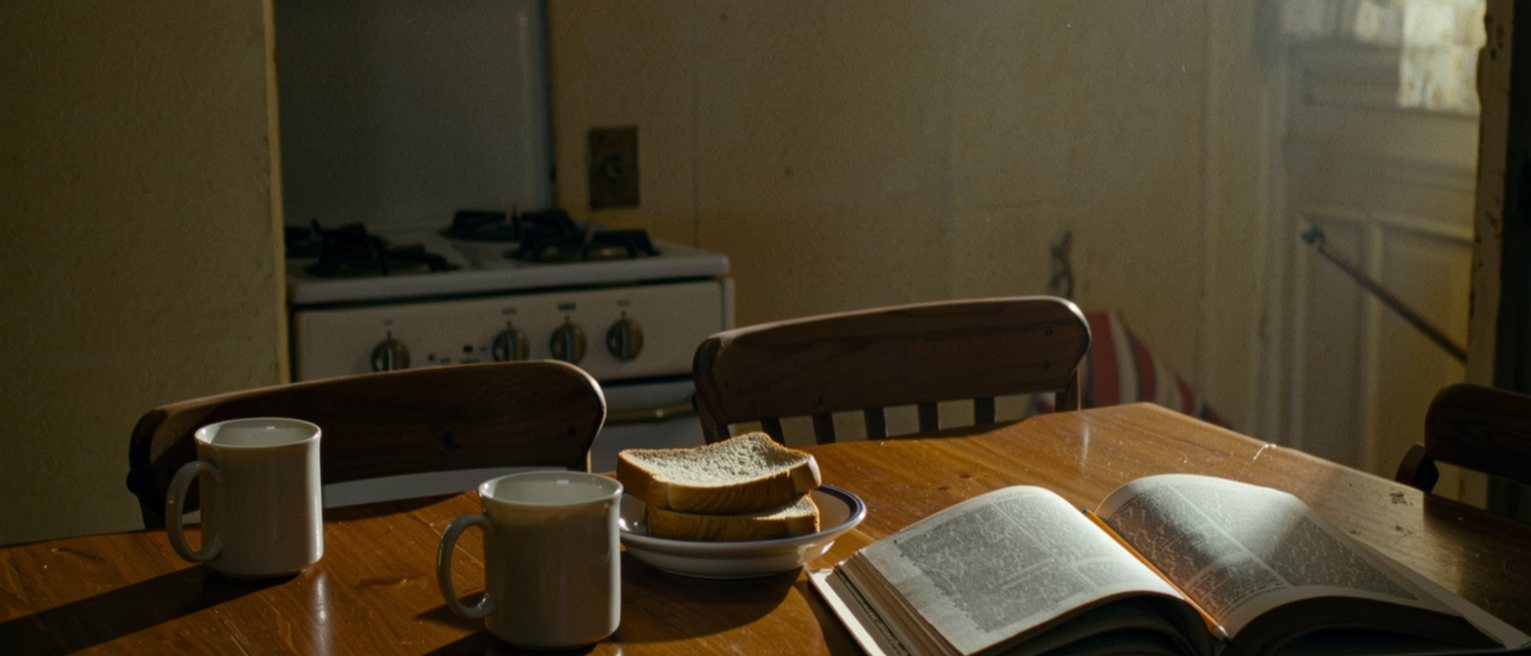

A deficit gets corrected.An allocation gets decided.
Here is what the refusal actually does, stated as plainly as possible.
A deficit is a shortfall against a level that is assumed to be correct. Deficits invite correction, correction requires a site, and in a couple the site is never the couple. It is a person. Specifically it is the person with less, who becomes the designated patient of the relationship, and who then has to conduct their own inner life as a treatment plan while the other person waits for results. This is true whether or not anybody says it out loud, and it is often truest in couples where everybody is being scrupulously kind.
An allocation is a different object. An allocation is a decision about what a finite quantity of time, attention and effort is spent on, taken against everything else competing for the same quantity. Allocations have no patients. They have participants, constraints and trade-offs, and they can be revisited without anybody being wrong.
The two questions sound similar and are not. What is wrong with me, or with us, that this has fallen off — that is the deficit question, and it is unanswerable in a way that keeps people busy for years. What is this worth to us, relative to sleep and the children and the commute and the work that follows us home — that is the allocation question, and it can be answered.
It can even be answered unfavourably. A couple can look at the year honestly and conclude that this is not what the protected hours are going to be spent on, not now, and that is an answer rather than a failure. Deficits cannot be answered that way. A deficit that is not corrected is simply a deficit that persists, and it keeps its moral charge indefinitely.
The allocation frame also makes visible something the deficit frame hides, which is that the hours are contested by named things. Not by entropy, and not by the passage of time, which nobody can argue with. By a job, by an infant, by an ageing parent, by a commute, by a phone, and by whichever of the two people is carrying the invisible administration of the household. Those are specific, and specific things can be negotiated with.
This Library has reached the same shape from another direction more than once. An earlier essay argued that the desire gap between two people is a difference of context rather than a difference of quantity, and that the gap therefore describes the conditions each person is in rather than the size of the appetite each person has. Another argued that sexlessness is a situation rather than a verdict, and that the word describes a state of affairs which almost always has ordinary causes standing behind it. Allocation is the version of that argument which two people can hold together, because it names something that is being decided rather than something that is being suffered.
Two shapes desire arrives in, offered as a model and not a law
The distinction most readers will already have met is between desire that arrives before anything has begun and desire that arrives after something has.
The clinical version of this belongs to Rosemary Basson, who proposed in 2002 a model of women’s sexual response that moved the focus away from spontaneous drive, with its markers of sexual thought, fantasy and conscious urge, towards what she called an inherently responsive cycle: intimacy-based motivation first, then arousal in response to stimuli, with desire to continue accessed later rather than present at the start. Nagoski’s work is a large part of why that model is now known outside clinical settings at all, and her formulation of it is compact. Spontaneous desire emerges before pleasure. Responsive desire emerges in response to pleasure.
The long-term case is almost always the responsive one, and the reason is not mysterious. At the beginning of a relationship, novelty and uncertainty supply arousal cues cheaply and constantly. Not knowing how an evening will end is itself a stimulus. A body that has not yet been catalogued by another person is itself a stimulus. None of that survives familiarity, and none of it can be manufactured on request. What is left, once it has gone, tends to show up after something has started rather than in advance of it.
That is a description of a common pattern, and this Library is careful about how far it will let the pattern travel.
The limit is worth stating precisely, because the distinction has hardened in popular use into something it was never entitled to be. A study published in the Journal of Sexual Medicine in 2007, the Nurses’ Sexuality Study by Sand and Fisher, asked women how well the existing models of sexual response matched their own experience, and found roughly equal proportions endorsing the Masters and Johnson model, the Kaplan model, and Basson’s. Three models, three roughly equal constituencies. That is not a picture of one true account with two obsolete predecessors.
So the position this Library held when it wrote about the first book is the position it still holds. Responsive desire is a useful model and not a law about women. Some people mostly experience desire before, some mostly after, the same person can move between the two across a decade or across a month, and the point of knowing which pattern is currently yours is not to find out which category you belong to but to stop treating one pattern as the authentic article and the other as a substitute.
And one thing has to be said here rather than left to be inferred, because it is the point at which a model becomes a lever. That desire can arrive after a beginning does not make the beginning owed by anybody. Responsive does not mean available. Some evenings nothing arrives after the beginning either, and that is information about the evening, not a fault in the person.
Built rather than maintained
Most of the language available for this subject is maintenance language. Keeping the spark alive. Not letting things slide. Getting it back. Working on it.
Maintenance carries two assumptions inside it, and both of them do damage.
The first is that the thing already exists in finished form and is now decaying, so that the entire task is the slowing of decay. The second, which follows from it, is that the standard of success is the original. Whatever the two of them had in the first eighteen months is the benchmark, and every subsequent year is graded as a percentage of it.
The publisher’s description of Come Together disputes exactly that premise: the belief that satisfaction and desire are highest at the beginning and inevitably decline from there. Take the premise away and the maintenance frame collapses, because there is nothing to maintain. There is something to build.
The difference is not rhetorical. Under maintenance, the first eighteen months are the true version and everything after is a managed loss. Under building, the first eighteen months were simply the version two people made under a particular set of conditions: not living together, or newly living together, with no shared logistics, no accumulated grievances, no shared accounts, and with each of them still substantially unknown to the other. Those conditions produced what they produced. They are not available now, and their absence is not a deterioration in either person.
Nagoski has made a related observation in interviews that is worth repeating because it is so easily missed. Couples in the early period were putting effort in too. They prepared. They groomed. They arranged to see each other, which took planning. The effort was substantial and nobody experienced it as effort, because it was wrapped in anticipation and did not yet have to compete with anything. The story that it was effortless is a story told backwards.
What a couple builds later is not a reconstruction of that. It is a different thing, made of what these two people actually like now, at the ages they actually are, in the bodies they actually have. It can be better than the original. It can also be less frequent and better, which the maintenance frame has no way of even describing.
Why scheduling sounds unromantic
The advice that follows from all of this is the advice that makes people wince. Put it in the calendar.
The objection is immediate and worth taking seriously rather than dismissing. If it is scheduled, it is not wanted. If it has to be arranged, the arranging is proof that something has failed. Real desire does not require an appointment, and an appointment is an admission.
That objection is downstream of the same script that produced the deficit frame. It holds that spontaneity is the certificate of authenticity, and that anything deliberate is therefore counterfeit. This Library has argued against that certificate repeatedly in other contexts, and it is worth noticing how narrow it is: nobody thinks a planned holiday is a fake holiday, or that a dinner cooked to a recipe is a fake dinner.
But the deeper point is that the scheduling advice is not really about calendars. It is an argument about status.
Look at what a household actually protects. The dentist is protected. The train is protected. The child’s lesson on Saturday morning is protected. The quarterly review is protected. Every one of those things is protected by a mechanism — a slot, a reminder, a booking, a person who will notice if it does not happen — and none of them is protected by being important in the abstract. Things that are important and unmechanised are precisely the category that gets cut, every time, by whichever week is worst.
So the instruction to schedule it is a question in disguise, and the question is this: does this belong to the protected category or not? That is a question about what a couple treats as non-negotiable, and it is answerable. It is also answerable in the negative, which is what makes it an honest question rather than a technique.
One boundary has to be drawn hard around all of this, and it should be drawn here rather than at the end. A protected hour is an appointment to be in a room together with nothing else claiming either person. It is not a contract, and it is not a promise about what will happen in the room. If the hour is treated as a commitment that has to be discharged, it stops being protected time and becomes an invoice with a date on it, and the one thing this Library will not let pass is a yes in the diary being treated as a debt owed on the night. The hour has to be genuinely allowed to contain nothing. Otherwise it is not an allocation. It is a deficit with better paperwork.
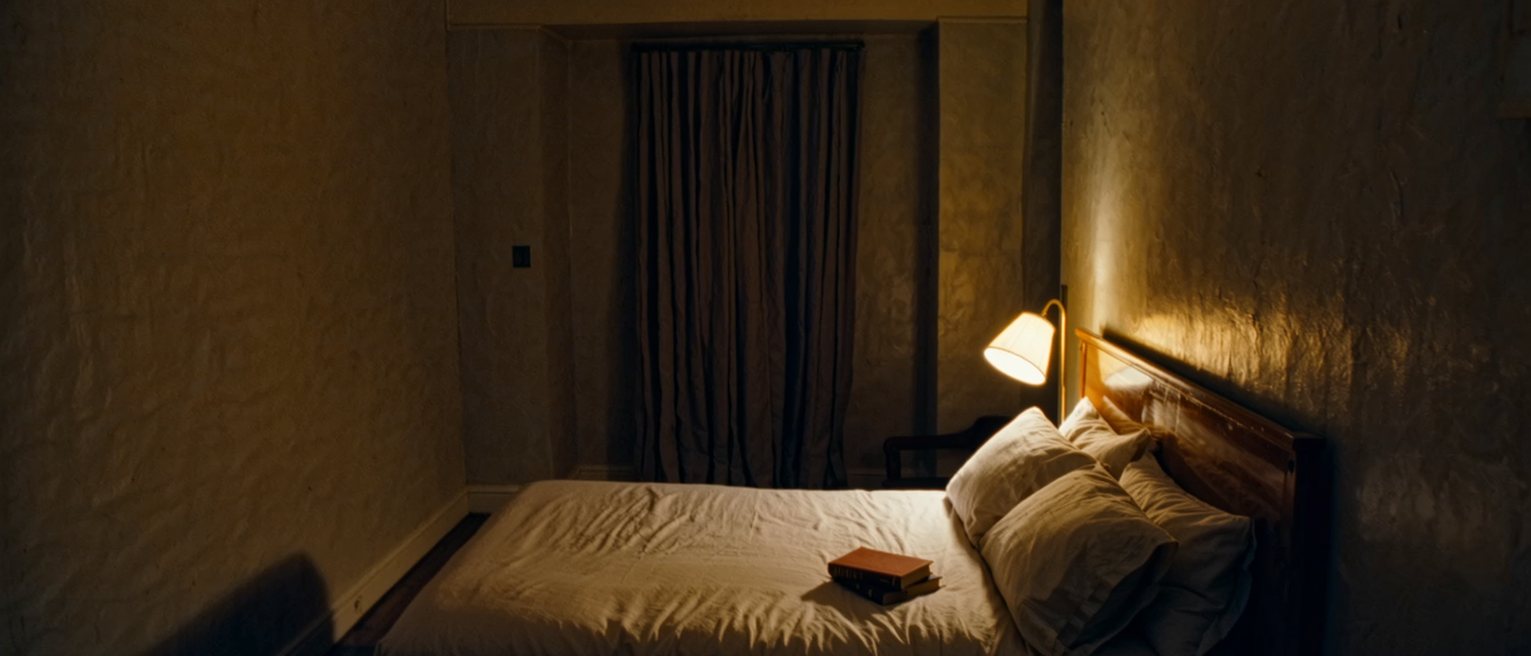

Prioritising is a decision two people make, or it is not prioritising
This is the load-bearing caveat, and it needs its own section because the finding is unusually easy to weaponise.
Prioritising is something two people do. One person cannot prioritise on behalf of a couple. What one person does alone, when they use that vocabulary, is apply pressure in the language of a shared project, and the shared-project language makes the pressure harder to refuse than plain asking would have been. That is a worse outcome than the problem it was meant to solve.
The distinction is audible in the sentences. We have decided this matters enough that we protect time for it is one thing. I have decided this matters and you are behind on it is another, and no amount of research citation converts the second into the first.
There is an asymmetry that makes this harder, and it is worth naming rather than stepping around. The person who proposes prioritising is usually the person who wants more. The proposal therefore arrives already carrying an interest, and the other person hears the interest before they hear the proposal. That does not make the proposal illegitimate. It does mean the proposer has to say what they are actually asking for, and has to be able to hear a no that is about this arrangement rather than about them.
A decision to protect time is also not a decision to consent in advance. Consent is not a scheduling artefact. It is given, or not given, at the time, by each person, about the specific thing in front of them, and it can be withdrawn inside a protected hour exactly as freely as it could be withdrawn at any other moment. Somebody changing their mind at nine in the evening has made an observation about how they feel at nine in the evening. That is data, not breach.
And nothing in any of this makes sex something one person owes another. The allocation frame does not smuggle that in through the back door. It says that two people can decide together what their hours are for. It does not say that either of them acquires a claim on the other by having agreed. A couple that protects an evening and then spends it talking, or asleep, has not failed to execute. They have spent the evening together, which was the allocation.
The strongest case against this book, and against this essay
The objection is not a quibble, and it should be put at its full strength before anything is said back to it.
The book addresses a couple. Its entire unit of analysis is two people who are both present, both willing to read something, both willing to be in the conversation that follows the reading. A very large share of the people who pick it up are not in that position, and the gap between what the book assumes and what they have is not a small one.
Some readers are not in a relationship at all, and find a book whose every mechanism requires a second participant. Some are in a relationship where the other person will not read it, will not discuss it, and has concluded that there is no problem, which is a position that cannot be argued with because it does not concede the premise. Some are in a relationship where the difficulty is not allocation. It is contempt, or an illness nobody is treating, or a person who has quietly stopped showing up, or a household in which one person has been carrying all the administration for a decade and no protected hour will survive contact with that fact.
For those readers, a finding that says couples who prioritise it do well reads as a description of a club with an entry requirement they cannot meet. And it can do something worse than fail to help. It can convert into a private verdict: we are not that kind of couple, and now I know what kind we are.
The prioritising frame has a second edge that sharpens this. If the mechanism is a joint decision, then the absence of the joint decision looks like a joint failure. In practice it is very rarely joint. Usually one person has been carrying the wish alone for a long time, has already tried several vocabularies, and is now being handed a framework whose first requirement is the one thing they have never been able to obtain, which is the other person’s participation.
This essay concedes that, and does not have an answer that dissolves it. A book whose unit is two cannot be operated by one, and no amount of careful reading supplies a second participant. Anybody who tells a reader otherwise is selling something.
What a single reader can take from it is smaller, and it is not nothing. The deficit framing is wrong even when applied to one person alone, and noticing that is worth something in its own right. The standard being used is a script rather than a measurement, and a script can be declined without anybody else’s agreement. And the allocation question can be asked by one person about their own life without a partner anywhere in it: what would this be worth to me, set against everything else my hours are currently doing, and is any of that currently being decided by me at all.
But that is a reduced version, and it should be called one. There is also a harder thing the book is not built to say, which this essay will say instead: not every relationship ought to be repaired, and a book about creating lasting connection is not equipped to tell any particular reader whether theirs is one of the ones that should be. That question is not a reading problem. It is a life, and it belongs to the person living it.
What this does not claim
This is an essay about a book. It is not therapy, not clinical advice and not a diagnosis of anybody, it prescribes no practice, and it does not instruct the reader to do anything.
It is also not a summary of the book. It is a reading of one move in it, and a reader who wants the book’s own argument in the book’s own arrangement should read the book. No passage is quoted here.
The bibliographic facts are taken from the publisher. Every statement about what Come Together contains or argues is attributed to the book, to its publisher’s description, or to the author’s own public remarks about it, and each is recorded with its source and its limit in this house’s ledger. Where this essay goes beyond those sources — in the deficit-to-allocation reading, in the account of scheduling as a statement about what a household protects, and in the reading of maintenance language — the reasoning is this house’s own and is offered as interpretation rather than as anything established.
The responsive and spontaneous distinction is presented as one model among several, because that is what the evidence supports. It is not a law about women, it is not a claim about any national population, and nothing here generalises about women as a group or about Japanese couples as a group.
Nothing in this essay says that anybody owes a partner sex. Desire is not consent, an agreement to protect time is not consent, and consent is given at the time by each person and can be withdrawn at any point.
Emily Nagoski, Ballantine Books, Penguin Random House, Simon and Schuster, and every researcher and journal named above have no connection to this house, have not endorsed it, and have no knowledge of it. Where this Library points to a book, it points only so that a reader can find it.