Books
Strange Weather in Tokyo and the Quiet Intimacy That Refuses a Proper Timeline
Two people who are of no use to each other eat and drink together for years without deciding what it is. The novel is often read as a charming eccentricity. The harder reading is that they are free of the timeline because the timeline discarded them both — and that the thing they build in the space left over is better than what it replaced.
Tsukiko is thirty-eight and drinks alone at a bar near her flat. One evening the man next to her turns out to be her high-school Japanese teacher, thirty-odd years older, whose name she cannot immediately remember and whom she therefore calls Sensei for the rest of the book.
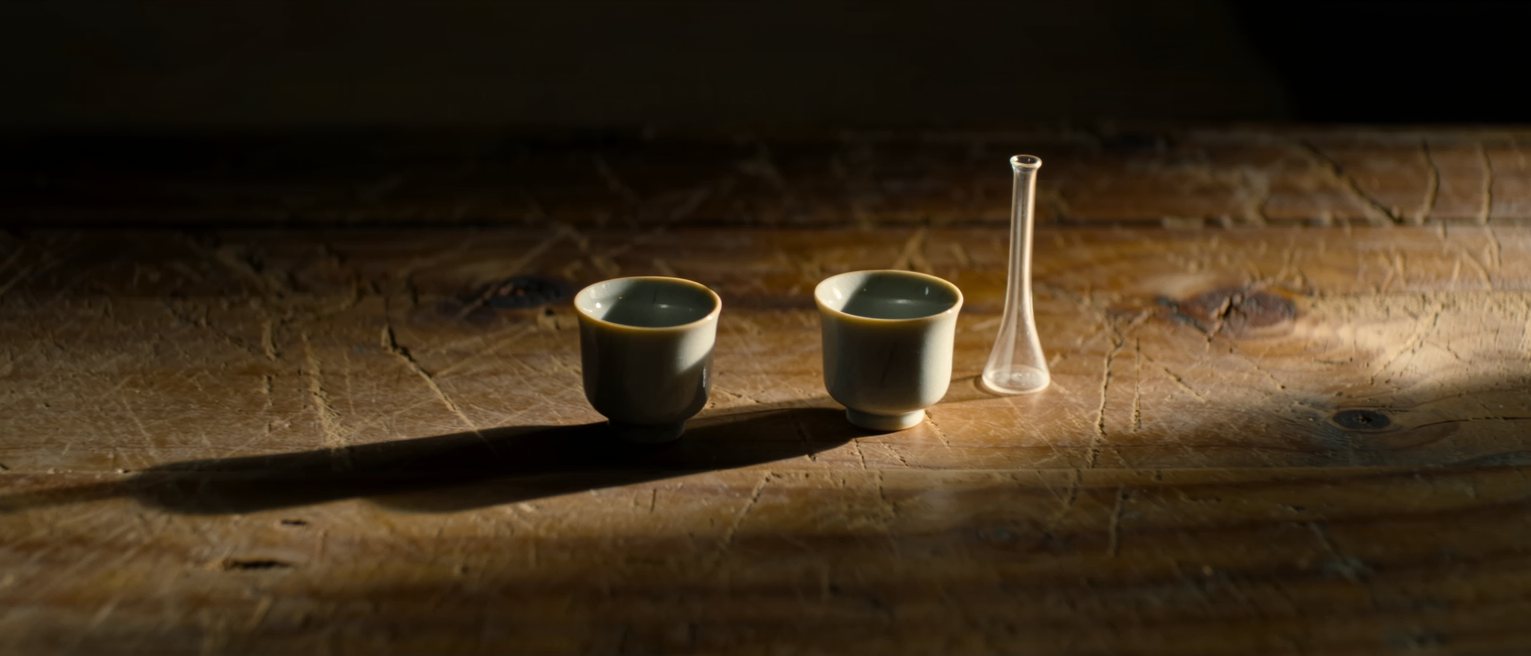
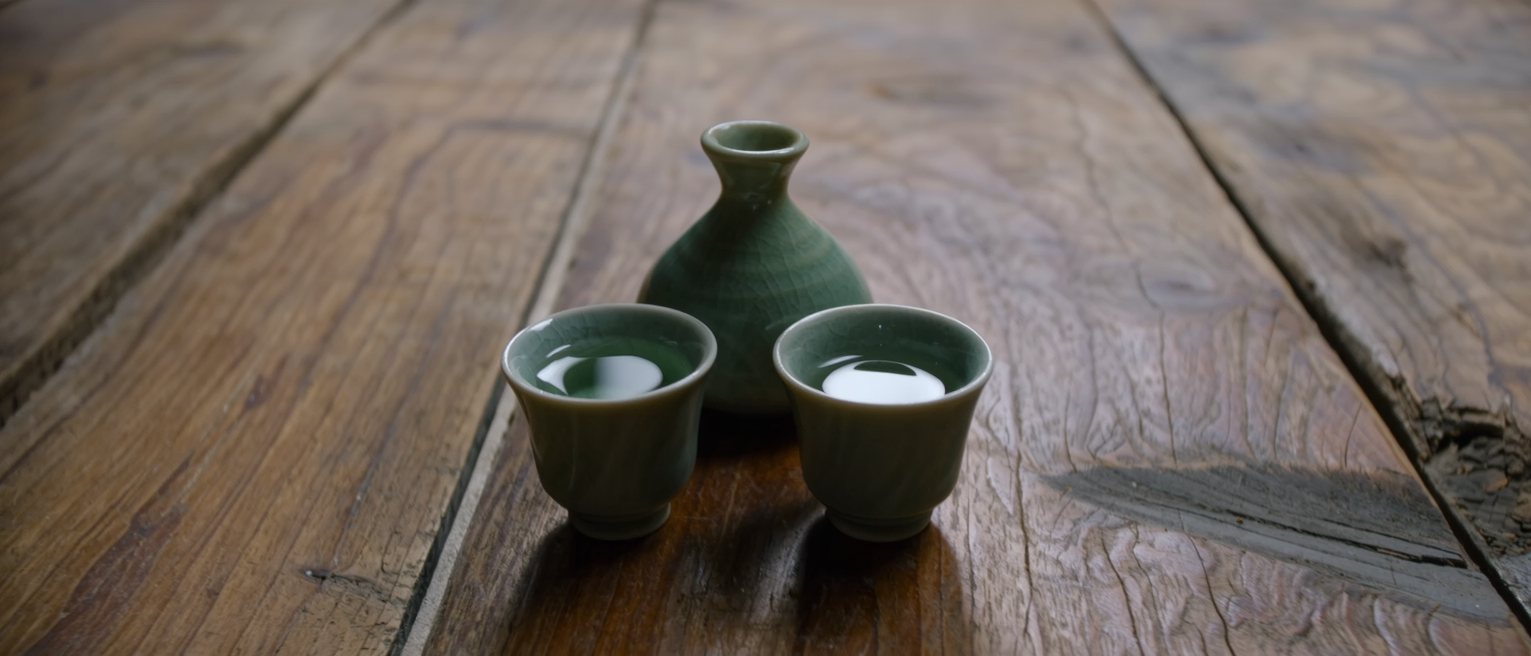
Nothing then happens for a long time, in the sense that novels usually mean. They run into each other. They drink. They eat things in season — cold tofu, new potatoes, mushrooms they pick badly on an outing, a great deal of grilled food and sake. Years pass in this manner and neither of them names what it is.
The month’s theme is gifts, obligation and care, and the private sentence underneath it is I want to be cared for when I am not being useful. This is the clearest answer to that sentence in the whole atlas, and it arrives in the plainest possible form: two people who are of absolutely no use to one another, staying in each other’s company for years.
It is also, we think, the most quietly radical book on this shelf, and almost nobody reads it that way because it is so mild on the surface.
What “no proper timeline” actually means
The atlas title for this piece names an intimacy that refuses a proper timeline, and it is worth being precise about what is being refused, because it is not commitment.
A modern relationship is expected to move through stages, and the stages are so familiar they are invisible: meeting, dating, defining, announcing, cohabiting, formalising. Each stage has an expected duration, and a relationship that stalls at one of them is understood to be failing, by the people in it as much as by anybody watching.
Tsukiko and Sensei do none of this. There is no first date, because there is no moment at which the meetings became deliberate rather than coincidental. There is no defining conversation. There is nothing to announce, and nobody to announce it to. The relationship does not progress; it recurs.
And here is the thing worth taking: the absence of a timeline is not a deficiency in what they have. It is the reason it survives. Every stage in the standard sequence is a checkpoint at which one party can be found wanting, and a relationship with no checkpoints cannot fail an inspection.
That does not make it easy. It makes it quiet, and it makes it almost impossible to describe to anyone, which the novel is honest about — Tsukiko has no way of explaining to herself what she is doing, let alone to a friend.
Food as the whole vocabulary
An enormous proportion of this novel is eating and drinking, and a reader who finds that slight has missed where the emotional content is located.
Neither of these people says much about feeling. What they do instead is feed each other: he knows what is in season, she orders what he likes, they argue mildly about whether something should be eaten cold, they share, they pour. The care is entirely in the provisioning.
This is not an idiosyncrasy of the characters. It is close to the dominant grammar of affection in Japanese life, and it is worth naming as a grammar rather than as a stereotype. Feeding somebody is a statement that can be made without exposure. It carries attention — you noticed what they like, you remembered, you went to the trouble — while requiring nobody to say anything that could be refused.
The strength of that grammar is that it works for people who cannot use the verbal one. Its weakness is precisely the same: it is deniable in both directions. A person can be fed devotedly for years and still not know whether she is loved, and the person doing the feeding can avoid ever finding out what would happen if he said so.
The novel sits exactly on that tension and does not resolve it prematurely, which is what makes it a better book than its gentleness suggests.
Neither of them is useful
Now the month’s sentence, applied directly, because this is the book’s real contribution.
Consider what these two do not provide each other. Not money — both manage. Not status; he is retired and she is a woman in her late thirties with an unremarkable office job. Not children, not a household, not a shared future of any length, not introductions, not care in old age. There is no exchange here whatsoever.
Which means every hour they spend together is unjustifiable by any of the criteria that usually justify a relationship. Nobody is getting anything. And it is precisely that, the novel suggests, which makes the attention real: it cannot be a by-product of a transaction, because there is no transaction available.
Set this against the expectation-gap essay in the Around the World chamber, which described partnership becoming a strategic decision about security and status. Kawakami has written the exact negative of that. Two people with nothing to assess in each other, who therefore assess nothing, and who are consequently able to be in a room without either of them auditioning.
That is what being cared for while not being useful actually looks like in practice, and it turns out to look like almost nothing: two people eating, one of them pouring for the other, neither going anywhere.
The age difference, named rather than glossed
Thirty-odd years, and he was her teacher. It would be dishonest to let that pass as charm.
The things that matter about it, stated plainly: she is thirty-eight, a fully adult woman, and the classroom is two decades behind them both. She is the one who pursues, hesitantly and over years. He is, if anything, more reticent than she is. There is no dependency running in either direction, no authority in play, and nothing being exchanged that could constitute leverage.
What remains is the ordinary asymmetry of mortality, which the novel treats as its central fact rather than hiding. She is choosing somebody who will predecease her by a large margin, and she knows it, and the book does not pretend that this is costless or make the ending a surprise.
A reader is entitled to find the configuration uncomfortable. What the novel earns is the claim that discomfort and wrongness are different, and that a relationship can be genuinely unequal in time remaining while being entirely equal in power — which is, when you look at it, a more accurate description of a great many long marriages than anybody admits.
Free of the script because the script let go
This is the counter-thesis, and it is the reason this essay exists rather than a summary.
It is tempting to read Tsukiko and Sensei as having achieved something — as having seen through the timeline and stepped off it. They have not. The timeline stepped off them.
She is a woman approaching forty in a culture that, as this Library has documented from several directions, has a clear script for a woman’s life and a clear age at which the script stops issuing instructions and starts issuing judgements. He is old. Neither of them is a candidate in any market. Nobody is asking what their plan is, because nobody expects them to have one.
And in the space left by that discarding, they build something with no obligations, no audience and no schedule — something that a thirty-year-old with a mother, a circle of friends and a functioning marriage market could not have built, because she would have been asked to define it within a month.
That is uncomfortable and we think it is true, and it cuts both ways. The freedom is real and it was not chosen. Being released from a script you never liked is still being released rather than escaping, and it arrives, for most people, only after a loss.
What the novel offers is not a recommendation to wait for that. It is the observation that the thing built afterwards can be better than what it replaced, which is worth knowing in advance by anybody currently experiencing the discarding as only a loss.
Tsukiko is not charming
One more corrective, because the book is frequently described as sweet and its narrator is not.
Tsukiko is prickly, avoidant and often unkind in her own head. She drinks a good deal, alone. She withdraws for long periods without explanation and is aware that she is doing it. She is jealous in ways she finds undignified. She goes on a date with somebody her own age and handles it badly, mostly because she does not want to be there.
This matters because the alternative — a lovable eccentric drifting into a gentle late romance — would make the book useless. What makes it useful is that the person doing this is difficult, knows it, and is not fixed by the relationship. She is the same woman at the end. She has simply had somebody’s company for a number of years.
For a reader who has quietly concluded that she is too withdrawn, too awkward or too set in her habits for anybody to persist with, Tsukiko is a better companion than a more likeable protagonist would be. The book does not argue that she was lovable all along. It shows somebody being accompanied without first being improved.

What is in the briefcase
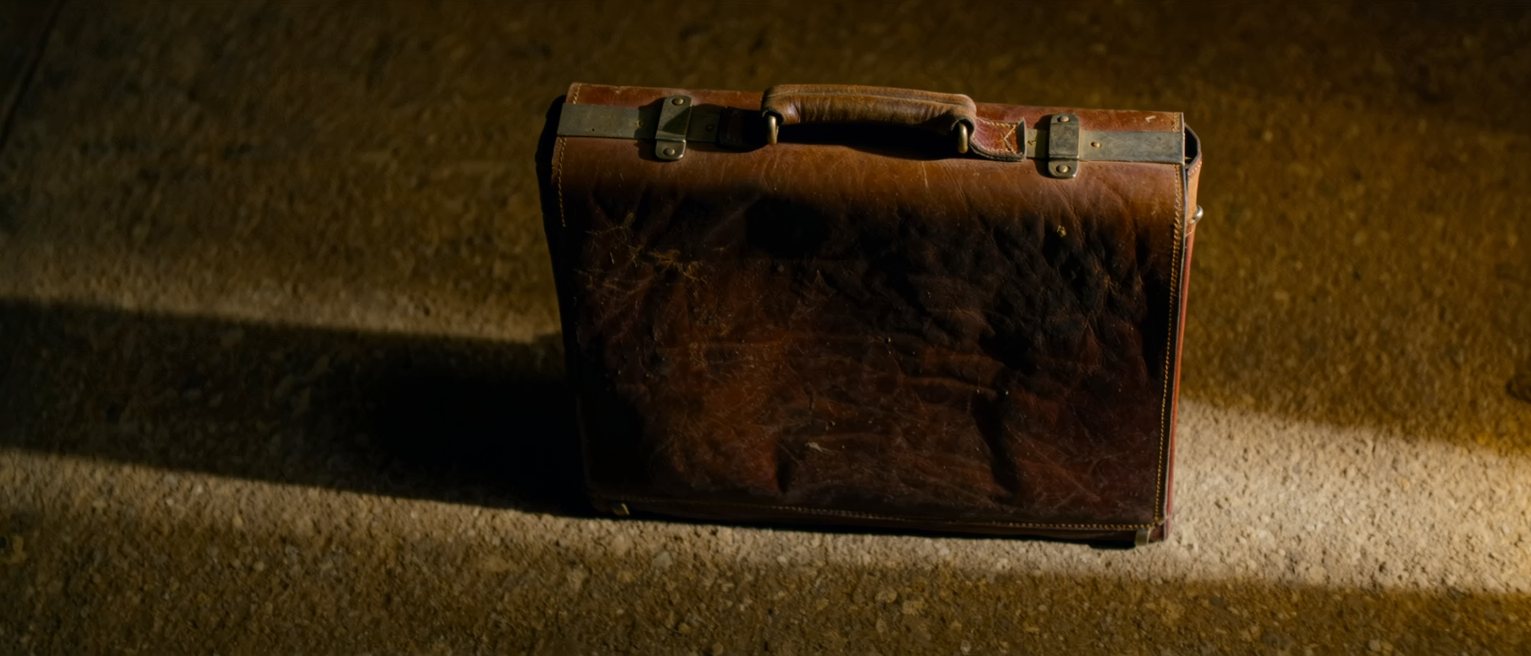
The Japanese title is Sensei’s Briefcase, and the object is in the reader’s eyeline for the whole book: he carries it everywhere, including to the bar, and it is never the point of any scene.
It would be easy to make it a symbol and the novel wisely does not. What it does instead is more useful. The briefcase is the visible sign that he arrived at these evenings from somewhere, with a whole life attached — decades of it, a marriage, a career, losses she knows nothing about — and that he is not a character who exists in order to be available to her.
That is a quiet argument for something this Library keeps returning to: the person across the table has an interior you do not have access to, and the health of a relationship depends more on tolerating that than on closing the gap. Tsukiko never learns most of what is in his life. She learns to be with somebody she has not fully accounted for.
The ending, without describing it, does something with the briefcase that makes the point permanent. It is the difference between possessing somebody and having been in their company.
How to use this book, and how not to
This desk’s standing rule is that a book is vocabulary, not an authority that gets to overrule a reader’s own experience. So, three cautions.
Do not read it as an argument for waiting. Nothing in it suggests that a slow, undefined thing is superior to a defined one, and a reader currently being kept undefined by somebody who benefits from the ambiguity should read the essay on arrangements in the Around the World chamber instead — that situation is not this one, and the difference is whether both people are declining to define it or only one.
Do not read it as a promise. Tsukiko is lucky. Somebody was there, in the right bar, willing to keep turning up for years. A great many people withdraw in the same way and nobody arrives, and the novel is not evidence about how often that goes the other way.
And do not take it as an instruction to be less demanding. The reason this works is not that Tsukiko lowered her standards. It is that the criteria stopped applying, on both sides, which is different and cannot be achieved by deciding to want less.
What it is genuinely good for is a vocabulary for something most people have no words for: an attachment that is real, unhurried, undefined, and not on its way anywhere. If you have one of those, the novel is the only book we know that treats it as a legitimate shape for a life rather than as a stage on the way to something else.
Limits
Publication details — Hiromi Kawakami’s novel, 2001, and the English translation by Allison Markin Powell published under two different titles in different markets — should be verified at the publication gate along with current edition availability, per the atlas entry’s note on external works.
The plot description is deliberately partial and avoids the ending. Readings of the book differ and the interpretation offered here is one serious reading among several; in particular, whether the relationship is best understood as romantic is genuinely argued about, and this essay does not settle it.
The characterisation of feeding as a dominant grammar of affection in Japanese life is a cultural observation rather than a measured finding, and it is not unique to Japan; it is offered as a way of reading the novel rather than as a claim about a population.
The counter-thesis — that these two are free of the timeline because it discarded them — is this essay’s own argument, not the novel’s stated position. Kawakami does not make it explicitly and a reader may reasonably disagree that it is what the book shows.
The reading of the age difference as equal in power while unequal in time remaining is a judgement about fictional characters in a specific configuration. It is not a general claim about age-gap relationships, which vary enormously in exactly the respects this one happens not to.
And the essay makes no claim about how common such relationships are or about outcomes for people in them. It says only that the shape exists and is treatable as legitimate.
The thing with no name
The reason to end on this book rather than a louder one is that a very large number of people are carrying an attachment they cannot describe.
Not a relationship, because nothing was ever defined. Not a friendship, because that word is too small for it. Not an affair, because nothing improper is happening. Just a person whose company has become one of the load-bearing things in a life, with no category available and therefore nothing to tell anybody, and a private suspicion that because it has no name it does not count.
It counts. Kawakami’s entire achievement is demonstrating that a thing with no stage, no milestone and no announcement can carry years of two people’s lives and be the best part of both.
And the mechanism underneath it is worth stating plainly, because it is the opposite of what the culture teaches. What made that possible was not intensity, not compatibility and not commitment. It was recurrence — two people who kept turning up, at no particular pace, with nothing at stake, for long enough that turning up became the thing itself.
Most people have nowhere to practise that. Adult life supplies rooms in which something is expected of you and rooms in which you are alone, and very few in which somebody is simply present while you are not required to be useful, interesting or on your way somewhere.
That is what an evening with Moonlight is, described at the pace this book would recognise: unhurried time in which nothing has to progress, the terms are yours and set in advance, saying what you want is the activity rather than the risk, and nothing is inferred from your silence. Not a stage on the way to anything. An evening, which is allowed to be the whole of it.