Cinema
Certain Women, and the Attention Nobody Returns
Kelly Reichardt’s 2016 film is usually described as three loosely linked stories about women in Montana. There is a fourth, and it belongs to a ranch hand who drives for hours to sit in a night class, and whose attention is never returned. Nothing happens to her. This reading argues that the nothing is the point — and that a house which sells attention guaranteed to be returned has an obvious interest in saying so, which is stated here rather than buried.
There is a kind of attention that does not go anywhere, and the difficulty of writing about it is that nothing happens. A person notices somebody. The noticing does not stop. It rearranges her week around itself, it changes what she is thinking about while her hands are busy, it becomes for a season the largest thing in her interior life — and at no point does it produce an event that another person could point to. No declaration is made and refused. No approach is rebuffed. There is no scene, no rupture, no night that anybody would remember afterwards. When it ends, there is nothing to tell anyone, because the whole of it happened on one side of the room.
Almost nothing in the culture is built to hold that. Stories need events. Grief needs an occasion. A person who has been left has a date and a conversation and a thing that was said; a person whose attention was simply never returned has none of those, and so has no standing to be sad in a way that others will recognise. The condition is extremely common and almost entirely undocumented, for the same reason: it leaves no trace.
Certain Women, released in 2016 and written, directed and edited by Kelly Reichardt from short stories by Maile Meloy, is the most exact account of that condition this Library knows of in a film. It is usually described as three loosely linked stories about women in Montana, and that description is accurate and it misses the centre. This essay argues there is a fourth story, that it belongs to the ranch hand in the third segment, and that it is the one the whole film is organised around — not because she is given more than the others, but because she is given almost nothing, and the film insists that the almost-nothing is a life.
This house sells private companionship: evenings in which a person is attended to, and in which the attention is guaranteed to be returned because it has been arranged and paid for. That gives us a direct and obvious interest in an essay about attention that is not returned. The interest is declared here, at the top, rather than left for a reader to notice at the bottom, and it is conceded again later in terms that this essay does not try to talk its way out of.
What the film is, and what was made of it
Certain Women premiered at the Sundance Film Festival on 24 January 2016 and was released in the United States by IFC Films on 14 October 2016. Kelly Reichardt, born in 1964, wrote, directed and edited it. Christopher Blauvelt was the cinematographer; it was shot on 16mm film in and around Livingston, Montana, and runs 107 minutes. The Criterion Collection issued it on Blu-ray in September 2017.
It is adapted from three short stories by Maile Meloy, who was born in Helena, Montana in 1972 and whose first collection, Half in Love, won the PEN/Malamud Award in 2003. Two of the stories, Tome and Native Sandstone, come from that collection. The third, Travis, B., comes from her 2009 collection Both Ways Is the Only Way I Want It. Reichardt adapted all three herself, which is worth noting because six of her features have been written or co-written with Jonathan Raymond; this one was not.
The reception was strong and specific. The film won the award for Best Film at the BFI London Film Festival in 2016. Rotten Tomatoes records a 92 per cent positive rating from 198 critics with an average score of 7.8 out of 10; Metacritic records a weighted score of 82 out of 100 from 38 critics. Guy Lodge in Variety called Reichardt the quietest of great American filmmakers. Nigel M. Smith in the Guardian gave it four stars out of five. Leslie Felperin in the Hollywood Reporter praised the final section as an exquisite tale and described Lily Gladstone as a luminous newcomer, while finding the film as a whole somewhat academic and dry — a mixed verdict that turns out to matter later in this essay, because it is the shape of the strongest objection to it.
Reichardt has said in interviews that the film is about moments of connecting and of not connecting, and she has described switching from digital to 16mm after test footage looked hard and flat, and has spoken about letting a space — a parking lot, a ranch yard — carry the story rather than a line of dialogue. Those are her public statements about her own method, and they are reported here as such rather than as a guarantee of what the film achieves.
Three stories, and the one underneath them
The three segments are usually described in a sentence each, and the descriptions are correct as far as they go.
In the first, a lawyer has spent months telling an injured client that he has no case left, because he accepted a settlement and in doing so gave up the right to sue. He does not accept it from her. A second lawyer, a man, tells him the same thing in a short meeting and he accepts it immediately. The lawyer watches this happen. Later the client takes a hostage at his former workplace and she is called in, and afterwards she visits him and agrees to answer his letters.
In the second, a woman and her husband are building a house and they drive out to an elderly man who has a pile of old sandstone on his property. She is the one who wants the stone and she is the one conducting the negotiation. The old man talks past her, to the husband, and she lets that happen because letting it happen is what will get the stone loaded onto the truck. It works. She gets what she came for, and something else goes out of the transaction on the way.
In the third, a ranch hand spends her days alone with horses. One evening she follows the lights into a school and finds a night class on education law, taught by a young lawyer who has taken the job and underestimated what the drive would cost her. The ranch hand has no interest in education law. She goes back every week. Afterwards the two of them sit in a diner and talk, and then the lawyer stops coming, and the ranch hand drives for hours through the night to find her and say that she came. Nothing comes of it. She drives home in the morning and falls asleep at the wheel and wakes in a field.
The three connect loosely — a character from one appears at the edge of another, a road is shared — and the film returns at the end to each of the three women in her ordinary day, which is the structural gesture that tells you the stories have not resolved and were not going to.
The argument of this essay is that beneath those three there is a fourth story which is not a segment at all. It is the account, carried almost entirely by the third segment and confirmed by the other two, of what it is to hold an enormous amount of attention for another person and to have none of it come back, and to have that fact never once become an incident that anybody could name.
The change Reichardt made to the story
One fact about the adaptation does more work than any other, and it needs to be stated plainly because the whole reading depends on it.
In Meloy’s story Travis, B., the ranch hand is a man. In the film, the character is a woman, played by Lily Gladstone. The change has been discussed in coverage of the film and of its Criterion release, which reports that Todd Haynes, who produced, championed it, and that Meloy herself did not know about it until she saw a screening and afterwards said she liked what it did to the story. Those are reported statements about how the adaptation came about rather than something this Library has confirmed with the people involved.
What the change does is not primarily about romance. It is about legibility. A man who drives four hours to a woman’s door to tell her he came has entered a script the culture recognises immediately, and the script has a name, and the name is not a flattering one. The same act by a woman, toward a woman, in a place where neither of them has any language for it, does not enter a script at all. It is not read as a threat. It is not read as a courtship. It is not read as anything, which means it does not become an event, which is precisely what the film needs.
That is the mechanism. By changing one thing about the character, Reichardt converts a story that would have had a shape into a story that has none, and the loss of shape is not a cost of the adaptation but its purpose. What survives the change is the interior fact — the driving, the going back every week, the wanting — stripped of every social form that would have made it recognisable from outside.
It is also worth saying what the change does not settle. The film does not name what the ranch hand feels. It does not put a word to it, and no reader should take this essay as asserting one. The character is credited as the Rancher, and the name Jamie that appears in a good deal of writing about the film comes from the actor’s own descriptions in interviews rather than from anything said on screen. A film that declines to name its subject’s feeling is not thereby being coy; it may be making the point that the feeling was never named inside her either.
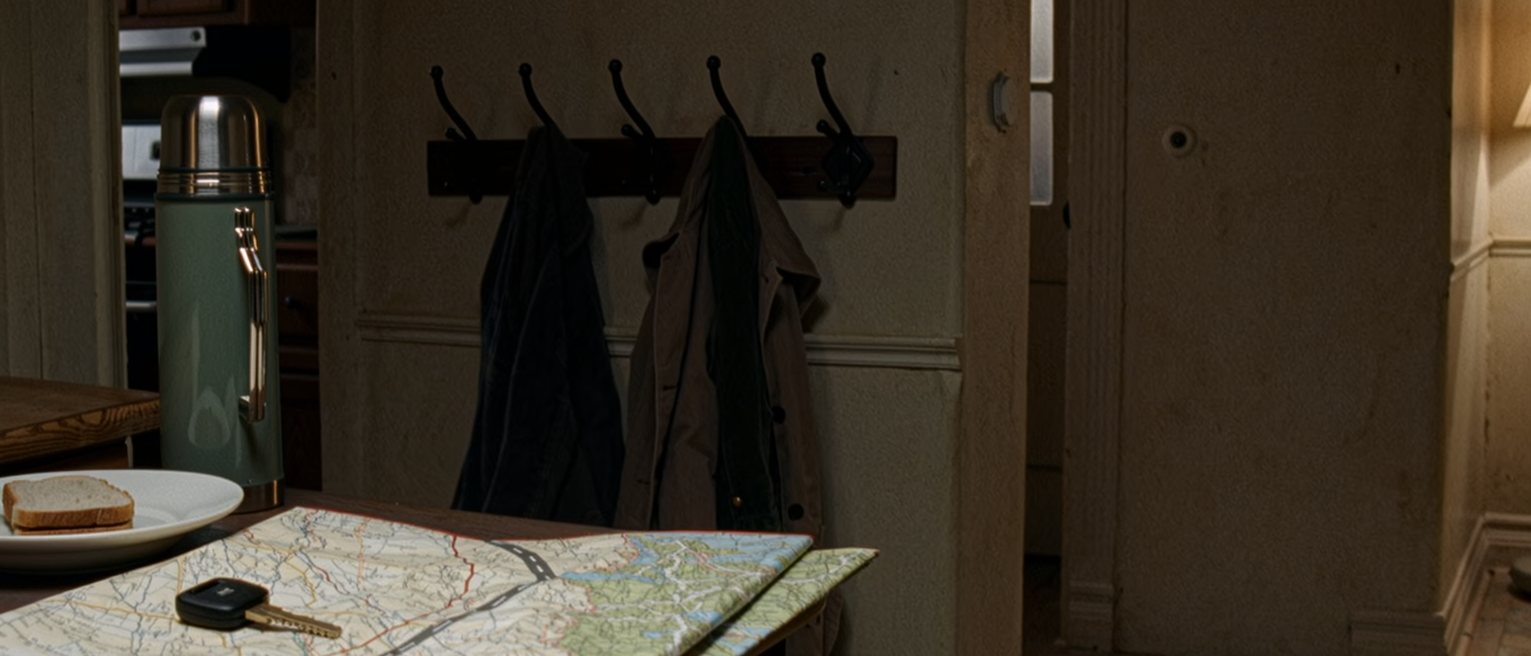
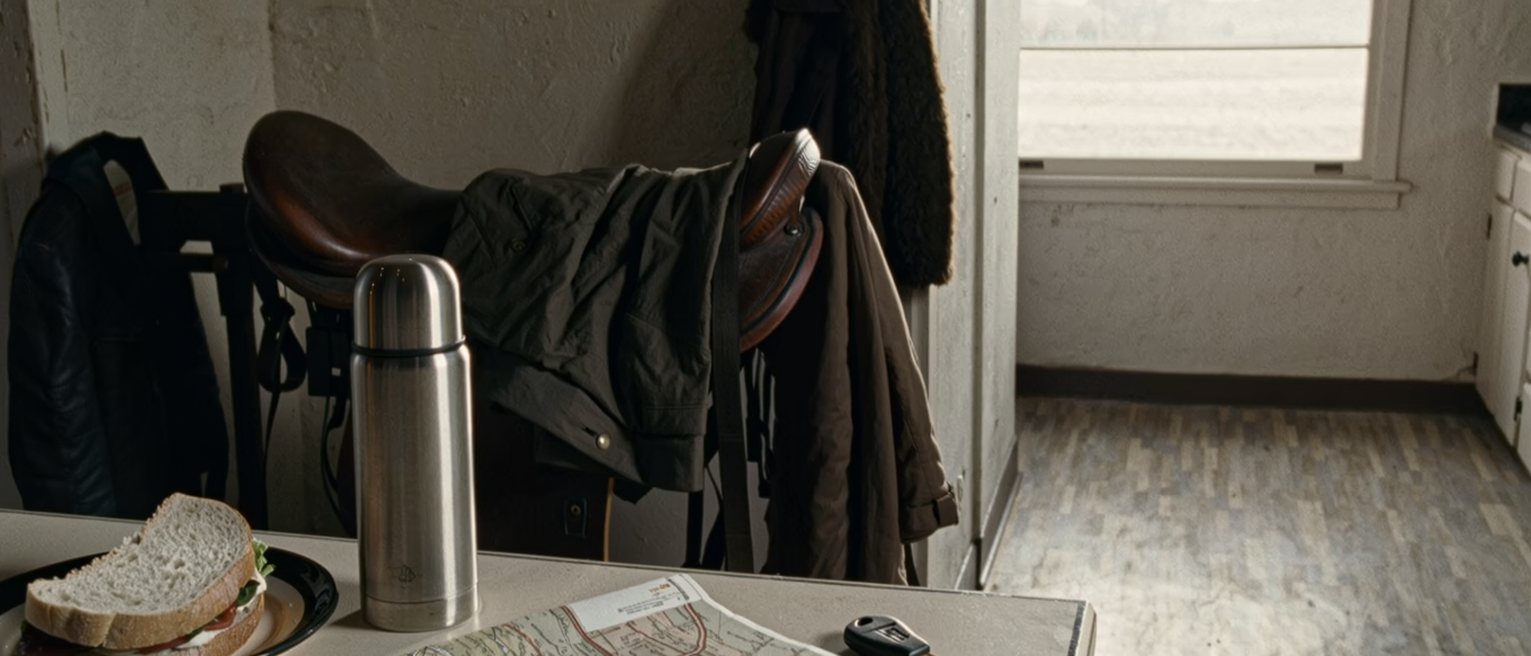
An attention that never becomes an event
Here is the distinction the film is built on, and it is the reason this is worth an essay rather than a paragraph.
There are two ways for wanting somebody to fail. In the first, you make it known and it is declined. That is a rejection. It has a date. It has a sentence that was said. It produces a small, definite injury with edges, and around that injury the culture has assembled an entire apparatus: friends who will hear about it, songs that describe it, a period during which you are allowed to be poor company, and eventually a story you can tell about yourself in which you were brave and it did not work out.
In the second, it never becomes legible to anyone. Not because it was hidden strategically, and not because the person was afraid — though fear is usually in there — but because there was no available form in which it could have been put. The wanting occurs. It is total. It reorganises a life for a season. And it remains, from every vantage point except one, indistinguishable from a woman who liked a class.
The second kind is not a lesser version of the first. It is a different condition, and this Library thinks it is the more common of the two by a very wide margin. Almost everything written about unreciprocated feeling is actually written about rejection, which is the rare case, because rejection is the case with an event in it.
What the film does — and this is its formal achievement, not merely its subject — is refuse to supply the event. It would have been easy to supply one. A confession, a rebuff, a scene in a parking lot: the film has the materials for it and declines. The drive at the end of the third segment is the closest thing to an event the story contains, and the film arranges it so that even that does not become one. She goes. She says that she came. And it does not land anywhere, because the other person has a different set of problems and is already elsewhere in her own life, and the film does not make her a villain for that, which is important. Nobody has done anything wrong. That is the hardest part.
Then the ranch hand drives home and falls asleep and wakes in a field, and there is a morning, and the horses still need feeding. The film’s claim, stated by its structure rather than in its dialogue, is that this is what most of what happens inside people is like: complete, consuming, and without issue.
Why it is hard to grieve something that was never refused
Grief requires an object and permission. The second kind of failure supplies neither, and the result is a specific and unattractive form of suffering that people rarely describe because describing it sounds like self-pity.
There is no object because nothing was lost. You cannot mourn a relationship that did not exist. Whatever the interior experience was — and it may have been the largest thing in a year — it corresponds to no external item that went missing. There is nothing to point at and say, that is the thing I no longer have.
There is no permission because nothing was done to you. Sympathy is allocated to people who have been treated badly. If a person has not been refused, has not been misled, has not been strung along, then any claim on sympathy sounds like a claim that somebody owed her a response, which is exactly the claim she does not want to make and which is not true. So the honest sufferer of this condition finds herself with an enormous private event and no legitimate way to bring it into a conversation, and she generally concludes that it was not real, which is the third injury.
This Library has circled this territory before from other directions, and it would be dishonest not to say so. An earlier essay here argued that the life a person did not choose is unrendered — drawn only where it differs from the life she has, and therefore never fairly comparable. Another argued that presence is a location and attention is a resource, so that being in the room is no evidence at all of where a person actually is. Another argued that silence is a multiplier rather than a message, carrying no content of its own and taking its meaning entirely from the listener. And another argued that reserve cannot be distinguished from absence of desire by any amount of attentiveness, because the observer has one observable and two possible causes.
What is new here is the vantage. Those essays all stand where the observer stands, asking what can be known about somebody else. This one stands inside the unobserved person and asks what her experience is made of when nobody is running any inference about her at all. The earlier arguments describe a problem of reading. This describes a life lived on the other side of that problem, which is not the same thing and is considerably lonelier.
The first two stories are the same problem, made legible
If the third segment were all there were, the film would be a portrait. The other two are what turn it into an argument, and the relation is not the one usually described.
The first two stories are about attention that is withheld in a form you can name. The lawyer says the true thing for months and it does not land; a man says it in ten minutes and it does. The mechanism is visible, it has a literature, it is the kind of thing a person can be angry about on the drive home. The woman negotiating for the sandstone is talked past in favour of her husband, and she can see it happening in real time, and she makes a decision to let it happen because she wants the stone more than she wants the correction. Both women know exactly what is being done to them. Both can put it into a sentence.
That knowledge is worth something. It is not a consolation, but it is a form of standing. A woman who has been disregarded in a way that has a name can locate the fault outside herself, and if she cannot fix it she can at least describe it accurately, which is the minimum condition for not going mad.
The ranch hand has none of that. Nothing is being done to her. No one is dismissing her; no one is even in a position to dismiss her, because no request has arrived that could be dismissed. The two earlier stories establish, in their legible register, what it is to have attention withheld — and then the film takes the naming away, and what is left is the same deprivation with no vocabulary attached and no one to hold responsible.
That is the architecture, and it is why this essay treats the third segment as the destination rather than the finale. The first two teach the reader what the injury feels like when it has a shape. The third asks what remains when the shape is removed. The answer is not less; it is the same thing with nowhere to put it.
The performance, the writing, and the danger of reading backwards
The performance that carries all of this was, in 2016, by a largely unknown actor, and the record of what it received should be stated precisely, because the loose version of it is wrong in several places.
Lily Gladstone won the Los Angeles Film Critics Association award for Best Supporting Actress and the Boston Society of Film Critics award in the same category, and the San Diego Film Critics Society named her Breakthrough Artist. She placed second, not first, in the National Society of Film Critics voting for Best Supporting Actress. She was nominated for the Independent Spirit Award for Best Supporting Female and did not win it; that award went to Molly Shannon for Other People at the 2017 ceremony. She was nominated for the Gotham Award for Breakthrough Actor and did not win that either. Those are the facts, and the difference between a critics’ prize and an industry nomination is not a technicality; it is the difference between a small group of writers naming something and an industry agreeing with them, and in 2016 the industry largely did not.
Her subsequent trajectory is a matter of public record as far as the awards go and no further. She played Mollie Kyle in Killers of the Flower Moon in 2023, won the Golden Globe for Best Actress in a Motion Picture Drama and the Screen Actors Guild award for Outstanding Performance by a Female Actor in a Leading Role, and was nominated for the Academy Award for Best Actress without winning it. She received a Primetime Emmy nomination in 2024 for Under the Bridge. This Library does not claim to know what any of that means about her career, and reports it only because it bears on the objection in the next paragraph.
Here is that objection, and it is serious. A reader in 2026 cannot watch the third segment of Certain Women without the later career in the room. The performance now arrives pre-authorised. It is extremely difficult to know whether the segment is the best thing in the film because of what is on the screen, or because a decade of subsequent acclaim has made it the part of the film that everyone has decided to look at. Criticism has no clean instrument for separating those.
What can be said is that the recognition was not retrospective. The critics’ awards were given in the winter of 2016 and 2017, before there was a later career to read backwards from, and the reviews that singled out the third segment were written at the time. That does not prove the reading is right. It establishes only that the reading is not an artefact of hindsight, which is a narrower claim and the only one available.
And there remains a further question this essay cannot settle, which is whether the segment is carried by the writing or by the face. Reichardt’s script gives the character almost no lines and almost no action. Everything the reading above depends on — the completeness of the attention, the absence of any expectation, the specific quality of a want that has never been articulated even privately — is conveyed by an actor looking at another actor. A sceptic would say that this essay has written a thesis about narrative form on the basis of a performance, and that the form would collapse into inertness with anybody else in the part. That is not obviously false.
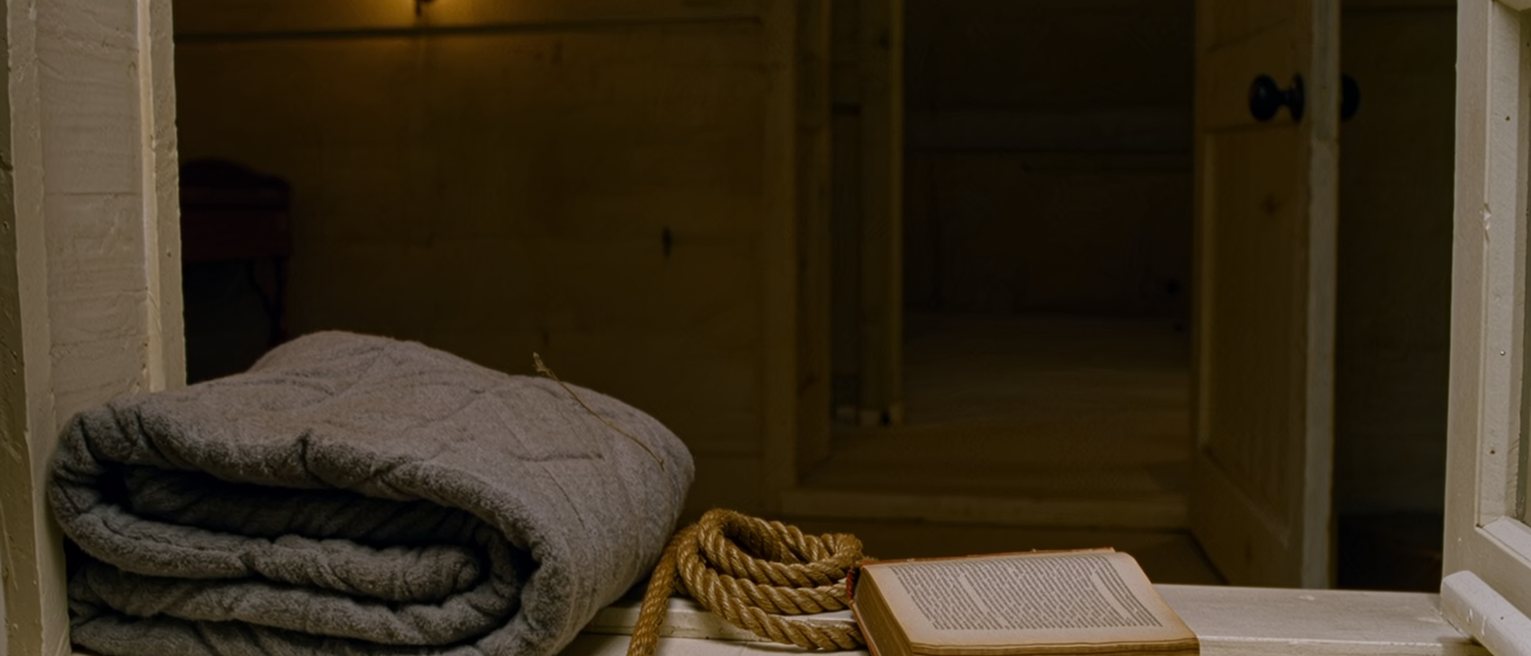
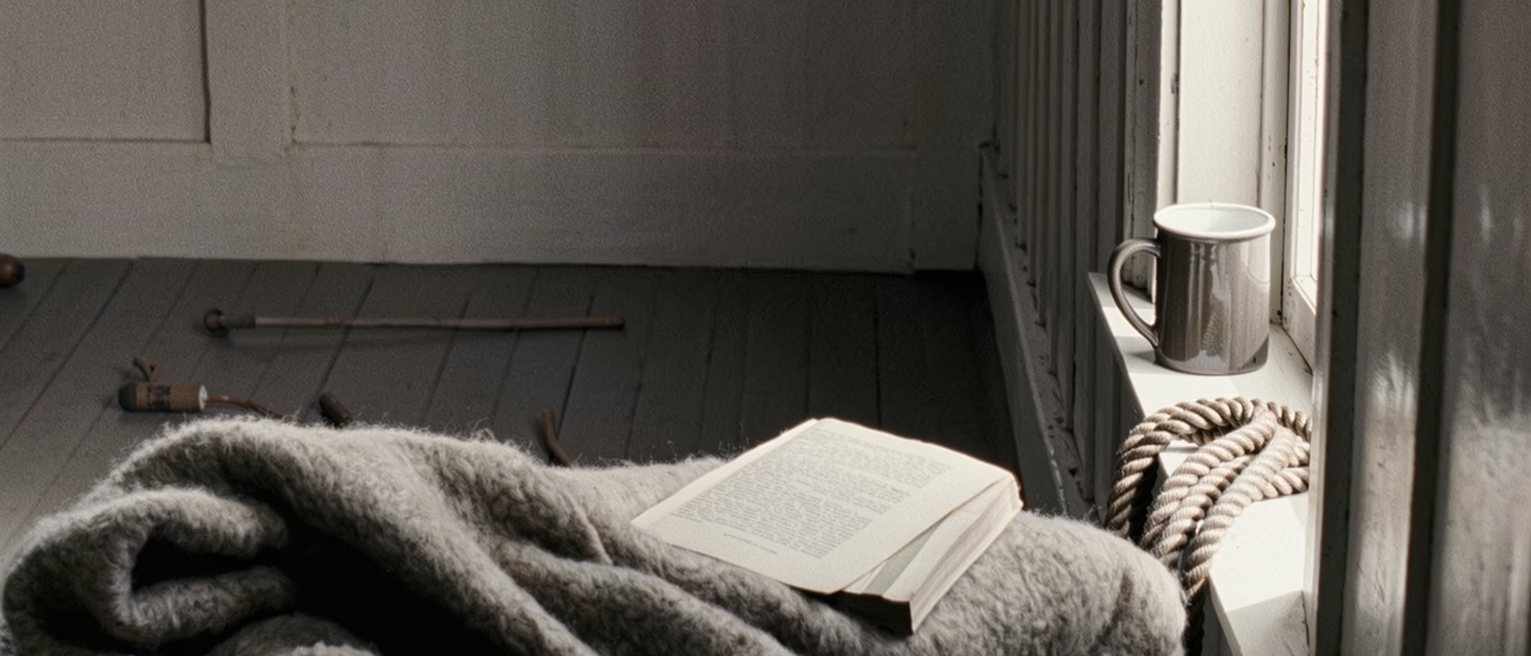
What this Library takes from it
This publication writes constantly about wanting and about being seen. Most of that writing assumes an audience for the wanting: somebody who might respond well or badly, a conversation that might go one way or another, a request that might be granted. The assumption is so deep it is rarely examined. Almost every piece of advice ever given about desire is advice about how to transmit it.
Reichardt’s case is the limit of that assumption, and the limit is where the interesting information usually is. Here is a want that never acquires an audience at all. Not refused — never received. And the reason is not shyness and not cowardice; it is that the want was never legible, in that place, between those two people, in any form that could have been handed over.
What follows from taking that case seriously is a correction to the usual account, and it runs in two directions.
The first is that the value of an interior experience does not depend on its being received. That sounds like a consolation and is meant as a description. The season in which the ranch hand rearranged her week around a night class was a real season of her life, containing real attention and real anticipation, and it does not become retroactively empty because it produced nothing. A great deal of ordinary suffering comes from a person deciding that because nothing came of it, nothing happened. Something happened. It happened in one place only, and that is a fact about its distribution rather than its reality.
The second runs the other way and is less comfortable. If an unreceived want is still real, then a person can spend years of attention on someone who never knew, and the fact that it was real is precisely what makes the expenditure costly. This is not a film that recommends its protagonist’s position. Nothing in the reading above says that the driving was a good use of a life. It says only that it was a use of a life, and that the culture’s habit of treating what produced no event as though it did not occur is a falsification that leaves people alone with something they cannot even name to themselves.
This house sells the opposite of what the film describes
Now the part that has to be said before the argument above is allowed to sound disinterested.
This house arranges paid private companionship. What a client purchases is, among other things, a period of attention that is guaranteed to be returned. That guarantee is the product. It is not a happy accident of the arrangement; it is what the arrangement is for, and it is the reason the arrangement can be priced.
So an essay arguing that unreturned attention is a widespread and underdescribed condition is an essay whose conclusion runs directly into our till. If attention that goes nowhere is common, and if it is hard to grieve, and if the culture has no vocabulary for it, then a service that supplies attention which cannot go nowhere is placed in a very flattering light. We did not need to say any of that for a reader to complete the thought, which is exactly why we are saying it.
Three constraints follow, and they are constraints on what may be claimed rather than a disclaimer.
We do not claim that a paid evening addresses the condition this essay describes. It does not. The condition is that a person’s attention was not legible to somebody she chose; an arrangement in which the return of attention is contractually assured is not the same good, and calling it the same good would be a lie told for money. What is sold here is bounded, scheduled, and reciprocal by construction. The film is about a want that had nowhere to go in a life that was not bounded or scheduled at all.
We do not claim any outcome. Nothing here says that companionship relieves loneliness, treats anything, repairs anything, or changes how a person feels about somebody she has been thinking about for a year. Unfalsifiable promises are the standard instrument by which people in a tender condition are separated from their money, and this house has been consistent in refusing them.
And we do not claim that this reading of the film is disinterested. It is not. It is a reading produced by a party with a commercial stake in its conclusion, and the next section gives the objection to it more room than the answer.
The strongest case against this essay
Four objections, in ascending order of how much damage they do.
First: a film about nothing happening is unfalsifiable, and so is an essay about it. If the absence of an event is the point, then any absence can be declared a point, and there is no observation that could count against the reading. A viewer who found the third segment slow and inert has not refuted this essay; they have supplied it with more evidence. That is the structure of an unfalsifiable claim and it is a genuine weakness in interpretive criticism generally, not only here. The most that can be said in reply is that the film does make choices which could have gone otherwise — it could have staged a confession, it could have given the character a line that named her feeling, it could have let the drive produce a scene — and it consistently declines in one direction rather than at random. Consistency is not proof. It is the only thing on offer.
Second: the first two stories are thinner than the third, and this essay’s architecture depends on that thinness being deliberate. If Reichardt simply adapted three stories and one of them turned out better, then the elegant structure described above — legible injury, legible injury, then the naming taken away — is something this essay built rather than something the film did. Felperin’s review, which praised the final section and found the film as a whole academic and dry, is close to that objection. It is a strong objection and there is no decisive answer. The reading remains a reading.
Third: the third segment may be the strongest because of the performance rather than the writing, in which case the essay has made a claim about form on the strength of a face. This was set out at length above and is not withdrawn. If the part had been played differently, there might be nothing there to read.
Fourth, and this one is conceded rather than answered: this Library sells attention that is guaranteed to be returned, and has therefore written an essay establishing that attention which is not returned is a serious and widespread harm. That is not a coincidence and it is not a subtle bias. It is the shape of the whole piece. A house in this trade has every reason to make the unarranged version of intimacy look precarious, and this essay has done exactly that, at length, with sources. The scrupulousness — the separated wins and nominations, the refusals of outcome claims, the declared interest — is not a defence against the objection. It is a more sophisticated version of the thing being objected to. We do not have a reply. We have only the practice of saying it out loud in the body of the essay, where it can do us some damage, rather than in a line at the bottom where it cannot.
What this does not claim
This essay is a reading of a film. It is not clinical guidance, it describes no treatment, it promises no outcome, and it diagnoses nobody. Nothing here should be read as a statement about any reader’s circumstances or as a claim that anything sold by this house affects them.
Certain Women is a work of fiction. Nothing here presents its characters as real people or their interior lives as established fact. Where this essay describes what a character feels, it is describing an interpretation of a performance and a structure, and the film itself declines to name the feeling in question. The character played by Lily Gladstone is credited as the Rancher; the name that appears widely in writing about the film comes from the actor’s interviews rather than from the film.
Production facts — the premiere date, the release date, the credits, the format, the running time, the source stories and their collections — are taken from published reference and distributor records and are attributed in the text. The account of how the adaptation came to change the rancher’s sex, including the producer’s advocacy and the author’s reaction on seeing the film, is drawn from published coverage and disc commentary reported at second hand, not from any statement obtained by this Library.
The awards record is stated with wins, nominations and placings kept separate. Lily Gladstone won critics’ prizes from the Los Angeles Film Critics Association, the Boston Society of Film Critics and the San Diego Film Critics Society for this film; she was nominated for, and did not win, the Independent Spirit Award and the Gotham Award; she placed second in National Society of Film Critics voting. Her later awards are reported only as far as the public record of wins and nominations goes, and no inference about her career is drawn beyond that.
The central claim of this essay — that there is a fourth story in the film, and that it is the account of an attention that never becomes an event — is this Library’s interpretation and is offered as such. It is not a claim about the filmmaker’s intention, which she has not stated in these terms, and a reader who finds the segment inert rather than eloquent has taken a position this essay cannot disprove.
No dialogue from the film and no passage from Maile Meloy’s stories is quoted anywhere here. Neither the director, the writer, the performers, the distributor, the Criterion Collection, nor any critic or publication named has any connection to this house, knows of it, or endorses it. This house’s commercial interest in the essay’s conclusion is stated in the body rather than only here, because a declaration made after the argument has done its work is not a declaration.