Cinema
Happy Hour, and What Four Women Say to Each Other
Five hours and seventeen minutes is treated as the film’s eccentricity. It is its method. Give a scene the time a real conversation takes and you can finally see the sentences that are true and tell you nothing — and you can see what fifteen years of them do to a friendship that never once failed.
There is a kind of sentence that carries a person through an entire week without a single lie being told. Asked how things are at home, you say much the same. Asked whether something is the matter, you say not particularly. Asked what you think, you say you see what they mean. Each is true in the narrow sense. Each also leaves the person who asked holding exactly what they were holding before, which is nothing.
This is not deception, and it is not politeness in the decorative sense. It is a working social technology and it is extremely good at its job. It allows two people to occupy a room, a marriage or a fifteen-year friendship without either of them having to find out what the other one actually thinks. Nobody has been misled. Nobody has been reached, either.
Cinema is badly equipped to show this, for structural reasons rather than any failure of nerve. A film has ninety or a hundred and twenty minutes and a story to move, so conversations get compressed to the lines that advance something. Compression is precisely the wrong instrument here, because the evasive sentence only becomes visible in the seconds after it lands: in the pause, in the way the subject gets changed, in the fact that the conversation goes nowhere and neither person remarks on it.
Happy Hour, directed by Hamaguchi Ryusuke and first shown in 2015, runs three hundred and seventeen minutes and follows four women in their late thirties in Kobe. The length is routinely treated as its headline fact and occasionally as its eccentricity. The argument here is that the length is the method; that two long set pieces are where the method does its clearest work; and that the film’s real subject is a distinction the culture keeps blurred — the difference between keeping somebody company and telling them something.
What the film is, and what is on the record
Happy Hour was produced by the Kobe Workshop Cinema Project and directed by Hamaguchi Ryusuke, from a screenplay credited to Hamaguchi with Nohara Tadashi and Takahashi Tomoyuki. Kitagawa Yoshio photographed it; Abe Umitaro wrote the music. It runs three hundred and seventeen minutes — five hours and seventeen minutes — and opened in Japan on the twelfth of December 2015. The four central roles are Akari, played by Tanaka Sachie; Sakurako, played by Kikuchi Hazuki; Fumi, played by Mihara Maiko; and Jun, played by Kawamura Rira.
It premiered at the sixty-eighth Locarno Film Festival in August 2015. The four leads shared the festival’s best actress prize, and the screenplay received a special mention. Those are the two awards from that festival, and it is worth being exact, because films with this reputation attract loose claims. A shared performance prize and a script mention at one festival, followed by prizes at several smaller ones, is the record. It is a considerable record. It is not the one that gets repeated.
The four principals were not professional actors. The film grew out of an improvisation workshop Hamaguchi ran at KIITO, the Design and Creative Center Kobe, from September 2013 into February 2014. Seventeen participants were selected from applicants, and by the account that circulates roughly two thirds of them had no previous acting experience. Shooting then took place in Kobe with those participants in the leading roles. Speaking at Locarno, the director described the workshop’s theme as how to listen to another person.
Because of its length the film is normally exhibited in three parts with intervals, and in some territories it was released in instalments across successive weeks. That is ordinarily a footnote about exhibition practice. Here it is not: a film whose argument is carried by duration has a complicated relationship with any arrangement that breaks the duration up.
Five hours is the method, not the indulgence
The director has given a plain account of why the film is this long, and it is not a manifesto about slowness. Speaking at Locarno in 2015 he took from the American filmmaker John Cassavetes the idea that what is worth filming is a person being unable to say the thing they actually want to say. If that is your subject, dialogue cannot be efficient. It has to circle, stall, restart and go round again, because that is what speech does when it is working hard not to arrive anywhere.
He has also said, in an interview given in Japan shortly before release, that the film was assembled longer still and that cutting it down did not tighten it but changed its weight — that the shorter versions became a different thing rather than a leaner version of the same thing. Whatever one makes of that as an editing judgement, it describes a filmmaker treating duration as a property of the material rather than as a budget to be spent.
The practical consequence is that scenes in Happy Hour last about as long as the equivalent event would last in life. A dinner takes the time a dinner takes. An argument does not resolve on the third exchange, because arguments do not. And once a scene runs past the point where it has delivered its information, something else becomes visible: the portion of the conversation that is not carrying information at all, the portion that is maintenance.
That is the portion this essay is interested in, and it is the first thing a conventional running time deletes. A ninety-minute film about four friends would keep the confession and cut the forty minutes of company surrounding it, on the correct screenwriting principle that the forty minutes are not doing anything. Happy Hour keeps the forty minutes, and shows that company and confession are not two points on one continuum — that a very large quantity of the first can accumulate without ever tipping over into the second.
The workshop, where people are formally invited to be real
Not far into the film the four women attend a workshop led by a performance artist named Ukai. Its theme is the centre of gravity. Participants are asked to find their own axis, to sit back to back and rise using one another’s weight, to place the head against another person’s abdomen and listen to what is going on inside. By the director’s own account the sequence occupies something like half an hour of screen time, and it was shot with thirty or forty people in the room in a manner he has described as documentary, because with that many bodies present a camera cannot know in advance where the reaction will come from.
It is very easy to read this sequence as satire, and some viewers do. The vocabulary is the vocabulary of the wellness seminar, the facilitator has the particular unembarrassed warmth of that trade, and the exercises, described flatly, sound absurd. The film declines that exit. It films them straight, at length, and lets the participants be visibly awkward without turning the awkwardness into the joke. Nobody in the room is made ridiculous, and nobody is redeemed either.
What the sequence is actually doing becomes clear if you notice what is absent from it. Almost none of the exercises involve speech. People are asked to lean, to balance, to listen to a stomach, to find a shared line with a partner. This is a room full of adults assembled for the express purpose of making contact with one another, and the method chosen routes entirely around language. The film does not editorialise about why. It runs the exercises long enough that the absence registers as a fact about the room rather than a quirk of the curriculum.
Then the formal part ends, there is a gathering afterwards, language comes back, and something real does get said: Jun tells the others she is divorcing. The order matters more than the content. The disclosure does not arrive because anyone asked the right question. It arrives after a long formal occasion designed entirely to lower people out of their usual register — and even then it arrives sideways, in the social debris after the event rather than inside the event built for it.
Sentences that are true and evasive
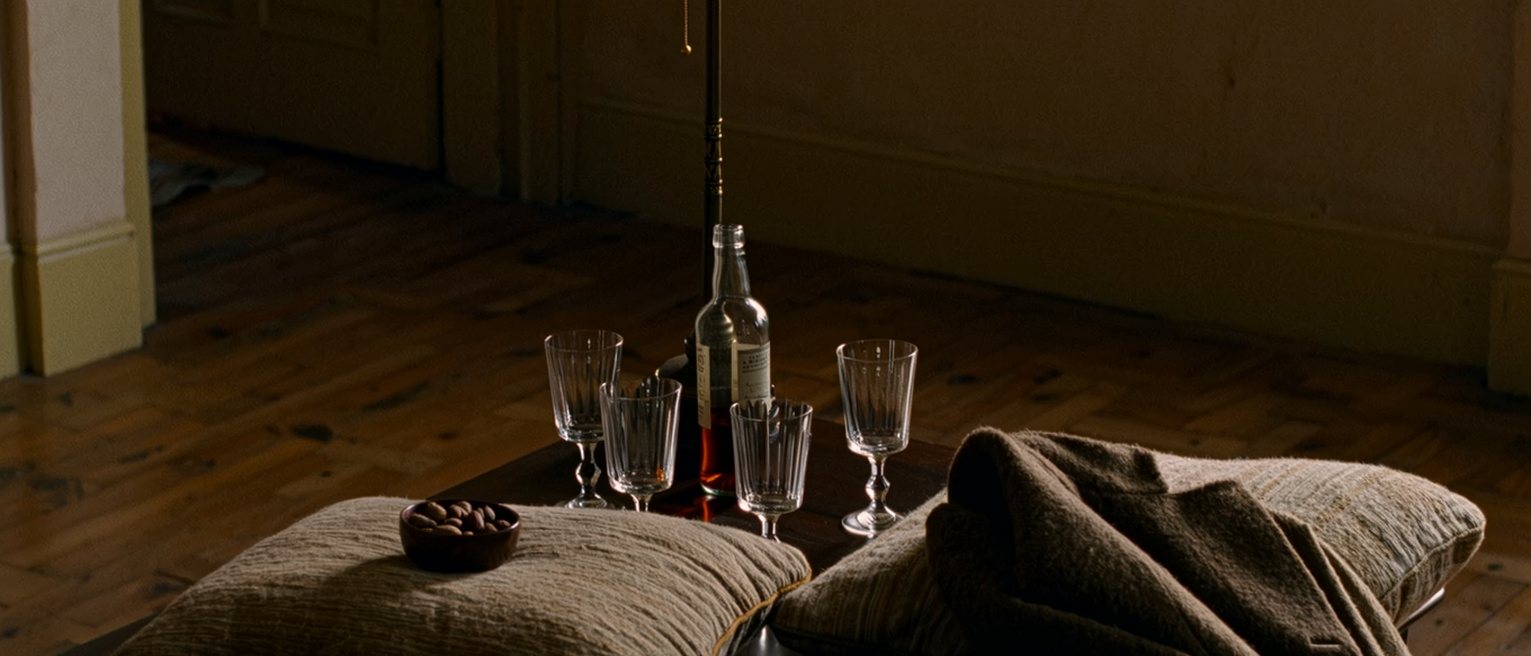
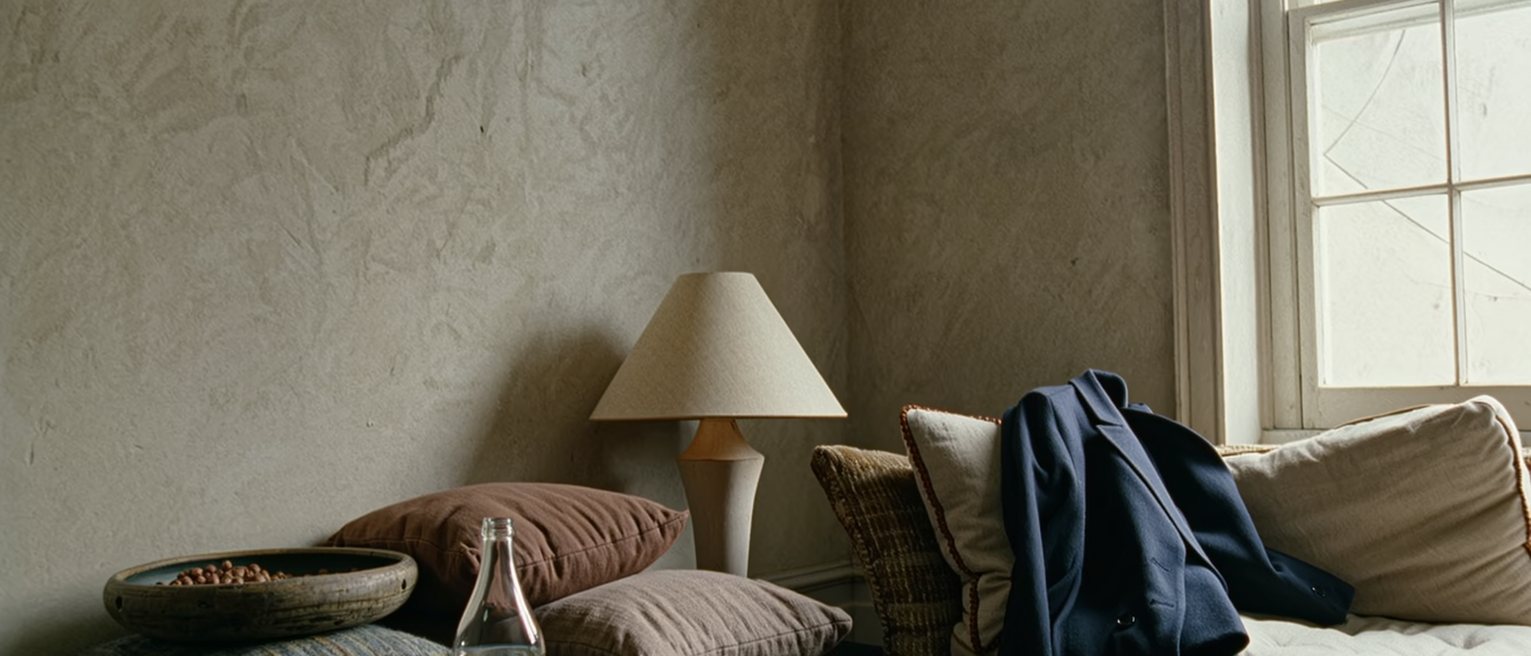
Set that against how these four talk to each other the rest of the time. The conversations are warm, frequent, affectionate, and composed almost entirely of sentences that cannot be contradicted. It is fine. Not especially. I suppose so. Each one is accurate. None of them is an answer.
Hamaguchi’s working method is relevant here, and this Library has written about it before. In our essay on Wheel of Fortune and Fantasy we described how he has his casts read a script aloud repeatedly without inflection before any acting is permitted, so that meaning arrives from the situation rather than being decided in advance by a performer. The effect on dialogue is a distinctive flatness, and flatness is the correct surface for this material, because an evasive sentence delivered with feeling stops being evasive. It becomes a signal, and a signal can be caught. Flattened, it stays what it is in life: unremarkable, unobjectionable and empty.
Two other pieces in this Library approach the same ground from other sides. Our essay on Drive My Car argued that there are two different silences and that only one of them is restraint. Our piece on listening as a physical act argued that a speaker decides whether to keep going by reading the listener’s body, not their words. Happy Hour adds a third thing, which is why it is worth taking on here. It shows what happens when the evasive sentence is not an event but the medium — not one silence inside a relationship but the entire fabric of four of them, sustained for years, by people who genuinely like each other.
That is the uncomfortable observation, and it should be stated without softening. These women are not cold, and they are not failing each other by any standard they would recognise. They meet, they travel together, they turn up. The sentences that pass between them are not lies, and are not even evasions in the sense of concealing a particular fact. They are the ordinary grammar of getting along with people. And at the end of five hours it is apparent that this grammar can run indefinitely without any of the four learning what the others are living through.
The reading, and the second invitation
The film’s other long set piece comes later: a public reading given by a young writer, Kozue, with Ukai — the workshop facilitator — acting as her interviewer. Like the workshop it plays at something close to real time, and like the workshop it is an occasion at which people are formally licensed to say true things out loud in front of others.
The two events rhyme, and the rhyme is the film’s architecture. Both are structured, chaired, attended by an audience. Both supply what ordinary life does not: a frame in which disclosure is expected behaviour rather than an imposition on whoever has to hear it. The workshop offers that frame through the body; the reading offers it through literature, which is the other socially approved vehicle for saying something you could not say in your own voice.
And in both cases the frame does not hold. The workshop’s real disclosure happens afterwards, off the programme. The reading’s question-and-answer session slides out of the register of a literary event into something personal and unmanageable, with people in the room using the occasion for purposes it was not designed to carry. The film’s point is not that these occasions fail. It is that they are the only instruments available, that they are crude, and that people reach for them anyway because there is nothing else on the shelf.
This is where the claim about length has to be cashed in. Neither set piece would survive a normal edit; both are, by the standards of screenwriting, enormously inefficient. But a montage would establish the wrong thing. It would establish that the characters attended an event. What the full duration establishes is the labour — how long a room takes to loosen, how many minutes of nothing precede the one sentence that matters, and how tiring it is to be invited to be honest when you have had no practice at it.
Jun leaves, and the question that had been avoided
Jun’s divorce runs underneath the film and eventually surfaces in a courtroom. The proceedings are given at length, and what they expose is not a discrete wrong a court can adjudicate but a marriage in which very little was ever said plainly — which turns out to be extremely difficult to describe in a room that requires descriptions. Afterwards she goes, without anything being settled, and the film does not follow her into whatever she has gone to.
Care is required here. The film shows what Jun does and a good deal of what she says. It does not narrate her interior, and no reader should take any account of her reasoning, including this one, as established fact about her. What can be said is structural rather than psychological: she is the only one of the four who pushes a question all the way into the open, and she is also the one who ends up outside the group. The film declines to tell you whether those two facts are connected.
The two marriages that come apart in the second half come apart in the same manner. There is infidelity in the film, but infidelity is not the mechanism. In each case the decisive event is a question finally being asked out loud — not a discovery, an articulation. What had been survivable while it stayed unstated becomes unsurvivable the moment it is put into a sentence, and the film is honest enough to leave that genuinely ambiguous. It does not tell you the asking was brave. It does not tell you the silence was better.
That refusal is the most adult thing in it. A film with a thesis about honesty would have rewarded the honest and punished the evasive, and audiences would have gone home instructed. This one shows that saying the true thing is a decision with costs entered on both sides of the ledger, taken by people who cannot see the ledger at the moment they take it.
Company is not disclosure
Here is the distinction the film is built on, and it is not one the surrounding culture keeps.
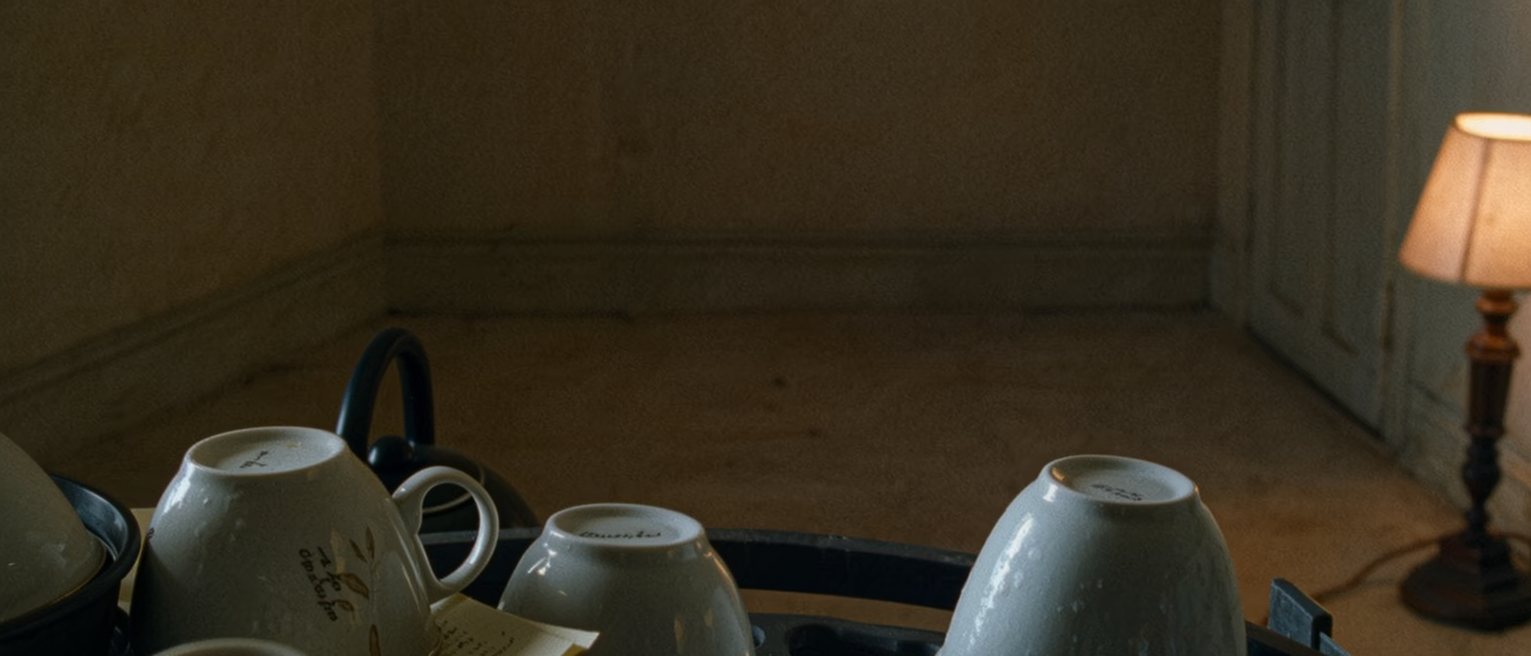
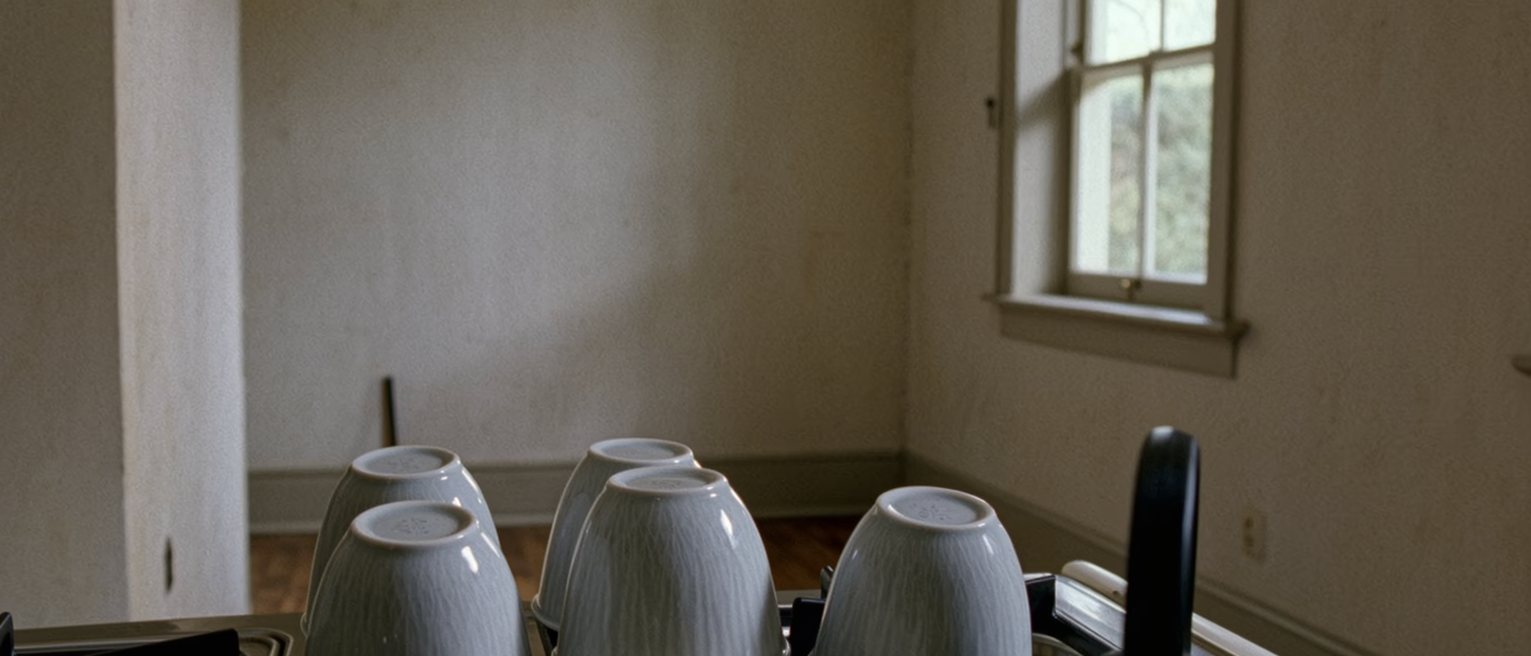
Company is the practice of being alongside somebody: shared time, shared meals, shared journeys, the accumulated evidence that a person will turn up when they said they would. Disclosure is telling somebody something about yourself they could not have inferred from watching you. These are different goods. They are produced by different behaviours, they answer different needs, and — this is the part that stings — one of them can be manufactured in very large quantities without producing any of the other.
The four women in Happy Hour hold an enormous stock of the first and almost none of the second. What the film stages, across five hours, is the moment they find this out. The discovery is not framed as a failure of friendship, which is exactly why it is worth writing about. They have been good friends by every observable measure. The gap is not in what they did for one another. It is in what the available forms of talking to one another permitted them to hand over.
Research here is thin and mostly indirect, and what exists should be reported rather than deployed. A meta-analysis by Nancy Collins and Lynn Carol Miller, published in Psychological Bulletin in 1994, reported three related associations between self-disclosure and liking: that people who disclose intimately tend to be better liked, that people disclose more to those they already like, and that people come to like those to whom they have disclosed. Those are associations across studies of variable design. They establish nothing about any particular friendship and predict nothing about any reader. They are cited for one modest point: that closeness and disclosure are treated as separable variables by the people who study them, which is precisely the separation this film spends five hours dramatising.
Put the two together and the film’s bleakest implication appears, and it is not a moral failing on anyone’s part. If company is easy to supply and disclosure is not, and if a friendship is judged — by its members, not only by outsiders — on the evidence of company, then a friendship can pass every test it sets itself while remaining, in the sense that matters at three in the morning, uninhabited.
High context is a description, not an explanation
The obvious move at this stage is to reach for a familiar term: to say that this is a high-context culture, that meaning here is carried by situation rather than by statement, and that Happy Hour is therefore a film about a Japanese problem. This Library is not going to make that move, and the reason is evidential rather than delicate.
The high-context and low-context distinction comes from the anthropologist Edward T. Hall and has been enormously influential. Its country rankings have been very much less well supported. Peter W. Cardon, reviewing two hundred and twenty-four articles in business and technical communication journals published between 1990 and 2006, reported that contexting is the most cited framework in the field while few of its propositions have been examined empirically, and that those tested most often — particularly the ones concerning directness — have frequently failed to find support. Markus Kittler, David Rygl and Alex Mackinnon, in a systematic review published in 2011, concluded that most research using the country classifications rests on less than adequate evidence, and that the classifications are flawed or at best very limited.
So the term cannot do the work it gets asked to do. It can name a texture. It cannot explain one, and it certainly cannot license a sentence beginning with the words people in this country. What Happy Hour offers is not evidence about a nation. It is a long, extremely specific portrait of four invented people in one city, made with performers who brought their own speech into the roles, and its authority is the authority of a case rather than a survey.
What survives the deflation is smaller and more useful. There exist ways of talking that let two people stay in contact indefinitely while exchanging nothing of substance. They are available to everybody, they are cheap, they are courteous, and in most settings they are the default rather than a choice. That is not a national characteristic. It is a property of a register — and this film is the most patient study of that register anybody has committed to screen.
What this house sells, and what it cannot claim
This publication belongs to a house that sells private companionship: paid, bounded, scheduled hours in which one person’s attention belongs to the person who arranged them. An essay drawing a bright line between company and disclosure is therefore written by an interested party, and the interest runs in one direction, so it is named here rather than left for a reader to work out at the end.
The convenient version of this argument would run as follows: ordinary friendship supplies only company, disclosure is what people are quietly starving for, and here is somewhere you can buy it. That version is not made here and would not be true. What a paid arrangement supplies is a frame — a bounded occasion with a defined end, in which one person’s task is to attend to another. That is the same category of thing as the workshop and the reading in the film: a structure that makes a certain kind of speech permissible. It is not the speech, and it is not a relationship.
So the constraints are stated as refusals. This house does not claim that what it sells is friendship or that it substitutes for one. It does not claim that any reader is short of anything, and it does not know. It does not claim that an arrangement which ends at an agreed hour and is paid for can produce what four women in this film failed to produce across fifteen years. And it does not claim the film’s support for any of that; the film has no relation to this house and was not made with anything like it in mind.
The honest statement of the interest is this. A house that sells bounded occasions benefits commercially from readers believing that bounded occasions are where difficult speech becomes possible. That belief may well be correct; the film itself is an argument for it. It is also extremely convenient for us, and a reader is entitled to discount the argument accordingly.
The strongest case against the film and against this essay
The first objection is about access and it is the strongest available. Five hours and seventeen minutes is a demand most adults cannot meet. A film requiring a free day has selected its audience by leisure before it has said a word, and whatever insight it holds is gated behind a resource distributed very unequally — an awkward position for a work about the ordinary lives of working women, two of whom have almost no unclaimed time at all. The reply that it can be watched in three parts is true and does not fully answer the charge, because part of the claimed effect depends on accumulated, uninterrupted duration.
The second objection is about performance. Non-professional acting reads as authenticity, and the reading is not always earned. Unpolished delivery and truthful delivery look alike from outside, and an audience that knows in advance these were workshop participants rather than actors will tend to score hesitancy as honesty and flatness as restraint. Some of what gets praised as the film’s exceptional naturalism may be nothing more than the absence of technique. The Locarno prize is a real fact and cannot settle this, because a jury is subject to the same framing as everyone else in the auditorium.
The third objection is aimed at this essay rather than at the film. An argument that praises slowness is very nearly impossible to falsify. If a long scene grips you, the length is vindicated; if it bores you, the boredom is said to be the point, and the critic is insulated against every possible outcome. That is not analysis, it is a stance that cannot lose, and the honest concession is that this essay has supplied no test by which its claim about duration could fail. A reader who finds the workshop sequence merely long is not making a mistake that anything written here can correct.
There are narrower complaints, and they come from admirers rather than detractors. Writing in Reverse Shot in 2016, Nick Pinkerton praised the film’s humane attentiveness while finding its ending insufficient and judging that it stalls when it shifts towards the tragic. Michael Sicinski, in Cinema Scope, admired the workshop sequence and the film’s hybrid of theatrical enquiry and social observation while calling the last stretch too incident-driven and a little pat. Both point at the same seam: a film whose method is patience turns conventional in its final movement, where events begin arriving on schedule. If the length is the method, the section where plot takes over is the section where the method is quietly abandoned — a concession this essay owes rather than an objection it can absorb.
What this does not claim
This is a reading of a film. It is not a claim about Japanese people, about Japanese marriage, or about how anybody in this country talks to their friends. The section on high context says so explicitly and gives the published reasons for distrusting that category as an explanation of anything.
The cast, credits, runtime, production and release details above are taken from the film’s own materials and from distributor, festival and venue records, read in September 2026. The account of the workshop and reading sequences draws on published critical descriptions and on the record of what the director has said about shooting them; this Library has not verified those descriptions against a frame-by-frame viewing, and no line of the film’s dialogue is quoted anywhere here.
Statements about what the director intended come from interviews he gave in 2015 and are reported as his published remarks, not as facts about his mind. Statements about what the characters feel are avoided. Where this essay describes Akari, Sakurako, Fumi or Jun, it describes what the film shows; their interior lives are not established and are not presented as though they were, and the same restraint applies to the marriages depicted.
The award record is stated narrowly on purpose. The four leads shared one prize and the screenplay received a special mention, both at Locarno in 2015; further prizes followed at smaller festivals. As to the director’s later work, Wheel of Fortune and Fantasy won the Silver Bear Grand Jury Prize at the Berlin festival in 2021, and Drive My Car received four Academy Award nominations — best picture, director, adapted screenplay and international feature — and won one of them, the international feature award, having earlier taken the screenplay prize at Cannes. Nominations are not wins and are not reported here as wins.
The research cited is cited for what it reports. The meta-analysis on self-disclosure describes associations across studies and describes no individual. The two reviews of Hall’s contexting model are reviews of a literature, not findings about any country. Nothing here diagnoses a reader, and nothing here says that a person who has never told their friends something important is failing at friendship or is short of anything.
No person, film, festival, publication or researcher named here has any connection to this house, knows of it, or endorses it. This house’s commercial interest in the argument is stated in the body rather than only here, because a declaration that arrives after the argument has finished working is not a declaration.