Cinema
Hirugao and the Only Unscheduled Hour in a Life
The drama names its own argument in its title. These relationships happen in the afternoon, in the gap after a household’s demands are met and before they resume — a window that exists only because a woman’s day is already built around other people’s schedules. The husbands are not cruel. The punishment is not evenly distributed. And an affair that is the only unscheduled hour in a life is not the same object as an affair that was decided upon.
Hirugao is the name of a plant. Japanese dictionaries give it first as a climbing perennial of the bindweed family, common on roadsides and in open ground, and the name is a clock: the morning glory opens in the morning, the moonflower at dusk, and this one in the middle of the day. The word has carried a second sense in Japanese since 1967, when it was used as the release title of a French film about a doctor’s wife who works afternoons in a brothel and is home by evening.
In the summer of 2014, Fuji Television broadcast a serial drama that took the word as a code name. The broadcaster’s own English description of the series defines it without ornament: a code name for housewives having affairs on weekday afternoons while their husbands are working.
This essay is not a retelling. It follows one observation, which is that the title is the argument and almost nobody discussing the series treats it as one. These relationships live in the afternoon. They occur in the hours after a household’s demands have been met and before they resume, and that window exists only because the day around it was built to somebody else’s specification. The scandal in the title is not the affair. It is the time of day.
Two things are settled before the first section, because an essay on this subject that leaves them until the end has already cheated. This one does not celebrate infidelity and it does not prosecute it. It holds throughout that understanding a cause is not excusing a choice. And it does not forget, in the middle, that there were people in these stories who were lied to and who did not agree to any of it.
What was broadcast, and what the broadcaster called it
The facts first, kept separate from the reading, so that a reader can tell which is which.
The drama ran on Fuji Television in the summer of 2014, in the network’s Thursday evening drama slot, across eleven episodes from mid-July to late September. The screenplay was by Inoue Yumiko and the direction was led by Nishitani Hiroshi. Ueto Aya played the housewife at the centre, with Kichise Michiko, Saito Takumi and Ito Ayumi in the other principal roles. The network has published an average household rating of 13.9 per cent for the run.
Fuji Television’s own summary of the story is the one this essay works from. A childless housewife living in a small apartment with her husband, working part time at a local supermarket, meets a very different kind of wife: a woman with a wealthy husband and two daughters who conducts extramarital affairs as though they were a game. The housewife then meets a high school teacher. Both of them are married, and the attraction is not deniable. What begins as an affair becomes, in the broadcaster’s own words, genuine love. The teacher’s wife discovers it, legal intervention follows, and the two are separated. The teacher relocates with his wife. The housewife is left with what the network calls the bittersweet memories of a forgotten love.
On 10 June 2017 a theatrical continuation was released, directed again by Nishitani Hiroshi and written again by Inoue Yumiko, produced by Fuji Television with partners and distributed by Toho. It is set, in its own promotional formula, three years after that ending. She has divorced and is living alone in a seaside town. He is lecturing at a university. They see each other again.
Everything above is verifiable. Everything that follows is a reading, and is offered as one.
The afternoon is a residue, not a mood
The easy way to read the title is atmospheric. Afternoon light, empty streets, the particular hush of a residential block at two o’clock. That reading is available and it is wrong, or at least it is the least interesting thing that is true.
Look instead at how the hour is produced. A weekday afternoon is free because the morning was not. It is free because breakfast was made, a child was delivered somewhere, a shift was worked, a load of washing was hung, and because at a fixed hour all of that will start again and will not wait. The window is bounded on both sides by obligations that belong to other people and that arrive on a schedule she did not set.
That is what makes the afternoon a residue rather than a choice. A person with an unstructured day does not have an afternoon in this sense; they have a day. The afternoon appears as a distinct object, with edges, only when everything around it is spoken for. It is the shape left when other people’s needs have been poured into the mould.
And this has a consequence that the drama sees clearly and that commentary about it usually misses. Anything a woman in this position wants for herself must be made to fit the residue. Not only an affair. A friendship, an unhurried meal, an hour of reading, a course of study, a walk with no destination, an unexplained absence of any kind. Each of them has to be sized to the same window and each of them has to end before the window closes. The drama is often discussed as though it were about sex. It is at least as much about the fact that in a life organised this way, wanting anything at all has the same timetable as wanting that.
This Library has argued before that wanting something is a claim about time rather than a claim about feeling. The afternoon is what that claim looks like when it has been granted the smallest possible allocation.
The husbands are the drama’s real innovation
A drama about affairs has an obvious cheap option and the series declines it. The husbands are not monsters. They do not drink, rage, humiliate or strike. They are not conducting affairs of their own that would balance the ledger and let the audience relax. They are decent, tired, preoccupied men who go to work, come home, and are pleasant.
What they are is absent in a way that has no name. Not absent from the house, absent inside it. They do not ask questions whose answers would take more than a minute. They have stopped noticing what has changed, not out of contempt but because noticing was never assigned to anybody and so it stopped happening. Nothing they do would appear on any list of grievances. If a woman in one of these marriages were asked what is wrong, the honest answer would be a description of nothing in particular, and she would hear herself saying it and conclude that the problem must be her.
This is the drama’s sharpest structural move, and it is why the series cannot be read as a story about bad marriages. Had the husbands been cruel, the affairs would be explicable and the drama would be a lesser thing: a story about escape from harm, which everybody already knows how to feel about. By making the husbands ordinary, the series forces the audience to look at a kind of deprivation that has no perpetrator, and that is a far harder object to hold. An earlier essay in this Library argued that logistics does not wear a partnership down evenly but takes things in a fixed order, and that the thing everybody watches for is the last item on the list. These husbands are still on the early items. Nothing has failed yet. That is precisely the condition the drama is describing.
It is worth being exact about what is and is not being claimed here. Absence of this kind is not a licence and it is not a defence. It does not make an affair a reasonable response and the drama does not pretend that it does. What it does is explain why the woman in that house cannot point at anything when she is asked to justify her unhappiness, and a person who cannot name what is wrong has no way to negotiate about it.
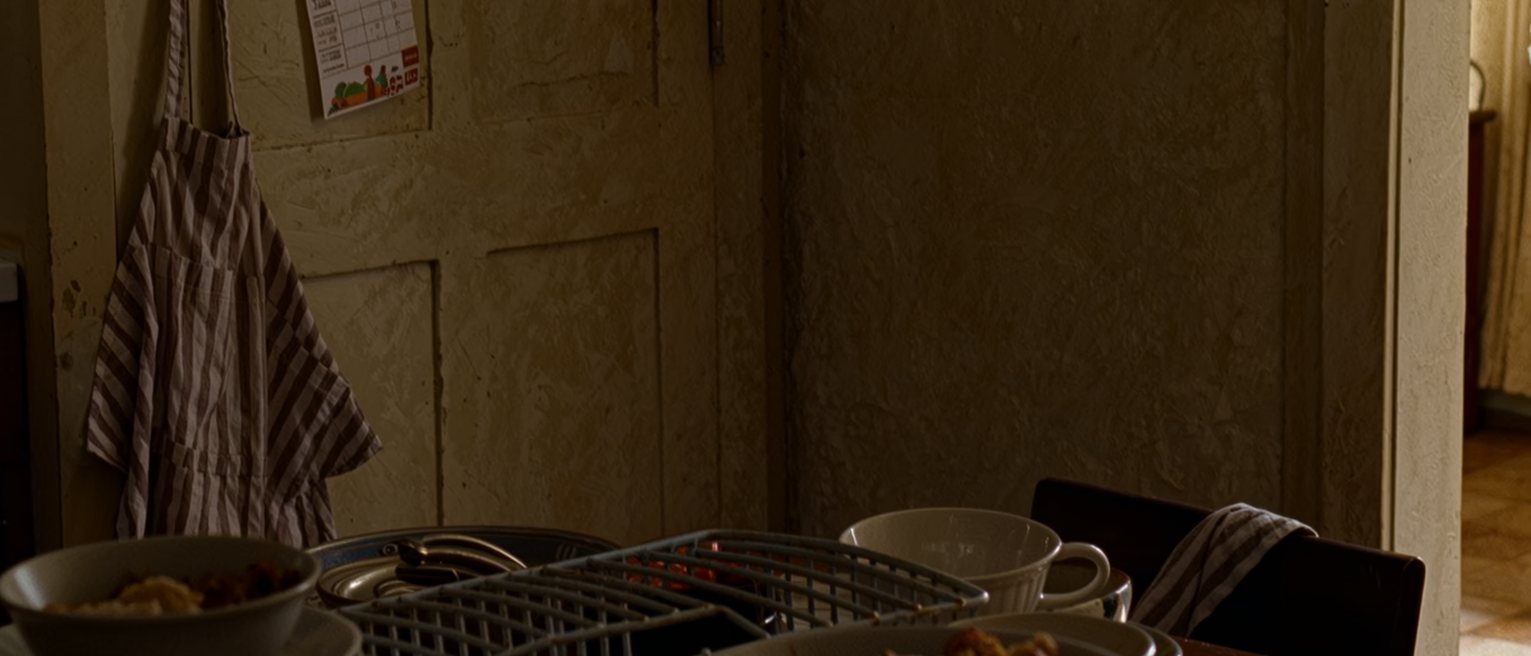
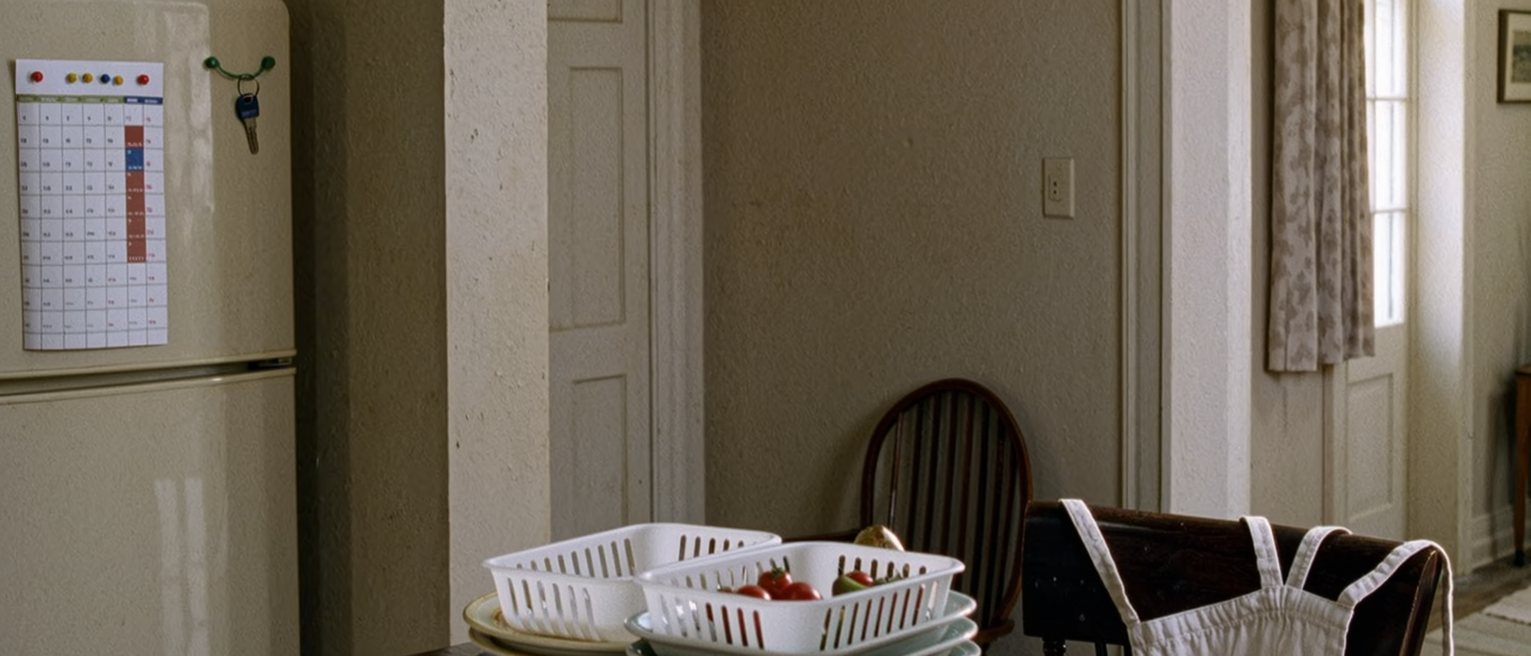
A decision, or the only unscheduled hour
There are two objects that share a word, and the failure to distinguish them is why most conversation about infidelity produces heat and no information.
The first is an affair as a decision. A person weighs a life, finds it wanting, considers the cost to everybody involved, and chooses to act. There is deliberation. There is a moment at which a different choice was fully available and was not taken. Responsibility here is straightforward and the language of judgment fits the object without strain.
The second is different in its mechanics rather than in its morality. It is an affair that occupies the only hour in a week that nobody has claimed. It is not chosen against alternatives, because there are no alternatives competing for that hour; it is the only thing that has ever asked for it. A woman in this position is not selecting an affair over a marriage. She is discovering that one hour of her week is not already assigned, and something has arrived in it.
The drama stages the second object with unusual patience. Its central figure is not shown deliberating in any recognisable way. She is shown being noticed, which she has not been for a long time, and then being noticed again. The word decision would badly misdescribe what the series depicts, and so would the word helpless.
Here is where the distinction has to be held rather than allowed to collapse, because the collapse is the whole danger. Naming the second object does not convert it into the first object’s exemption. She still lied. Other people were still deceived and still lost something real. The mechanics of how a thing came about and the question of who bears responsibility for it are two separate inquiries, and an essay that lets the first quietly answer the second has performed a conjuring trick rather than an analysis. This Library’s position is that the second inquiry is not softened by the first. What the first one does is make the event intelligible, which is a different service and a legitimate one.
The bill arrives at one address
The series is careful about consequence, and what it depicts is not symmetrical.
In the broadcaster’s own account of the story, the discovery is made by the teacher’s wife and legal intervention follows. The two are separated. He relocates with his wife and continues to have a profession, a household, a name that still functions. The woman at the centre of the drama loses the marriage, the standing, the neighbourhood, the ability to be in the places she used to be in, and the version of herself that other people had agreed to recognise. The drama does not editorialise about this. It simply shows the accounts being settled and lets the audience notice that the same act produced two very different invoices.
The asymmetry is not primarily legal. It is social, and it works through description. A married man in this situation acquires an episode. A married woman acquires a category, and the category is durable, portable and available to anyone who meets her afterwards. It attaches to her occupation of public space, to her clothes, to the hours she keeps. The drama’s own title supplies the category, which is one of the more uncomfortable facts about it.
And the woman who is wronged is treated by the series as a person rather than an obstacle, which matters and which a good deal of writing about this drama forgets. The teacher’s wife has not agreed to any of this. Her response is hers, she is entitled to it, and it is not a plot device. Any reading of this drama that treats her as the antagonist has quietly adopted the position that a woman’s suffering is interesting only when she is the one wanting something. This Library does not adopt that position. Two women are harmed in this story by an arrangement that neither of them designed, and one of them is harmed by the other.
The word that entered the language
The drama did not merely dramatise a phenomenon. It supplied a term, and the term went to work immediately.
The word appears as one of the fifty nominated entries for the 2014 edition of Japan’s annual new-words-and-buzzwords award, the thirty-first, on the award organiser’s own published list. That is a modest fact with a large implication. A phrase becomes a nomination because enough people found it useful during that year, and what it was useful for was identifying a certain kind of woman on sight, at a distance, with no information.
This is worth sitting with, because naming is not a neutral act. Before the word, a woman leaving her flat at two on a Tuesday was a woman leaving her flat. After it, she was a woman who might be one of those. The drama gave the language an instrument of suspicion that did not exist in that convenient form before it, and the instrument is pointed in exactly one direction. There is no corresponding word for a man with an afternoon free.
The 1967 film whose Japanese release title the drama borrowed does something structurally similar, a half century earlier and in another country: a woman with a comfortable marriage who is somewhere else between the early afternoon and the evening, home before her husband, the whole arrangement defined by the hours it fits inside. The lineage is not an accident of naming. Both works understand that the interesting unit is not the transgression but the timetable.
What the 2017 film changes
The theatrical continuation is set three years later, and its premise removes the very thing the title named.
She is divorced and living alone by the sea. There is no household whose demands frame her day, no window to carve, no hour that has to end because a schedule resumes. If the drama’s argument were merely that affairs are exciting, the film would have nothing left to be about. That it does have something left is the most useful thing about it.
What the film puts in place of the stolen hour is the question of whether any of it survives the conditions that produced it. Two people who met inside a structure now meet outside one. The constraint that shaped the thing has been removed, and the removal is not experienced as liberation. This is a familiar finding in this Library’s reading. An earlier essay on a film about a detective and a widow argued that desire can be fed by distance, and that removing the distance does not simply deliver what the distance promised.
The film also declines, to its credit, to arrange a reward. Nothing about the three years is presented as a sentence served after which a couple has earned an outcome. And because the continuation exists at all, the series as a whole ends up making an argument that a single season could not: that the afternoon was never the content. It was the container. When the container goes, what was inside it has to be looked at directly, and looking at it directly is a harder test than any amount of secrecy.
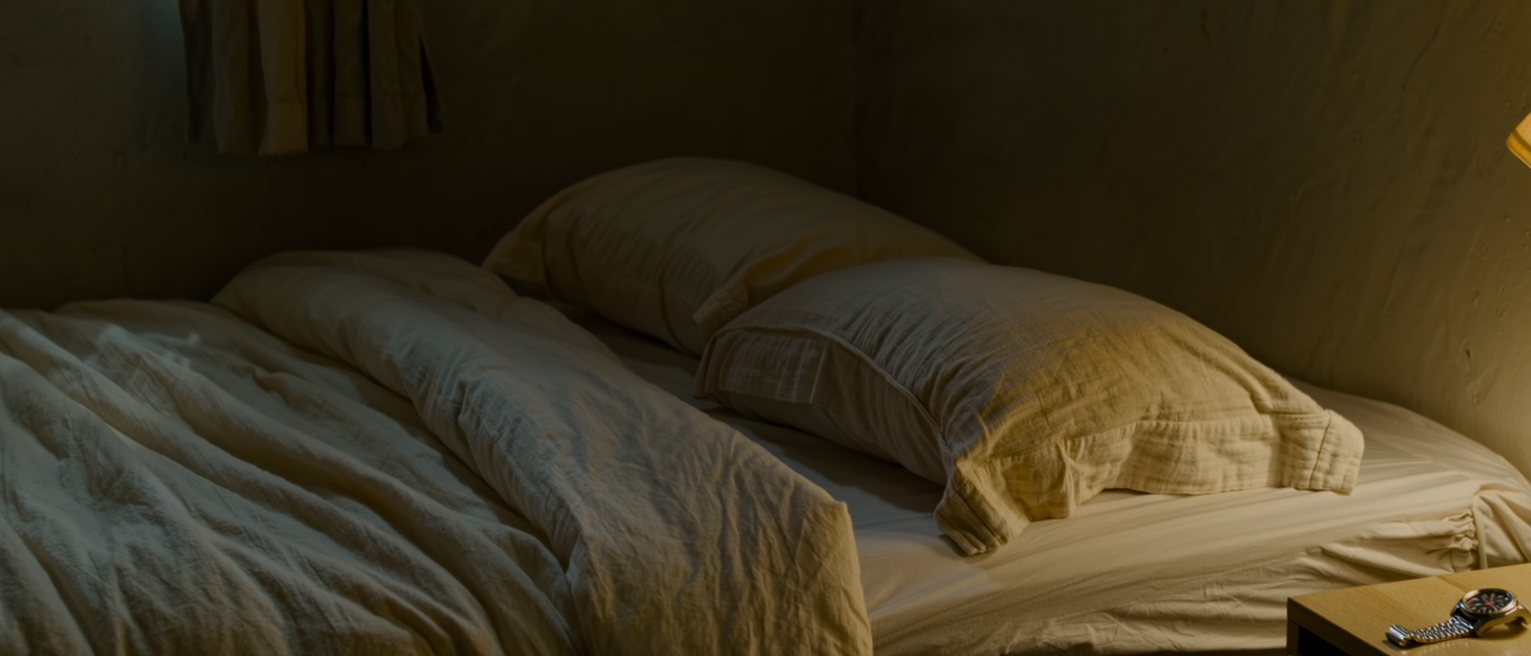
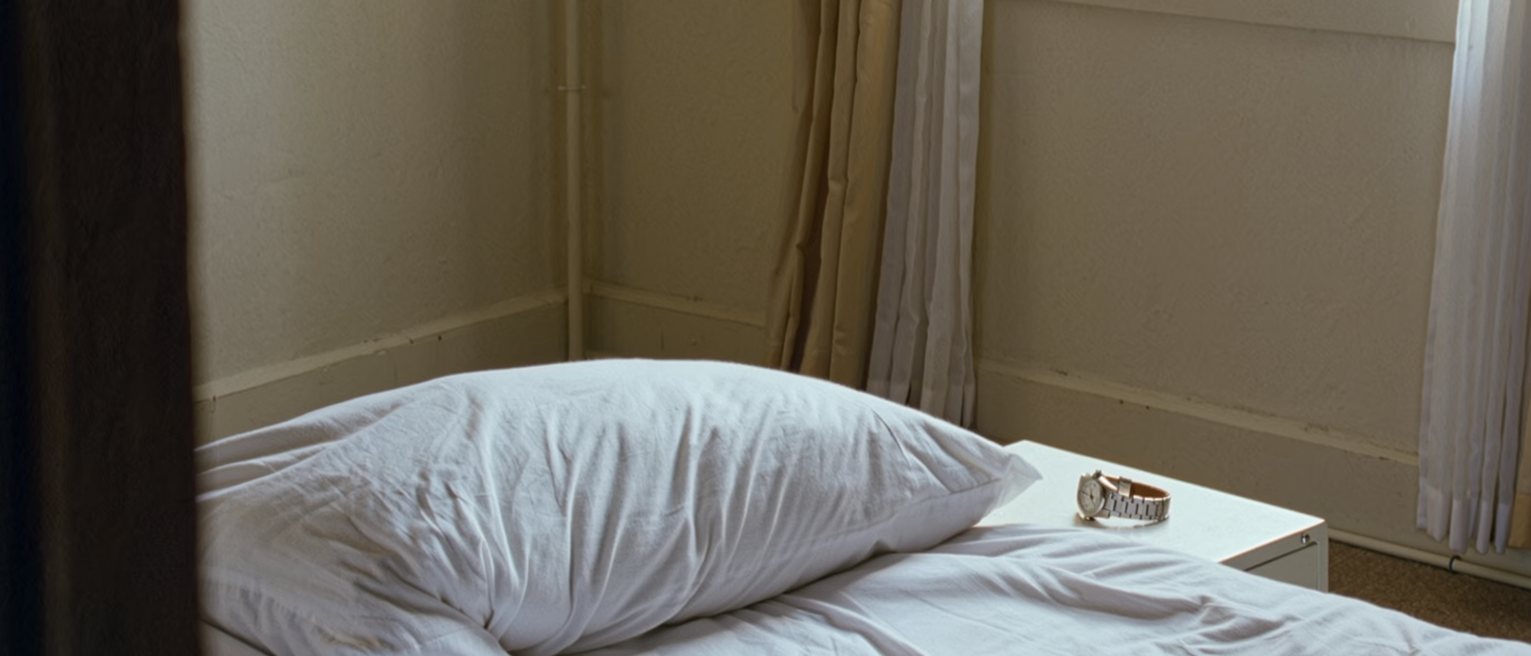
Two earlier essays in this Library
This reading did not arrive from nowhere and it rests on two arguments already published here.
The first is the account of emotional distance inside a marriage. An earlier essay in this Library argued that when a partnership becomes logistics, what it loses is lost in a fixed order, and that the indicator everybody watches is the last one to move. Which means that by the time anything has visibly gone wrong, several earlier things have already gone, and the first of them disappeared behind an increase in talking rather than a decrease. The households in this drama are at exactly that stage. There is plenty of conversation in them. It is all about arrangements.
The second is the position that desire is information rather than instruction. An earlier essay in this Library, written about the opposite case — a match that is right on paper while the body quietly refuses — made the argument that both the checklist and the refusal are data and that neither is the verdict. That principle is symmetrical, and this drama is where the other half of it gets tested. A strong pull toward somebody is a report that something is at stake. It is not a directive, it does not authorise itself, and the fact that it arrived without being summoned does not make acting on it involuntary. A woman who feels it has learned something about her life. What she does next is a separate matter, and it is hers.
Put those two together and the drama’s subject comes into focus. A marriage that has lost things in a fixed order, and a signal arriving in the one hour that nobody else has claimed. Neither of those is a story about a bad person.
What a reader can take from it
Neither condemnation nor endorsement leaves an essay with an obligation to say what is left, so here it is, and it is not advice about relationships.
The first thing is a question that can be answered tonight by anybody, with no vocabulary for desire required and no decision attached. Which hour of your week is not assigned to anybody. Not which hour is free in the sense of unbooked, but which hour has no other person’s schedule on either side of it. For a great many people the honest answer is none, and the interesting part is that it is possible to have reached that condition without noticing, because each individual allocation was reasonable when it was made.
The second is that this is a question about structure rather than about love. It is answerable by a person in a happy marriage and by a person living alone. It has nothing to do with whether anybody is at fault. It is closer to reading a timetable than to examining a conscience, which is exactly what makes it usable: nobody has to admit anything in order to answer it.
The third is what the drama demonstrates about untended hunger, and it is not a warning about affairs. It is that a want with nowhere to go does not dissolve. It waits, and it attaches itself to whatever eventually arrives in the one gap available to it, and the thing that arrives is selected by the timetable rather than by any judgment the person would otherwise have applied. That is not an argument for permitting oneself anything. It is an argument for noticing the gap early, while what goes into it is still a matter of choice rather than a matter of availability.
And the fourth is the one this Library would most want a reader to take. If the only hour in which you are recognisably yourself is an hour nobody knows about, the problem is not the hour. Nothing that happens inside a window that size can repair a life organised so that the window is the only opening.
The strongest case against this essay
The objection worth taking seriously is not that the drama has been misread. It is that this kind of reading is a laundering operation, and that its elegance is what makes it effective.
It runs like this. Reading these affairs as structural rather than chosen turns adult women into weather systems. They do not decide; conditions decide through them. That is a description no one would accept about a woman’s career, her politics or her money, and it is offered here only because the conclusion is congenial. It removes exactly the agency that a feminist reading of the same drama would insist on, and it removes it while sounding sympathetic, which is worse than removing it rudely. Meanwhile the deception disappears into the analysis. Somebody was lied to for months. A wife discovered that the account she held of her own life was false. Those are specific harms done by a specific person, and a structural vocabulary is very good at making specific persons hard to locate. The essay even declines to describe the harmed wife as an antagonist, which is generous, and then spends its length explaining the person who harmed her.
A substantial part of that lands, and the honest answer is a narrowing rather than a rebuttal.
The narrowing is this. Nothing above claims the women in this drama could not have done otherwise. The claim is about what was in front of them, which is a claim about the choice set rather than about the capacity to choose. A person with one door and a person with six both choose; describing how many doors each had is not a denial that either of them opened one. Responsibility is left exactly where it was, and the section on the two objects that share a word was written specifically so that this move could not be made — the mechanics of a thing do not answer the question of who is answerable for it.
What remains true is that the objection cannot be fully discharged, only declared. A reading that makes a choice intelligible will always be usable as an excuse by somebody looking for one, and there is no formulation that prevents it. The only available compensation is to say so where a reader can see it, which is what this section is. It is not a disclaimer at the foot of the page. It is the second-strongest argument in the essay, and the essay does not come through it undamaged.
What this does not claim
This is a drama. It is fiction, and it is fiction made to be watched by a large audience on a Thursday night, which is a craft with its own requirements. Nothing in it is evidence about Japanese marriages, about how common anything is, or about what anybody does on a weekday afternoon. No survey, rate or proportion appears anywhere in this essay, because none could be sourced to an official statistical series with its year and method stated, and an unsourced figure would have been the least honest thing on the page.
No generalisation about Japanese women is made or intended. The households depicted are two households written by a screenwriter. They are not a sample, they were not drawn at random, and a story about them supports no statement beginning with the words women in Japan.
The verifiable material here is narrow and is recorded in this essay’s evidence ledger: the broadcast year, network, slot, episode count and published average rating for the drama; the principal cast and creative leads; the broadcaster’s own description of the premise and the outcome; the release date, director, writer, production and distribution of the 2017 film and its three-years-later setting; the appearance of the word on the 2014 buzzword award nomination list; and the dictionary senses of the word itself. Everything else — the afternoon as residue, the husbands as the drama’s innovation, the two objects that share a word, the asymmetry of the bill, the reading of the film as a test of what survives the constraint — is this house’s interpretation and is labelled as such.
No character is diagnosed here. Nobody in this drama is described as having a condition, and no clinical language is applied to anybody’s behaviour, including behaviour a reader may recognise.
Nothing here is guidance about conducting a marriage, leaving one, or anything that happens inside one. This is a reading of a television programme and a film.
Fuji Television, the cast, the writer, the directors, the production companies and the distributor have no connection to this house, do not know of it, and endorse nothing written here. Naming them is attribution of their work, which is all it is.
And the reading itself is a position rather than a finding. It is held here because it explains the drama better than the alternatives this Library considered, and a reader who watches the series and concludes something else has not made an error.