Cinema
The Piano and the Will a Body Can Carry Before Language
A woman who does not speak is not a woman without a will. Jane Campion’s film understands that better than almost anything else on screen — and it also contains a bargain this house would call coercion. Both of those are true, and reading it properly means holding them at once.
Ada does not speak. She has not spoken since she was six, and the film never explains why — it declines the scene in which a cause is supplied and the mystery is closed.
That refusal is the first thing worth noticing, because almost every other film about a silent woman treats the silence as a symptom to be cured, with the cure arriving as the plot. Here the silence is a position. Ada is not waiting to be given a voice. She has one, and it is simply not made of speech.
This is a piece about long-term desire, which is the month’s subject, and the reason a nineteenth-century story about a woman shipped to a marriage she did not choose belongs to it is that the private sentence underneath it is completely modern. I love this person. Something in me is still asleep.
Though in Ada’s case the first half of that sentence is not available either, which is its own kind of clarity.
What the piano is actually doing
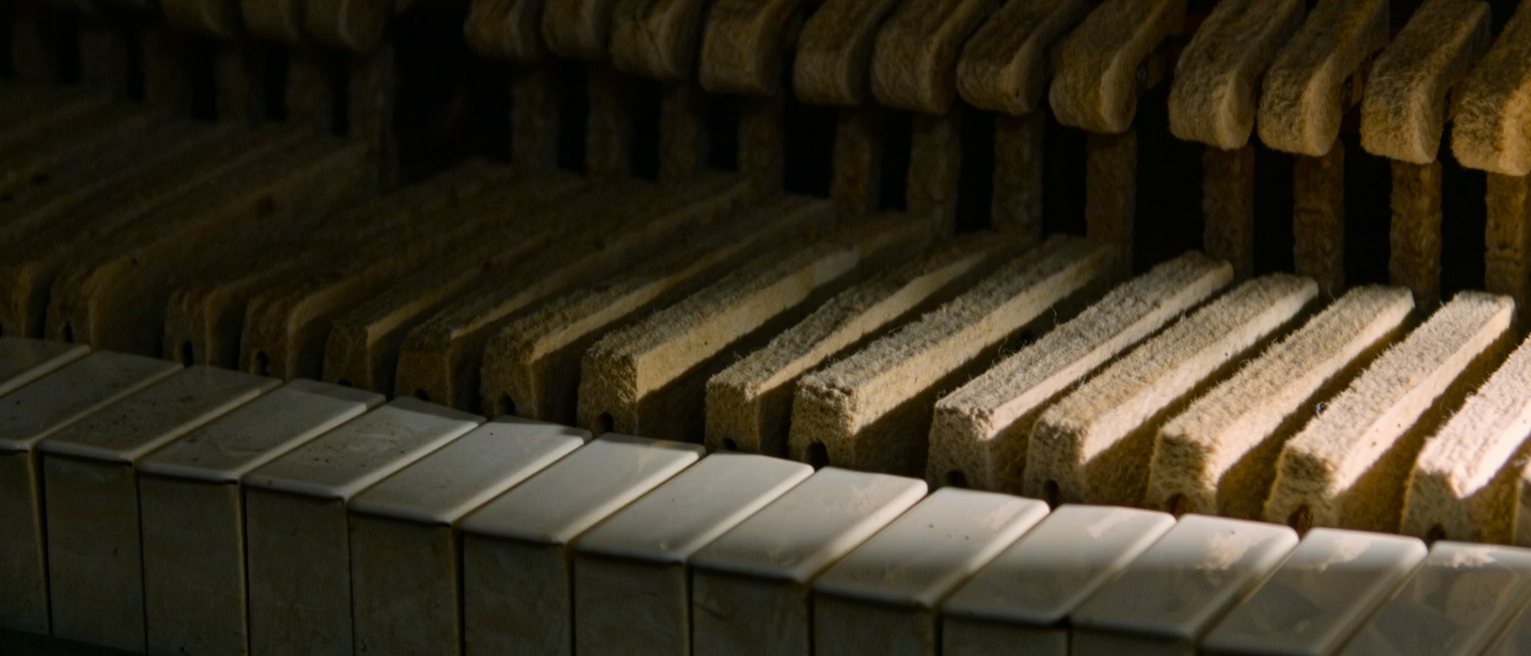
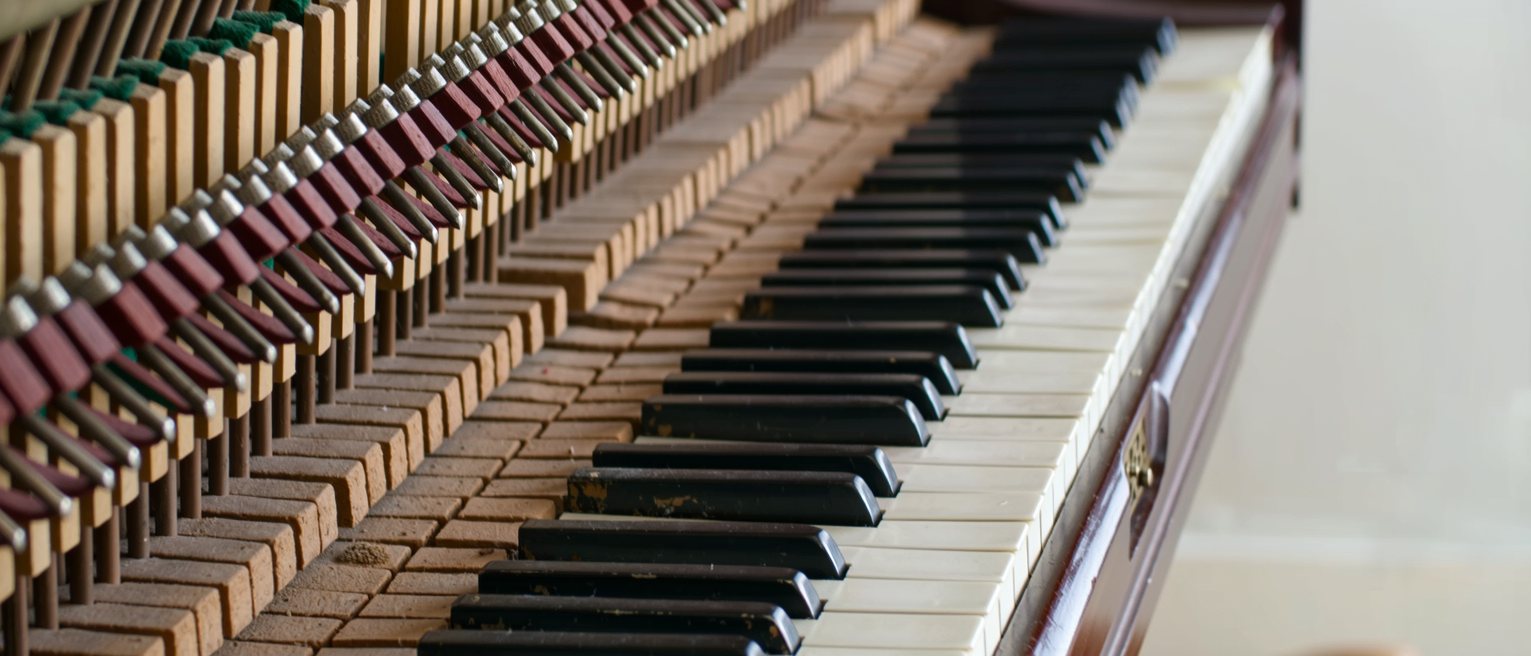
The instrument is the film’s whole argument, and it is not a metaphor for her voice in the simple sense people usually mean.
Notice what she uses it for. Not to communicate a message — she has a notebook and a daughter who interprets for her, and both are perfectly adequate for messages. The piano does something the notebook cannot: it lets her have an interior life that is audible without being translated.
That distinction matters enormously and it is the reason this essay exists. A message is something you convert into somebody else’s terms so they can receive it. What Ada plays is not converted. It is the thing itself, put into the room, and anybody present may either meet it or fail to.
Her husband fails to. Stewart hears a noise that his wife makes and understands it as an eccentricity to be managed, then leveraged, then confiscated. He is not a monster in the film; he is something more ordinary and more recognisable, which is a man who has acquired a person and cannot work out why she will not become available to him.
And when he leaves the piano on the beach — a woman’s interior life left on the sand because it was inconvenient to carry — the film has said everything it needs to about that marriage in one image.
Stewart, who is not a villain
It is worth staying with the husband for a moment, because the film does something with him that is rarer than it looks and more useful than the romance.
Stewart is not cruel by temperament. He is bewildered. He has entered an arrangement that everybody around him treats as normal — a wife arrives, a household forms, a life proceeds — and the arrangement is not working, and he has no framework for why. What he has instead is a set of escalating attempts to produce the outcome he was promised: possession, then bargaining, then confinement, then an act of violence the film does not excuse.
The line the film draws is precise. His failure is not that he wants her. It is that he never once treats what she produces as information. The piano is noise to be managed. Her refusals are obstacles to be routed around. At no point does it occur to him that the woman in his house is transmitting continuously and that the problem is on the receiving end.
That is a recognisable man and he is not confined to the nineteenth century. The modern version does not confiscate anything; he simply describes his partner as difficult to read, for years, without the possibility crossing his mind that she has been perfectly legible to somebody who was listening.
And there is a warning inside this for the reader too, because the same failure is available in the other direction. A woman who has concluded that her partner is incapable of hearing her, and has therefore stopped transmitting, is running the same experiment from the opposite chair and will get the same result.
The child who has to translate
Flora, Ada’s daughter, speaks for her mother. She is nine or so, and she is the household’s interpreter — the one who converts her mother into terms other adults can receive.
The film is unusually clear-eyed about what that costs a child. Flora is not a charming device. She is a person given a job that is too big for her, and she performs it with the improvisation and self-importance of somebody who has discovered that her usefulness is her standing. When she betrays her mother, it reads less as malice than as a nine-year-old finally acting on the fact that she has been handed adult power and no adult judgement to go with it.
There is a name for this in the clinical literature — a child conscripted into a role that belongs to an adult — and it is worth having, because the arrangement is common and is almost always described admiringly by everyone except the child. She is so grown-up. She is such a help. She is the only one who understands her mother.
For a reader raising a child alone, or in a household where the emotional work has quietly become one child’s responsibility, this is the part of the film to sit with. It is not an accusation. Ada is not doing it on purpose; she is doing what a person with no other route does. But a child interpreting an adult is not a solution to an adult’s isolation, and the only real remedy is that the adult finds somewhere else to be heard.
The bargain, named plainly
Now the part that cannot be admired past, and we are going to put it in the middle of the essay rather than in a footnote.
Baines acquires Ada’s piano and offers to return it to her, one key at a time, in exchange for escalating physical access to her. She agrees because she wants the instrument back.
That is coercion. Not ambiguous, not of-its-period, not complicated by chemistry. This house has published essays arguing that the absence of resistance is not consent, that an agreement obtained by controlling something a person needs is not freely given, and that the structural question in any encounter is whether she could have declined at low cost. Ada could not. The thing being withheld was hers.
We say this bluntly because the alternative is worse. A reader who loves this film — and it is a great film — should not have to choose between loving it and holding the standard. The two are compatible only if the coercion is stated rather than aestheticised, and a great deal of writing about this film has aestheticised it.
It is also worth saying that the film itself is not naive about this. Baines is shown arriving at his own disgust, stopping the arrangement and returning the piano without conditions, which is the film conceding that what he set up was intolerable. That concession is the strongest thing in his character and it is routinely skipped in summaries.
What survives saying it
So what is left, once the bargain has been called what it is?
What is left is the film’s real observation, which is unaffected by its plot mechanics and which we think is one of the most useful things cinema has managed on this subject.
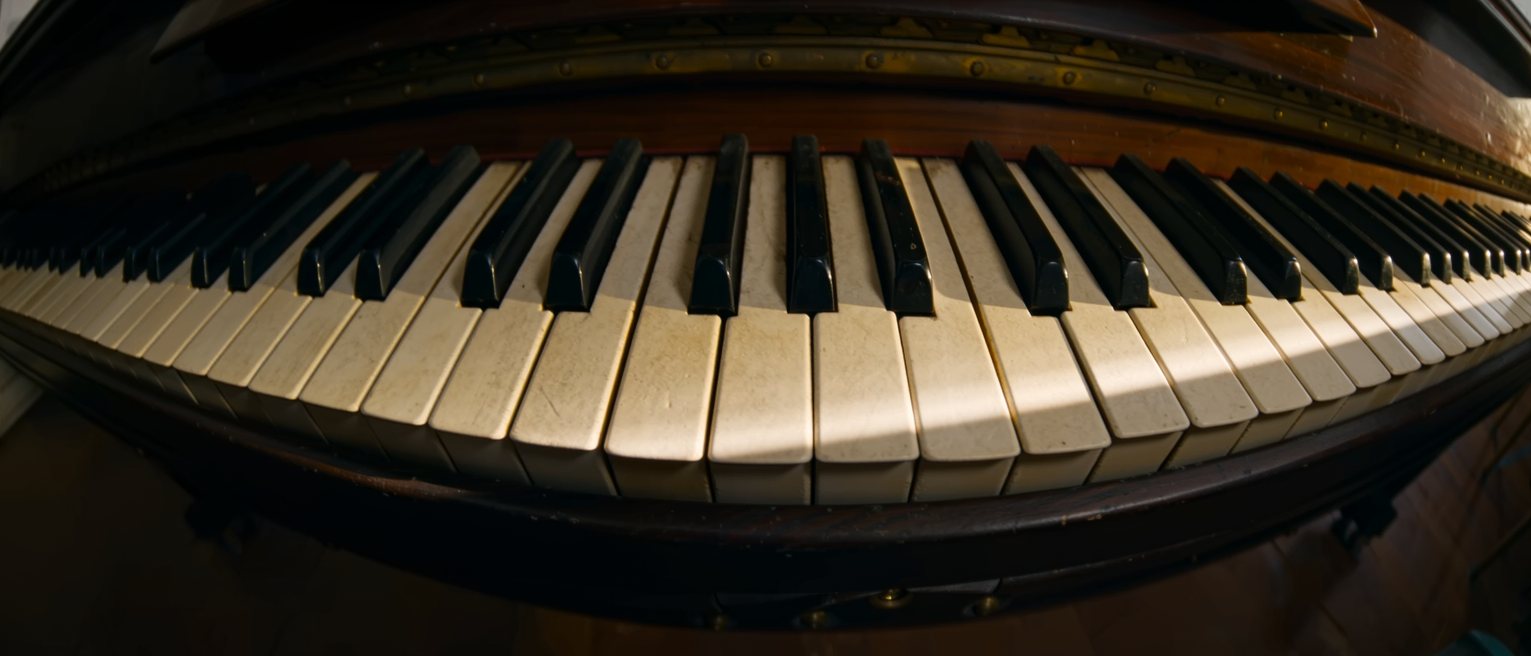
Ada’s desire is not created by either man. It precedes them. It is audible in the first minutes, in how she plays, in the fact that she carried an instrument across an ocean to a place with no floor to put it on. She is not a woman waiting to be awakened. She is a woman whose wanting has never had anywhere to go.
The evidence for that is physical rather than thematic, which is why it survives the plot. Watch what her hands do. She plays with the absorption of somebody who has been doing it alone for years and expects no audience — there is no performance in it, no checking of a face for approval. Whatever is happening in her is happening whether or not anybody is in the room, and it was happening in Scotland before any of these men existed.
That is a completely different story from the one the film’s marketing told, and it is the story a viewer in a long relationship should take. The thing asleep in you was not put to sleep by your partner and will not be woken by a stranger. It is yours, it has been running the whole time, and what it lacks is not a person. It lacks a room, a language, and somebody able to hear a thing that has not been translated into their terms first.
Which reframes what the film is asking of its audience. Not who should she end up with, which is the question the story shape supplies. But: what would it have taken for anybody to hear what she was already saying — and is there anybody currently in your life for whom that question has the same answer.
Against the awakening plot
This is the counter-reading and it is aimed at the shape of the story rather than at the film’s craft.
The awakening plot is one of the most durable structures in cinema: a woman is numb, a man arrives, she becomes alive. It is enormously satisfying and it makes a specific promise that is false — that the location of your unlived life is another person, and that the work involved is being found rather than being done.
Held against the film’s own evidence, the promise does not survive. Ada was never numb. She was constrained, which is a different condition with a different remedy. A numb person needs waking. A constrained person needs the constraint removed, and if you mistake the second for the first you will look for a rescuer when what you needed was a key.
The practical version, for a viewer whose private sentence is I love this person and something in me is still asleep: check which one it is. If you are numb, that is worth attention and possibly clinical attention, and nobody’s arrival fixes it. If you are constrained — by hours, by a role, by a decade of not being asked and having stopped volunteering — then the missing thing is not a person. It is conditions.
The film knows this, incidentally. Its ending gives Ada a piano, a house, a life, and a slowly returning voice, and it presents all of that as the point rather than the man. Then it appends an epilogue in which she imagines herself still tied to the drowned instrument at the bottom of the sea, which is the most honest image in the film: the old life does not stop being part of you because a new one started.
The thing the film gets exactly right about silence
There is one more observation and it is the reason this piece sits in this Library rather than in a film column.
Ada’s silence is frequently read as damage. The film gives it to us as exertion. She is described in her own narration as having a will so strong that her silence is its instrument — not a wound she is nursing but a refusal she is maintaining, at cost, for years.
That reframing is worth taking out of the cinema. A great many women are described by the people around them as quiet, reserved, hard to read, difficult to get to know. The description is usually offered as a diagnosis of a deficit. It is at least as often an accurate report of a decision: that speaking to these particular people, about these particular things, has not been worth what it costs.
A woman who has stopped explaining herself to people who do not listen well is not damaged. She is economising. The question that matters is not how to make her more forthcoming in general; it is whether there is anywhere at all where the arithmetic changes, and whether she has been in such a room recently enough to remember what it feels like.
Limits
The film is from 1993, written and directed by Jane Campion. Its release details, awards and current availability should be verified at the publication gate, per the atlas entry’s own note on external works.
The account of Ada’s history — mute since childhood, the cause never supplied — follows the film as presented. Readings of the film differ substantially, and the interpretation offered here is one among several serious ones rather than the correct one.
The judgement that the bargain constitutes coercion is this house’s standard applied to a fictional nineteenth-century arrangement, stated because consistency requires it. It is not a claim about how audiences in 1993 understood the film, nor about Campion’s intent, which she has discussed in her own terms elsewhere and which this essay does not attempt to characterise.
The film’s depiction of Māori characters and of colonial New Zealand has been the subject of substantial criticism from Māori writers and scholars, particularly regarding their function as background to a settler story. This essay does not engage that criticism and a reader should not take its silence as a dismissal of it; it is a real limit on the reading offered here.
The distinction between numbness and constraint is a framing offered for recognition, not a diagnostic instrument, and a reader who recognises the first should speak to somebody qualified rather than to a film essay.
What she carried, and why
The image people remember is the piano on the beach. We would put a different one beside it.
Ada carried that instrument across an ocean, to a country with no road to the house, knowing what it weighed. Nobody asked her to. It was not useful. It was not going to make her marriage better or her arrival easier. She brought it because the part of her that it belonged to was coming too, whatever the arrangements were.
Most people reading this have carried something similar and have stopped mentioning it, because there was no floor to put it on and no one asking what the noise was.
It is still in the crate. It did not drown, and it was not confiscated, and it does not require anybody to arrive and find it.
What it requires is a room where a sound you have not translated into somebody else’s terms is allowed to be made. That is what an evening with Moonlight is: unhurried time in which saying what you actually want is the activity rather than the risk, the terms are set in advance by you, a boundary is part of the conversation, and nothing is inferred from your silence — including, especially, that there is nothing behind it.