JAPAN & WOMEN
大和撫子, and What Happened to It
A wildflower in the Man’yōshū whose name means the child one stroked. Then an ideal, then wartime propaganda, then faintly embarrassing — and then, on one July evening in Frankfurt, eleven women in blue rewrote it without anybody issuing a correction.
Ask three people what 大和撫子 means and you will get three answers that do not agree, and all three will be delivered with confidence. That is not confusion. It is an accurate reading of a word that has been reassigned at least five times, and whose current meaning was settled, as much as it ever is, on a July evening in Frankfurt by eleven women in blue.
This page follows that word from a wildflower to a propaganda poster to a penalty shootout, because the route says something about ideals in general that is hard to see from inside any single version of one.
It begins as a flower, and the name means what it says
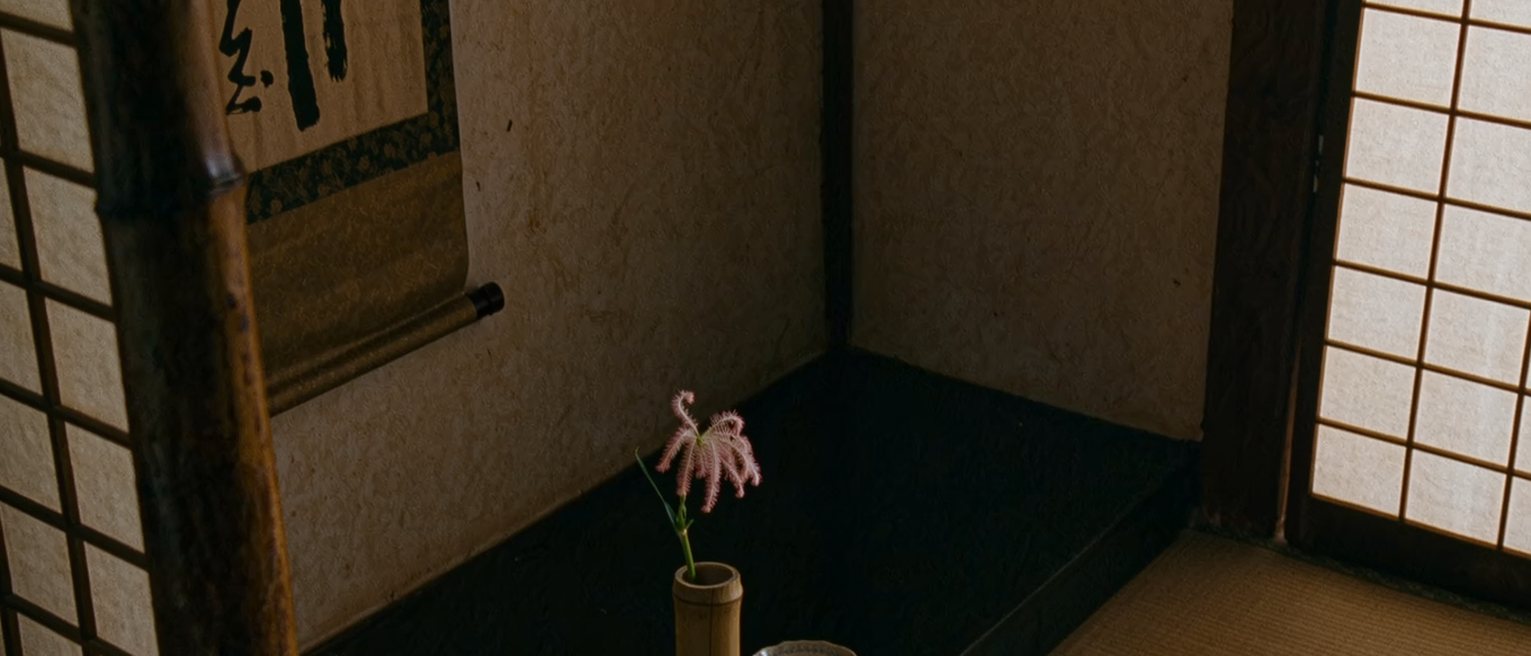
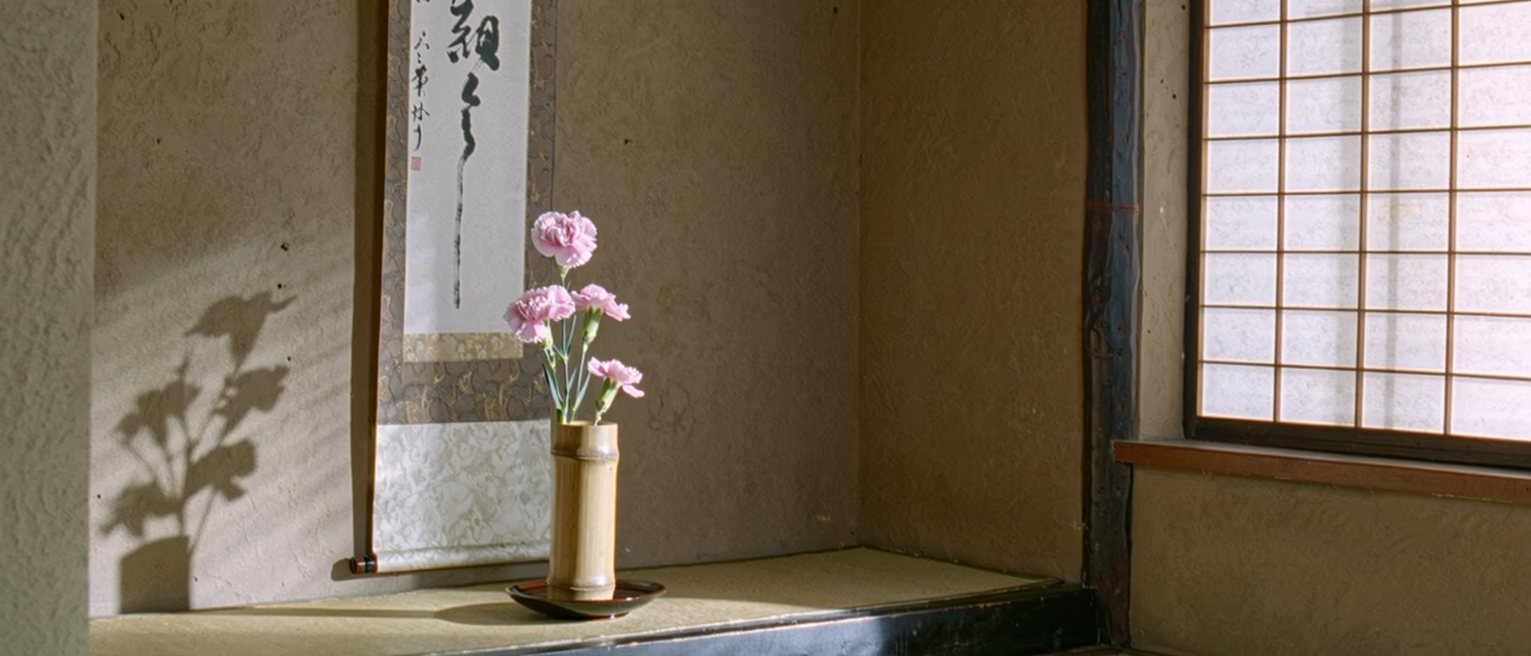
なでしこ is a real plant — the fringed pink, カワラナデシコ, a slight wild thing that grows on riverbanks. It is one of the 秋の七草, the seven grasses of autumn, listed by 山上憶良 in the 万葉集 in the eighth century. It has been in the language, as a flower, for about thirteen hundred years.
Its name is worth stopping on. 撫子 is understood as 撫でし子 — the child one strokes. The flower was named for the impulse it produces in whoever is looking at it, which is a charming thing to do to a flower and a considerably less charming thing to do to a person. The whole later history of the word is contained in that etymology, and nobody had to add anything.
And the 大和 in front of it was not originally about women at all. It was botany. A pink had arrived from China — 唐撫子, セキチク — and the prefix distinguished the native flower from the imported one. Before it described a kind of woman, 大和撫子 described which of two flowers you meant.
Then it becomes a person, and then it becomes a duty
At some point the flower becomes a description of women: modest, graceful, composed, unshowy, strong in a way that does not announce itself. Said like that it is not an unattractive set of qualities, and it is worth conceding that plainly rather than treating every traditional ideal as a trap on sight. Composure is real. Not needing to be the loudest thing in a room is real.
What happened next is the part that matters. In the war years the term was picked up and pressed into service, and the qualities were reweighted. Composure became endurance. Modesty became not complaining. Quiet strength became the capacity to absorb loss without transmitting it. 大和撫子 stopped describing a temperament and started describing a contribution — the woman who gave up, went without, saw sons off and did not make a sound about it.
Notice the move, because it recurs everywhere and is rarely this visible. An aesthetic description of how a person might be was converted into a specification of what she owed. Nothing in the vocabulary changed. The same words were used throughout, which is precisely what made the conversion possible without argument.
On integrity: the word was least honest when everyone agreed
If you ask when 大和撫子 had the most integrity, the intuitive answer is the period when its meaning was most settled — when everyone knew what it meant and nobody argued. That period is the war.
Which suggests the intuition is wrong, and usefully so. Agreement about an ideal is not evidence that the ideal is sound. It is usually evidence that somebody needed the question closed, and had the means to close it. A contested word is not a degraded word; it is a word still being decided by the people it describes, which is the healthier condition even though it feels like decay from inside.
So the post-war period, when the term went quiet and slightly embarrassing and got used half-ironically, was not the word’s decline. It was the interval in which it was available to be reassigned — and it was, by people nobody expected.
17 July 2011
The Japan women’s national football team had been called なでしこジャパン since 2004, when the name was chosen by public solicitation. For seven years it was a pleasant, slightly old-fashioned nickname and meant very little.
Then, four months after the March earthquake, they reached a World Cup final in Frankfurt against the United States, drew two apiece, and won on penalties. 澤穂希 took both the Golden Ball and the Golden Boot. By the end of the year なでしこジャパン had taken the grand prize at the 新語・流行語大賞.
Consider what the word now had to accommodate. Not endurance. Not absorbing loss quietly. A team that was physically outmatched for most of that tournament and kept equalising; that refused to lose a match it was losing; that celebrated without composure at all. The qualities had been reweighted again, in about two hours, and this time in public and by the women the word was about.
The detail worth keeping is that nobody issued a correction. No authority announced a revised definition. A word that had meant quiet sacrifice for seventy years came to mean, to a generation of Japanese girls, the thing you shout at a television at two in the morning. Meanings move when a sufficiently vivid counter-example refuses to be filed under the old one.
Reclamation, or a new employer?
The honest question, and this page would not be worth much without it: was that a reclamation, or did the word simply get a better job?
From 2012 the state has awarded なでしこ銘柄 — a designation from the ministry and the stock exchange for listed companies advancing women. The aim is good and the effect is probably positive. It is also, structurally, the same move as every previous one: a national-feminine label, defined from above, attached to whatever the moment requires of women. In the war it required sacrifice. Now it requires labour-force participation and a corporate disclosure. The ideal is better. The mechanism is identical.
The 2011 version is different in one respect that matters more than it might look. It was not assigned. Eleven women went and did something, and the word had to move to accommodate what they had done. That is the only kind of redefinition that has ever held, and it is also why it cannot be organised in advance or granted by a committee.


How the word is coping now
In ordinary current speech it is doing three incompatible jobs at once, and a reader can watch which one a speaker reaches for. Used straight and approvingly of a person, it usually carries the old freight and often lands as faintly dated. Used of the football team and its successors, it means competitive, unembarrassed and loud. Used by a company in a report, it means a policy.
Many younger women use it about themselves only with a protective layer of irony, which is worth reading correctly rather than as indifference. Irony is what people use when a word is still attached to something they want and also to something they refuse, and they have not yet been given a version with only the first part in it.
Which is a fair description of where the word actually is. Not dead, not restored, and not settled — being argued over by the people it describes, in public, with one genuinely good counter-example on the record. That is a considerably healthier position than it has occupied in most of its history, including all the periods when it seemed more dignified.
Why this house does not have an ideal woman
Moonlight describes no ideal client and never will, and this page is the clearest illustration of why. Every ideal in this word’s history was benign in its own description and became a specification of what a woman owed — and it did so without changing a single word, which is exactly what makes it undetectable from inside.
So the house holds nothing about how a person should be, and instead holds a scope she wrote herself, on a day when declining cost her nothing. That is a smaller and less beautiful thing than an ideal. It has one advantage an ideal structurally cannot have: it was authored by the person it governs, and it can be narrowed by her at any point without anybody’s permission.
The flower was named for what it made an onlooker want to do. Thirteen hundred years later the word attached to it was rewritten by a team that had no interest in being stroked and every interest in winning, and it turned out the word could carry that too. Essences are not found. They are assigned, contested, and occasionally taken back — and the taking back has never once been done by explaining. It gets done by somebody visibly being the counter-example, and leaving the language to catch up.
Education without claiming authority.
Moonlight separates history, modern interpretation and service application rather than blurring them. Nothing on this page is a claim of lineage, initiation or clinical effect; each section is labelled with the lens it is written from.