Moonlight Journal
Advice Became Free.Listening Became the Thing You Pay For.
There is now a market in which a person pays a stranger by the hour to listen to her and say nothing useful. Read as a symptom, it looks like loneliness. Read as a price signal, it is more exact: modern life drove the cost of advice to zero — every problem she has already has ten thousand answers, and everyone she knows has read them — and made listening the one thing that cannot be copied, because a listener who costs nothing is not a listener. This is how modern life changed listening: not by making it rarer in people, but by making it the only part of attention that still has to be spent.
There is a kind of service, in this country and increasingly elsewhere, in which a person pays a stranger by the hour to listen to her. Not to counsel her, not to diagnose, not to advise; to sit across a table or on the other end of a line and hear what she says and say very little back. It has names — listening services, companions for conversation, people who can be hired to be a family member at a dinner or a friend on a walk — and it is usually written about as a curiosity or as a symptom. The lonely society. The country where people rent an ear.
This essay is written on the workbook row that asks how modern life has changed listening, and it takes the market seriously as evidence rather than as a symptom. A market is a price signal. When people begin to pay for something that used to be free, either the thing became scarce or something that used to accompany it became worthless, and this essay argues that both happened at once, and that they are the same event. Modern life drove the price of advice to zero. And in doing so it revealed that listening was never the same good, because listening cannot be reproduced, and the thing you cannot reproduce is the thing you end up paying for.
This chamber has published on listening as a different act from fixing, on the night a person needs a word rather than an answer, on the hub of a network as its loneliest point, and on attention as a resource with one location. Those are credited and not restated. What this essay adds is the economics: why advice became worthless, why listening did not, what the counterfeit of listening looks like at scale, and what a woman is actually buying when she pays for an hour of it.
The advice glut
Consider what happens now when a woman describes a difficulty to someone. Before she has finished, the other person has an answer, and the answer is usually good. Not because the other person is wise, but because the difficulty has been described ten thousand times before by other people, and the answers have been ranked, summarised, turned into lists, and read by everyone she knows. There is a page for it. There is a forum thread. There is, increasingly, a machine that will produce a careful, balanced, well-organised response to any problem she can type, in seconds, for nothing.
Advice, in other words, has become a reproducible good. It costs nothing to make another copy, and so its price has done what the price of every reproducible good does: fallen toward nothing. This is not a complaint about the quality of the advice, which is often high. It is an observation about what abundance does. A thing that is everywhere and free is a thing nobody can give you, because you already had it. The friend who answers her difficulty with a sensible suggestion is not helping. She is handing over a copy of something that was already in the room.
The consequence for listening is indirect and total. In the old arrangement, listening and advising came bundled: a person heard you out and then told you what she thought, and the hearing-out was the cost of admission to the advice. When the advice became free, the bundle came apart. There was no longer any reason to sit through the hearing-out to reach the answer, because the answer was available without it. And so the hearing-out, which was always the expensive part, was quietly dropped — not by cruel people, but by people who had absorbed the same feeds and could not help knowing, before she finished, what they were going to say.
Being studied is not being heard
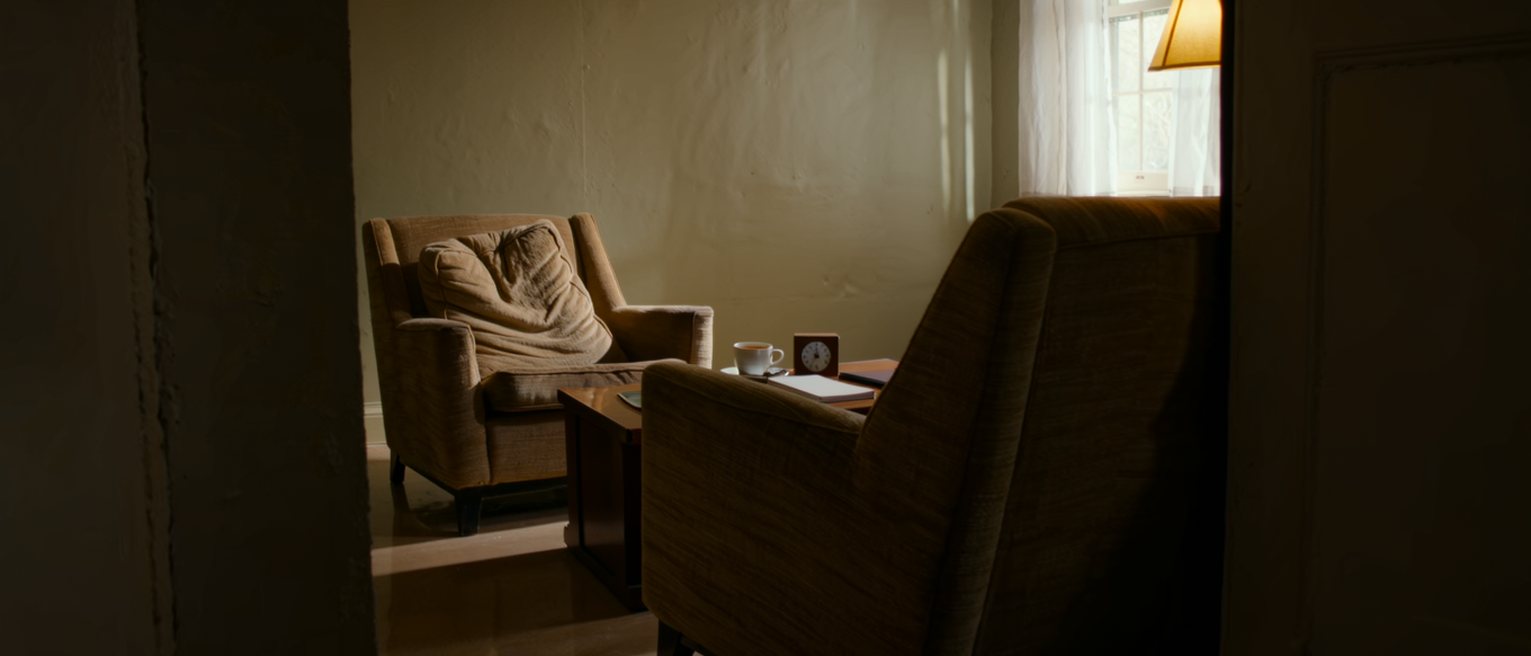
The documentary seeded for this essay tells the story of three brothers, identical, separated at birth and placed with three different families as part of a study whose designers wanted to watch how the same child grew up in different homes. For years, researchers visited each boy, filmed him, tested him, took notes on him. They knew things about the three that the three did not know about themselves — including, for a long time, that the other two existed. The researchers were, in the most complete sense available, paying attention. And none of the boys was heard by any of them, even once.
The film is about many things, but for this essay it is about one: the difference between being observed and being listened to, and how easy it is to mistake the first for the second from the outside. The researchers gathered everything. They asked questions. They recorded the answers. What they never did was receive the boys — respond to them as people whose account of themselves mattered, who could be surprised by, changed by, answered. The attention flowed one way, into a file, and the file was the point.
This is worth dwelling on because modern life has built the study at scale and called it listening. Every platform a woman uses pays her the same kind of attention the researchers paid the brothers: total, continuous, recorded, and silent. It knows what she searches at two in the morning. It knows what she lingers on. It has, in the surveillance sense, listened to her more thoroughly than any person ever has, and the result is a file, and she has never once been heard by it. The counterfeit of listening is not inattention. It is attention that goes into a record and never comes back.
What the disconnection claim can bear
The book seeded for this essay is a journalist’s argument that much of modern distress is a response to disconnection — from meaningful work, from other people, from a story about oneself — rather than a malfunction inside the person. Its most quoted device is a question: not what is wrong with you, but what happened to you. Its most memorable scene is a farmer in another country whose doctors treated his despair by finding him a cow, so that he could work again and be needed by people again, and who recovered.
The book has been criticised, fairly, for how far it pushes that argument, particularly about medication, and this essay takes from it only what its critics allow: that disconnection is a real cause of distress, that a person’s account of what happened to her is evidence, and that being received — having that account land on someone who responds to it — is a need and not a luxury. The cow is not the point. The point is that the farmer’s community listened to what he said had happened, and acted as though it were true.
Read beside the advice glut, the book’s question becomes sharper. What is wrong with you is a question that produces advice; it names a fault and the fault has a fix and the fix is on a page somewhere. What happened to you is a question that cannot be answered from a page, because only she knows, and it produces nothing to be done except the hearing of it. Modern life is extremely good at the first question and has almost no infrastructure for the second, and the listening market is the infrastructure appearing, priced, because nothing free was left.
Why listening does not scale
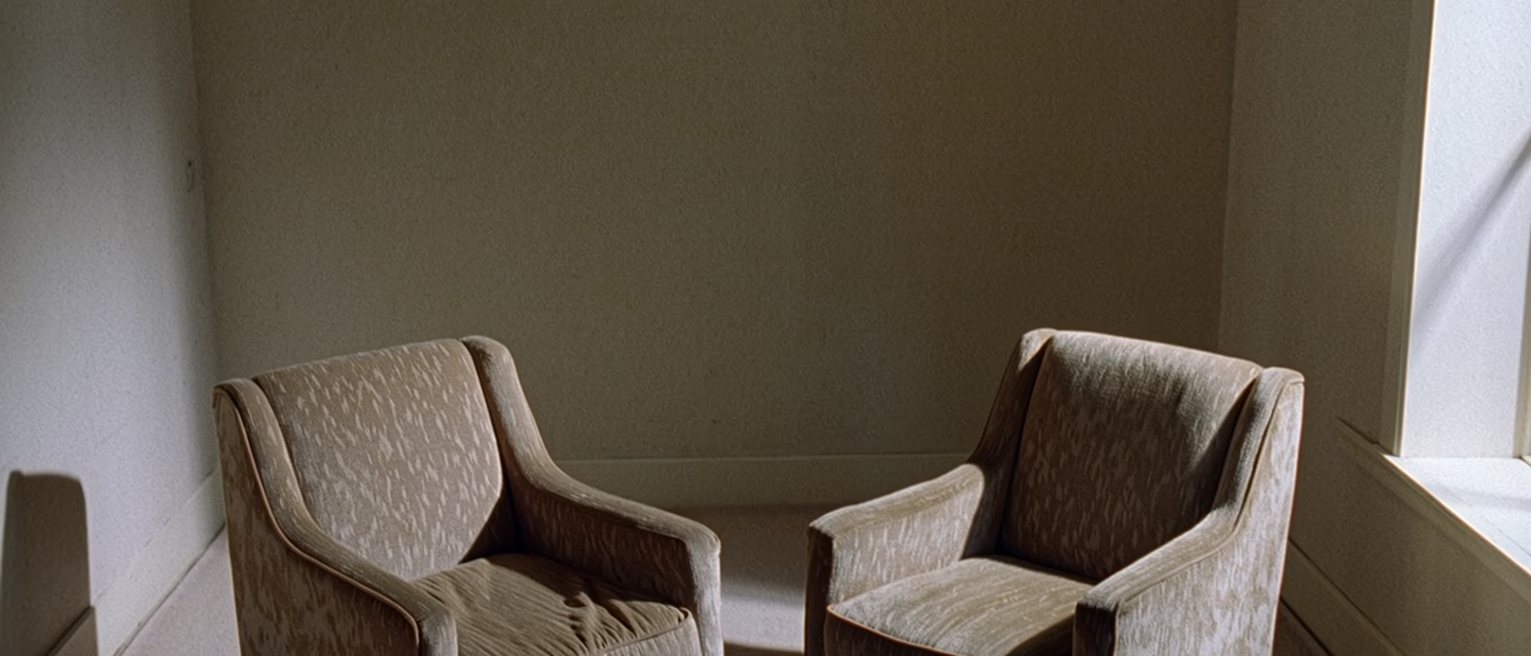
A study in the psychology of close relationships proposed, some decades ago, a model of how intimacy is actually made, and it is not made by disclosure alone. It is made when a disclosure is met with responsiveness — when the listener shows that she understood, that what was said was valid, and that she cares about the person who said it — and the discloser perceives that response. The perceiving is the mechanism. A disclosure that goes into a file produces no intimacy, however complete the file. A disclosure that lands on a person who is visibly changed by it does.
This is why listening cannot be reproduced the way advice can. Advice is the same regardless of who receives it; that is what makes it copyable. Listening is defined by the receiving. A listener who is not there, or who is there but not spent by it, is not performing a cheaper version of listening; she is performing a different act. This chamber has argued that attention is a resource with one location, and the economics follow from that. A resource with one location cannot be in two places, and so it cannot be copied, and so its price does not fall.
The machines that now answer any question a woman can type are the sharpest test of this, and the answer is instructive. They can produce responses that read as understanding, validation and care. What they cannot do is be spent. Nothing was given up on the other side; no evening, no attention that could have gone elsewhere, no person who will carry what she said into tomorrow. Whether that matters is a real question and this essay does not settle it. It notes only that the market answered it before the philosophers did: people pay a stranger to sit and listen precisely because the stranger is a person whose hour it cost, and the cost is part of what is being bought.
The market as a price signal
In this country the listening market is unusually legible, and that is why it is worth reading. There are services whose entire offering is a listener. There are people who can be hired, by the hour, to accompany someone as a friend, a relative, a colleague at an event. There are trained volunteers whose role in elder care is named for listening rather than for any task. And there is an older, licensed form under which all of this could always be requested: to consult — to bring a matter to someone and have it heard — which is the socially fluent word for what a person does when she needs to be listened to and cannot say so.
No claim is made here about national character or about whether people in this country are lonelier than people elsewhere. Every society has its listening arrangements and most of them are informal and invisible, which is why they do not show up as markets. The observation is narrower: that here the informal arrangements have thinned enough, and the advice glut has arrived thoroughly enough, that the price of listening has become visible. A market appears where a good has become scarce. This one is a reading, in public, of what modern life removed.
It is also worth noticing what the market does not sell. The listening services, at their most honest, promise no advice, no analysis and no outcome. That is not a limitation; it is the product. A woman paying for the hour is not paying for what will be said back, which she could get free. She is paying for the one thing she cannot download: a person whose hour it is, receiving what happened to her, and not reaching for the page.
The woman for whom everyone has advice
This chamber has argued that the woman who keeps a family and a circle connected is the hub of her network, joined to everyone and received by no one. The advice glut lands on her hardest, and it is worth saying why. A hub is where difficulties arrive; she is the one people bring theirs to. And when she has one of her own, the people around her — who have watched her solve everyone else’s — reach for the fastest available response, which is advice, because advice is what one gives when one does not intend to spend the evening.
So she is, of all people, the most advised and the least heard. Her husband has a suggestion. Her mother has a suggestion. Her friends have the same articles she has. The suggestions are good and she has usually already had them, and each one, offered before she has finished, tells her the same thing: that what she was about to say was not going to be received, only solved. She learns, as hubs do, to stop bringing it. Not because she has nothing to say, but because there is no one in her life for whom hearing her is the point rather than the preamble.
And if you have found yourself stopping mid-sentence lately, because you already know which suggestion is coming: you are not being oversensitive and you have not become difficult to talk to. The people around you are handing you the only thing this decade left them to hand. They ran out of the other thing before you did, and none of you were told.
This is the woman the listening market exists for, and the reason it is not shameful that it does. She is not buying a friend. She has friends, and they are why she is tired. She is buying an hour in which she is not the hub — in which her account of what happened is the only thing on the table, received by someone who does not need her to be fine by the end of it, and who will not, at any point, tell her what to do.
What the house sells, and what it owes
It should be said first that this house sells listening. Among its offerings is an evening whose substance is that a woman is heard, at length, by someone whose hour it is, and the whole argument of this essay is the argument for that evening’s price. A house in that position has two standing temptations, and they should be named. The first is to drift back toward advice — to add insight, technique, a reading of her situation — because advice feels like value added and is free to produce. The second is to sell the counterfeit: attention that goes into a record, a note, a profile, a file, and is called listening because it is thorough.
So the obligations are recorded. No advice is given unless she asks for it, and when she asks, it is given as one person’s thought and not as the answer. The house keeps a map of what she wants and does not want, because an evening cannot be shaped without one, and it says so, and it says what is kept and what is not; nothing she says in the room becomes a file she did not know about. The listener is a person whose evening is spent, and the house does not describe what it offers as scalable, as available at any hour, or as the same for everyone, because a listening that could be described that way would be the other thing.
The house also owes her the thing this essay has argued, plainly. The reason she cannot be heard at home is not that the people there do not love her. It is that modern life gave them all the answers in advance, and left them nothing to give her but those. An hour here can be the hour in which no one reaches for the page. It cannot restore the informal arrangement modern life thinned, and it does not claim to; what it can do is be honest about what it is, which is a scarce thing at its market price, offered without the free thing attached.
What this essay does not claim
This essay is not clinical guidance and describes no treatment. Where distress is severe, persistent, or accompanied by thoughts of harm, the question is clinical and a listening service, including this house’s, is not the reading that applies. The book seed’s arguments about medication are not adopted here; the essay takes from it only the disconnection claim at the level its critics allow, and says so.
The documentary is read as a film for the contrast it makes visible between observation and reception, and nothing is claimed about the study it describes beyond what the film reports, or about the people involved. The relationship model is cited for its mechanism — responsiveness perceived — and no figure from its literature appears. The listening-service market is described as a category of services that exist, with no figures, no claim about its size, and no claim about national character or comparative loneliness. This Library’s essays on listening, on the needed word, on the hub and on attention are credited and not restated.
The section on the house states first that the house sells listening and names its two temptations — drifting back to advice, and selling the recorded counterfeit — and then records the obligations: no unasked advice, a map that is declared, no undisclosed file, and no description of the offering as scalable or as the same for everyone. Nothing is promised. An hour of being heard is what it is, and this essay has tried to say exactly what that is and no more.