Moonlight Journal
Career Does Not Steal Intimacy.It Sends You Home Mid-Cycle.
The conflict between a woman’s work and her intimate life is usually described as a budget: two demands on one calendar. It is not. The workday ends when the stressor ends, but the body’s stress response does not end until it is allowed to complete — and she arrives home with it still running, into a room that reads the unfinished state as distance, and is asked to give again before she has been allowed to finish.
A woman gets home from work and is, by every account she could give, finished for the day. The meeting ended, the train arrived, the door closed. And what her partner encounters is somebody who is not there yet — brisk, managing, a step ahead of the conversation, checking something on her phone, answering a question with the answer to a different one. He reads it as distance. She reads his reading as one more thing to handle.
The usual account of what is going on here is a budget. A career takes hours and energy; intimacy takes hours and energy; a woman with a demanding job has less of both left for the second, and the conflict is arithmetic. On that account the remedy is allocation — protect the evening, work less, choose.
This essay is written from her side, and its claim is that the budget account is wrong about what is being spent. Career does not take intimacy’s hours. It sends her home with a physiological process still running that the workday started and did not let her finish — and everything that then goes wrong in the room is a consequence of that unfinished state being read as something it is not.
The stressor ends.The stress does not.
The book seeded for this essay makes one distinction that changes the whole picture, and it is worth stating exactly. A stressor is the thing that activates the body — the deadline, the difficult colleague, the inbox. The stress is the body’s response to it: the shift into readiness, the mobilised chemistry, the narrowed attention. The two are separate events, and dealing with the stressor does not end the stress.
The stress response evolved to be completed. In the situation it was built for, the threat is met by running or fighting and the body arrives, exhausted and safe, at the other side, where the response resolves. Modern stressors do not come with that ending. The deadline is met by sitting still, the colleague is handled by staying calm, the inbox is emptied by typing, and none of those tells the body that the emergency is over. The stressor is gone. The response is still running, because nothing has completed it.
That is the state she arrives home in. Not tired, or not only tired — mobilised. The body is still at work, holding the readiness the day demanded, and it will keep holding it until something signals completion. The commute does not. The door does not. And her partner, encountering the mobilised state, encounters something that looks from outside exactly like not wanting to be there.
What work trains, and why it comes home
This chamber has published on the stance a career rewards: producing outcomes reliably, operating on problems, holding a subject-object split — and on the fact that you cannot be the operator and the experiencer at once. That finding stands, and this essay adds the physiological layer beneath it.
The operator stance is not only a habit of mind. It is what a mobilised body does. Readiness narrows attention to the task, prioritises the next action, and treats everything in the environment as something to be handled. A woman whose stress response has not completed is not choosing to manage the evening. Her body is still in the configuration in which managing is the only available mode, and every attempt to be present is an attempt to override chemistry with intention.
This is why the budget account fails even for women who have protected the hours. She has the evening. She is in the room. And she is still, in every way that matters to the person beside her, at work — because the thing that ends work is not the clock but the completion of the response, and nobody scheduled that.
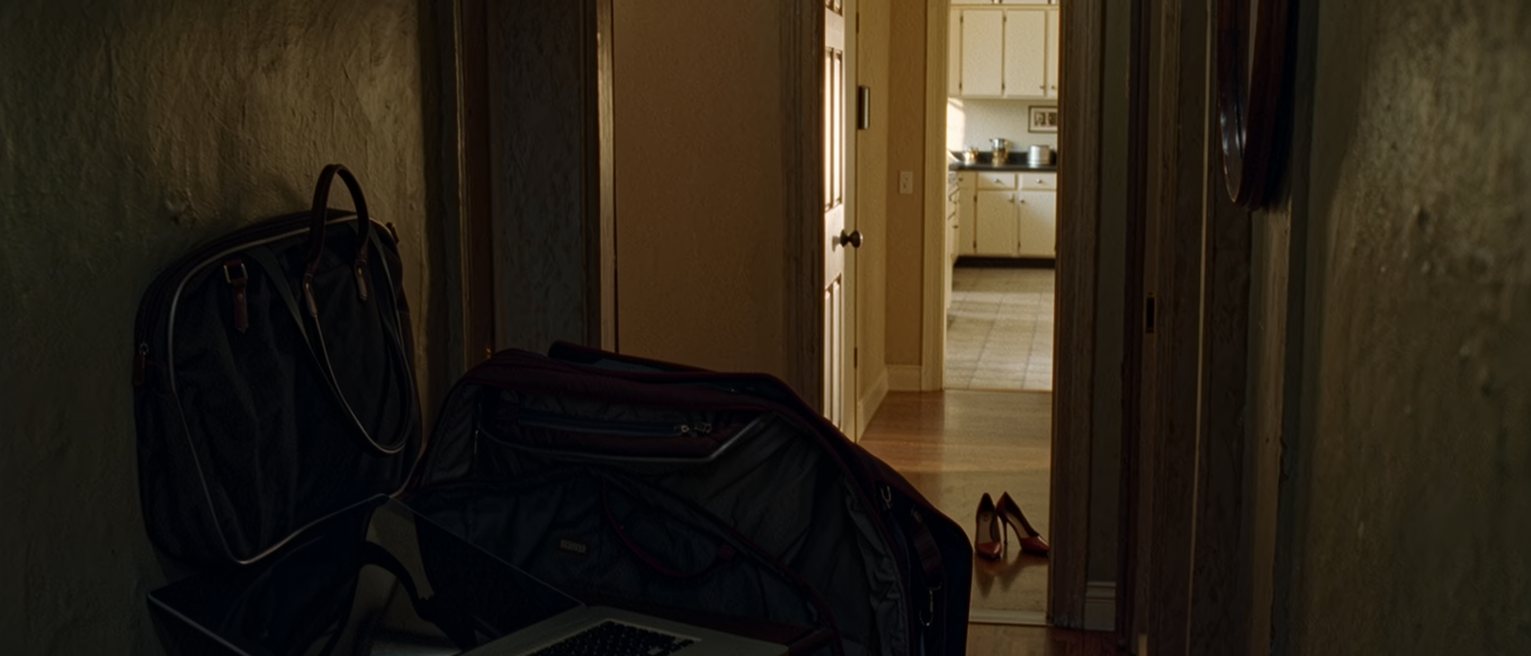

Why she arrives owing
The book names a second thing, and it is the one that makes this a woman-centred question rather than a general one. It calls it the giver script: the expectation, held by the culture and internalised early, that a woman’s role is to give her attention, her time and her humanity to others, and that having needs of her own is a defection from that role.
Under that script, a career does not exempt her from giving. It adds a second site of it. She gives at work — the reliability, the management, the smoothing of other people’s difficulties — and then comes home to the first site, where the giving is expected to resume. This chamber has found that the woman who holds everything is not fine but skilled, and that when everybody trusts her to cope, asking for anything begins to feel like breaking character. The giver script is why: she arrives home not owed a completion but owing one more round.
So intimacy, which for her partner is the reward at the end of the day, is for her frequently one more delivery. Not because she does not want it — this chamber has argued elsewhere that wanting is not the variable — but because it arrives as a demand on a body that has not yet been allowed to stand down, from a script that says standing down is not hers to do.
The transition nobody schedules
Put the two findings together and the missing step becomes visible. Between the workday and the evening there is supposed to be a transition — the completion of the response, the signal to the body that the emergency has passed — and nothing in an ordinary day provides it.
The book’s most useful contribution is that completion has a form, and the form is bodily rather than mental. The body finishes the cycle through movement, through breath that is allowed to slow, through laughter, through affection given and received without agenda, through crying, through making something. None of these is a technique; they are the things a body does when it is allowed to arrive at the other side of an emergency. What they have in common is that they happen in the body and not in the diary.
This chamber has argued that time that belongs to you is not what is left over, and that a new role expands until somebody protects a piece of the day in which nobody needs an answer. The transition is that piece, and it is the one most consistently unprotected, because it produces nothing anybody can see. A woman who takes twenty minutes to walk, or to lie down, or to breathe before she is available to anybody has, on the budget account, wasted twenty minutes. On this account she has done the one thing that makes the rest of the evening possible.
What the room does with an unfinished state
The consequences for the relationship follow from a misreading, and the misreading is honest on both sides.
This chamber has published on the partner who is technically there — present by every observable measure, absent in the one that matters — and on how attention in a long relationship is reallocated to the relationship’s operations. A woman home mid-cycle looks, to her partner, exactly like that partner: there, managing, not reaching. He has no way to see that the state is physiological and temporary, because it looks identical to the state that is neither.
And she, reading his response, sees a demand. He wants something from her; she has nothing left; the wanting is one more item. The pursue-and-withdraw pattern this chamber has described begins here, not from a shortage of love on either side but from a body that has not been allowed to finish and a partner who cannot tell.
Which is why the budget remedies make it worse. Protect the evening, and she is now required to be present in it, on schedule, with the cycle still running. Work less, and the giver script fills the space with more giving. The remedy that works is upstream of the evening, and it is the transition.
The Japanese version: doing both
The Japanese framing of this question has a name, and the name is the giver script in two characters. Doing both — work and home, career and family — is the ideal held out to working women, and it is offered as a form of success. A woman who manages both is admired. A woman who cannot is understood to have failed at one of them.
The state counts what doing both costs. Its own surveys of how time is used record that the hours of unpaid household and care work fall overwhelmingly on women, including women in full-time employment, and that the gap has narrowed far more slowly than the gap in paid work. The essay reports no figure, because the shape is what matters: the second shift is not a metaphor here. It is measured, and it is measured as hers.
What the ideal of doing both leaves out is the transition. It budgets the two shifts back to back — the workday, then the home — with no step between them in which the body is allowed to complete what the first shift started. A woman who does both, on this account, is a woman who goes from mobilised at work to mobilised at home with nothing in between, and who is then asked, at the end of the second shift, for intimacy — a third delivery, from a body that has not been allowed to stand down since morning.
This is not a claim that Japanese working women are worse off than working women elsewhere. The second shift is documented across every society that has measured it. It is a claim that the local ideal has a name that makes the missing step invisible: doing both leaves no room for a third thing, and the third thing is the one that makes the other two survivable.
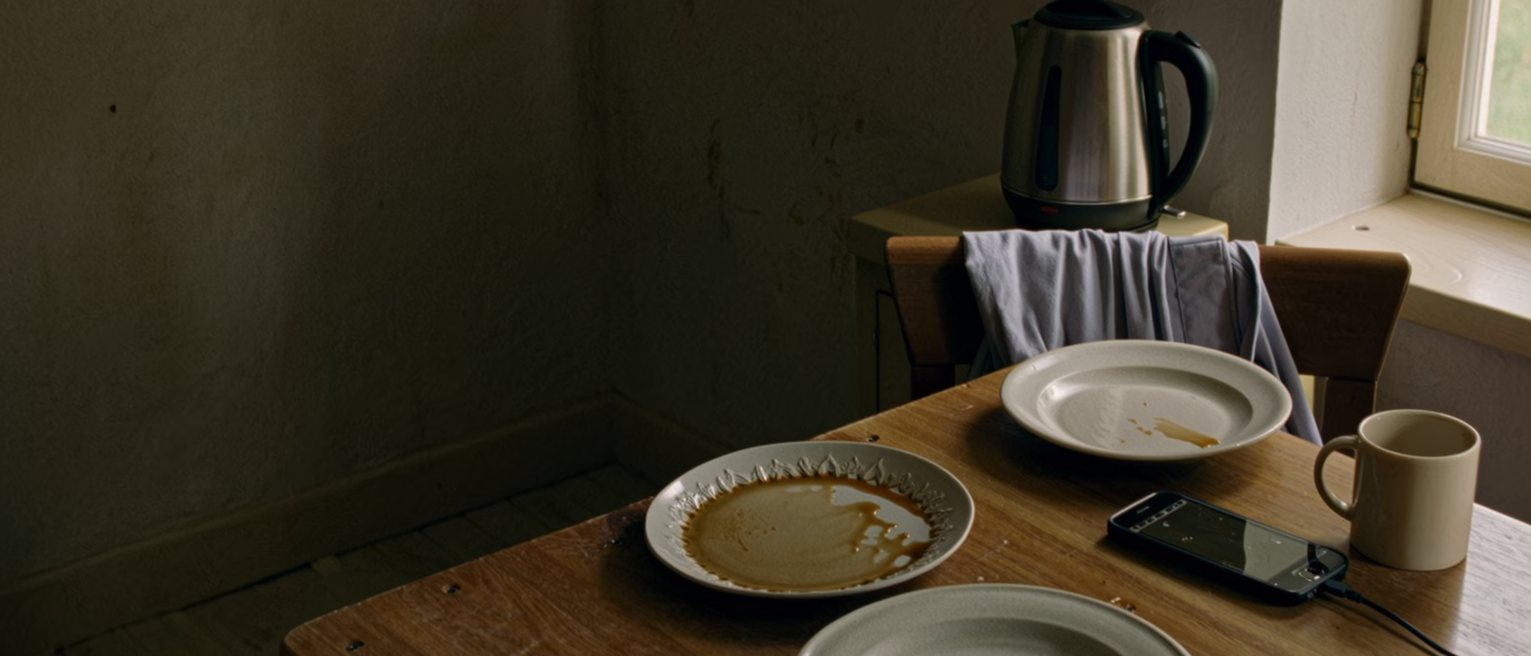

A comedy about the unclosed cycle
The series seeded for this essay is a comedy about mothers returning to work, and its running joke is the one this essay has been describing. Its women pump in office bathrooms, take calls in the car outside daycare, and treat sex with their partners as one more item that has to be scheduled and, once scheduled, got through. The comedy is in the collision of the two shifts. The pathos, which the show is honest about, is that nothing in any of those lives has a gap in it.
What the series gets right is that the women are not failing at intimacy. They are arriving at it mid-cycle, every time, with the response from the last emergency still running, and the show plays the unfinished state for laughs because from outside it is absurd — a woman answering an email during foreplay. From inside it is a body that has not been told the day is over.
What helps, including the part that favours the author
This essay does not propose working less, which the giver script would fill, or protecting the evening, which would schedule presence on top of an unfinished state. It proposes one thing.
The transition is the thing to protect, and it is bodily. Something between the last stressor and the first person — movement, breath allowed to slow, a bath taken alone, a walk that goes nowhere — that signals to the body that the emergency has passed. It does not need to be long. It needs to exist, and it needs to be hers, because the giver script will otherwise assign the slot to somebody else’s need.
The second thing is for the person she comes home to, and this chamber has said it under other names: the unfinished state is not distance. A woman who is brisk at the door is not withholding; her body is still at work, and the response that helps is not to reach for her but to leave the gap in which she can arrive.
And the part that favours the author. This house sells the transition. An evening here is, in the terms of this essay, a completion cycle purchased whole — a bounded interval in which nothing is required, the body is allowed to stand down, and somebody else’s attention does the signalling. That is a real thing and it is what the copy describes. The exposure is that a house selling the transition benefits when a reader has no transition of her own: the more completely she arrives mid-cycle, the more an evening here will feel like the first time in months her body has been allowed to finish, and the more that feeling will be misread as evidence about her life rather than about her day. So the obligations are these. Nothing published here may describe an evening as what her career or her partner cannot give her; the missing step is twenty minutes she can take herself, tonight, for nothing, and this essay has said so. Nothing here may frame career as the problem, because the essay’s own finding is that the problem is the absent transition and not the work. And a house whose whole product is a completion cycle has a standing reason to let a client believe she cannot complete one alone, which is false, and is the reason the practical section above was written first.
What this does not claim
This essay is not clinical, occupational-health or counselling guidance and describes no treatment. Where exhaustion, stress or its bodily effects are a source of distress or a medical matter, the questions are clinical and this essay is not the relevant reading; burnout in its clinical sense is not diagnosed here and nothing here treats it.
The distinction between stressor and stress response, the account of the response as a cycle that must complete, and the giver script are taken from the book seed and credited in the evidence ledger with their limits, including that the book is a popular synthesis that argues a thesis and that the physiological account is a simplification of a large literature. The claim about the distribution of unpaid work in Japan rests on the state’s own time-use surveys and is reported as a shape rather than a figure. No figure, proportion or statistic appears anywhere in this essay.
The series is read for its running joke and for what the joke reveals; no claim is made about its makers. The ideal of doing both is read as a script, with the explicit statement that the second shift is documented across every society that has measured it and that no comparative claim about Japanese women is made.
The section on this house states first that it sells the transition, that it benefits when a reader has none of her own, and records the obligations: never described as what a career or partner cannot give, never framing career as the problem, and the practical section written first because the missing step is available to her for nothing.