Moonlight Journal
You Can Love Your Life and Still Imagine Another One
The life you have is known down to its Tuesdays. The life you imagine is drawn only where it differs, and everything else is left blank — and blank has never once been bad. The comparison is not close; it is not a comparison at all, because the two things are not made of the same material.
A woman who would not trade her life for anybody else’s finds herself, regularly and without invitation, somewhere else. A different city, a different arrangement, a version of the morning that is not this morning. Then she notices she is doing it, and the noticing is worse than the imagining.
The guilt has a specific shape. It assumes the imagining is a preference — that some part of her has quietly voted, and the vote went against the life she is in.
The month’s private sentence is: imagining another life does not automatically betray the one I have. The word automatically is doing the work, and this essay honours it rather than converting the sentence into a general absolution.
This chamber has taken the interior side of this before, arguing that an event with no conduct attached is still an event, and offering a test of what an imagined life is for — whether it returns with something changeable or exists to make the present tolerable. This essay takes a different question, which is prior to both: what the imagined life is actually made of, and why that makes the comparison she is running invalid before it starts.
Two things not made of the same material
Begin with the objects being compared, because the whole argument is there.
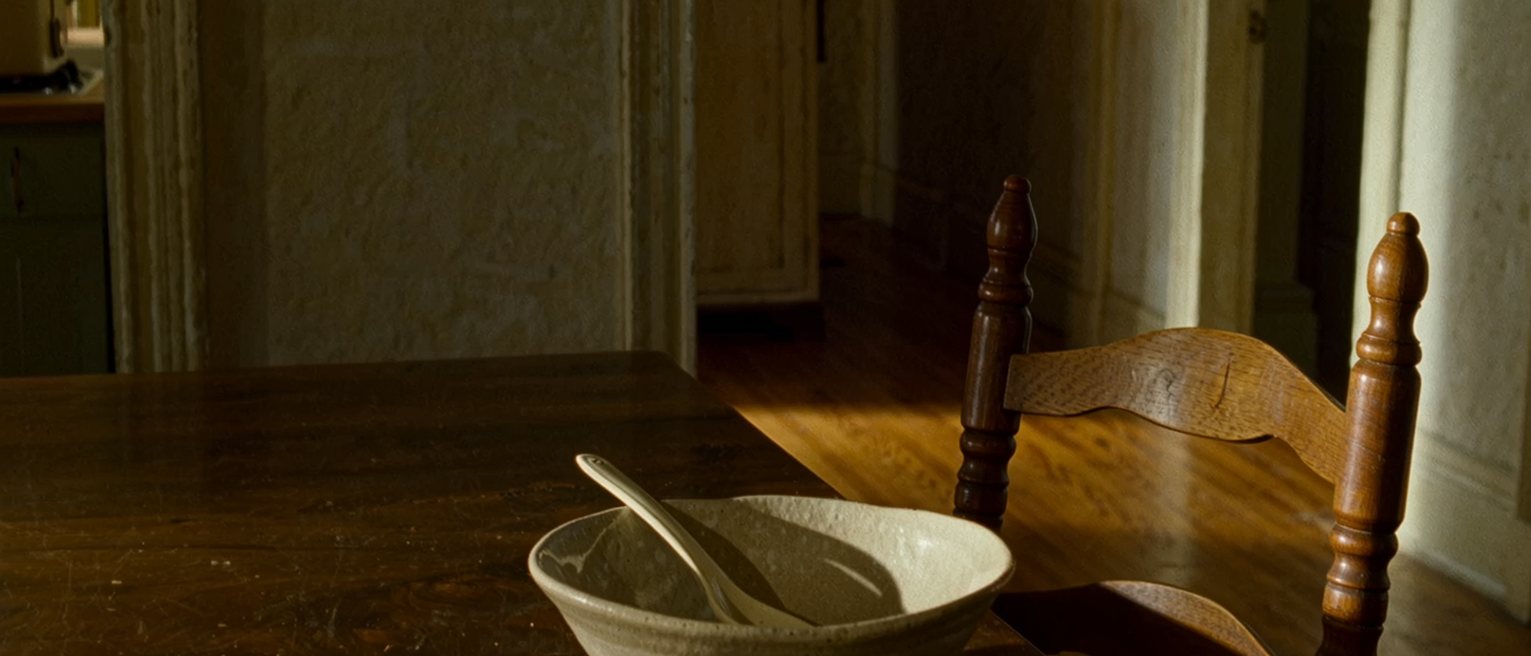
A lived life is known at full resolution. It includes its Tuesdays. It includes the third conversation about the same logistical problem, the drawer that does not close, the ten minutes of nothing before dinner, the specific texture of being tired in a familiar room. All of it is loaded, whether or not anybody wants it to be.
An imagined life is not built that way. It is rendered only at the points where it differs from this one — the different city, the different person, the different morning. Everything else is left undrawn, and undrawn does not come out neutral. It comes out fine, because there is nothing in it to be otherwise.
So the alternative is not winning because it is better. It is winning because it is unspecified, and unspecified has never once been bad. Nobody imagines the third conversation about a logistical problem in the other life. Nobody imagines its drawer.
Which means the comparison is not close, and is not actually a comparison. It sets a complete record against a specification, and the specification only contains the parts somebody chose to write.
And this is not a failure of imagination that could be corrected with effort. The undrawn parts cannot be drawn, because there is no information about them — they would have to be invented, and anything invented would be invented by the same person who is unhappy about the friction, which is not a neutral source.
Why knowing your life well makes it worse
That structure produces a result that sounds wrong and is the most useful thing in the essay.
The gap between the two objects is a function of how much texture is loaded on the lived side. And texture accumulates with knowledge. The longer somebody has lived a life, the more of its ordinary grain is available to consciousness, and the more there is to set against something that has no grain at all.
So the intensity of the alternate-life fantasy tracks how thoroughly somebody knows their present, not how bad the present is. A life known in detail will always lose to a life known in outline, including a very good life. Especially a very good life, in fact, because a person who is paying attention to hers has loaded more of it.
Which is the title’s claim, arrived at structurally rather than reassuringly. Loving a life and imagining another one are not in tension. The second is partly a consequence of the first, since the attention that makes somebody appreciate a life is the same attention that renders its texture — and the texture is what the unrendered alternative is quietly being compared against.
It also explains a pattern that is otherwise puzzling: that these imaginings frequently intensify in periods of stability rather than crisis. Nothing has gone wrong. What has happened is that enough time has passed for the resolution to fill in.

Built by subtraction
The next question is how the imagined life gets specified at all — which parts get drawn — and the answer turns the whole thing into an instrument.
Almost nobody constructs an alternate life from nothing. What actually happens is subtraction: the present life is taken as the base, and one specific element is removed. The commute. A particular recurring argument. A role that has to be performed daily. The requirement to be available.
Which means the content of the fantasy is not arbitrary. It is a precise record of what was subtracted, and it is accurate about that even though it is worthless as evidence about the alternative.
So the imagined life is bad data pointed one way and good data pointed the other. As a claim about a different life it is unreliable by construction. As an index of what is currently costing the most, it is unusually direct — more direct than asking herself what is wrong, which invites a reasonable-sounding answer rather than a true one.
This chamber has already offered a different test of the same material — whether an imagined life comes back with something changeable or functions as an anaesthetic. That test asks what the imagining is doing. The reading here asks what it contains, and the two are complementary rather than competing: the content says what was subtracted, and the function says whether anything is being done with it.
The refinement worth having is cheap. A fantasy that changes shape every time — different city, different life, different everything — is reporting general restlessness and names nothing in particular. A fantasy that keeps returning to the same deleted element is naming something specific, and the specificity is the information. Noticing which of the two she has costs nothing and can be done from memory.
The architecture is usually loyal
That construction also disposes of the guilt, and it does so without appealing to anybody’s good intentions.
Subtraction retains. Everything not deleted stays in the picture by default, which means the imagined life is typically populated with the same children, the same house, the same city, the same friends — because none of those were the friction, so none of them were removed.
An imagined life that keeps all of that and deletes one argument is not a rival life. It is an edit. The guilt reads it as a departure when its own architecture is overwhelmingly a retention: the overwhelming majority of the imagined scene is the present life, carried over untouched because it was never in question.
Which is a stronger defence than the usual one. The usual defence is that thoughts are not actions, which is true and unpersuasive, because it concedes the content is disloyal and argues only that content does not count. This says the content is not disloyal. Read structurally, most of these fantasies are an argument for the life she has, conducted in the only vocabulary available.
The exception is real and should be stated rather than hidden: sometimes the element subtracted is a person, and then the retention argument does not apply in the same way. Even then the observation holds about the rest of the scene, and the honest version is that the fantasy is reporting a specific cost rather than issuing a verdict. What follows from that cost is a separate question this essay does not answer.
When it does do damage
There is a case in which the imagining is genuinely corrosive, and it would be dishonest to build an argument this reassuring without naming it.
The damage is not betrayal and has nothing to do with loyalty. It is that an unspecified alternative always wins a comparison. So anything held up against it loses permanently, regardless of its quality, and the loss says nothing about the thing that lost.
Which becomes corrosive at a specific point: when the unrendered life is used as the reason not to repair the rendered one. Why negotiate the recurring argument, when in the other life it does not exist. The comparison makes repair look insufficient — not because repair would fail, but because its result would be measured against something that cannot be measured.
That is a maintenance failure rather than an infidelity, and it deserves the more accurate name. Nothing is being taken away from anybody. Something is simply not being done, and the reason it is not being done is a comparison that was never valid.
And the counter-concession is owed, because the argument above could be turned into a sermon about staying put and being grateful. Sometimes the subtraction names something the present genuinely cannot supply — a constraint that is structural rather than negotiable, a cost that repair does not reach. The finding is that the imagined life is not evidence about the alternative. It is not evidence against a decision either, and a person who concludes from all this that she should simply stop wanting has taken an argument about comparison and turned it into an instruction about her life, which it is not.
What to do with the subtraction
If the fantasy is an accurate index of a cost and a useless report about an alternative, the practical question is what to do with the index.
The first move is to name the deleted element as precisely as the fantasy does. Fantasies are specific. They do not delete stress in general; they delete a particular arrangement, a particular obligation, a particular hour of a particular day. That specificity is the usable part, and it is lost immediately if the whole thing is translated into something vague about needing a change.
The second is to ask what a smaller version of the subtraction would cost in this life. Not whether the alternative is available, which is the wrong question, but what fraction of the deleted element could actually be deleted here — and at what price, to whom. Sometimes the answer is a significant fraction at a modest price, and nobody had asked because the question was buried inside an unaskable one.
The third is to stop running the comparison, which is the only genuinely difficult part. Not by suppressing the imagining, which is unavailable to anybody, but by declining to treat its result as a finding. The imagined life will continue to look better. It will look better permanently, and for reasons that have nothing to do with the life she is in.
And there is a smaller thing worth saying, because the guilt is usually a bigger problem than the imagining. The imagining is not a preference and cannot be one, since a preference requires two comparable objects and there is only one. Whatever is happening in those moments, it is not a vote.

Why this house renders so well
This section is about a structural feature of what we sell, and it is not flattering.
An evening here has no Tuesdays. It has no admin, no logistics, no third conversation about the same problem, no accumulation. That is not an achievement of ours; it is a property of anything that is bounded. The texture that makes a life heavy is produced by continuation, and a thing that does not continue cannot produce it.
Which places this house in exactly the category the essay has been describing. We are unrendered in the same way the imagined life is unrendered, and we are flattering for the same reason. Nothing about how an evening here feels is evidence about how anything resembling it would feel as a life, because the part that makes lives hard has not been drawn and structurally cannot be.
That should be said plainly by us rather than discovered later, and the commercial incentive runs directly against saying it. We benefit when the contrast is sharp. A house in this business has a standing reason to let an unrendered evening be mistaken for evidence, and no reason at all to explain why the comparison does not hold. Which is precisely why it belongs in writing, where it can be pointed to.
There is a second exposure and it is the more serious one. This essay identified the corrosive case as using an unrendered alternative as a reason not to repair something. We can be that alternative. An evening that reliably supplies what a particular friction removes can make negotiating the friction look unnecessary, and that can happen without anybody intending it.
We cannot police that, and it would be dishonest to promise otherwise. What we can do is decline to encourage the comparison — not describing what happens here as what life should feel like, not positioning it against anybody’s home, and not treating a client’s dissatisfaction as our opening. That is a limit rather than a solution, and stating it as a limit is more honest than the guarantee that would sound better.
Limits
This essay is analysis rather than clinical guidance, counselling, or advice about anybody’s relationship or decisions. It describes no treatment, promises no recovery, diagnoses nobody, and makes no claim about any reader.
The account of a lived life as known at full resolution and an imagined life as rendered only where it differs — with the remainder left undrawn and therefore never bad — is this Library’s own formulation. It is reasoned rather than measured, and no claim is made about imagination, memory or judgement as studied disciplines.
The inference that the intensity of an alternate-life fantasy tracks how thoroughly somebody knows their present rather than how bad it is follows from that account and is offered as an explanation, including of why such imaginings can intensify during stability. It is reasoned rather than measured.
The claim that imagined lives are typically built by subtraction from the present rather than constructed, so that their content indexes a specific cost accurately while saying nothing reliable about the alternative, is this Library’s interpretation. The distinction between a drifting fantasy and one that returns to the same deleted element is offered as a cheap reading, not as a diagnostic instrument.
This chamber’s earlier finding — that an interior event with no conduct attached is still an event, and that an imagined life can be tested by whether it returns with something changeable or functions as an anaesthetic — is credited and treated as complementary rather than restated. That test concerns the function of the imagining; this essay concerns its content and construction.
The argument that subtraction retains everything not deleted, so that most such fantasies are structurally an argument for the present life rather than against it, is this Library’s formulation. The exception where the subtracted element is a person is stated rather than omitted, and what should follow from any identified cost is explicitly left unanswered.
The corrosive case is named as a maintenance failure rather than an infidelity: an unspecified alternative always wins a comparison, so anything measured against it loses permanently, and repair can come to look insufficient for reasons that have nothing to do with whether it would work. The counter-concession is stated in the same section — sometimes the subtraction names something the present genuinely cannot supply, and nothing here is an instruction to stay, to be grateful, or to stop wanting.
The practical section is derived from the essay’s own reasoning rather than from evidence about outcomes and is not an instruction. No figure, proportion or statistic appears anywhere in this essay.
The section about this house states that an evening here is bounded and therefore cannot produce the texture that makes a life heavy, that we are consequently flattering for the same structural reason the imagined life is, and that nothing about how an evening feels is evidence about how a life resembling it would feel. It discloses that we benefit when the contrast is sharp and therefore have a standing reason not to say so, and that we can become the unrendered alternative that makes repair look unnecessary. That exposure is recorded as a limit we cannot police rather than as a guarantee, alongside the practices that follow from it: not describing what happens here as what life should feel like, not positioning it against anybody’s home, and not treating dissatisfaction as an opening.
The sentence underneath
Imagining another life does not automatically betray the one I have.
The word automatically survives this argument intact, and it should. There is a version of the imagining that does damage, and it was named: not the imagining itself, but the use of an unmeasurable alternative as a standing reason to leave something unrepaired. That is a real failure and it belongs in the sentence’s exception.
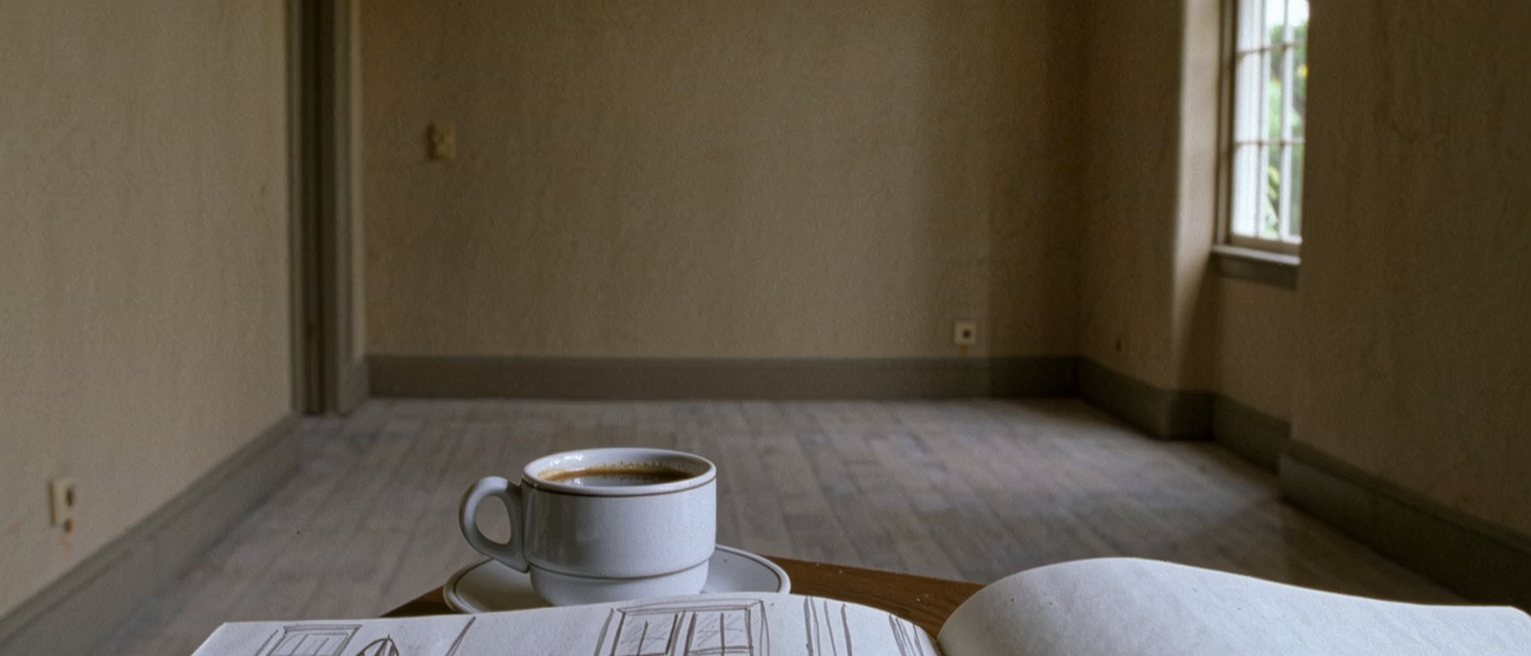
What the sentence rules out is the automatic reading — that the presence of the thought is itself the verdict. It cannot be, because a verdict requires a comparison and there is nothing here to compare. One of the two objects is a life. The other is a sketch with most of the page left blank.
And the smallest true version is this. The other life looks better because nobody has drawn its Tuesdays. Draw them and it stops looking better, which is not an argument for the life she has so much as an accurate description of why the contest was never fair.
Which leaves the imagining as what it mostly is: not a door she is standing at, but a report about one specific thing, arriving in the only form a mind has for saying it.