Moonlight Journal
Do You Want a Travel Partner, a Lover, or Simply Someone You Can Relax Beside?
Those are three separate capacities, and nothing in the language forces anybody to distinguish them until a train is cancelled. A trip is a real test of compatibility and a biased one — it over-weights the part of a shared life that shrinks to nothing once routines exist, and barely samples the part that fills the rest of it.
A connection is missed and there are four hours to fill in a station with one café. One person wants to solve it; one person wants to sit down first. One starts pricing alternatives; one observes that there is nothing to be done for four hours and buys a pastry.
Nothing in this is about love, and both are behaving reasonably. But something is being learned that six months of dinners did not teach, and it is being learned at speed.
Whether it is the right thing to be learning is the question this essay is about. Travel is widely recommended as a test before any serious decision, the recommendation is sound, and almost nobody states what the test actually measures — which matters, because a test whose bias is unknown gets read as a verdict on the whole person.
The month’s private sentence is the same question it was at the start of the month: if I travel far enough, can I step outside the version of me everyone already knows? Here it has a second edge. Somebody is coming with her, and he is the person most likely to bring the version along.
Travel removes the episode boundary
Start with what is structurally unusual about a trip, because it is not the scenery.
Courtship at home is sampled in episodes. A dinner ends. An evening ends. Even a weekend ends, and both parties know the hour at which they will be alone again with their own habits, their own bathroom and their own opinions about what time to go to bed. Every difficulty has a horizon, and a difficulty with a horizon can be politely outlasted rather than resolved.
Travel removes the horizon. The two of them are making decisions continuously — where to eat, how long to stay, what to do about the weather, whether to pay more to avoid a change of trains — and they are making them while tired, in a place neither controls, with no possibility of either one going home. Not a single one of those decisions is important. The density of them is the point.
So the case for travelling together before deciding anything serious is a real one, and it is worth separating from the reason usually offered. This chamber has already argued that travel does not reveal a truer self, and that the version of a person that appears away from home is the product of a condition rather than the surfacing of something hidden. That still holds, and it is not in tension with anything here.
What a trip changes is not the depth of the sample but its rate. A shared life is mostly small joint decisions under mild fatigue. At home, in the early period, those are invisible — each party handles them alone and arrives pre-resolved. On a trip they all have to be made twice, out loud. Nothing deeper has been exposed; something ordinary has simply been sampled at a frequency that ordinary life withholds until much later.
Three capacities, one word
The title names three things, and they are better understood as capacities than as kinds of person, because a single person can be strong in one and weak in another without any of it being a character flaw.
The first is the travel-partner capacity, and it is almost entirely procedural. How fast does he decide. Does he need a plan or does he prefer to improvise, and how does he behave when the plan fails. What happens to his temper when he is lost, which is the only part of this that is genuinely diagnostic, because being lost is a small, honest stress with nobody to blame. And money friction: not how much he spends but whether the spending has to be discussed every time.
The second is the lover capacity, and here the cultural script is simply wrong about travel, which is worth stating plainly. Trips are sold as erotic and frequently suppress eroticism. Two people sharing a small room with one bathroom, exhausted, sunburnt, negotiating luggage, with no privacy from each other at all — that is a set of conditions under which desire usually goes quiet, and its going quiet is evidence about the conditions rather than about the couple. A trip under-reports this capacity almost systematically.
The third is the capacity to be relaxed beside, and it is the one nobody asks about in advance. It is not affection and it is not compatibility of interests. It is whether being in his presence costs her anything — whether she can be unimpressive for an hour, silent without it meaning something, wrong about the direction without a discussion, tired without having to account for being tired.
And the three are orthogonal. A man can be an excellent travel partner and exhausting to sit beside. A man can be a superb lover and unable to tolerate forty minutes of unplanned nothing. There is no reason in principle for any of them to predict the others, and the language supplies a single word — partner — which quietly implies they come bundled.
Which is why people discover the orthogonality by accident, mid-trip, at the least convenient moment available, and then feel that something has gone wrong with the relationship rather than that something has been measured.


What relaxing beside somebody actually requires
The third capacity deserves more than a line, because it is the one that determines what most of the hours of a shared life feel like, and because it is usually described in a way too vague to act on.
This Library has argued before that closeness requires the capacity to be separate inside it — that two people who have merged are not close, and that solitude is not withdrawal. And the companion essay this month argued that at home every action is read against a record that other people hold, which is what makes behaviour carry a second meaning.
Put those together and the third capacity has a precise description. Relaxing beside somebody is being with a person who holds a record of her and is not currently consulting it. He knows exactly who she is, has years of material, and is not at this moment comparing today against it. That is not the absence of being known. It is being known by somebody who has stopped checking.
Which explains why a stranger and a long-married husband can both supply it and for opposite reasons. The stranger has no record to consult. The husband has a complete one and is not looking at it. The failure case sits between them: somebody who has a partial record and is actively maintaining it, which is the most monitored position a person can occupy and the reason the second year of a relationship can be more effortful than the tenth.
And it is a capacity rather than a feeling, which means it can be absent in somebody who loves her and present in somebody who does not much care. Those are awkward facts and they are useful ones, because they explain how a woman can be certain of a man’s devotion and still find four hours in a station unbearable with him.
The test is biased, and the bias has a direction
Now the finding, which is not that travel is a bad test but that it is a skewed one in a knowable direction.
A trip over-samples logistics. Shared decision-making about transport, food, money and timing is the overwhelming bulk of what a trip consists of — and in a settled shared life it is close to the smallest component there is, because routines exist precisely to stop those decisions being made. Once two people know who does the shopping and what time dinner is, the entire category shrinks to almost nothing. The trip measures a variable that is about to be optimised away.
And a trip barely samples the things that fill a shared life. Ordinary obligation, repeated daily for years. The division of labour that nobody sees, which this Library has written about elsewhere. Tolerance for boredom in the presence of somebody familiar. How he behaves during a long dull stretch with no stimulus and no novelty, which is most of any year.
Most importantly, a trip almost never samples the decisive thing: how he is when she is what has gone wrong. On a trip the adversary is external — the weather, the railway, the map — and an external adversary is the easiest possible condition for a man to look good under, because it is him and her against a timetable. Her having a bad month, being unreasonable, being ill, being bored of him, being poor company for a while: that is the test that predicts a shared life, and a holiday is structurally incapable of administering it.
So the recommendation survives with an amendment. Travel before deciding, yes — and read the result knowing that it over-weights a skill that matters for a fortnight, and leaves the larger question untested. A trip that went badly is real information about one axis. A trip that went beautifully is weaker evidence than it feels, because the conditions flattered both of them.
The ranking most people use is upside down
Which suggests that the title’s question is the wrong question, and that a better one is available.
Asked which of the three she wants, any honest person says all of them, and the asking achieves nothing. The useful question is different: which of the three is she treating as a requirement, and which as a bonus she assumes will arrive later?
The common ranking puts the lover capacity first and treats it as the thing worth screening for, assumes the travel-partner capacity will sort itself out with practice, and never examines the relax-beside capacity at all — because there is no stage of courtship at which anybody thinks to ask whether being near this person is restful. Early attraction is many things and restful is not one of them, so the question never comes up while it is still cheap to ask.
And that ranking is inverted relative to how the hours actually distribute. The logistical capacity is genuinely learnable and mostly gets solved by routine. The erotic capacity is real and varies over decades in ways no screening predicts. The relax-beside capacity is the one that is operating during the overwhelming majority of the time two people spend in a room together, and it is the one least responsive to effort — which is exactly the combination that makes it worth knowing about early.
None of which means she should choose restfulness over desire, and the essay is not making that recommendation. It means the thing she is not measuring is the thing that will be running most of the time, and that four hours in a station is a better opportunity to notice it than any dinner will ever be.
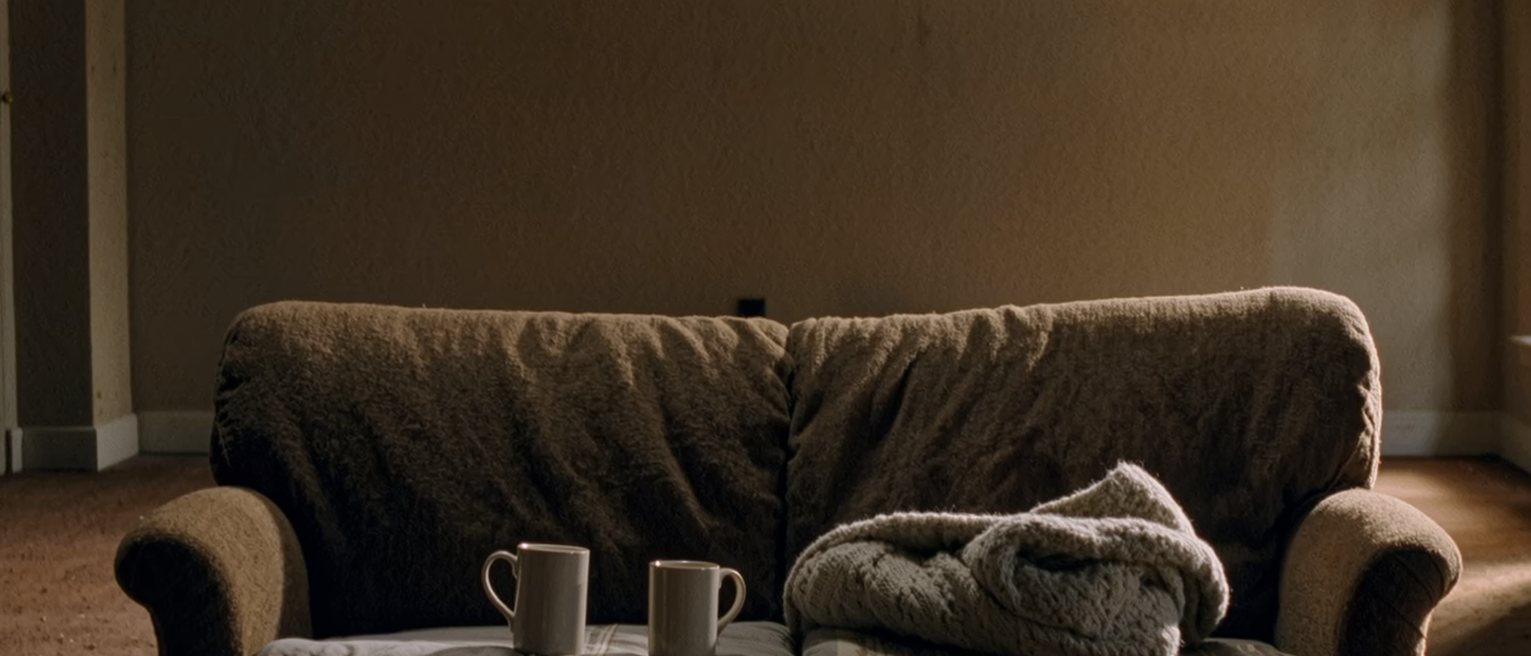

What this house is selling, and why it cannot be used as a comparison
This essay has just named the third capacity and argued it is undersupplied and under-examined. An arrangement here is a few hours of precisely that, with the other two capacities removed, which puts this business inside the argument rather than outside it.
So the disclosure, and then the part that is genuinely against our interest.
Co-presence without maintenance is easy to supply here, and it is easy for a specific structural reason: there is no stake in tomorrow. Nobody here needs her to be reasonable next week, has a position on how she spends money, will be affected by her mood on Thursday, or has to live with any decision she makes. Of course an hour like that is restful. It is restful in the way a hotel room is tidy — because nobody is living in it.
Which makes the comparison unusable, and that has to be said plainly because the comparison is the most commercially useful thing available to us. An evening here is not evidence that her husband is bad at being relaxed beside. He is attempting it while carrying a stake in her behaviour, a record he has to maintain, and consequences that reach into next year. Anybody here would find it harder too, under those conditions. A measurement taken with the load removed cannot be used to grade somebody who is carrying the load.
The honest account of what is on offer is therefore narrow and real at the same time. A few hours of the third thing, cleanly, with no implication about anybody at home — and a reader who takes this essay and spends four deliberate hours of unplanned nothing with the person she already lives with has done something this house cannot do for her, because she will have tested the capacity under the conditions that actually apply.
Limits
This essay is cultural and structural analysis rather than clinical guidance, counselling or relationship advice. It describes no treatment, promises no recovery, diagnoses nobody, and does not tell any reader whom to choose or what to conclude about anybody.
The claim that courtship at home is sampled in episodes with a horizon, while travel removes the horizon and imposes continuous joint decision-making under fatigue with no exit, is this Library’s own formulation. It is reasoned rather than measured.
The claim that a trip changes the rate at which ordinary joint decisions are sampled rather than the depth of what is revealed is offered explicitly as compatible with this chamber’s earlier finding that travel reveals no truer self, and is reasoned rather than measured.
The separation of three orthogonal capacities — procedural travel competence, erotic charge, and co-presence requiring no maintenance — is this Library’s framework. It is presented as capacities rather than types of person, no capacity is described as more valuable than another, and the essay states that weakness in one is not a character flaw.
The observation that travel conditions frequently suppress desire rather than heighten it, against the cultural script, is an interpretation offered to explain why a trip under-reports that capacity. It makes no claim about frequency and names no group.
The description of relaxing beside somebody as being with a person who holds a record and is not currently consulting it synthesises this chamber’s earlier findings on solitude inside closeness and on actions being read against a record. The synthesis is this Library’s, is reasoned rather than measured, and the account of why a stranger and a long-married partner can both supply it is illustrative rather than evidential.
The central claim that the test is biased in a knowable direction — over-sampling logistics that routines later eliminate, under-sampling ordinary obligation, invisible labour, tolerance of boredom, and above all how somebody behaves when the difficulty is her rather than an external adversary — is this Library’s argument. It is reasoned rather than measured, and is offered as an amendment to a common recommendation rather than a refutation of it.
The claim that the usual ranking of the three capacities is inverted relative to how hours actually distribute is an interpretation. The essay states explicitly that it is not recommending restfulness over desire, and it assigns no fault to anybody for not having asked a question that courtship provides no occasion to ask.
The section about this house declares that the argument identifies what this business supplies, and concedes against that interest that co-presence is easy here only because there is no stake in tomorrow — so an evening here cannot be used as evidence about anybody at home, a measurement taken with the load removed being inapplicable to somebody carrying it. The obligations are stated as constraints rather than as a description of current practice. No figure, proportion or statistic appears anywhere in this essay.
The sentence underneath
If I travel far enough, can I step outside the version of me everyone already knows?
Travelling with somebody answers that question in a way travelling alone does not, because he is carrying the version with him. She cannot get out of range of a record that has booked the seat next to hers.
Which sounds like a loss and is closer to the opposite. The thing worth knowing is not whether she can escape the version, but whether the person holding it is willing to stop consulting it for a while — to let her be unimpressive in a station for four hours without anything being inferred.
That is a much better thing to find out on a trip than whether he can read a timetable. And it is the one discovery that stays true at home, because unlike the logistics it is not a skill that routine will quietly dissolve, and unlike the erotic weather it does not depend on both of them being rested.
The ordinary version is very small. Four hours, one café, nothing to be done. If that is bearable — if it is even pleasant — then something has been established about the majority of the hours of a life together, and it was established by accident, by a cancelled train, which is the only examiner that ever sets the right question.