

TANTRA RESOURCES
Intimacy for Couples
Why the shorthand froze, why affection got expensive, why one of you does all the asking — and why almost none of it is anybody’s fault.
Closeness works better when two people can remain two independent people. That sentence is easy to agree with and hard to operate, and this page is about the operating — not about desire, which this chamber covers at length elsewhere, but about the mechanics: what two people in a room actually do, and what quietly goes wrong in the doing.
Almost nothing described below involves anybody behaving badly. That is the point, and it is the part most advice gets wrong. The couples who arrive at a page like this are usually two considerate people who have each been quietly solving a problem on their own, in ways that made perfect sense, and whose solutions have been working against each other for years.
Ask instead of assume — and the model that quietly froze
Relationship history does not replace asking what the other person wants now. Long couples accumulate a kind of shorthand that saves real time and slowly erases the question, and reintroducing the question out loud is the single most useful thing two people can do before any shared Experience.
The shorthand is not laziness. Knowing how somebody takes their coffee, which of two routes she prefers, what she means by that particular silence — this is what intimacy is made of, and having to ask would be a kind of failure. The trouble is that the shorthand is a model, and a model that is never queried stops updating. It freezes on the day the asking stopped. After that, two people can be faithful, attentive and thoroughly kind to a version of each other that is several years out of date.
Which is why the repair cannot be an audit. Do you still like this? lands, however it is meant, as an accusation with a correct answer — and the person asked will usually give the answer that keeps the peace, because the alternative is telling somebody who has been getting it wrong for a while that they have been getting it wrong for a while. Nobody wants to deliver that news to a person they love.
The version that works has no history in it at all. Not do you still, but what would be good this week — a question about now, which nobody can be wrong about, and which does not require either person to admit that anything had drifted. Both of you answer a question about the present. Nobody has to be corrected.
Two consents, never one
In Private Tantra for Two, each partner completes a private intake and a Map the other never sees. The shared session is the intersection of the two, confirmed with each of you separately. One person’s wish is never the other person’s permission.
The separation exists because of a specific, extremely common situation, and naming it plainly is more use than any reassurance. One of you found this, read about it, and wanted it. The other agreed. Those are not the same act — and from outside, on a booking form filled in by one person for two, they are completely indistinguishable.
A private intake is what makes them distinguishable, because the answer given alone is not the answer given in front of the person who is hoping for it. The same structure applies where one person pays: a booking made as a gift is confirmed directly with the woman it is for, on a date she has agreed, in her own name — and what she writes is never shared back with whoever paid. Not as a formality. Because a yes given to keep somebody happy is the thing the entire evening is designed not to run on.
A practical consequence worth stating, because it relieves a specific worry: the narrower answer decides. If one of you wrote something the other did not, it does not happen — and the person who wanted it is not told which line was the one that stopped it. Nobody leaves the room knowing what their partner declined on their behalf.
Why affection got expensive
A cuddle, a kiss, a massage or a sensual moment does not obligate either partner to continue. Much of what makes touch feel unsafe inside a long relationship is not the touch itself but the sense that accepting it signs you up for what comes next.
Follow that through, because the ending is where most couples actually are. If every touch is read as a bid, then declining a touch is declining the person — and that is a heavy thing to do to somebody at ten at night in your own kitchen. So the cheapest move available to the person who does not want what the touch might lead to is to avoid producing the moment at all: no hand on the back, no standing close, nothing that could be misread as an opening.
A few months of that and the couple reports, accurately and sadly, that they are not very affectionate any more. What actually happened is narrower: the kiss that means nothing stopped being available. And once it is gone, the kiss that means something cannot be read either, because there is no longer anything for it to be distinguished from. Every gesture now carries the full weight, so every gesture becomes a decision, so there are fewer of them — and neither person has done anything wrong at any point in that sequence.
Which is why practising touch that asks for nothing, on purpose, is not a warm-up exercise. It is the repair itself: it puts the weightless gesture back into circulation, and the weighted one becomes legible again the moment it has company. REIGNITE spends six months on this, and the partner-massage module inside it exists to give two people a way of touching that has no agenda at all — not as a route to something else, but because a couple with no unweighted touch left has lost a language rather than an appetite.
The ledger nobody is keeping on purpose
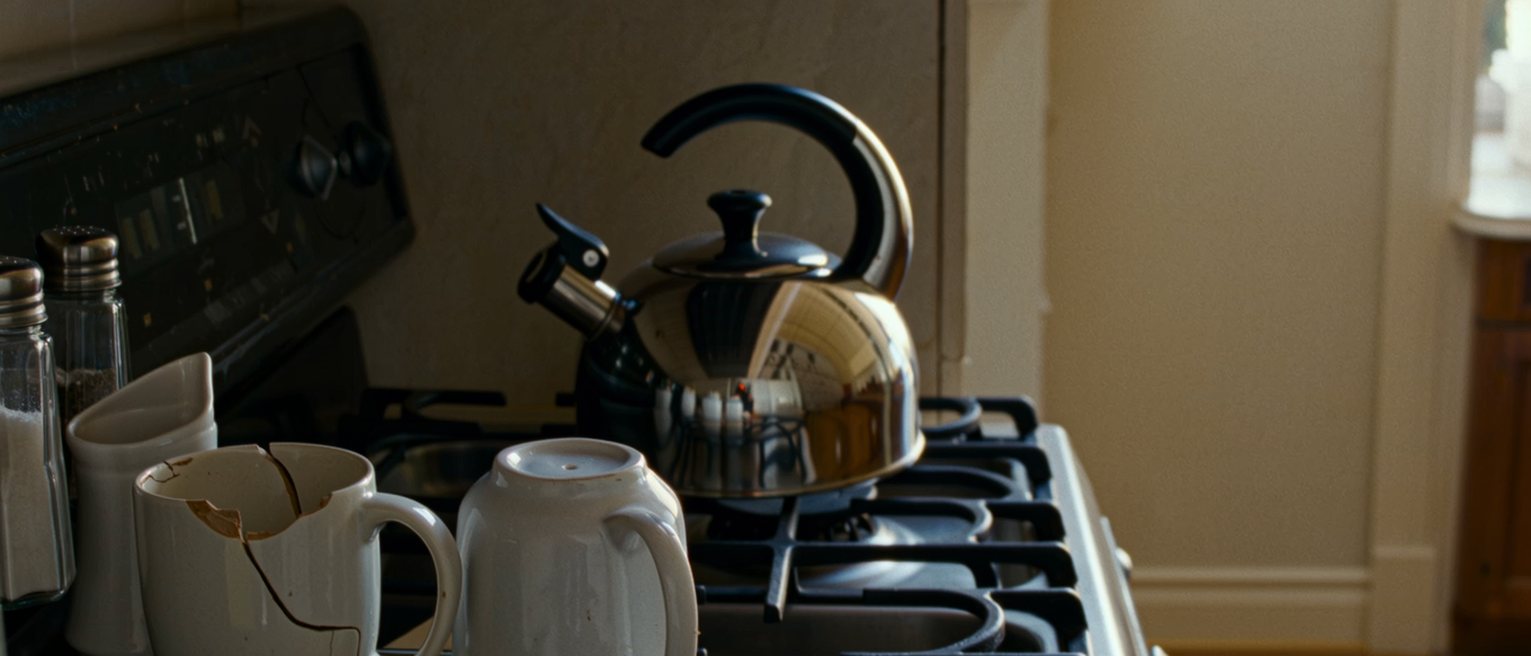
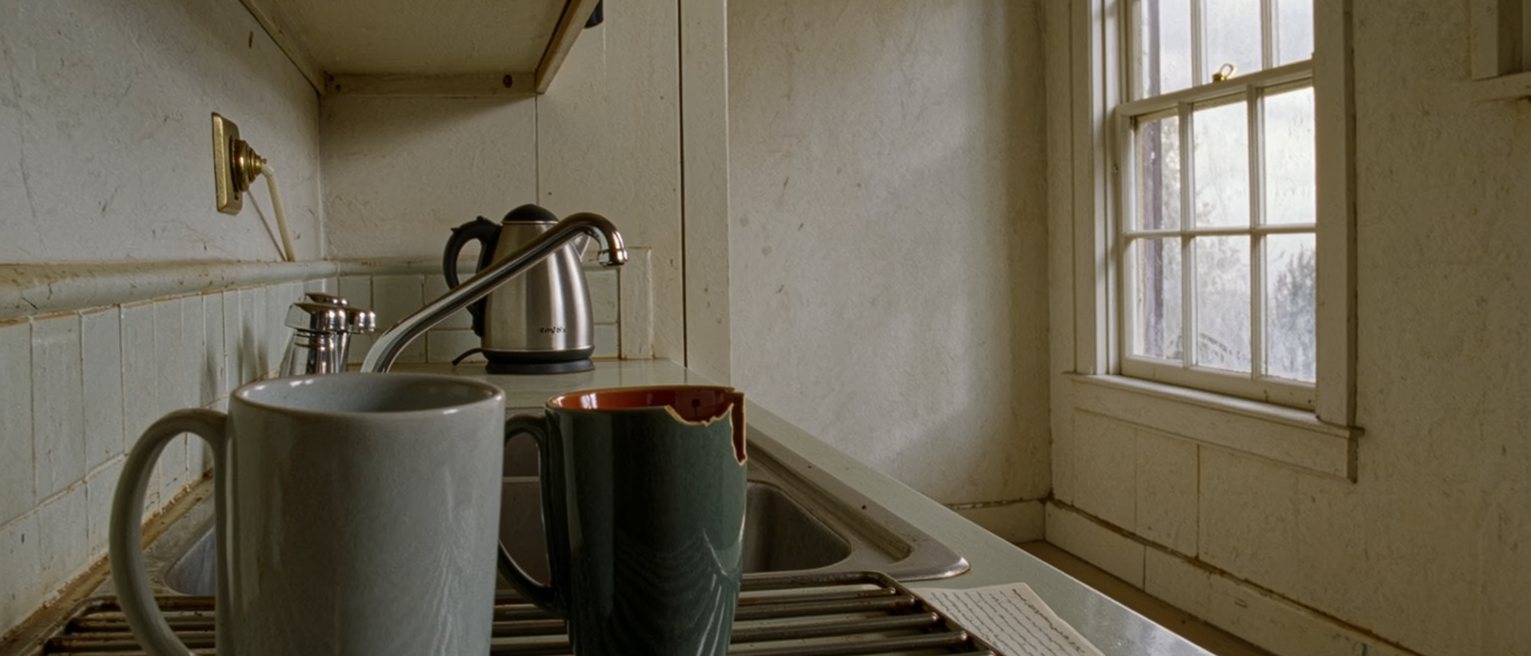
In most long couples, one person does the asking. Not by agreement — it settles early, for ordinary reasons, and then hardens into a role that neither of them chose and both of them can describe.
Both positions are expensive and the expenses are invisible to each other. The one who asks accumulates refusals, and a refusal is only ever partly about tonight — asked often enough and declined often enough, a person stops hearing not tonight and starts hearing something about herself. The one who is asked accumulates obligation: every evening now contains a question that will need answering, so the hours before bed acquire a low hum of decision, and the reasonable response is to arrive at them already asleep, already busy, already turned towards the wall.
So two tired people lie in the dark, each privately certain that the other one has the easy job. She thinks he can simply ask. He thinks she can simply say yes or no. Neither is being unfair; each can only see their own side of the ledger, and there is no natural moment at which the two columns get compared.
The thing that resolves it is not better asking or more generous answering. It is an evening in which nobody has to initiate, because what happens was settled in advance by somebody who is not in the couple. For the one who usually asks, there is nothing to risk. For the one who usually answers, there is nothing pending. And it is remarkably common for two people to discover, in the first hour of not having those roles, that they were considerably less tired of each other than they were of the arrangement.
Different tempos are the normal case
One person may want conversation while the other wants rest or touch. The goal is coordination, not identical desire. Couples who expect to want the same thing at the same moment read every difference as rejection; couples who expect difference can negotiate it.
The expectation of matching is not something either of you invented; it is the only model most of us were ever shown, in which two people are struck simultaneously and everything follows from that. This chamber has a long essay on why that model describes the beginning of a relationship rather than the length of one, and on what replaces it: desire that arrives after the conditions rather than before them. The practical upshot for two people is small and useful. A partner who is not in the mood is not necessarily a partner who does not want you. Very often she is a partner for whom nothing yet has happened.
Which changes what there is to negotiate. Not whether two people want the same thing — they rarely do, at the same minute, at any stage — but whether the slower one is given the conditions under which wanting appears at all, and whether the faster one can wait inside that without experiencing the wait as a verdict.
Why a third person makes two people slower
A guided shared format helps here mainly by slowing things down, and the paradox is worth unpacking: a third person in the room gives two people permission to take their time.
Alone, pace is negotiated by the two of you, which means somebody has to propose slowing down — and a proposal to slow down, made by one partner to the other, is almost impossible to deliver without it sounding like a smaller version of no. So it does not get made. Things move at the speed of whoever is least willing to say anything, and both people afterwards describe the evening as somehow rushed without being able to say who rushed it.
Inside a structure, the pace belongs to the structure. It was decided before either of you arrived, by somebody with no stake in how the evening turns out, and it is nobody in the couple’s to defend. A pause is not a message. Nobody in the room is rejecting anybody — and two people who have spent years reading each other’s speed for signals get an evening off from interpretation.
What a shared evening actually consists of
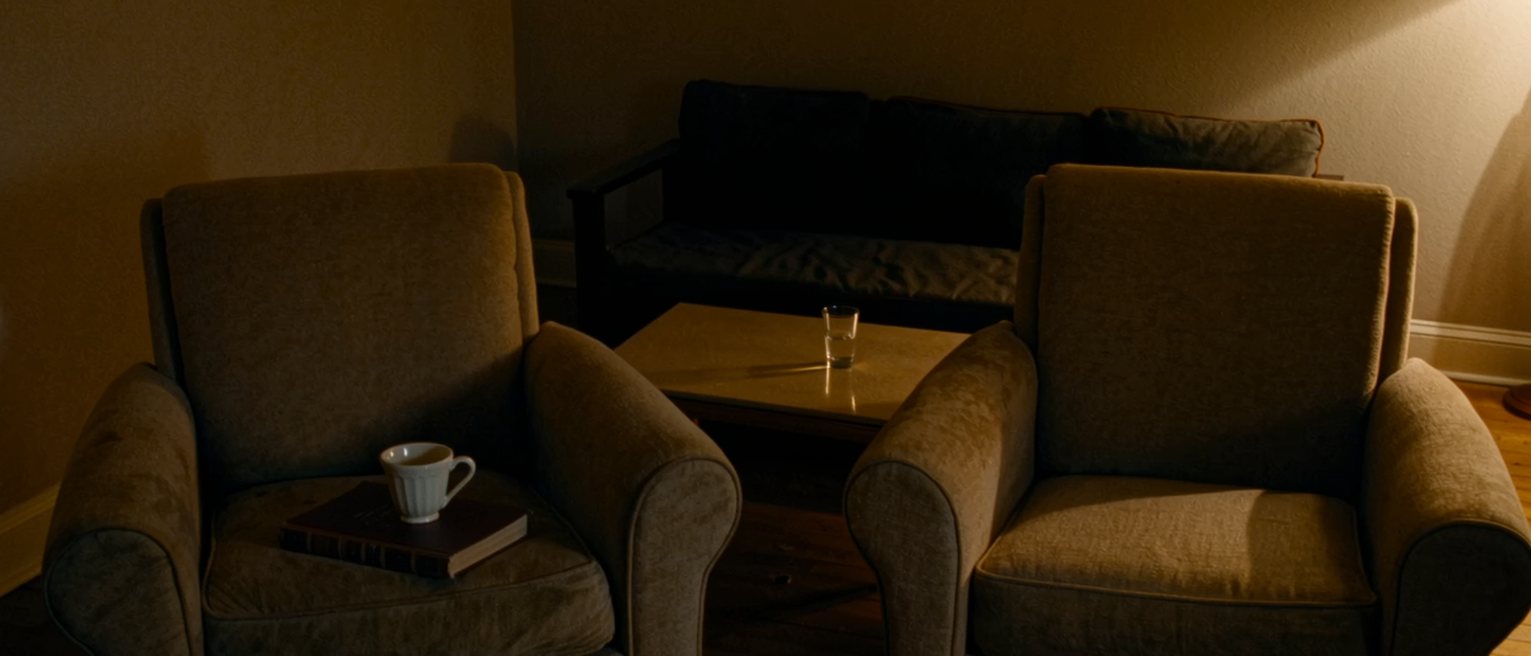
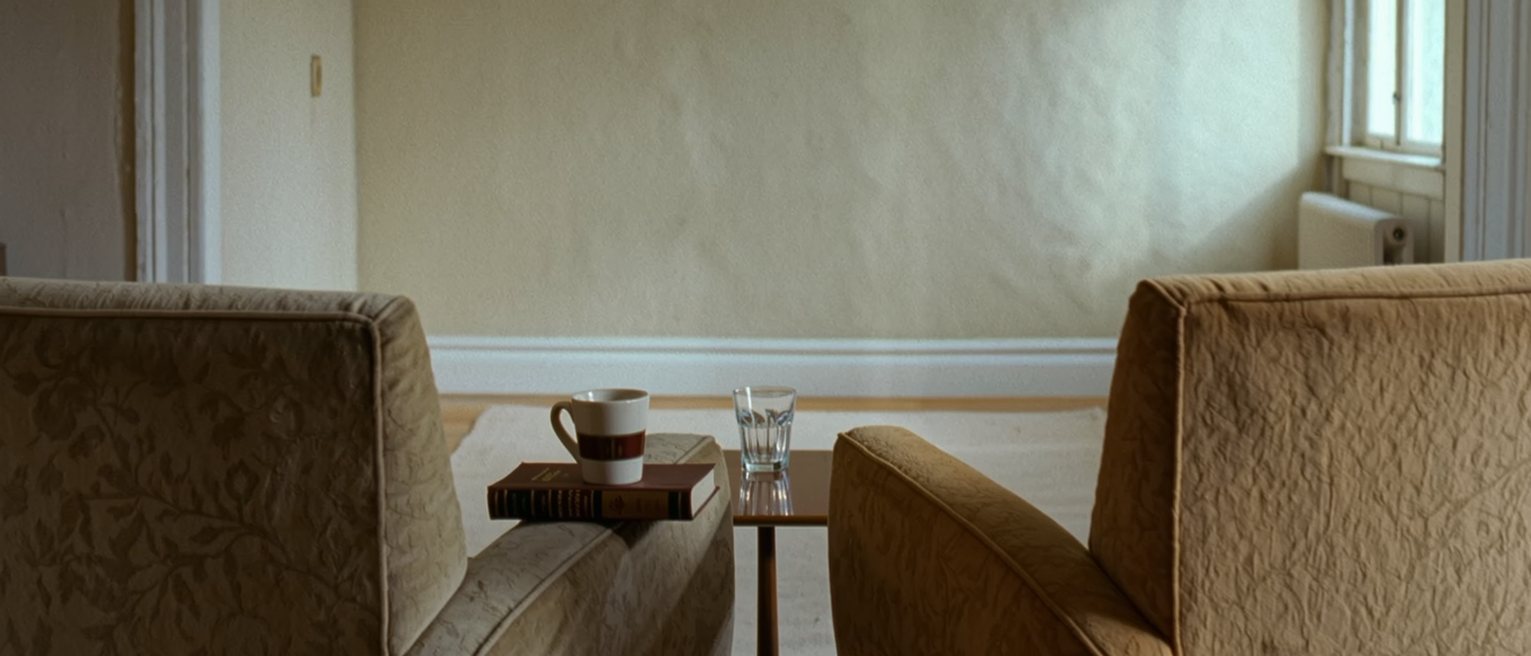
Diagnosis is easier to write than description, so here is the description. The shape is deliberately unmysterious, because two people who do not know what is about to happen will spend the first hour finding out instead of arriving.
Before the day, each of you completes your own intake and Map, separately and privately. On the day: arrival and greeting, then a check-in about how each of you is feeling and where your boundaries sit now — which is not a repeat of the form, because the form was last week and you are here tonight. Then the Experience itself, built from the overlap of the two Maps. Then time to land, which is not an afterthought and not optional. Then follow-up where it is appropriate.
Two things about that sequence are worth saying plainly, because they are what most couples are actually wondering. Neither of you is required to perform anything for the other, or to demonstrate that the evening is working. And neither of you is ever asked a question about your own state in front of the other — a check-in that puts a wife on the spot beside her husband has not checked anything, it has held an audition.
You are also allowed to want very little. A shared evening in which two tired people are warm, unhurried and touched with no agenda, and in which nothing further happens, is not a reduced version of the thing. For a good number of couples it is the entire thing, and the reason it works is that it was the first hour in years that neither of them had to steer.
The day after, which is where couples most often trip
One more mechanism, and it is the one nobody warns two people about, because it happens after everybody has gone home.
The morning after, one of you will want to talk about it and one of you will not — and this is usually a difference in how each of you metabolises things rather than a difference in how the evening went. But the one who wants to talk hears the silence as disappointment, and the one who does not hears the question as an evaluation. Within twenty minutes a good evening has acquired a verdict that neither of you intended to deliver.
The fix is unromantic and it works: agree beforehand that there is no debrief. Nothing has to be summarised, rated or concluded, and neither of you owes the other a reading of the night. If something wants to be said it will still be there in three days, by which point it will be a thing one person noticed rather than a verdict either of them has to defend.
And expect the delayed arrival. It is common for something to surface a day or two later — an unexpected flatness, a tenderness, an irritation with no obvious object — after any experience involving sustained attention and touch. In a couple this is where the real damage usually happens, because a partner’s low mood on Tuesday gets read as evidence about Saturday. It is almost never that. Knowing in advance that it is ordinary is most of what stops it becoming a conversation neither of you meant to have.
What a slow evening cannot do
Some of what brings two people to a page like this is not a pace problem, and a house that blurred the difference would be selling somebody the wrong hour at a difficult moment.
Contempt is not a pace problem. Nor is a betrayal that has not been dealt with, nor a partner who does not accept that the other can decline, nor pain during sex that has never been examined, nor the kind of exhaustion that turns out to be an untreated illness. Those need a couples therapist, a doctor, a lawyer or a clinic — people with training this house does not have and does not pretend to — and Moonlight will say so and point you onward rather than book you in.
Where it does help is narrower and real: two people who still like each other, who have each been solving a problem alone, and whose solutions have quietly been cancelling each other out. That is a large number of couples. It is simply not all of them, and knowing which one you are is worth more to you than an evening is.
If there is one idea to carry out of here, it is that almost none of this is anybody’s fault. The shorthand froze because the shorthand worked. Affection got expensive because declining a touch had become declining a person. One of you started doing the asking because somebody had to, and the other started arriving asleep because a question was waiting. Every step was reasonable. The sum of them is a couple who cannot work out where it went.
Which is also the encouraging part, because none of those require a different person to fix. They require a question with no history in it, a touch that asks for nothing, a night where neither of you has to initiate, and a pace that belongs to neither of you. That is a much smaller repair than it feels like at eleven at night, with your back to somebody you love.
Education without claiming authority.
Moonlight separates history, modern interpretation and service application rather than blurring them. Nothing on this page is a claim of lineage, initiation or clinical effect; each section is labelled with the lens it is written from.
Terms used on this page
Continue reading
A quiet next step
The reading letter
Twice a week. Three pieces, then one. Chosen from what you ask for, and nothing is sold to you.