WELLBEING
Last in the Developed World
Japan sleeps least among the developed countries, and inside Japan — reversing almost every other country surveyed — women sleep less than men. No patience, everything hurts, no desire, nothing interests me: those four sentences are also the published effects of being two hours short every night for years, and almost nobody checks that first.
In comparative time-use data across the developed countries, Japan comes last for sleep. That is reported often enough to have become background noise. The part that is not background noise is what happens when you split the figure by sex.
In nearly every country surveyed, women sleep slightly more than men. In Japan they sleep less. Japan is an outlier on the total and an outlier on the direction of the gap, and one explanation covers both: the second shift is unusually large here, and it is taken out of the only block of hours that nobody else can see you spending.
Where the hours actually go
Do the arithmetic on an ordinary weekday and it stops being mysterious. Paid work and commute. The unpaid work that this chamber has already priced — the shopping, the cooking, the school paperwork, the remembering. The emotional administration of a household, which is invisible and does not stop. Everything that could be compressed has already been compressed. The only remaining elastic item on the list is sleep, so sleep is what gives.
And sleep gives quietly, which is the crucial property. Cutting a meal is visible. Cutting a child’s activity is visible. Nobody at all observes a woman going to bed at one and getting up at six, so it is the cheapest possible place to absorb a shortfall — cheapest in social terms and by far the most expensive in every other. A household that is chronically over-committed is usually not over-committed. It is running a deficit and settling it, silently, out of one person’s nervous system.
The Japanese language got a good phrase for this around 2017: 睡眠負債. Debt, not deficit. The distinction is exact and it matters, because it says the shortfall accumulates rather than resetting each morning, and that one long Sunday does not clear six years of it.
And some of it she is not losing.She is taking it.
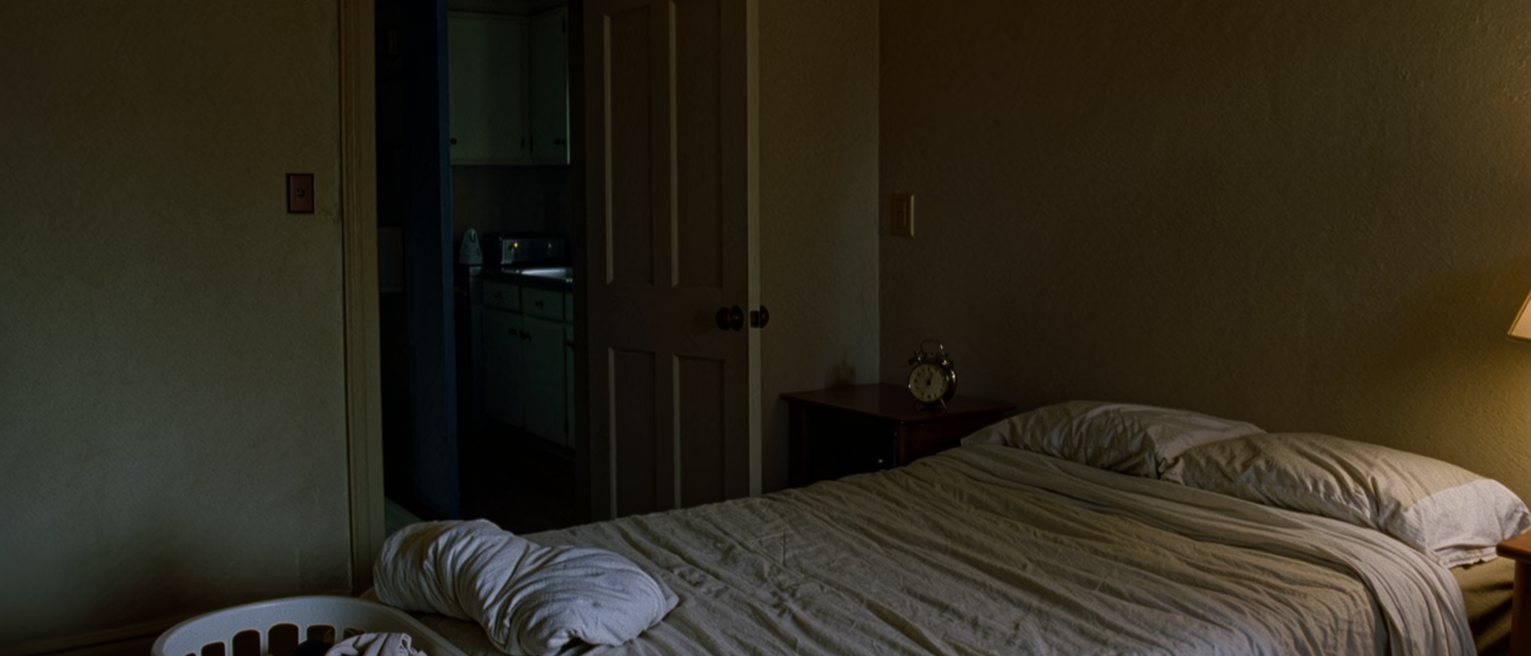
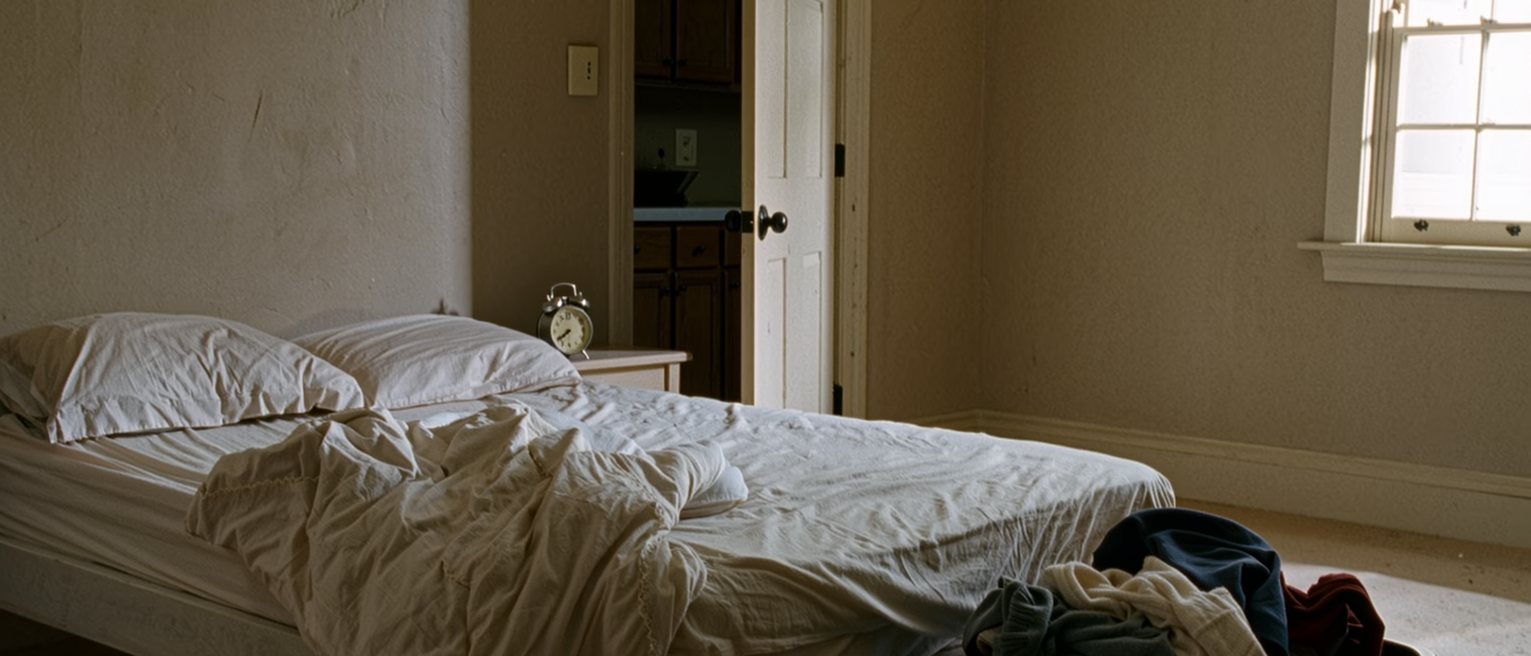
Here is the part that most sleep advice skips, and any advice that skips it deserves to be ignored. Not every one of those hours is being stolen from her. Some of them she is taking, deliberately, with her eyes open, at half past midnight, knowing exactly what it will cost her at six.
Everyone is finally asleep. The dishwasher is running and nobody is going to ask her for anything for the next ninety minutes. It is the only stretch of the day that is not allocated to somebody else, and she is not going to hand it back. So she watches something. She scrolls. She does nothing at all, magnificently. There is a name for this now — the bedtime that gets pushed later and later — and it is not weakness of will. It is a person with no time of her own taking the only unguarded hour there is, from the only place it can still be taken.
So please do not read the next section as being told off. Anybody who tells her to just go to bed earlier has not noticed that she is paying for that hour with her own health because it is the only currency she has left, and that this is not irrational at all. It is a bad trade made by someone who was offered no good ones. The honest goal is not to take the hour away from her. It is to get it back for her somewhere it does not cost so much — which is a conversation about the whole week, not about her bedtime.
What short sleep is actually doing
This is where it stops being a lifestyle subject. Chronic short sleep degrades emotional regulation first and most — the same events produce more irritation and more distress, and the recovery from each one is slower. It lowers the pain threshold, so the body hurts more at identical stimulus. It blunts sexual desire and physical arousal directly, through both hormonal and attentional routes. It flattens interest generally, in everything, including things a person genuinely loves.
Now read that list again as a set of complaints. No patience. Everything hurts. No desire. Nothing interests me any more. Those are the four sentences women most often arrive at this subject with, and they are also, precisely, the published effects of being two hours short every night for several years. A great many women have concluded that something has gone wrong with who they are, when what has gone wrong is an hours deficit that nobody audited because it was too boring to be the answer.
The honest qualification: persistent insomnia, loud snoring with daytime sleepiness, and low mood that does not lift are medical, and sleep apnoea in particular is badly under-diagnosed in women because the textbook patient is a large middle-aged man. If sleep is protected and still broken, that is a doctor’s question and not a willpower question.
Rest is not a reward for finishing
The belief doing the damage is that rest is earned. Finish the list, then sleep. It sounds like discipline and it is arithmetically illiterate, because the list does not end — it regenerates overnight, and a rule that permits rest only after completion is a rule that permits rest never.
The replacement is unglamorous. Sleep is an input, like food. It is not virtue, it is not laziness, and it does not belong to the category of things that get done if there is time. A household that cannot function without one member sleeping five hours is not a household that is trying hard. It is a household whose books do not balance, and the imbalance is being settled by whoever was assigned to absorb it.
Which is the house position stated in its dullest and most defensible form: wellbeing sits with health rather than with social structure. Her sleep is not the slack in the system. It is load-bearing, and it has been treated as slack because it is the only expenditure that leaves no witness.
Three moves, in order of how much they return
One: find out the real number. Not the estimate — the actual time the light went off and the actual time she got up, for one ordinary week. The gap between what women believe they sleep and what they sleep is frequently an hour, and nothing gets negotiated until the figure is on the table rather than in the realm of feeling tired a lot.
Two: do not attack the late bedtime directly. Replace it. The hour before bed is the only unguarded hour she has, and taking it away without putting one somewhere else is a plan that will fail in four days and leave her feeling worse about herself, which is the opposite of the point. Find her a protected hour somewhere in daylight — Saturday morning, a weekday lunchtime, anything with a witness — and the midnight one loosens its grip on its own. Thirty minutes recovered that way, every night, returns more than any weekend catching-up ever has.
Three, and it is the one that actually requires courage: say the number out loud to the other adult. Not as a complaint and not as an accusation — as a figure. "I am sleeping five and a half hours and you are sleeping seven." Most people carrying the smaller share have never once been told the size of the difference, because it happens at one in the morning in a dark room while they are asleep. It is remarkably hard to defend once it is a number, and remarkably easy to keep not noticing while it is a mood.
Why a house about intimacy is talking about sleep
Because it would be dishonest not to. A woman who is chronically short of sleep and who wonders why she feels nothing is not usually facing an intimacy problem, and it would be easy — and profitable — for a service like this one to let her believe otherwise. Sleep is the first thing to check, it costs nothing to check, and if it turns out to be the answer then she needs an argument with her household rather than an appointment.
Where an Experience genuinely sits is further down. Two or three hours in which nothing is required, nobody is waiting and no list is running is a different kind of rest from sleep and does not substitute for it. It is worth having. It is not worth having instead.
Last in the developed world, and inside that, the women are last again. It is not a national character trait and it is not devotion and it is certainly not a flaw in her. It is a shortfall being settled, every night, out of the one account that issues no receipt — hers. If you are reading this at half past midnight because it is the only time anybody left you alone, that is not a failing, and this page is not here to take your hour away. It is here to say that the hour should never have had to come out of your sleep, that the figure is knowable in a single ordinary week, and that almost nothing else in this chamber gives back so much for so little. You are not short of discipline. You are short of two hours a night, and you have been for years, and somebody should have said so a long time ago.
Education without claiming authority.
Moonlight separates history, modern interpretation and service application rather than blurring them. Nothing on this page is a claim of lineage, initiation or clinical effect; each section is labelled with the lens it is written from.