Around the World
The Rope and the Lineage It Borrowed
Rope work is sold to the world as an ancient Japanese art descended from the arresting techniques of the Edo period. The martial art was real. The descent is largely asserted rather than documented, and the practice as it exists is barely a century old — which is the third time this chamber has found a modern invention wearing a borrowed antiquity, and the fact that it keeps happening is more interesting than any of the individual cases.
The story told about rope work, in workshops and catalogues and documentaries worldwide, runs like this. In the Edo period officials developed a martial discipline for binding prisoners, with schools and transmitted technique and knots that indicated a captive’s rank and offence. That discipline was refined over centuries, and from it descends the erotic rope practice of today, carrying its geometry and its authority.
The first half of that is true. The arresting art was real, it had named traditions, and rope was a serious instrument of Japanese law enforcement with genuine technical literature behind it.
The second half is the part worth examining, because it is asserted far more often than it is demonstrated. The line of transmission from a martial restraint discipline to a twentieth-century erotic aesthetic is not documented in the way the story implies. What exists is a strong visual resemblance and a great deal of retrospective attribution.
The documented origin sits much closer to us. The modern erotic form takes shape in the early twentieth century, and the pivotal figure is an artist and photographer working in the nineteen-tens and twenties who produced images of bound figures and photographed his own wife suspended while she was pregnant. From there the practice circulated through postwar fetish magazines, which built its vocabulary and its readership, and was then codified into performance by a handful of practitioners across the later twentieth century.
So it is roughly a hundred years old, it was assembled by identifiable people, and the ancient pedigree was attached afterwards.
The third time this chamber has found the same thing
That pattern should now be familiar, because this is its third appearance here and the repetition is more instructive than any single case.
Tantra: the contemporary practice is a twentieth-century Western construction wearing a Sanskrit name, while the genuine tantric tradition Japan actually possesses is a mainstream Buddhist lineage with nothing to do with sex.
Cosplay: the practice is American and predates the Japanese word by decades; what Japan invented was the discipline, and the deep cultural ancestry people reach for is atmospheric rather than genealogical.
And rope: a modern erotic aesthetic with a martial antiquity attached by assertion.
Three cases, one structure. In each, a recent practice acquires an ancient lineage, and the lineage does real commercial and psychological work — it makes the thing feel serious rather than merely appetitive, it supplies an authority the practice could not claim on its own merits, and it converts a preference into a heritage.
Which is worth noticing about oneself as much as about the market. The instinct to want an old reason for a current interest is very strong, and it is almost never necessary. A practice invented in 1925 can be worth doing. It simply cannot claim that the samurai endorsed it.
What the origin actually contains
An essay that aestheticises this form without stating where it came from is sanitising it, so here is the uncomfortable part.
The early work that establishes the modern aesthetic did not emerge from a tradition of pleasure. It descended from pictorial depictions of judicial torture — a recognised genre with its own conventions — and the artist at the origin point was explicitly working in that register. The imagery of suffering is not an accidental residue. It is the source material.
And the most cited images in the form’s early history are photographs of the artist’s own wife, bound and suspended, while she was pregnant. Accounts of that relationship are not comfortable reading and are not straightforwardly consensual by any standard, including the standards of the time.
None of this means the contemporary practice is illegitimate, and it is not an argument that anybody doing rope work today is implicated in it. Art forms routinely outgrow their origins, and this one has been substantially reconstructed by people with entirely different intentions.
What it does mean is that the reverent version — an ancient refined art of beauty and trust — is a considerable tidying of the record. The form’s foundational images are of a woman who was not in a position to refuse, made by a man who found the depiction of suffering aesthetically interesting.
Knowing that does not spoil the practice. It removes the pretence that its history is a credential.
Why the export improved it
Now the comparative finding, which inverts the story usually told about cultural export.
The standard narrative is that a deep Eastern tradition travels west and is diluted — stripped of context, commercialised, reduced to technique by people who do not understand it. That narrative fits several things and it does not fit this one.
The Japanese tradition transmitted primarily through apprenticeship and performance. A practitioner learned from a particular teacher, absorbed a house style, and a great deal of the knowledge stayed tacit. What it did not develop, as a formal body of teaching, was an apparatus for negotiation and physical safety.
The Western scene that grew from the two-thousands, largely through workshops and the internet, built exactly that. It arrived inside communities that already had explicit consent frameworks and applied them here as a matter of course. It produced a substantial teaching literature on nerve anatomy — which nerves rope compresses, what the warning signs are, how long is too long. It normalised checking in, safe words, and the expectation that the person being tied directs what happens.
So the import did not water down the original. It added the component the original had not systematised, in the specific area where the original was most dangerous.
That is worth stating plainly, because the reverence in this field runs one direction and the safety literature runs the other, and a person choosing where to learn should know which tradition developed which strength.
The risk, stated as risk
This belongs in the middle of the essay rather than in a footnote, because everything aesthetic above is written about an activity that injures people.
Rope compresses nerves. The ones that run close to the surface at the upper arm are the common casualties, and the result ranges from temporary numbness to loss of function lasting weeks or months. It is not rare, it happens to experienced people, and it can follow from a tie that felt fine at the time.
Suspension adds a second category. Weight distributed through the wrong places, a position held too long, or a body that cannot signal distress creates problems that develop faster than an inexperienced person expects.
And the structural point that matters most: the person in the rope is the one who cannot act. If something goes wrong, the capacity to respond sits entirely with the other person, which means everything depends on their attention and their willingness to stop.
This is not decorative caution. It is the reason the negotiation apparatus described above is the valuable part of the practice rather than an administrative preliminary to it, and it is why the aesthetic account in the rest of this essay should be read as a description of something that requires competence rather than as an invitation.
What is actually beautiful about it
Set the history and the risk aside for a moment, because the aesthetic question deserves a real answer.
Three things do the work, and they connect directly to what this chamber has already established about Japanese erotic aesthetics.
The first is the tension between geometry and body. Rope is regular, repeating and imposed; a body is irregular, soft and particular. Laying one over the other produces a visual argument between them, and the interest lives in where the body refuses the pattern — the compression, the displacement, the places where flesh does what rope did not plan.
The second is partial concealment, which this chamber identified as the organising principle of the whole aesthetic tradition here. Rope does not cover. It divides, frames and directs, and it makes the eye construct what it cannot fully see. That is the same principle as the kimono collar and the obscured image: an effect produced by inference rather than display.
The third is impermanence, and it is the most genuinely Japanese element in the practice. The marks left afterwards fade over hours or days. They are the record of something that has already ended, they cannot be preserved, and their disappearance is part of what they are. That is a straightforwardly classical Japanese aesthetic position about transience, and it is the one place where the heritage claim this essay has spent its length questioning is actually earned.
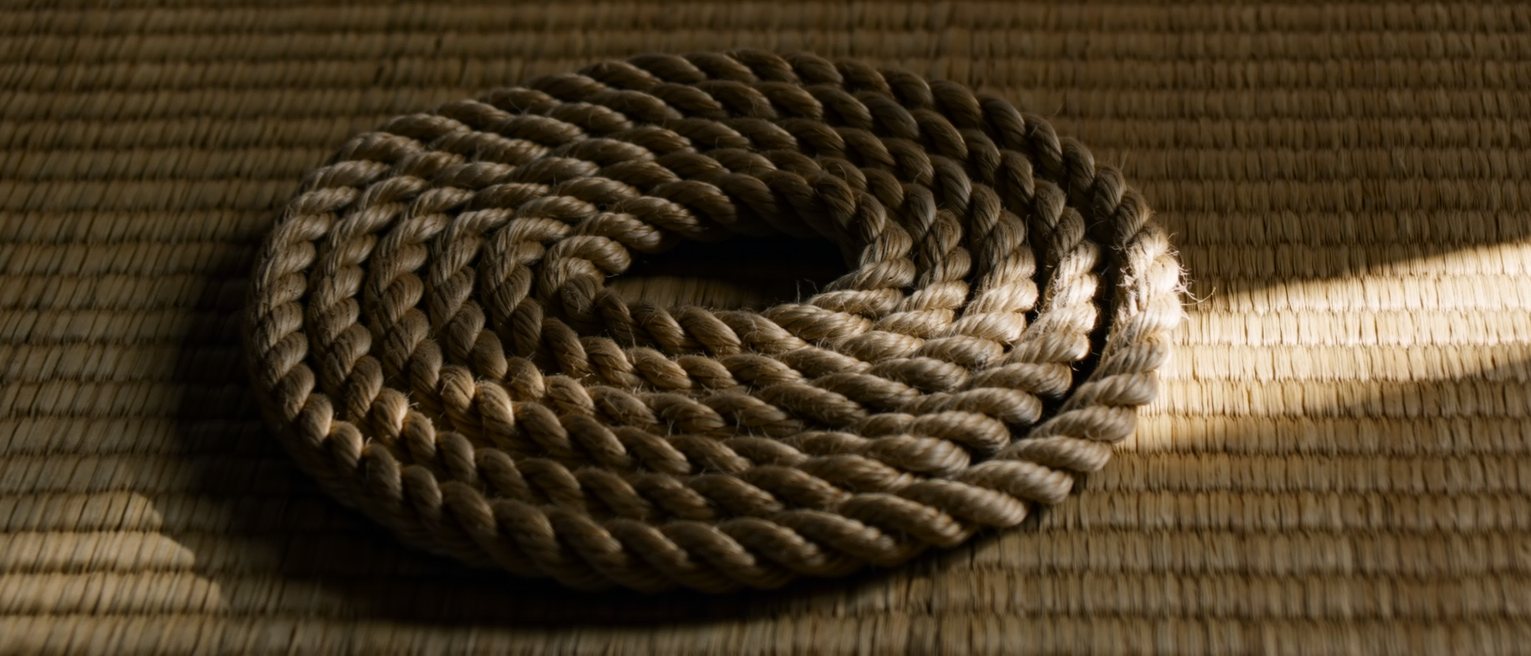
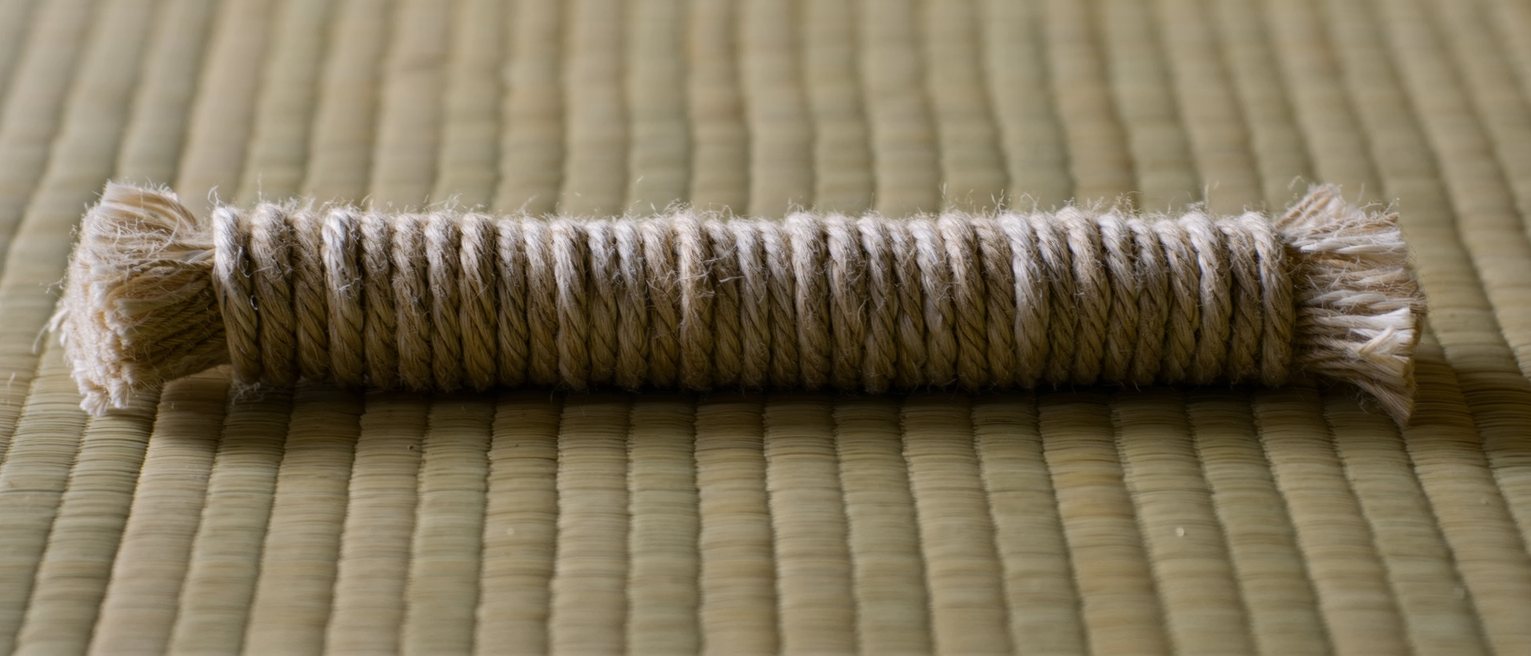
The kimono and tatami staging is a different matter. That is a photographic convention signalling tradition, assembled for the camera and for a market that wants the setting to look old. It is styling rather than lineage — which does not make it ugly, and does mean it is telling you about marketing rather than about history.
The question about what the woman experiences
How women feel about being restrained within a male-female dynamic, and the honest answer requires admitting what can and cannot be known.
What is not available is any representative account. The people who write about this are people who kept doing it, and the literature is therefore selected for enthusiasm. Anybody who tried it once, disliked it, and never mentioned it again is invisible in the record, and there is no reason to think that group is small.
What people who do write describe clusters around a few things. The relief of not deciding, for a defined period, by prior agreement. The intensity of sensation and the narrowing of attention it produces. The experience of being the object of somebody’s sustained, effortful, undivided concentration — which several accounts identify as the actual content, with the rope as the occasion rather than the point.
And there is a structural fact that cuts against the visual reading. In a great deal of practice the person being tied is the more experienced party, sets the limits, and directs what happens. The image depicts one person acting and one person acted upon. The activity frequently runs the other way, with the person holding the rope serving an experience the other person specified.
Both readings are available in real instances, which is exactly why the negotiation is not optional. The same physical arrangement can be an encounter in which somebody’s stated wants are being carefully executed, or one in which they are not, and nothing in the photograph distinguishes them.
So the useful answer is not a description of how women feel. It is that the image is a poor guide to what is happening, in both directions, and that the only thing which reliably tells you is what the two people agreed beforehand.
Where this leaves a practice that is genuinely useful
Having spent the essay dismantling the mystique, it is worth being clear about what survives, because a great deal does.
The negotiation is the valuable part. To do this at all, two people have to discuss in advance what will happen, what will not, how long, what the signals are, and what ends it. That conversation is mandatory here in a way it is not in most of the rest of intimate life, and it produces a level of explicit agreement that many couples never reach about anything.
Which is the observation this Library keeps arriving at from different directions. The chamber found it in scenario and costume, where naming a scene in advance transmits what a direct statement cannot. It is here too, and more forcefully, because rope makes the conversation unavoidable.
That is the actual transferable thing. Not the knots, not the aesthetic, and certainly not the borrowed lineage. The transferable element is a practice in which stating what you want is a precondition rather than a risk — which is the thing this entire Library has identified as missing from ordinary life.
A person could take that single structural feature and apply it to an evening with no rope in it whatsoever, and would have extracted the most useful thing the practice contains.
Limits
The Edo-period arresting art is well documented as a martial discipline. The claim of direct descent from it to modern erotic rope practice is widely repeated and is disputed among people who study the subject; this essay treats the resemblance as real and the transmission as unestablished, which is the defensible position rather than a settled one.
The early twentieth-century origin, the artist at its pivot, the descent of his imagery from depictions of judicial punishment, and the postwar magazine circulation that followed are documented in the history of the form. Accounts of the personal circumstances behind the best-known early photographs come from biographical sources of varying quality, and the essay characterises them as not straightforwardly consensual rather than making a specific factual claim about any incident.
The description of the Western scene as having developed the safety and negotiation apparatus reflects where the teaching literature on nerve injury and consent protocol was substantially produced. Japanese practitioners also teach safety, and the claim is about where systematisation occurred rather than about who cares.
The physical risks described — nerve compression at the upper arm, problems arising in suspension — are well established among practitioners and in the injury literature of the practice. This essay is not a safety guide and must not be used as one.
The account of what people report experiencing is drawn from self-reported and published accounts, which are selected for enthusiasm by the nature of who writes them. No proportion is claimed and the essay says in its own text that dissatisfied participants are structurally invisible in that record.
The reading of rope marks as a classically Japanese aesthetic of transience is this essay’s interpretation, offered because the connection is direct, and it is not a claim any practitioner makes in those terms.
And the pattern claim across three cases in this chamber is a synthesis of three separately argued findings rather than a general law about cultural transmission.
What the borrowed lineage was for
The question underneath all this was about cultural import — whether this is joining ikebana and wabi-sabi as a Japanese thing the world consumes, and what that says about taboos entering the mainstream.
It is, and the mechanism is worth seeing clearly. A borrowed antiquity does a specific job: it converts an appetite into an appreciation. Wanting to tie somebody up is an appetite, and appetites are difficult to hold without embarrassment. Practising a centuries-old refined art is an appreciation, and appreciations can be discussed at dinner.
That laundering is not contemptible. People need routes to things they want, and a respectable frame is a functional route. It is how a great deal of the world’s pleasure is conducted and there is no particular virtue in refusing it.
But it is worth knowing that is what you are doing, because the alternative is available and is simpler. You can want something without it having been endorsed by history. The practice does not become less interesting when the samurai are removed from it, and the interest was never coming from them.
What this Library offers is the part that needed no lineage at all — language for what you want, arrived at somewhere it costs nothing to say.
And an evening in which somebody is paying attention, the terms set in advance and by you, where saying what you want is the activity rather than the risk, and where nothing is inferred from your silence. Which, as this essay has just spent several sections establishing, is the only part of the rope that was ever doing the real work.