Around the World
What Is Hidden Is the Flower
Japan never produced a doctrine of correct sex, because a culture that does not moralise the act has no reason to legislate its performance. What it produced instead was an aesthetic — and the aesthetic turns out to be organised around inference rather than display, which explains almost everything that puzzles a visitor, including the word for foreplay and the sound in the videos.
Start with the absence, because it is the most surprising thing in the subject.
Japan has almost no prescriptive sexual doctrine. There is no Japanese equivalent of the long Western tradition in which a religious authority specifies which acts are licit, in what configuration, for what purpose, and in which failing to conform is an offence requiring confession. There is also no strong Japanese counterpart to the twentieth-century Western marriage-manual tradition, which replaced the priest with the expert and went on prescribing — mutual orgasm as the goal, technique as the route, dysfunction as the failure state.
That absence follows directly from the moral structure described elsewhere in this chamber. A culture whose moral order governs disclosure rather than the act itself has no particular reason to legislate how the act is performed. Nobody was ever going to be asked about it.
What Japan produced instead is aesthetic. Not rules about what is permitted, but conventions about what is done well — refinement, timing, restraint, the handling of a situation. The operative question is 作法, manner, rather than 正しさ, correctness.
So the honest answer to what counts as proper sex in Japan is that “proper” is the wrong axis. The available vocabulary is about whether something was done with skill and taste, which is a completely different question from whether it was allowed.
The scene in the period drama is not evidence
The familiar image — a samurai and a courtesan in layered robes, minimal preamble, a rapid escalation with only what is necessary uncovered — is worth examining because it is so widely taken as a window onto the past. It is not one.
That scene is a convention of twentieth-century Japanese cinema and television. Costume drama developed a visual shorthand for these encounters under the practical constraints of film production and the censorship standards of its own era, and the shorthand hardened into something audiences now read as historical.
The period’s own erotic art says something different, and it is much better evidence, because it was made by and for the people who actually lived then.
Shunga depicts encounters that are leisurely rather than hurried. There is conversation, written into the image. There are interruptions, jokes, domestic surroundings. Both parties are generally shown as engaged and enjoying themselves. There is no sense of a rapid escalation toward a conclusion.
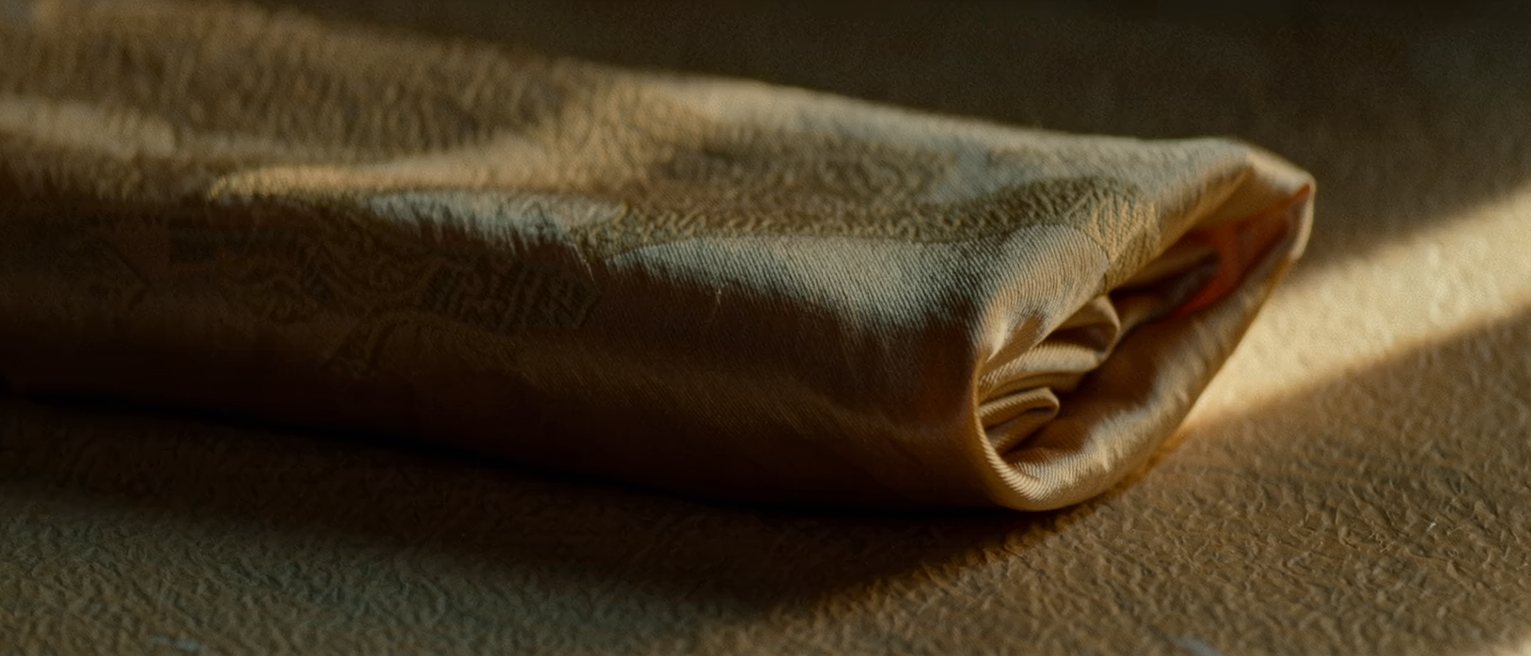
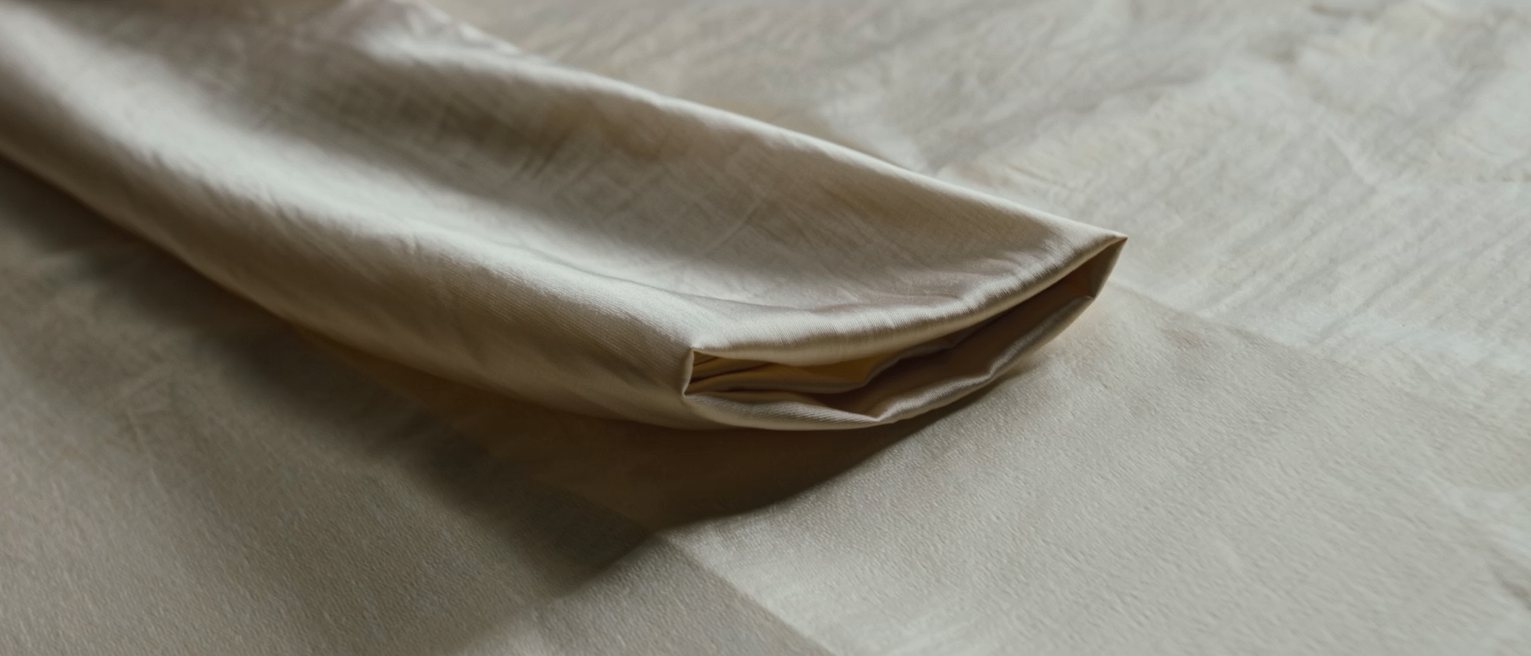
And the partial clothing — the detail the cinematic version borrowed and misunderstood — is an aesthetic decision rather than a practical one. The textile is the point. Pattern, layering, the way a specific weave falls and the contrast of it against skin are what the artist is interested in, and full nudity would remove the material that makes the picture work. The figures are partly dressed because the fabric is beautiful, not because anybody was in a hurry.
So the film image tells you about postwar Japanese cinema. It does not tell you about Edo bedrooms, and the period’s own pictures contradict it.
The word for foreplay, and what it admits
What foreplay is in Japanese is a fair question, and the answer is genuinely revealing.
The word is 前戯 — literally before-play. Structurally it is identical to the English, and it carries exactly the same defect: both words define the thing by what it precedes. There is a main event, and this is the material that comes first.
That is a shared failure rather than a Japanese one, and it is worth naming plainly because the hierarchy is doing damage in both languages. A category defined as preliminary is a category that can be shortened when time is short, skipped when somebody is impatient, and understood by both parties as not the actual thing. It is the grammar of an appetiser.
Two Japanese details make this more interesting than a simple parallel.
The first is that 前戯 is a modern and faintly clinical word, at home in medical and commercial contexts rather than in literature or affection. It is what you would find in a magazine article or a product description, not a word most people would use warmly. There is a softer alternative — 愛撫, caressing — which carries considerably more tenderness and is used far less often.
The second is that the older material does not segment an encounter this way at all. Shunga and the erotic writing around it do not divide the thing into a preliminary and a main event; they depict something continuous, in which what a modern reader would file as foreplay has no separate status because there is no hierarchy for it to be lower in.
Which suggests that the segmentation is recent in Japanese too, and arrived with the modern apparatus of medicine, commerce and imported sexology. The hierarchy was not always there. It was installed.
The sound, and where it actually comes from
People ask whether the vocalisation heard in Japanese adult video is an authentic characteristic of Japanese women. It is a fair question and the answer is no, in a way that is more interesting than a simple correction.
What is heard in that material is a production convention — highly codified, taught within the industry, remarkably consistent across decades and studios, and about as ethnographic as the way people in action films react to being punched.
The interesting question is why the convention exists in that particular form, and this chamber has already established the mechanism. Japan’s obscenity provision means the explicit image cannot be shown. A production therefore has to supply, through some other channel, the evidence that something is occurring — and the two channels available are the face and the sound.
So the vocalisation is carrying informational load that the image is legally prevented from carrying. It is not decoration. In a censored medium it is doing structural work, which is exactly why it became so elaborated and so standardised.
And then the consequence, which is the part that matters. Because commercial material functions as the de facto curriculum in a country whose schools do not teach this, a convention invented to solve a censorship problem became a script that people learn. Men learn to expect it. Women learn that it is expected — and Japanese reporting has covered the pressure that produces, including women describing performing a register they did not arrive with and could not step out of without the silence being read as a verdict.
A production workaround became a standard of authenticity. That is roughly the least authentic thing that can happen to a sound.
The salaryman’s layers, and why that is the wrong picture
There is a familiar image of a neutral-faced salaryman with layers of lewd fantasy underneath, and the image is vivid and comes from the wrong tradition.
It is a Freudian picture: a true self that has been pushed down, held under pressure, and kept out of sight by an effortful civilised surface, with the implication that the material below is more real than the material above and will escape if the pressure fails.
Japanese social practice supplies a different and less dramatic account. The public register and the private feeling are both recognised, both named, and both understood as genuine. The composed face is not a lid. It is the appropriate form for that setting, presented by somebody who also has a private life, and neither register is secretly the true one.
The difference matters practically. A repression model predicts pressure, leakage and eventual eruption. A dual-register model predicts something much quieter: not a man straining against himself, but a man who moves between two entirely functional modes and experiences no particular contradiction in doing so.
What that model does produce, and this chamber has described it before, is compartmentalisation — and the cost is not eruption but isolation. The two rooms do not communicate. He is not tormented by what is in the second room. He simply has no way to bring it into the first, including into his marriage.
The image of the repressed salaryman is more exciting than the truth. The truth is a man who is not conflicted and is extremely alone.
The aesthetic, which is the actual answer
If Japan built no doctrine of correct practice but did build an aesthetic, then the aesthetic is where to look for what might be called the cultural switch. Three principles recur, and they are the same three.
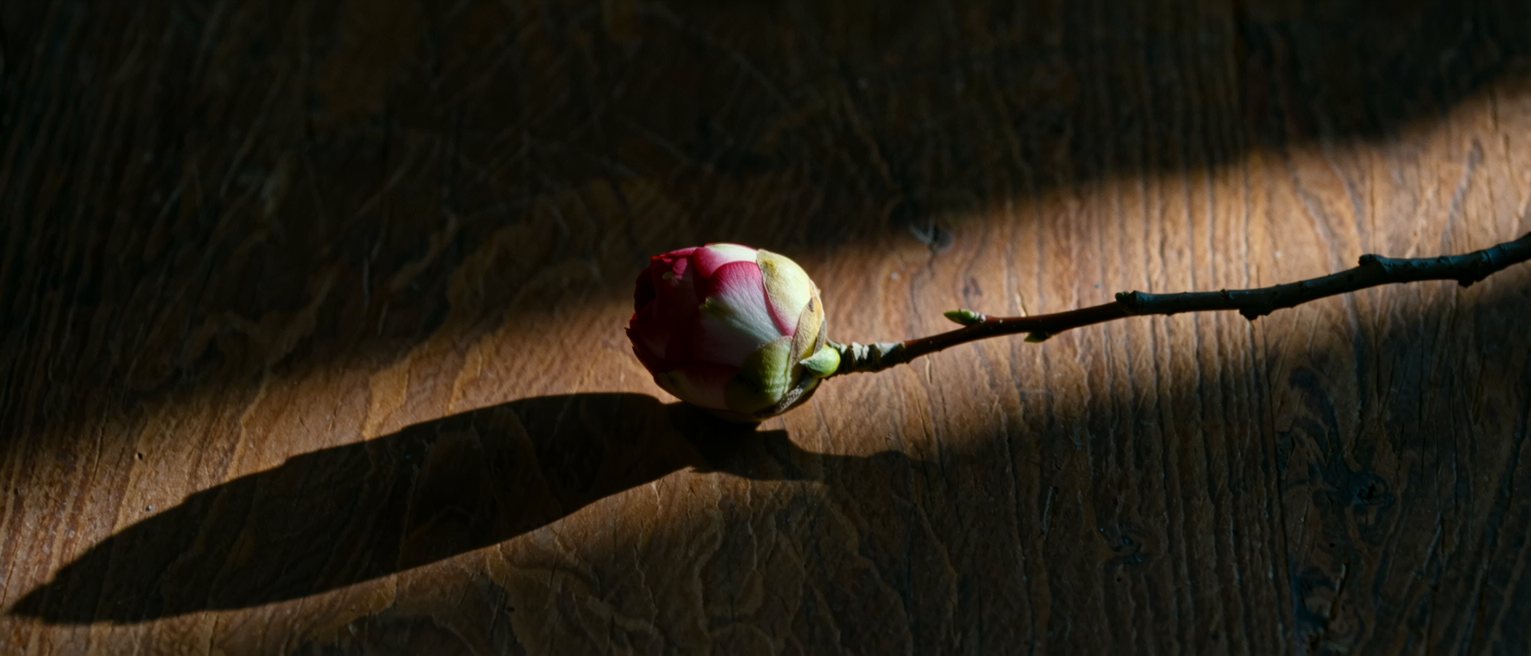
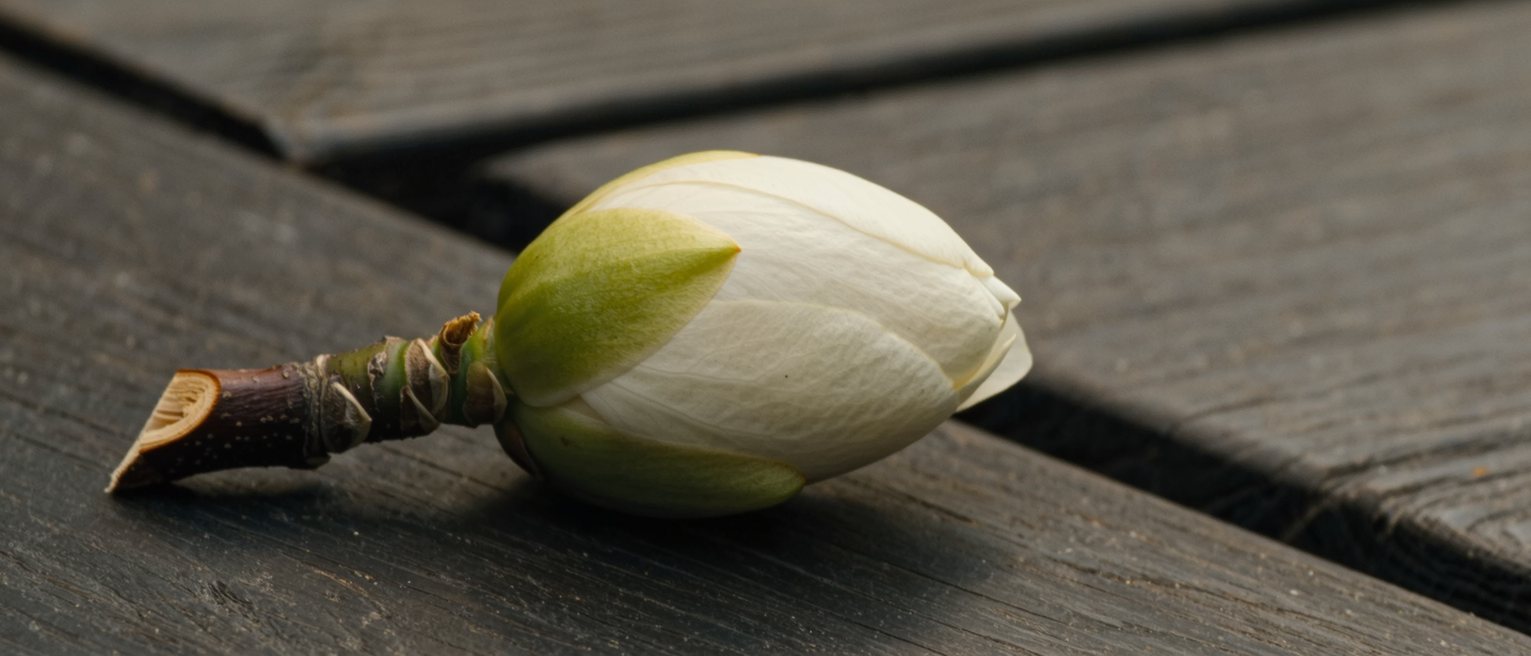
Concealment intensifies. The classical formulation belongs to Nō and is roughly that what is hidden is the flower — that an effect withheld is stronger than an effect displayed, and that revealing everything spends the thing you were trying to produce. This runs through Japanese aesthetics far beyond the erotic, and within it the emblem is the nape of the neck exposed by a kimono collar: a small deliberate opening in an otherwise closed surface, valued precisely because everything else is covered.
The interval carries weight. 間 — the gap, the pause, the space between — is treated in Japanese aesthetics as content rather than as absence. In music and theatre it is the silence that does the work. Applied to an encounter, the pacing and the pauses are not the empty part waiting to be filled.
And the evidence of effect is the subject. Not the anatomy, not the act, but the visible fact of a person being affected by what is happening. This chamber found it in the mosaic pushing the camera to the face, in shunga depicting both parties engaged, and in what the market prices highest — and it is the same principle each time.
Put the three together and the pattern is coherent: partial concealment, the loaded interval, and attention to response. Every one of them is about inference rather than display. The aesthetic is organised around what a person perceives and infers, not around what they are shown.
Which is a genuinely different erotics from one built on revelation, and it explains the puzzle. The switch is not tripped by more. It is tripped by almost.
The correction this essay owes, and it points at us
Everything above is a description of conventions in art, and the temptation it creates needs naming, because this house is the party most tempted.
There is no Japanese sexual essence. The variation between any two people in Tokyo is larger than any average difference between Japan and anywhere else, and a description of aesthetic patterns in a national art tradition is not a specification for the person in front of you.
Anyone who tells you that Japanese women respond to a particular thing, or sound a particular way, or that Japanese men want a specific script, is describing a media convention and calling it a people. That is the same error as taking the vocalisation for ethnography, and it is the error that makes commercial material harmful as a curriculum.
And it would be very easy for a service in this category to sell exactly that — an authentic Japanese approach, a traditional aesthetic, technique derived from the conventions described above. It would market well and it would be a lie of the specific kind this essay has spent its length dismantling.
The aesthetic principles are real as principles. Concealment intensifying, the interval carrying weight, attention to response being the subject — those are genuine and useful observations about how erotic effect works, and they are portable to anybody who finds them useful.
What they are not is a template for a particular woman. The moment any of it is applied as instruction rather than offered as a possibility, it has become the same thing as the script learned from the videos: an expectation somebody else is required to meet.
Limits
The claim that Japan produced little prescriptive sexual doctrine is a comparative characterisation against traditions that produced a great deal of it. Japanese religious and medical traditions do contain guidance on conduct, which this summary flattens, and the claim is about the absence of a sin-and-confession apparatus rather than about the absence of any norms.
The description of shunga as depicting leisurely, conversational and mutually engaged encounters characterises prevailing features of a large and varied body of work. The corpus includes material that does not fit this description, including work depicting coercion, and this chamber has said so elsewhere.
The reading of partial clothing in shunga as an aesthetic decision about textile is a widely held art-historical interpretation and remains an interpretation.
The account of 前戯 as a modern and clinical term, and of older material as not segmenting an encounter, is drawn from usage and from the character of the surviving erotic corpus. It is a reading of that evidence rather than a lexicographic study.
The characterisation of vocalisation in adult video as a production convention is based on its consistency across producers and decades. The causal attribution to the obscenity provision is an inference from the constraint, consistent with this chamber’s earlier finding about the camera and the face. The reported pressure on women to perform the register comes from Japanese journalism and self-reported accounts, which is the available evidence and is not a representative sample.
The aesthetic principles — concealment, interval, attention to response — are well documented in Japanese aesthetics broadly. Applying them specifically to erotic effect is this essay’s synthesis and is not a finding from any literature.
The comparison between a repression model and a dual-register model is an interpretation of how a cultural frame functions, not a psychological finding about any individual, and both models are simplifications.
And the whole essay describes conventions in art and media. Nothing here is a claim about what any person wants, does, or should do.
What the aesthetic is actually good for
There is one thing in this material genuinely worth keeping, and it is not a technique.
An erotics organised around inference rather than display makes a specific demand on both people, and the demand is attention. If the content is partial concealment, the loaded pause, and the evidence of somebody being affected, then the whole thing depends on one person noticing what the other is doing — closely, continuously, and without being told.
That is a high standard and it is also the thing most likely to be missing, which is why the aesthetic is easier to admire than to practise. It is far simpler to follow a script learned from a screen than to watch a particular person and respond to what is actually happening on her face.
And there is a trap folded into it that this Library has to name. An erotics of inference works beautifully when both people are paying attention, and it is the exact aesthetic that produces 察してほしい — the expectation that you will be perceived without having to say anything. The same principle that makes the interval meaningful makes the unstated want invisible when nobody is looking carefully.
So the honest position is that the aesthetic is worth having and it is not sufficient. Inference is a beautiful way to conduct an encounter between two people who are already accurate about each other. It is a terrible way to establish what somebody wants in the first place, and a culture that only has the first has been trying to run the second on equipment not built for it.
What this Library can offer is the missing half, which is language: a way of saying the thing once, plainly, so that everything afterwards can go back to being inferred.
And an evening in which somebody is paying attention, the terms set in advance and by you, where saying what you want is the activity rather than the risk, and where nothing is inferred from your silence — because the one thing this aesthetic cannot do is read a silence correctly, and it has never admitted that.