Books
Fierce Attachments, and a Relationship With No Success Condition
A memoir built from walks through New York with the author’s mother, cut against the Bronx tenement of her girlhood. It is the most exact book we know of about a relationship that can neither be improved nor ended, and its exactness comes from refusing both of the endings a reader wants. A reading that separates a relationship you are failing at from one that has no success condition, and that takes the author at her own word about what a narrator is.
A person can be failing at a relationship. An enormous amount has been written for that condition, and some of it is good. It assumes a structure: there is a better state available, there is a route from here to there, and the route runs through some combination of honesty, patience, limits and time. The assumption is rarely stated because it does not feel like an assumption. It feels like the definition of a relationship.
There is a second condition that looks identical from the inside and is not the same thing at all. In it, there is no better state that both parties would recognise as better. Effort does not compound. Concessions are absorbed without changing anything, and are then required again. The other person is not withholding a resolution out of stubbornness; there is no resolution to withhold, because what would count as one to you would count as a defeat to them, and the reverse. Nothing is being refused. The thing you are asking for does not exist in the form you are asking for it.
Very little is written for that condition, and the reason is structural rather than negligent. The second condition does not support a procedure. It cannot be turned into steps, which means it cannot be sold as steps, which means the shelf that sells steps has no reason to describe it. So the person inside it reads the material written for the first condition, applies it, fails, and draws the only conclusion the material permits: that they have not tried correctly. That conclusion is where most of the suffering is manufactured. Not in the relationship. In the mismatch between the relationship and the frame brought to it.
One book is written from inside the second condition and is honest about which one it is in. It is Fierce Attachments, a memoir by Vivian Gornick, published by Farrar, Straus and Giroux in New York in 1987. What follows is not a summary of it, and is not an appreciation. It is an argument about the category the book occupies, about why that category has almost no literature, and about what a reader can take from a book that supplies neither of the endings they came for.
The book, and what it is made of
Vivian Gornick was born in the Bronx on 14 June 1935 and was a reporter for the Village Voice from 1969 to 1977. Fierce Attachments was her first book of memoir; an excerpt appeared in the Village Voice on 17 March 1987 under the title A Fierce Attachment, shortly before Farrar, Straus and Giroux published the book. It has stayed in print since. Farrar, Straus and Giroux carries it in its FSG Classics series; Beacon Press issued it in the United States; Daunt Books reissued it in the United Kingdom in September 2015; and Open Library’s records list further editions and translations into Spanish, French and Portuguese. No Japanese translation appears to exist, and this essay returns to that absence near the end rather than passing over it.
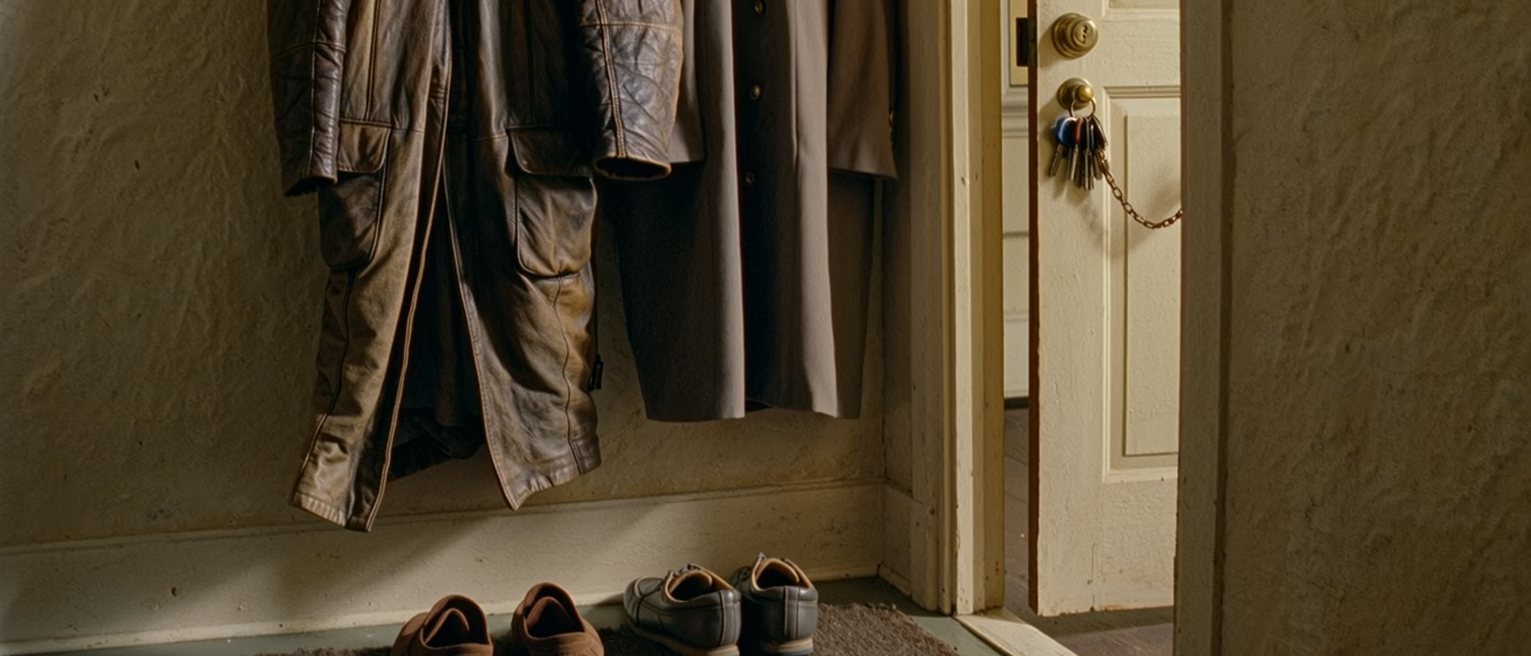
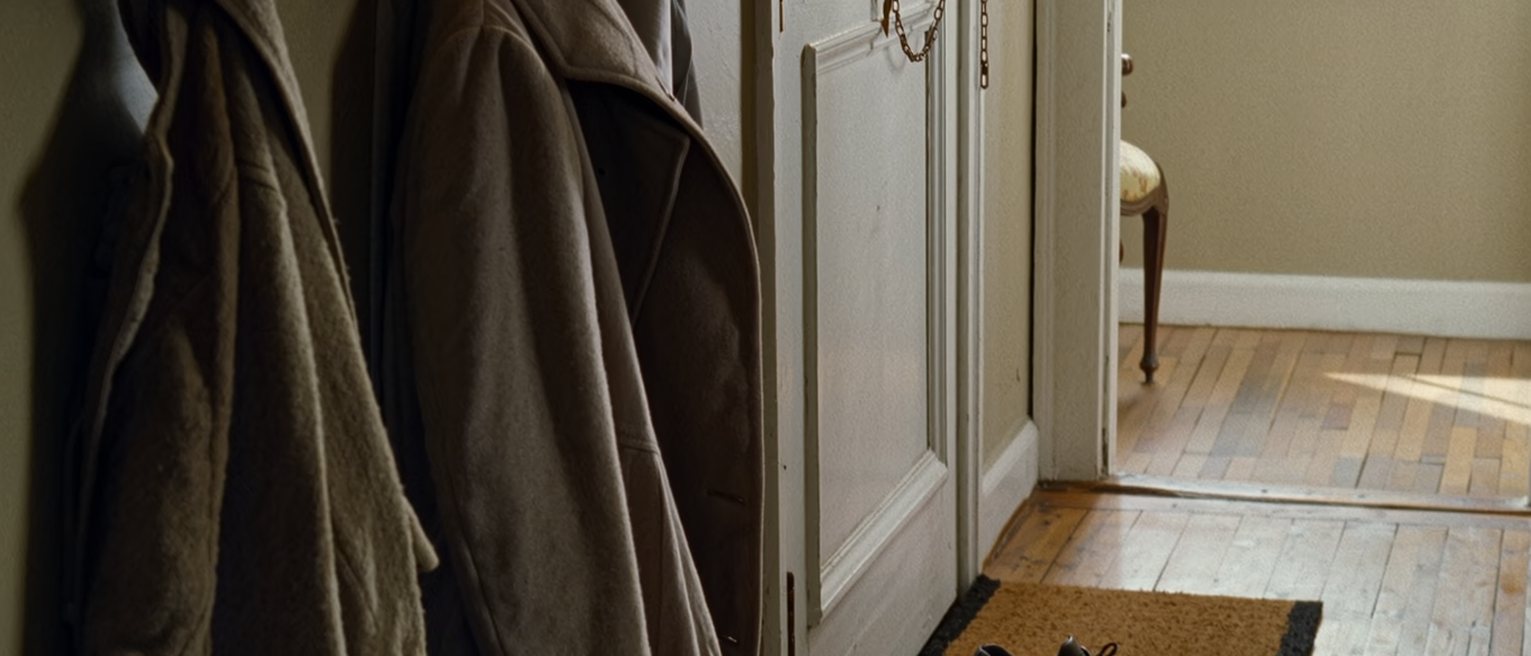
The book has two materials and one join. The first material is the present tense: the narrator and her mother walking through New York, across Manhattan, talking. The second is the Bronx tenement of the narrator’s girlhood — a building the book renders as a world of women, neighbours whose lives are conducted at close range and at volume, among them a widowed Gentile neighbour whose presence in the building is an event. The join is that the walks trigger the tenement and the tenement explains the walks, and neither is allowed to become the frame that contains the other.
The circumstance that organises everything is a death. Madeleine Kingsley, reviewing the Daunt Books edition in the Jewish Chronicle on 8 October 2015, states that Gornick’s father died when she was thirteen, after three successive heart attacks, and that her mother, Bess, was left marooned in lifelong grief and depression, mourning so completely that there was no room left for the daughter’s own distress. That is a reviewer’s summary of a book’s portrait, and it is repeated here as such. It is not a finding about a real household, and nothing in this essay treats it as one.
The book’s standing is not in dispute. In 2019 the book critics of the New York Times published a list of the fifty best memoirs of the past fifty years. Library catalogue reproductions of that list describe its first twenty-five titles as ranked and place Fierce Attachments at the head of them. The list itself could not be read directly for this essay, and the ledger says so.
A relationship with no success condition
Here is the distinction this Library thinks is the book’s durable contribution, stated as flatly as it can be.
A relationship you are failing at has a success condition. You can describe what better would look like; so, roughly, could the other person; and the two descriptions overlap enough that work on the gap is meaningful work. A relationship with no success condition has no such overlap. There is no state of affairs that both parties would call an improvement. What you would name as progress — being met, being released, being seen without being enlisted — the other person would experience as a loss of the only footing they have. The relationship is not broken. It is functioning exactly as it is built, and it is built without a resting place.
Fierce Attachments is the most exact rendering of that arrangement we know of, and the exactness is visible in what the book refuses. It refuses reconciliation: there is no scene in which mother and daughter arrive at a shared account of the past, forgive, and proceed differently. It refuses rupture: the narrator does not cut contact, does not deliver a final verdict, does not depart. Those are the only two endings the culture recognises for a relationship of this kind, and they are both, in different ways, ways of saying that it ended. The book will not say that. The walks continue.
A reader trained on the first condition reads that continuation as failure. It is not failure. It is accuracy. The relationship the book describes is not a problem with an unfound solution; it is a permanent condition, and the right response to a permanent condition is not the response you would make to a problem. Treating it as solvable does not produce a solution. It produces a repeating cycle of effort, disappointment and self-blame, in which the disappointment is read as evidence about the person doing the trying.
That is the whole of the usable contribution, and it deserves to be kept small. Naming the difference between a relationship you are failing at and one that has no success condition is not a technique and cannot be turned into one. It is a category correction. But a category correction is sometimes the thing that stops the manufacture of a particular kind of pain, and stopping manufacture is not nothing.
Grief that became an occupation
What the book depicts — and the wording matters — is a widowhood that hardened into a vocation. In the portrait Gornick draws, the mother’s bereavement is not a season that passes into something else. It becomes the organising fact of her life, the standard against which other people’s sorrows are measured and found trivial, and the position from which she addresses the world. The daughter’s role, assigned early and never renegotiated, is to be its witness: the one who registers the grief, confirms its size, and does not compete with it.
This is where the book earns its title. The attachment is fierce in both directions and in both senses — tenacious, and hostile. The mother is not indifferent to the daughter. The mother is entirely oriented towards the daughter, which is precisely the problem: there is no distance at which the daughter can stand and still be regarded as present. The demand is not that she do something. The demand is that she be an audience, permanently, for a performance that has no last act.
There is a verdict inside that arrangement, and it is the reason this essay sits where it does in this Library’s vocabulary. A life given over entirely to mourning a husband is, among other things, a statement about what a woman’s life is worth on its own. The mother’s grief carries an implicit ruling: that a woman without the man is a woman without a subject. The daughter grows up under that ruling, in a body and a life that the ruling has already sentenced in advance, and a great deal of the book’s energy is the narrator arguing with a verdict that was never formally issued and therefore cannot be formally appealed.
Two cautions belong here and cannot be moved to a footnote. The first is that this is one party’s account, made by the party with the pen. The mother did not write a book. The second is that nothing here establishes what any real woman felt, intended or understood about her own life. A memoir renders an inner life; it does not evidence one. This essay describes a depiction, and says so each time it does.
Why the walks are the form
A book about a permanent condition has a structural problem to solve: how to move for two hundred pages without progressing. Narrative wants development. The subject has none. Gornick’s solution is the walks, and the walks are not decoration. They are the argument in another medium.
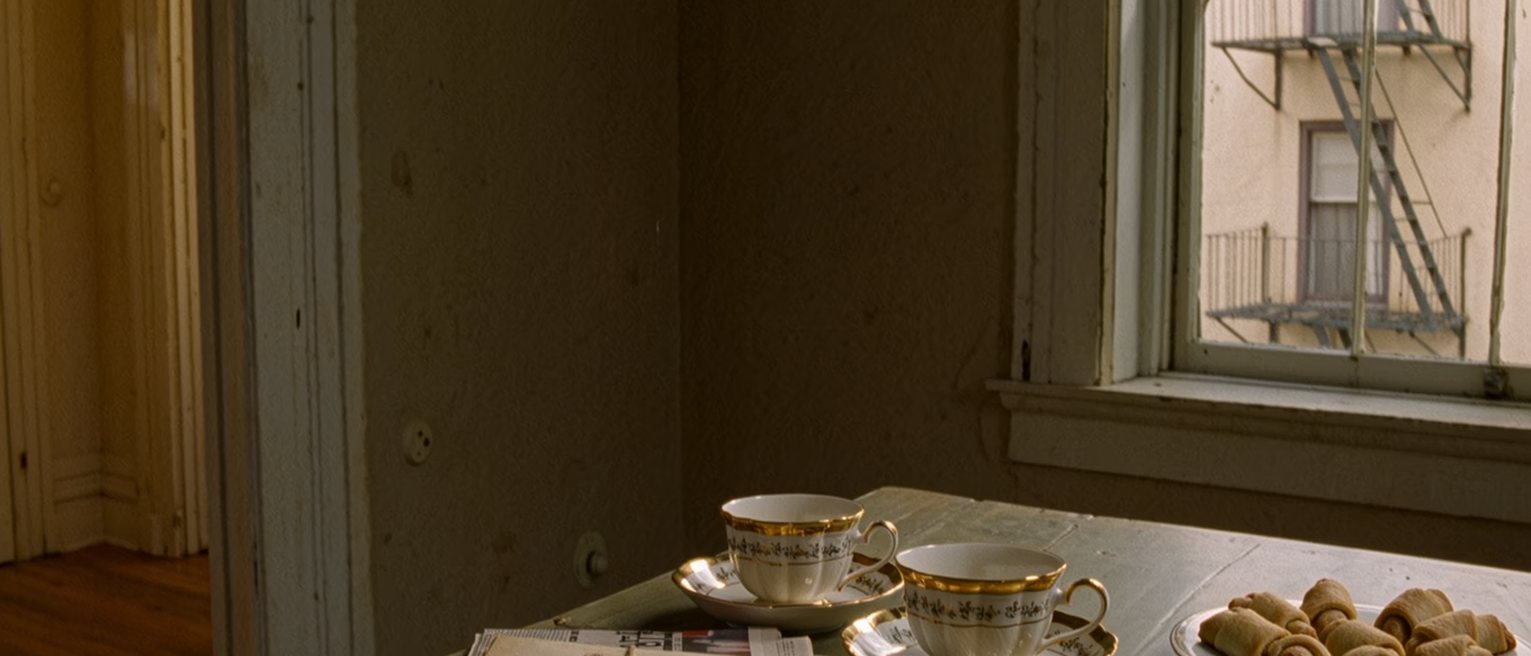
A walk has motion without destination. It covers ground, changes scenery, generates incident, and arrives nowhere in particular; then it is repeated. Set the present tense of a relationship inside a walk and you have a form that can carry an enormous amount of detail, conflict and tenderness without implying that any of it accumulates towards a settlement. The mother and daughter of the book quarrel, wound each other, and go on walking. Next time, the same. The repetition is not a failure of invention. It is the claim.
The childhood material does the complementary work. The tenement chapters have the one thing the present tense lacks, which is causation: they show where the arrangement came from, how the roles were allocated, what the building taught a girl about what women do with their lives. But they are cut in, not laid out as a chronology, so that understanding the origin never becomes the same as escaping it. The book grants the narrator full insight into her own situation and denies that insight any power to change it. That is an unusual thing for a memoir to do, and it is the opposite of what the form normally promises.
The ending follows from the form. There is no summing up in which the narrator declares what she has learned and how she will proceed. The relationship has the same shape on the last page that it had on the first, held now with more precision. A reader looking for release will not find it, and the disappointment is intended. The form says the thing the content cannot say in the first person without sounding like resignation: this does not end, and you can still write it exactly.
The narrator is not the writer
Fourteen years after the memoir, Gornick published The Situation and the Story: The Art of Personal Narrative, with Farrar, Straus and Giroux in 2001. It has become one of the standard texts on personal narrative, and its central distinction bears directly on how her own memoir should be read.
The distinction is between the situation and the story. The situation is the circumstance — the context, the events, sometimes the plot. The story is the emotional experience that preoccupies the writer: the insight, the thing the writer has come to say. Between them stands the narrator, and Gornick’s term for the nonfiction narrator is the unsurrogated one: a persona built out of the writer’s own undisguised self, with no invented character to stand in. Building that persona, she argues, is the whole difficulty of the form, because the writer must select from among her many selves the one that serves this particular story. In an interview with Kathleen B. Jones published on the Brevity blog on 26 August 2019, she put the emphasis on structure and on developing the idea of the persona, and described her editor’s part in restructuring the book.
Apply that to Fierce Attachments and a fact appears that readers often resist. The daughter who narrates is a constructed figure. She is made of Vivian Gornick and she is not Vivian Gornick; she is the self selected and shaped to carry this story, and the mother on the page is a figure in that construction rather than a deposition about a woman in Queens. Commentary on The Situation and the Story reports that Gornick locates the memoir’s story in the narrator’s recognition that she could not leave her mother because she had become her mother; that formulation is repeated here as reported, not as verified against the book’s pages.
The construction became public argument in 2003. Terry Greene Sterling, writing in Salon on 1 August 2003, reported that at a seminar at Goucher College’s writing programme on 28 July Gornick had told the audience she composed some of the walks and conversations with her mother, and invented a scene involving her mother and a street person. Gornick replied in Salon on 12 August 2003 in her own name. Her account there is that she made composites, combining elements of two or more incidents and rearranging chronology, and that she did not fabricate; that memoir belongs to literature rather than journalism; that the narrator is a literary construction rather than the author; and that what the memoirist owes the reader is the ability to persuade that the narrator is honestly trying to get to the bottom of the experience at hand. Later writing on the episode notes that she reframed the composed scene as compression.
A reader is free to find that defence insufficient. But the defence is not a retreat invented under pressure; it is the same position as the book on craft she had already published, and it answers the question readers most often ask about Fierce Attachments. Was her mother really like that. The honest answer is that the book does not claim to be a recording, that the woman on the page is a made figure serving a made narrator, and that this is what a memoir is. And the answer cuts both ways, which is why it is worth saying plainly. It protects a real person from being treated as a documented case. It also removes the book’s standing as evidence about her.
What this Library has already said, and where this differs
This Library has been here before from other directions, and the boundaries are worth marking so that nothing is claimed twice.
An earlier essay here on Maggie Gyllenhaal’s film of Ferrante’s The Lost Daughter argued that what the film exposes is not bad mothering but the absence of any socially available sentence for loving your children and wanting your life back. An essay on Sheila Heti’s Motherhood argued that the decision whether to have a child is genuinely undecidable on the merits and still has to be answered by a date — a decision with no procedure. An essay on Tsushima Yūko’s Woman Running in the Mountains took up the body that still wants things outside motherhood, and one on single parenting and a romantic life found the binding constraint to be arithmetic rather than stigma.
Every one of those stands on the mother’s side of the relation, or before it. This essay stands on the daughter’s side, decades in, with a mother who is not going to change and is not going to be left. The scarcity is different. In the Lost Daughter essay the missing thing was a sentence. Here the sentence is available and has been said many times, in both directions, and saying it changes nothing. What is missing is not language. It is any state of affairs that both parties would accept as better.
There is one more edge to state. This essay is not about estrangement, and it takes no position on it. A reader who has ended contact with a parent will find nothing here that judges that, because the case for it is not this essay’s subject and a book that refuses rupture is not an argument against rupture. Fierce Attachments describes one arrangement precisely. It does not legislate for any other.

An obligation with no clause for ending
The book is American and mid-century in its materials, and a reader in Japan might reasonably ask what carries across. The answer offered here is deliberately narrow, and it is a point about a statute rather than about families.
The Civil Code of Japan is Act No. 89 of 1896. Chapter VII of its Part on relatives is headed Support. Article 877, paragraph 1 provides that lineal relatives by blood and siblings have a duty to support one another, and paragraph 2 permits a family court, in special circumstances, to impose that duty on other relatives within the third degree. Article 878 provides that where the parties cannot agree the order of who supports whom, the family court determines it. Article 879 provides that where the extent or method of support cannot be agreed, the family court determines it, having regard to the needs of the person entitled, the means of the person obliged and all other circumstances. Article 880 provides that where circumstances change after an agreement or an adjudication, the family court may vary or rescind it.
Read those four provisions together and a shape appears that is worth noticing. The law is fully equipped to set the terms of the obligation and to change them. It has a forum, a standard and a procedure for adjustment. What it does not contain, and does not contemplate, is a mechanism by which the relation itself concludes. The duty exists because the relation exists. Terms are negotiable; the relation is not a term.
That is a description of a legal instrument, not a description of any household, any family or any country. It says nothing about how people in Japan actually treat their parents, which varies as much as anything human varies, and no reader should take a statutory provision as a description of their own life or their own obligations. It is cited for one reason only: it shows that the structure the memoir describes is not a peculiarity of one difficult woman in the Bronx. Some relations are constituted as permanent, and where that is so, the vocabulary of resolution was never the right vocabulary, in law or out of it.
What this house sells, and what it cannot claim
This is a publication attached to a business, and the business is relevant to this essay in a way that should be stated here rather than discovered later.
What this house sells is bounded companionship: an arrangement with a beginning, an end, a price and no claim on anybody afterwards. That is the exact structural opposite of what Fierce Attachments describes. Which means this house has an interest — not an imaginary one, a real one — in a reader concluding that unbounded, unendable relationships are unbearable and that bounded, purchasable ones are a relief. An essay published by us that praises a book for showing how inescapable a permanent attachment is, is an essay that flatters our own product. We would rather say that than have a reader notice it.
So there are refusals, and they are constraints rather than disclaimers. This house does not claim that what it sells addresses anything the book describes; the arrangement it offers is not a remedy for a relationship with a parent and is not offered as one. It does not claim that bounded is better than unbounded, only that they are different in structure. It does not diagnose any reader, and nothing in this essay is a statement about anybody’s family. And it gives no advice about anybody’s mother — not about contact, not about limits, not about duty — because this Library has no standing to advise on a relationship it cannot see, and because the moment a reading turns into instructions it stops being a reading.
What remains after those refusals is one distinction and a book that holds it. That is the whole of what is on offer here, and it is offered without any suggestion that a reader needs anything further from us.
The case against this reading
The strongest arguments against this essay, and against the book it reads, are worth stating at their full strength rather than in a version already weakened for the purpose of answering.
The first is that a memoir of an unresolvable mother flatters a reader into not trying. Give a person the phrase no success condition and you have given them a permission slip. Effort in difficult relationships is frequently rewarded, slowly and unspectacularly, and a frame that recasts giving up as accuracy will be adopted enthusiastically by exactly the people who should not adopt it. This objection is substantially correct and there is no clean answer to it. The narrowing available is this: the distinction described here is not a test, and this essay supplies no method for telling which condition a reader is in, precisely because no such method exists that a stranger could hand over. A reader who takes the category as a verdict on their own situation has been handed something this essay did not give them.
The second is that the mother gets no chance to answer. She is rendered, at length and unforgettably, by the one person in the room with a publishing contract, and she is dead and cannot dispute a line of it. Every judgement a reader forms about her is formed inside a portrait she did not consent to and could not correct. This objection is simply sound. It is the standing problem of the memoir form and this book does not escape it. The most this essay can do is refuse to treat the portrait as evidence about a real woman — which it has done, and which is a limitation rather than a rebuttal.
The third is that the walks are artful enough to raise the question of how much has been shaped, and the author has conceded that some of them were composed. If the book’s authority comes from its unflinching fidelity, and fidelity turns out to include amalgamated walks and at least one invented encounter, then some of the authority was borrowed. That is fair. The narrowing is that this essay does not rest on the book’s documentary accuracy at any point: it reads the book as a constructed account whose value is the precision of the arrangement it renders, and it says so before the objection is raised rather than after. But a reader who believes memoir should be held to a reporting standard will find that answer unsatisfying, and they are entitled to.
The fourth is the most serious. No success condition can describe a permanent asymmetry; it can also be reached for by someone inside a relationship that is genuinely improvable, and by someone who is themselves the difficult party. A framing that treats a relationship as structurally unchangeable can excuse real cruelty — can make contempt look like realism and neglect look like acceptance. That risk is not hypothetical and this essay cannot eliminate it. What can be said is that the distinction is symmetrical: if a relationship has no success condition, neither party is failing, which also means neither party is licensed. Nothing in a category that describes a situation says anything about how anybody in it may behave. That is a real limit on the framing rather than a defence of it, and it is where this reading stops.
What this does not claim
This essay is an analysis. It is not clinical guidance, it describes no treatment, it promises no outcome, and it diagnoses nobody. Nothing here is advice about any reader’s mother, father or family, about contact, distance, duty or limits, and nothing here should be read as a recommendation to maintain or to end any relationship.
Fierce Attachments: A Memoir was published by Farrar, Straus and Giroux in New York in 1987. Publication and edition details are drawn from library, publisher and bibliographic records rather than from inspection of the volumes. No passage of the book is quoted anywhere in this essay.
The description of the household in the book is a description of the book’s depiction. Where a detail is attributed to a review — the father’s death when the author was thirteen, the mother’s name, the character of her mourning — it is repeated as that reviewer’s summary of the book and not as a finding about a real family. Nothing here establishes what any real person felt, intended or understood about her own life, and no verdict is passed on anyone named.
The account of the 2003 seminar at Goucher College is taken from a reported piece in Salon and from Gornick’s own published reply in the same magazine eleven days later. Her position is given in her own words as published there. This essay does not adjudicate the dispute and takes no position on where the line between composition and fabrication should fall in nonfiction generally.
The claim that the book was placed first on the New York Times critics’ 2019 list of the fifty best memoirs of the past fifty years rests on library catalogue reproductions of that list, which describe its first twenty-five entries as ranked. The original article could not be read for this essay. No British best-memoir list containing the book could be sourced: what was found was review praise quoted by its publishers, including from the Observer, which is not the same thing, and the absence is stated here rather than papered over.
On a Japanese edition: a search of National Diet Library Search returns no records for ヴィヴィアン・ゴーニック, and a search under ゴーニック alone returns only an unrelated author. On that evidence no Japanese translation of this book appears to exist, which is stated as the result of those searches and not as a certainty about the whole of Japanese publishing.
The provisions of the Civil Code of Japan are cited from the text of Act No. 89 of 1896 as held by the government’s laws database at the revision current on 24 June 2026. They are cited as statutory text only. They are not a description of families in Japan, not a statement about Japanese people, and not a statement about any reader’s obligations, which depend on circumstances this Library cannot see.
This house’s commercial interest in the essay’s framing is stated in the body rather than only here. Neither the author, her publishers, nor any critic, interviewer or institution named has any connection to this house, knows of it, or endorses it.