Books
The Cost of Living, and the Logistics of Having Left
A woman in her fifties whose marriage has ended writes in a borrowed shed, rides an electric bicycle up a hill with the shopping, and buys the same ice lolly every day for a mother who is dying. The book refuses both available scripts. What it puts in their place is the part nobody narrates: a life is held together by arrangements, and leaving one means rebuilding them before anything else can be true.
One January night, in a bar on the Caribbean coast of Colombia, a writer was eating coconut rice and fish. At the next table sat a tanned, tattooed American man in his late forties, his silver hair pinned into a bun. He had invited a young English woman, perhaps nineteen, to leave the book she had been reading alone and join him, and after some hesitation she had. She told him about diving in Mexico: twenty minutes under the water, and then surfacing into a storm that had turned the sea into a whirlpool, and the fear of not getting back to the boat. It is a good story, told by somebody who had lived it. He was not listening. He told her she talked a lot.
The writer is Deborah Levy, and this is the opening of her book The Cost of Living. What she notices about the exchange is not that the man was rude, which is unremarkable, but something structural underneath the rudeness: it had not occurred to him that she might not consider herself to be the minor character and him the major one. That is the whole book in one paragraph, arriving before the book has started. It is a claim about who is presumed to be the subject of their own account, and about what happens to a person who quietly declines the demotion.
The Cost of Living was published in the United Kingdom by Hamish Hamilton in 2018. It is the second of three volumes Levy calls her living autobiography, and it covers a stretch of a few years in which her marriage ended, she moved with her two daughters into a flat on a hill, wrote in a shed at the end of somebody else’s garden, bought an electric bicycle, and watched her mother die. It is funny. It is unsentimental. It is short.
What follows is not a summary of it. It is an argument about the thing the book does that almost no book in its category does, which is to treat the dismantling of a life as logistics. The cost in the title is not a metaphor. It is money, hours, addresses and equipment. And the reason that matters is a distinction this essay wants to put on the table and keep there: there is a difference between a decision to leave and the infrastructure of having left, and the second is far more expensive than the first.
The record, stated plainly
Levy is a British writer, born in South Africa, who has worked in theatre, fiction, poetry and essay. The three volumes of the living autobiography are Things I Don’t Want to Know, first published by Notting Hill Editions in 2013 as a response to George Orwell’s essay Why I Write, with later editions from Penguin and, in the United States, Bloomsbury; The Cost of Living, Hamish Hamilton, 2018, issued in the United States by Bloomsbury under the subtitle A Working Autobiography, with a Penguin paperback following in February 2019; and Real Estate, Hamish Hamilton, 2021.
The term living autobiography is Levy’s own. In published remarks about the project she has described it as writing that is not composed at the end with hindsight but inside the weather of a life still being lived, and she has said she wanted a form that does not take a fixed position, in which rage, strength, vulnerability, humour, confusion and clarity are allowed to occupy the same pages. That is a description of a method, not a marketing line, and it explains the book’s shape: episodic, interrupted, willing to break off.
The prize record is worth stating carefully, because publisher copy routinely blurs it. Levy has been shortlisted twice for the Booker Prize, for the novels Swimming Home in 2012 and Hot Milk in 2016, and longlisted for it in 2019 for the novel The Man Who Saw Everything. Those are shortlistings for fiction. They are not shortlistings for The Cost of Living, and a reader who sees the phrase twice Booker-shortlisted on the cover of this book should understand what it refers to. What The Cost of Living itself carries is a win rather than a shortlisting: the Prix Femina étranger for 2020 was awarded to Levy for the French translations of the first two volumes of the project, Ce que je ne veux pas savoir and Le Coût de la vie, translated by Céline Leroy. The Guardian placed The Cost of Living at number 84 in its 2019 list of the hundred best books of the twenty-first century. Publisher and bookseller listings also describe it as longlisted for the 2019 Andrew Carnegie Medal for Excellence in Nonfiction; that claim appears widely in trade copy and this Library was not able to corroborate it against the awarding body’s own published list, so it is recorded here as reported rather than as confirmed.
On availability in Japanese: this Library searched the National Diet Library catalogue and the Japanese-language bibliographic record for works published under the author name Deborah Levy, and found one translated title, the novel Hot Milk, translated by Ozawa Miwako and published by Shinchosha in July 2022. No Japanese edition of The Cost of Living, of Things I Don’t Want to Know or of Real Estate was found. That is a statement about what the searches returned on the date they were run. It is not a statement that no such edition exists or is in preparation, and a reader who wants this book today will be reading it in English or in another translation.
The cost in the title is not a metaphor
Open the book expecting an interior account of the end of a marriage and the first surprise is how much hardware there is.
There is a sixth-floor flat in a decaying block on the top of a hill in north London, into which Levy moves with her two daughters after leaving the family house: a building with corridors, with heating that does not always work, with the ordinary indignities of a place that is not what you had. There is the hill itself, which is not a symbol in the book but a gradient, a thing that must be climbed while carrying food for three people. There is an electric bicycle, bought so that the hill and the shopping can be solved at the same time, and which the book treats as a piece of equipment rather than as a sign of anything.
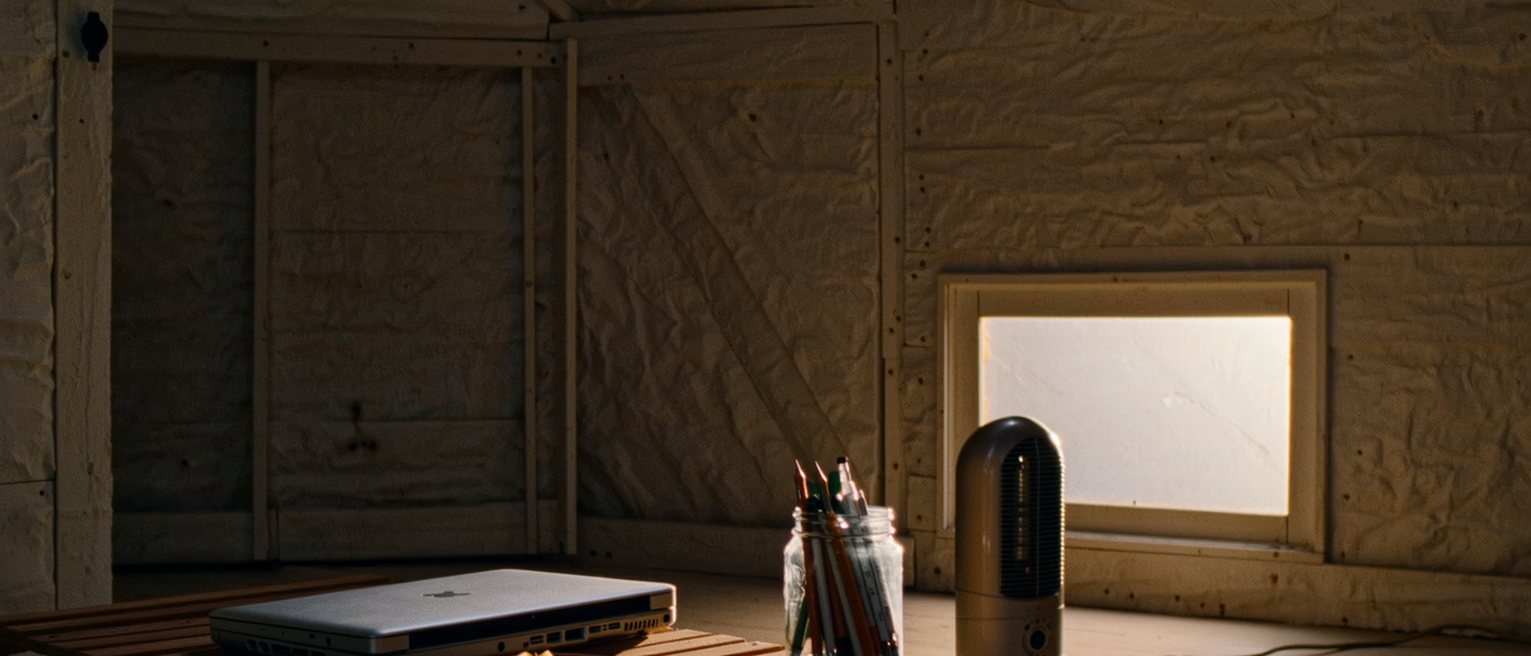
There is a shed at the end of a friend’s garden, offered to her because she needed somewhere to write and did not have it. The shed belonged to the friend’s late husband. It contains, among other things, the friend’s spare freezer. Levy reaches it by bicycle or on foot. There is the writing done in it, including the novel Hot Milk, which was being written across this period. And there is a small daily errand: the particular ice lolly bought from a nearby shop and carried to a hospital bed, because in the last stretch of her mother’s illness it was one of the few things her mother could take.
Every one of these is a solved problem. What is unusual is that the solving stays on the page. Most accounts of a life coming apart move quickly past the arrangements to get to the feelings, on the assumption that the arrangements are stage management and the feelings are the play. Levy leaves the stage management in, and the effect is not to make the book smaller. It is to make it accurate. A person in the middle of this does not spend most of her attention on the meaning of what has happened. She spends it on where the desk goes.
A decision is not an infrastructure
Here is the distinction this essay wants to argue for, and it is the reason the book is worth more than its reputation as a beautiful short memoir suggests.
A decision to leave is an event. It may take years to arrive at, but as an object it is small: a sentence, a conversation, an afternoon. It can be narrated. It has a before and an after. Almost the entire public vocabulary around the end of a long relationship attaches to this object. Was it the right decision. When did she know. What made her certain. Whether she had the courage. The question is always about the moment of turning, as though the turning were the difficulty.
The infrastructure of having left is not an event. It is a list that does not end and cannot be narrated in the same register: an address, a lease or a mortgage, a deposit that has to exist in cash on a particular day, a name moved onto a utility account, a school run that now has one adult in it, a desk in a room that somebody has to be willing to lend, a way of carrying heavy objects up a hill, an income that arrives on a schedule reliable enough to underwrite all of it. None of these items is interesting. Together they are the whole of whether the decision holds.
And they cost more. In money, obviously, because two households are more expensive than one and because the person who did most of the unpaid work in the marriage usually enters the rebuild with the weaker earnings record. But also in hours, and in the particular kind of attention that cannot be spent on anything else while it is being spent. The decision took an afternoon. The infrastructure takes the next several years, and it is taken out of the same finite supply that the grieving, the parenting and the working have to come from.
There is a further point, and it is the uncomfortable one. The infrastructure does not only follow the decision. Very often it determines whether the decision was ever available. A woman who cannot assemble an address, an income and a childcare arrangement does not get to have the moment of turning at all, and her staying will be described by everybody around her in the language of feeling — she must still love him, she is not ready, she is afraid — when what is actually true is that the arrangements do not exist. This is the point at which the word cost in Levy’s title stops being decorative.

What this Library has argued before, and where this differs
This Library has already published an argument about marriage and logistics, and it should be credited before this essay builds past it.
That earlier essay, on what disappears first when a marriage becomes logistics, made a claim about order. Logistics does not wear a partnership down evenly. It takes things in a sequence — unpurposed talk goes first, then the real question, then unscheduled touch, then being looked at while the other person is not doing something else, and only last the thing that everybody is actually monitoring. Which makes the monitored thing a lagging indicator, and makes the first loss invisible, because a couple deep in logistics is talking more than ever. The mechanism was that the urgent always wins a scheduling conflict with the important, and that a household generates an unbounded supply of urgent.
That essay is about logistics eating a marriage from inside. This one is about something else: logistics as the thing a woman has to rebuild after. The two are not the same subject, and the relationship between them is not symmetry.
It is asymmetry, and the asymmetry is the finding. Inside a marriage, the arrangements exist. They are running. The complaint is that they have colonised the hours that used to hold something else, and the repair, as that essay argued, is a matter of sequence and of offloading the queue. After a marriage, the arrangements do not exist. There is no queue to offload, because there is no longer a household to run it. Every item has to be created from nothing, by one person, who is also grieving, also working, and in this book also driving to a hospital with a lolly in a bag. Erosion is expensive. Construction is more expensive, and it is paid by fewer people.
Two other pieces of this Library’s work touch this one and are worth naming. The reading of Virginia Woolf here argued that the capacity to be close to anybody has material preconditions, and that a lockable door and an income are what make refusal possible. This essay is downstream of that. And the reading of Tsushima Yuko’s Territory of Light argued that leaving is not one decision but a decision re-made badly every day by somebody unsure it was right. Put that beside this and you get the fuller picture: the decision is re-made daily, and what it is re-made against is the state of the arrangements.
The shed is a room with an address, not a symbol
A shed at the end of a garden is an invitation to symbolism, and it is worth resisting for one section, because the literal facts of it carry more.
Woolf’s argument, nearly a century old, was materialist and specific: a woman needs money and a room with a door that locks, because a mind cannot do sustained work while it is interruptible and dependent. That argument is about the preconditions of making anything at all. What Levy’s book adds is about the condition those preconditions are actually met in, for a woman at this point in a life.
The room she gets is not bought. It is lent. It is at the bottom of somebody else’s garden, it belonged to somebody who has died, it has a freezer in it that belongs to the lender, and it is reached across London on a bicycle. It is hers in the sense that matters — she can shut the door and work — and not hers in any other sense at all. It exists because a friendship exists.
That is worth stating without romance, because it is the ordinary shape of a rebuilt life. The infrastructure a person assembles after a marriage ends is very often made out of other people’s spare capacity: a spare room, a spare shed, a friend with a car on a Saturday, a sister who can take the children for a fortnight, a former colleague who knows about leases. It is not self-sufficiency and it does not look like the images the culture supplies for a woman starting again, which tend to involve a clean flat and a new job and nothing borrowed. It is a network being called on, at a moment when the person calling has nothing to offer back for a while.
Which has a consequence worth being honest about. The quality of the rebuild depends heavily on the quality of the network, and networks are unevenly distributed. A woman with a long friendship, a garden to borrow, and colleagues who return her calls is rebuilding in a different economy from a woman who moved for a marriage and knows nobody in the town. The shed is not a lesson about resourcefulness. It is a piece of evidence about what a friendship is worth in cash terms, which is a thing friendships are almost never measured in.
Care is a subtraction from the working day
Across the same period covered by the book, Levy’s mother became ill with the cancer that killed her. The book does not organise itself around this, which is part of its method, but the material is there and it is where the title does its hardest work.
What the book records about the illness is largely practical. There is the daily journey. There is the specific thing that could be eaten when almost nothing could. There is the shop it is bought from. There is the time it takes, and there is the fact that the time is taken out of a working day that still has to produce an income, because a writer with two daughters and a new flat cannot stop earning for the duration of a parent’s dying.
This is the part of the arrangement that is hardest to see from outside and hardest to plan for from inside. A caring obligation does not announce itself as a budget item. It arrives as love, and it is love, and it also removes a specific and non-negotiable number of hours per week from the only resource the household has. Those hours are not recoverable later. They do not appear in any account of what the year cost. And they land, in most families, on one person rather than being distributed — which is a statement about how households tend to allocate this work, and not a statement about any particular family, including this one.
A caution about how to read the book on this. What appears on the page is an account by a daughter, written afterwards, of a period she lived through. It reports her actions and her observations. It does not give the reader access to what her mother thought or felt, and nothing here should be taken as having established the inner life of a real person who did not write this account. Where the book reconstructs, it reconstructs. That is not a criticism of it; it is how memoir works, and Levy is unusually unwilling to pretend otherwise.
Two scripts, and the refusal of both
A woman in her fifties whose marriage has ended is offered two stories, and the book declines both with some deliberation.
The first is the tragedy of the discarded wife. In it she is a figure something happened to. She is owed sympathy, which is a form of demotion, and her interest to the reader is the size of her loss. The second is the triumph of reinvention. In it she is a figure who has been through the fire and emerged with a new self, a new career and a better attitude, and her interest to the reader is the size of her recovery. These scripts look opposed. They are the same script, because both require that the woman be a type, and both locate the meaning of her life in what was done to her rather than in what she is doing.
The refusal is partly a matter of tone. The book is funny — about the shed, about the freezer, about men at parties who ask her to pass a canapé without asking her name — and the humour is not decoration laid on top of grief. It is load-bearing. A person who is being funny about her circumstances is a person operating on them, which is a different grammatical position from a person things are happening to. The comedy is how the book keeps its narrator in the subject position that the man at the bar in Colombia did not think she was entitled to.
The refusal is also formal. The book is short, episodic and full of stops. It does not build toward a resolution, and it does not end with an arrival. There is no chapter in which the new life is complete. That is not a failure of shape. A structure that resolved would have been an argument that these things resolve, and the book does not believe that. It believes, and shows, that you go on making the arrangements.
Why nobody narrates the arrangements
If the arrangements are the substance, the obvious question is why they are almost entirely absent from the enormous literature of leaving.
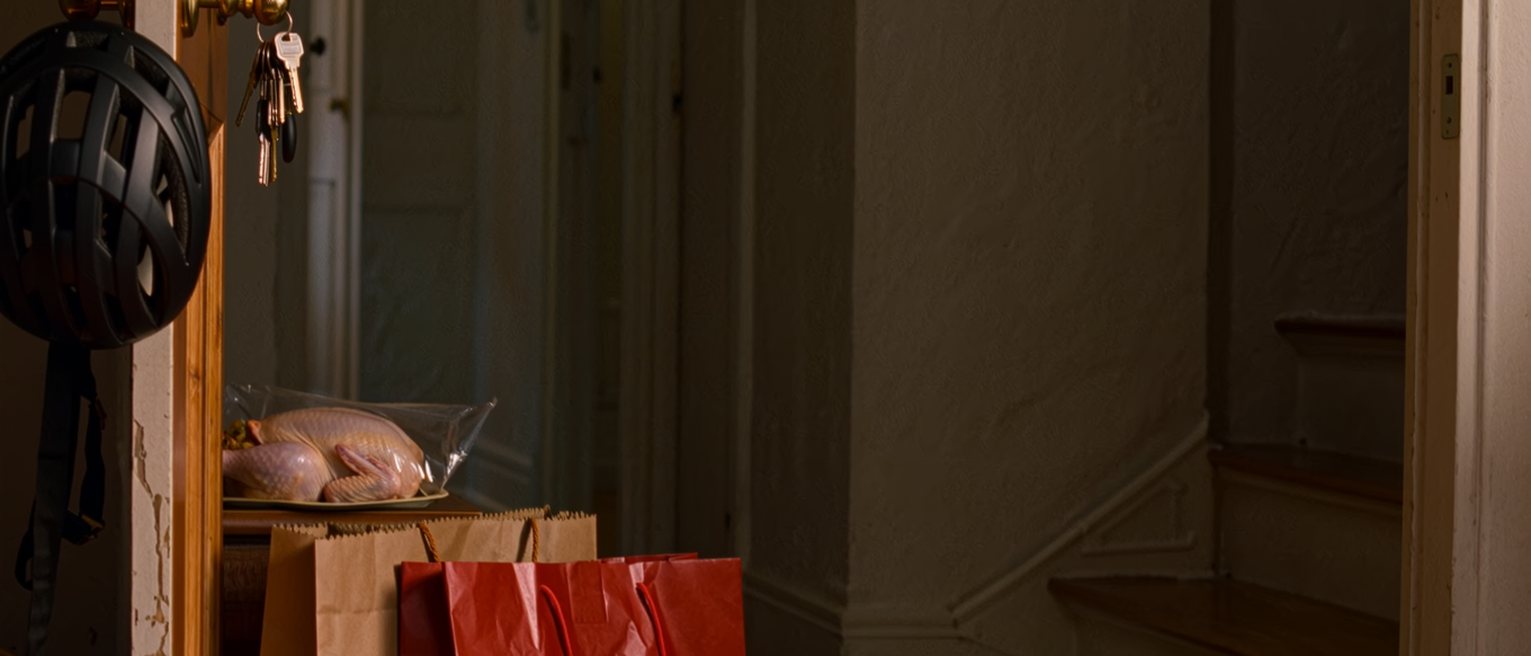
Part of it is that they are unglamorous, and the forms available for this material are forms that reward drama. A lease is not a scene. A deposit is not a turning point. The negotiation with a letting agent, the twenty-minute call about a utility account, the week spent working out whether the cheaper flat is cheap once the commute is priced in — none of this will carry a chapter, and a reader who has been promised a story about a marriage will feel cheated by it.
Part of it is money, which remains the last genuinely private subject. A writer who narrates the arrangements honestly has to name figures, and naming figures exposes her class position, her advantages, her debts and her dependence on other people, all at once. It is far safer to describe a feeling. Feelings do not reveal a bank balance.
And part of it is that the culture wants the self. The story it is prepared to buy about a woman leaving a marriage is a story about who she turned out to be. A story about how she got the desk into the room is understood as preliminary, the boring part before the real part, even though the desk is what the real part happened on.
The practical consequence of the omission is worth stating, because it is the reason this is more than a literary observation. A reader who has been handed only the two scripts will measure her own year against an inner transformation, and will not find one, because she has been busy. She will conclude that she is behind, or that she has not processed it, or that something in her is failing to convert the event into meaning. What she has actually been doing is the work — the part that has no genre, and that nobody wrote down.
What this house sells, and what it cannot claim
An essay that argues arrangements are the real story should declare that it is published by a business which is itself an arrangement, and should do it before the argument has finished working rather than after.
This house sells private companionship: an evening that is booked in advance, agreed in terms, and paid for. It is a line item. Everything above, which treats the scheduled and the paid-for as real rather than as a lesser substitute for the spontaneous, is congenial to us, and we would have reason to make this argument whether or not it were true.
So the declaration comes with limits on what may be claimed. An evening here rebuilds nothing. It is not a stage of recovery, it does not constitute progress, and it is not evidence that anything has been resolved. Nothing we sell substitutes for an address, an income, a lawyer, an accountant, a housing adviser or a friend with a spare room, and a reader who is actually in the middle of the rebuild this essay describes has needs that are better met by those than by us.
We also do not claim to be company in the sense that matters most. What we offer is bounded, scheduled and paid for, exactly as described. If an evening here were to become the only place in a person’s week where she is spoken to as the major character in her own account, that would not be a success for us to report. It would be a description of a gap that an evening cannot close.
The strongest case against the book and against this essay
The objections worth taking seriously are not corrections of fact. They are objections to what the book makes of its own circumstances, and to what this essay makes of the book.
The first is class, and it is the heaviest. Levy rebuilt a life as an established writer, with publishers, commissions, a literary network and a long-standing friendship that could supply a shed, in a city where her work exists. The arrangements she reassembled were available to her because of a position she already held. Read as an account of one person’s particular circumstances it is honest. Read as a demonstration that a life can be rebuilt at fifty, it quietly imports an advantage most readers do not have, and a reader without an income of her own, without a professional network, in a place where her work does not exist, will find the mechanism described here far less available than the essay’s calm tone implies.
The second follows from it. A borrowed shed and an electric bicycle are charming when they appear in a book by a writer whose career is secure. The same two objects, in a life with no floor under it, are not emblems of freedom; they are what you have because you cannot afford a room and a car. Treating them as figures for a new way of living risks aestheticising precarity — turning the visible signs of having less into a style, and then recommending the style to people who have less involuntarily. This essay has used the shed and the bicycle as evidence, which is a different move from using them as emblems, but the line between the two is thin and this essay has not always stayed on the right side of it.
The third is about the book’s lightness. It is funny, and the humour is genuinely a form of dignity, but comedy is also a way of not saying things. The book is reticent about the marriage, about what was decided and by whom, about the specifics of money, and about how any of this landed on two daughters who did not choose it and whose own accounts are not in the book. A reader can finish it moved and still not know what it cost anybody other than the narrator. The strongest version of this objection is that the lightness is not only a style but a shield, and that the volume’s brevity is doing some of the same work.
The fourth is against this essay. An argument that the arrangements are the real story can very easily become an argument that a woman in the middle of this should stop feeling and start organising. That would be a bad thing to hand somebody. Grief is not a logistics failure. A person who cannot get out of bed does not need a better spreadsheet, and there is a version of this essay’s thesis that is indistinguishable from the oldest advice ever given to women in difficulty, which is to get on with it.
Here is the narrowing, offered instead of a rebuttal, because most of the above lands. This essay does not claim that the arrangements are more important than the grief. It claims something narrower: that the arrangements are the part that goes unrecorded, that they are more expensive than the decision they follow, and that a reader who cannot find her own transformation in the wreckage may be looking for the wrong object. Whether she should then do anything about it is not something this Library knows. The class objection has no answer at all, and the right response to it is not a defence of the book but a plain statement that the mechanism it describes is distributed as unequally as everything else.
What this does not claim
This is a reading, not guidance. It sets out no procedure for leaving a marriage, recommends no course of action, and diagnoses nobody. Nothing here says that any reader should leave, stay, rebuild, grieve differently, or feel anything in particular about her own circumstances.
Every description of The Cost of Living is attributed to the book. The term living autobiography and the account of what Levy intended by it are attributed to her own published remarks about the project. Where this essay characterises the book’s method, its tone or its refusals, that is this Library’s reading and is offered as such.
The book is a memoir about real people, including the author’s mother, her daughters and a friend who lent her a shed. What is reported here is what the book reports, written afterwards by one participant. No claim is made about what anybody other than the author thought or felt, and reconstruction in a memoir is reconstruction rather than record.
The prize record is stated precisely and should not be compressed. Levy’s two Booker Prize shortlistings were for the novels Swimming Home and Hot Milk, not for this book. The Prix Femina étranger for 2020 was a win, awarded for the French translations of the first two volumes of the living autobiography. The Guardian ranking is a newspaper list and a matter of taste rather than an award. The Andrew Carnegie Medal longlisting appears in publisher and bookseller copy and was not corroborated here against the awarding body’s own published list, and is recorded as reported rather than confirmed.
On Japanese availability: this Library searched the National Diet Library catalogue and the Japanese bibliographic record for titles published under this author’s name and found only the novel Hot Milk, translated by Ozawa Miwako, Shinchosha, July 2022. No Japanese edition of The Cost of Living was found. That is a report of what those searches returned on the date they were run and not a claim that no edition exists or is planned.
No passage of the book is quoted at length anywhere in this essay. Neither Deborah Levy, nor her publishers, nor any translator, prize body or newspaper named here has any connection to this house, knows of it, or endorses it. Book references are for discovery only and no retail or affiliate arrangement exists.