Books
The Vegetarian, and a Refusal With No Language
A woman stops eating meat and gives one reason: a dream. Her family cannot file that, so it supplies a different description — she is unwell — and acts on the description. The novel is not about diet. It is about what happens when a refusal arrives without a licensed explanation, and about a book that withholds its own protagonist so that three people can be shown failing to read her.
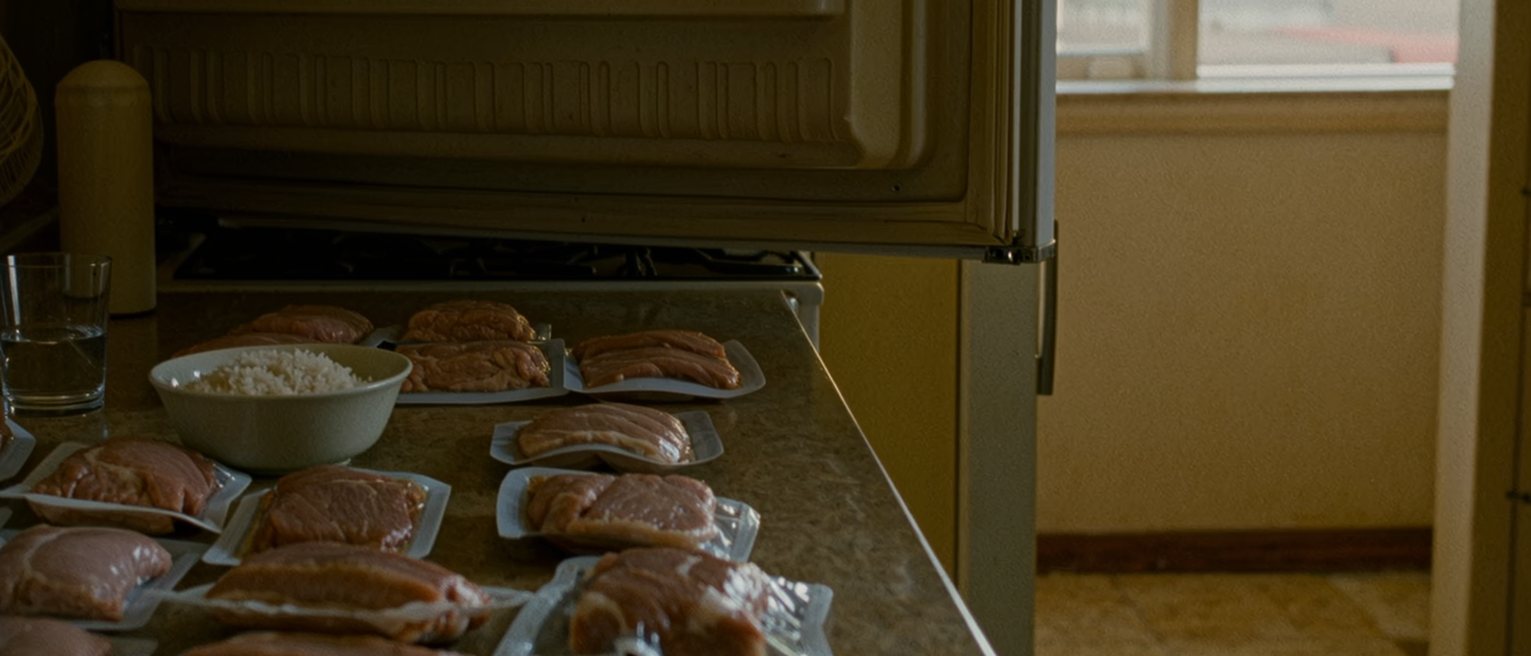
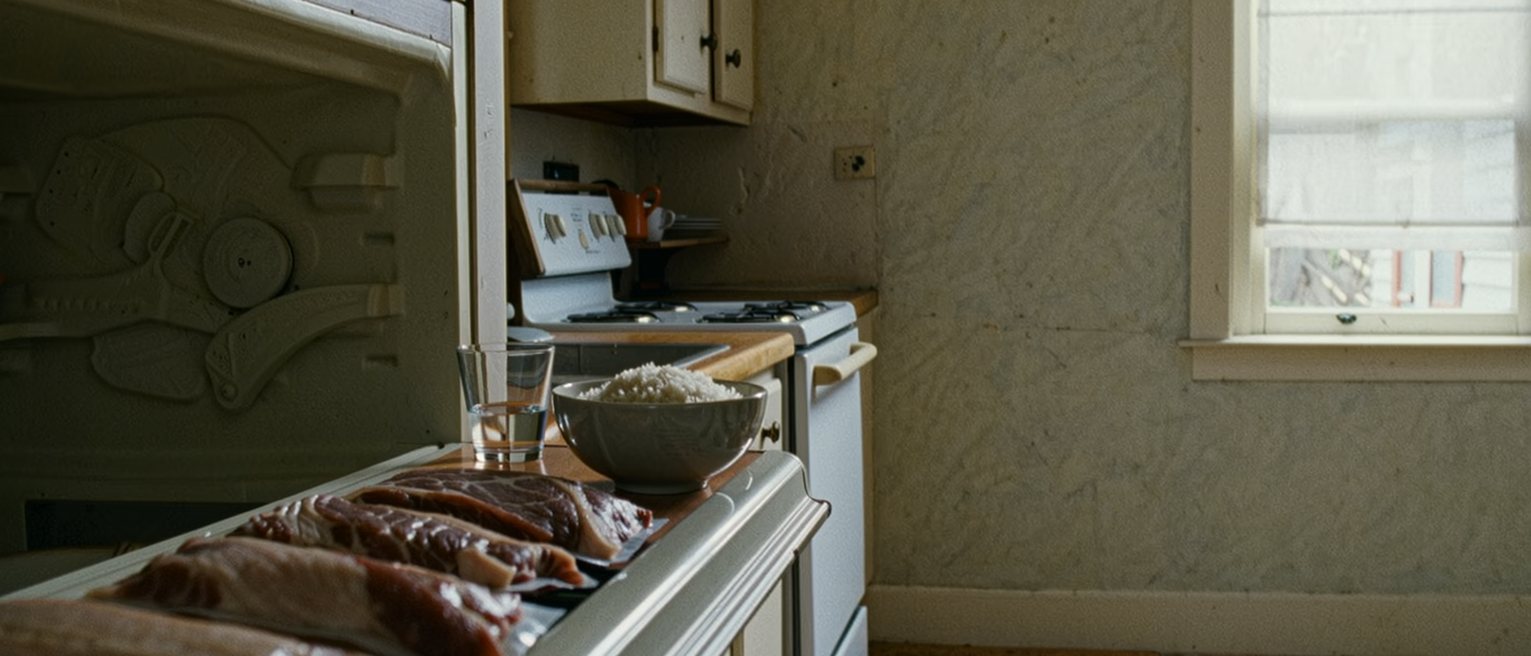
A woman in her early thirties stops eating meat. She empties the refrigerator in the middle of the night and will not say much about it. Asked why, she offers one reason, and the reason is that she had a dream. She does not expand on it, does not argue for it, and does not appear to believe that anybody is owed more than that.
Her husband, who narrates the opening section and who had chosen her in the first place because she seemed to require nothing of him, is inconvenienced before he is alarmed. His shirts, his meals, a business dinner at which she will be conspicuous. The alarm comes later and is mostly social. Then her family is convened, and the matter passes out of her hands entirely.
Everything that follows in Han Kang’s novel follows from what other people do with that refusal. Not from the refusal. The refusal, taken by itself, is an adult declining a category of food, which is among the least consequential things a person can do. What makes it consequential is that it arrives without an explanation anyone is willing to accept, and that the people around her cannot leave an unexplained refusal alone.
This is a reading of that mechanism, and of the form Han Kang built to show it. The argument has two parts. The first is that a refusal which cannot be stated in the terms a family accepts gets reclassified as illness, and that the reclassification — not the refusal — is what does the damage. The second is that the novel’s three-part structure, which gives us a husband, a brother-in-law and a sister and never gives us Yeong-hye, is not a stylistic choice laid over the story. It is the argument, made in the only way a novel can make it.
What the book is, and what it is not about
The Vegetarian began as three separate novellas, published in South Korean literary quarterlies between 2004 and 2005, and was collected as a single volume by Changbi Publishers in October 2007. The middle novella, Mongolian Mark, received the Yi Sang Literary Award in 2005. The three parts share a protagonist and change narrator each time, which is why the book reads as a novel that keeps losing and regaining its footing rather than as a linked collection.
The English translation is by Deborah Smith and was published by Portobello Books in the United Kingdom in January 2015, and by Hogarth in the United States in February 2016. A Japanese translation by Kim Funa appeared earlier, from CUON in 2011, as the first title in that publisher’s New Korean Literature series. A reader in Japan has therefore had access to this book for well over a decade, and had it before most of the English-speaking world did.
The prize history is worth stating precisely, because it is routinely blurred. The Vegetarian won the Man Booker International Prize in 2016. That was a win, announced in London on 17 May 2016, not a nomination, and it was the first year of a reformed prize: from 2016 the award went annually to a single book in English translation rather than to a writer’s body of work. The fifty thousand pound purse was split equally between author and translator, which is how Han Kang and Deborah Smith came to share it. The chair of judges, Boyd Tonkin, called the book compact, exquisite and disturbing.
Two further points of precision. Han Kang was shortlisted again in 2018, for The White Book, also translated by Smith, and did not win that year; the prize went to Olga Tokarczuk’s Flights. And the award was called the Man Booker International Prize in 2016 and was renamed the International Booker Prize in 2019, after the sponsorship changed, so accounts written at the time use the older name and later accounts use the newer one for the same thing.
Then, on 10 October 2024, the Swedish Academy awarded Han Kang the Nobel Prize in Literature, with the citation: for her intense poetic prose that confronts historical traumas and exposes the fragility of human life. That citation describes a body of work — it reaches across novels that this essay does not discuss — and it is not a verdict on The Vegetarian in particular. It is quoted here because it is the Academy’s own wording and because the phrase about historical trauma is a useful corrective to the idea that this writer is principally a writer about one strange woman and her diet.
Which brings us to what the book is not about. It is not a novel about vegetarianism, and reading it as one produces nothing. Nobody in it debates animal ethics. The diet is the occasion. What the book is about is a household, and then a marriage, and then a family, and then a hospital, each in turn confronted with a person who will not supply a reason in a form they can use.
A refusal with no available language
Consider the reasons that would have worked. If she had said her cholesterol was high, the matter would have ended there. If she had said a doctor had told her to, ended. If she had said she had taken up a religious practice, or was following a diet a colleague recommended, or had read a book about factory farming and could not get past it, or was pregnant and off the smell of meat — each of those converts a refusal into a category other people can file, and a filed refusal stops being a problem.
What these licensed reasons have in common is that they do not belong to her. They are borrowed from institutions that already have standing: medicine, religion, ethics, fashion, the body’s own emergencies. A person who refuses in one of those names is not refusing on her own authority. She is relaying an instruction from a source the room already respects.
Yeong-hye has nothing of the kind. She has a dream, which is to say she has an experience that is entirely hers, that is not transferable, and that carries no institutional weight whatsoever. In the vocabulary available to her family, a dream is not a reason. It is at best a symptom of something and at worst an evasion.
Han Kang has said that while writing the book she was carrying questions about human violence and the impossibility of innocence. She has also described the seed of the novel as a line from the modernist poet Yi Sang to the effect that humans should be plants — a line written in a Korean script that was suppressed under Japanese colonial rule, which gives the wish to stop being an animal a history that is not only private. Neither of those is a key that unlocks Yeong-hye. They do indicate that the refusal in this book was never conceived as a dietary preference.
The novel places her refusal deliberately outside the available vocabulary. That is the design. If she could explain herself, the book would be about the explanation and about whether it persuaded anyone, which is a much smaller book. Because she cannot, the book is free to be about the thing that actually happens when someone refuses without a permit: the room does not accept the refusal and does not let it stand. It goes looking for a description that will let it act.
What a family does with a reason it cannot accept
The escalation in the novel is orderly and, read slowly, entirely recognisable. It begins with annoyance. It proceeds to argument, then to the mobilisation of the wider family, then to a gathering at which her father, a veteran who is accustomed to being obeyed, attempts to put meat into her mouth by force. She responds with an act of self-injury severe enough to require a hospital, and from that moment the question of what she wants stops being asked in any serious way.
The novel is careful about something that a reader in a hurry will miss: none of these people is a villain, and the book does not present them as one. The husband is ordinary, self-interested and unimaginative, which is not a crime. The mother tries to get broth into her by deception, which is what a frightened mother does. The father believes he is exercising a duty. The sister, In-hye, acts from love throughout and pays for all of it. The damage in this book is not done by cruelty. It is done by concern that has no way to hear a no.
This Library has been here before, at one remove, and it should say so. Two earlier essays on this desk read Sayaka Murata’s Convenience Store Woman and argued that the circle around Keiko is composed of people who are sincerely worried and whose help always takes the same shape: partner, marriage, a real job. Those essays made the distinction between help, which eases a person toward where she is already going, and conversion, which brings her to where you stand — and observed that the only difference between them is who chose the destination.
This essay takes the step after that one. In Murata’s novel the circle knows exactly what it wants installed, and Keiko can see the scorecard perfectly well. In Han Kang’s novel the circle cannot get an account of the situation at all. It asks why, receives a dream, and finds itself holding a refusal with nothing attached to it. What it does then is the subject here, and it is a further move: in the absence of an explanation it supplies one of its own. Not a reason, because she has declined to give a reason. A condition.
The ordinary versions of this are everywhere and are usually much smaller. The relative who has stopped coming to the gathering and will not say why. The friend who declines every invitation and offers no substitute date. The colleague who says only that she would rather not. In each case the suspicion attaches not to the act, which is minor, but to the silence around it, which is read as concealment. A refusal with a reason is a preference. A refusal without one is treated as a puzzle that somebody is entitled to solve.
The reclassification is what does the damage
Here is the contribution this essay wants to make, and it is narrow on purpose. Watch what changes at the exact moment the description changes — when the sentence in everyone’s mouth stops being she will not and becomes she cannot help it.
Before that moment, she is a person one disagrees with. Disagreement is a relation between two parties who are, at least formally, of the same kind. It carries obligations in both directions. You may be angry with her. You may argue, withdraw, negotiate, or decide you cannot live with it. What you cannot do is act on her behalf without asking, because she is still the one who decides.
After that moment, she is a person one manages. And management runs on a different set of permissions. Her statements are no longer answers; they are material to be interpreted. Her refusals are no longer decisions; they are the condition expressing itself. Consent stops being sought, because consent is not thought to be available. Force, applied to a person who has been reclassified, presents itself as care — and in the novel it does exactly that, at the table and later in an institution, where being made to eat is understood by everyone involved as help.
The cruelty of the new description is that it is self-sealing. Once she is inside it, everything she does becomes evidence for it. If she resists, that is the illness. If she is calm, that is the illness responding or the illness deepening. If she says she is not ill, that is the illness speaking. There is no move available to her from inside the frame that counts as an argument against the frame, because the frame has already reclassified her arguments as symptoms.
So the claim is this, and it should be held in its narrow form rather than a grander one. The injury the novel depicts is administered by the reclassification and by what the reclassification licenses. Not by the refusal. Yeong-hye stops eating meat and nothing happens to her; she is reclassified and, from that point, things are done to her body continuously and with everyone’s blessing. That is not a claim that she is well, and this essay does not make one. Whether she is well is not knowable from a novel that withholds her, and a publication is not qualified to decide it in any case. It is a claim about sequence and about who is doing what to whom.
It is also not a claim about psychiatry, about hospitals, or about anybody’s treatment in any country. It is a claim about what one novel shows happening in one family, and about a move that families, workplaces and friendships make constantly without any medical apparatus at all. The reclassification of an unexplained refusal into a defect in the person refusing does not require a doctor. It only requires a room that has run out of patience.
Three narrators, and none of them is her
Now the form, which is where the book stops being a story about a family and becomes an argument.
Part one is narrated in the first person by Yeong-hye’s husband, Mr Cheong, a man who tells us in his opening pages that he married her because she was unremarkable, and who is therefore the least equipped narrator imaginable for what he is about to describe. Part two moves to the third person and settles close to her brother-in-law, a video artist whose interest in her is aesthetic and then not only aesthetic. Part three stays in the third person and settles on her sister In-hye, with passages in the present tense, and In-hye is the only person in the book who has genuinely tried.
Yeong-hye narrates none of it. She surfaces in brief interpolated dream passages, set apart from the surrounding text, and otherwise she is available only as other people report her. Han Kang has described this directly: Yeong-hye has a voice only in those very brief dream-monologues, so the image of her is assembled into an imperfect composite through the gazes and voices of those around her. That is the author’s own account of her method, and it is worth taking at face value.
The consequence is that the reader never receives a reliable interior. We do not learn what she wants, what she believes she is doing, or whether she has a project at all. What we receive instead is three consecutive attempts to read her, by three people with different equipment and different motives, each of which fails in a characteristic way. The husband cannot see past the inconvenience to himself. The brother-in-law sees her with tremendous intensity and sees an image. The sister sees a person and cannot reach her.
This is why the withholding is not a gap in the book. It is the content of the book. A novel that gave us Yeong-hye’s reasoning would be a novel in which the reader could adjudicate — could decide she was right or wrong, ill or lucid, and close the case. By refusing that, Han Kang puts the reader in the same position as the characters and makes the reader’s failure part of the demonstration. The formal argument is that a person can be surrounded by attention, discussed constantly, and never once read.
It follows that anybody who tells you confidently what Yeong-hye means is supplying it themselves. That includes this essay, which is why its claims are pitched at what the other characters do rather than at what she is.
The section that is hardest to hold
The middle part is the one that makes this book difficult to recommend casually, and it should not be talked around.
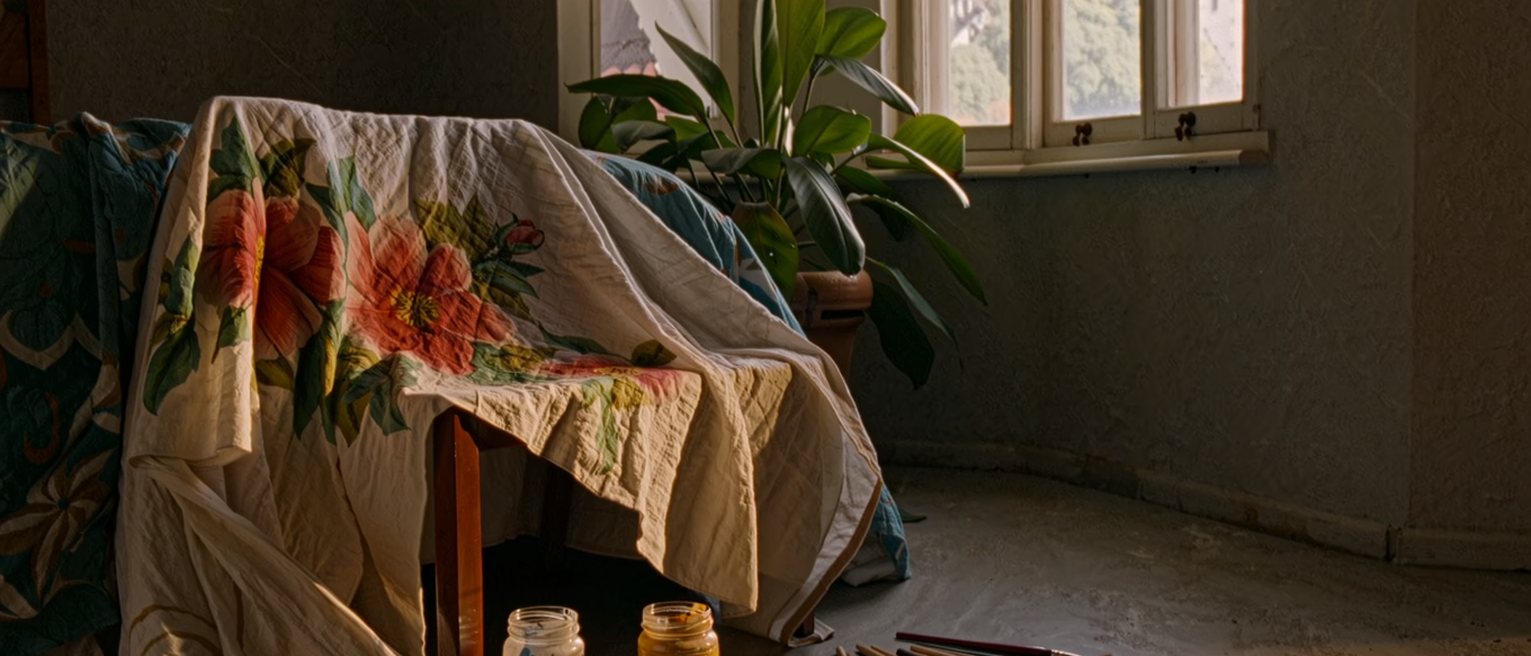
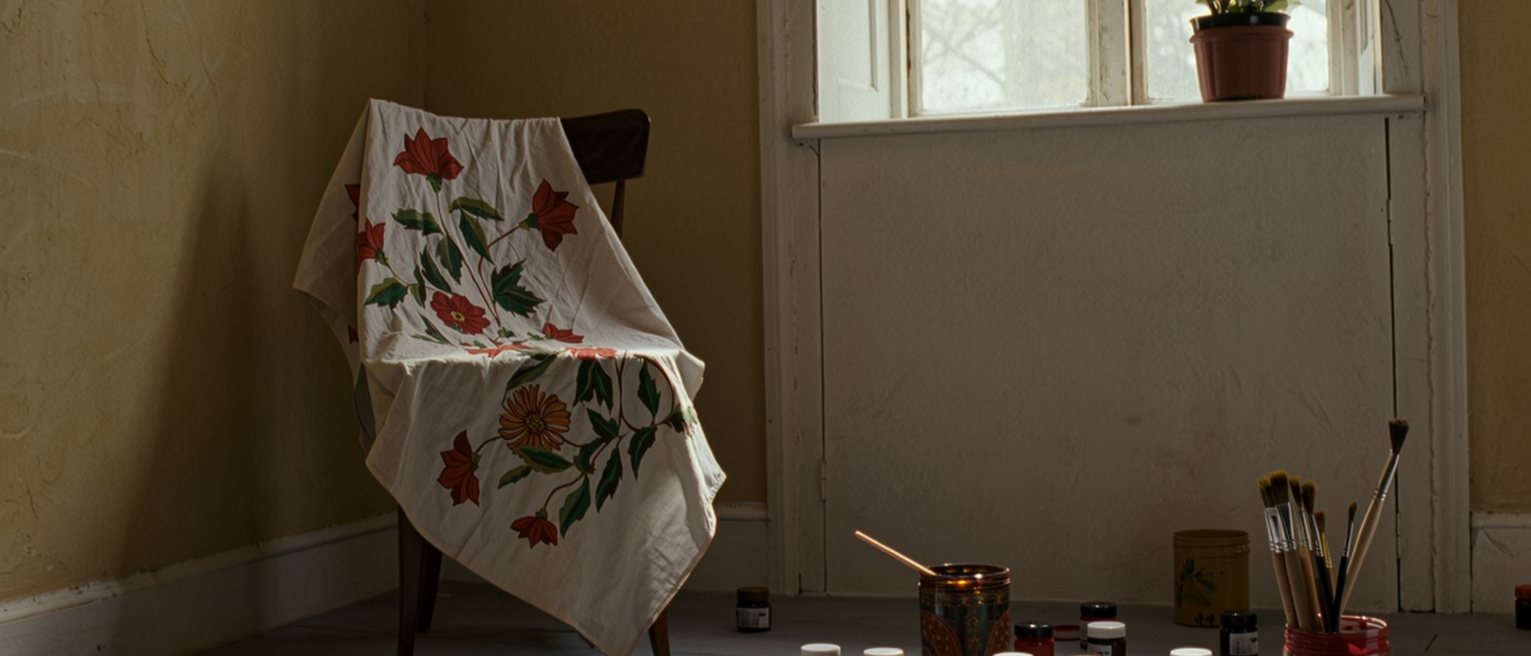
Her brother-in-law, an artist working in video, becomes fixated on a detail he learns about in passing: a birthmark she has carried since childhood. The fixation is both artistic and sexual, and the novel does not pretend otherwise or grant him a cover story. He arranges to paint flowers onto bodies and to film them. What happens between them in the course of making that work is described by the novel plainly and is the reason the book was received in South Korea, on first publication, as extreme.
It is tempting, for an essay with a frame like this one, to hurry past the section or to convert it into a symbol. That would be dishonest. The eroticism is not decorative and not deniable. It is the sharpest test the book sets, and it tests precisely the thing this essay has been arguing.
Here is why. The brother-in-law is the only character in the novel who does not want Yeong-hye fixed. He is not trying to return her to a normal life; he is drawn to her exactly as she has become. He looks at her longer and more carefully than anyone else in the book. And he still does not ask her a single question she could answer as herself. His attention is total and it is appetite. He has replaced a refusal he cannot read with an image he can use, which is a different substitution from the family’s and arrives at a comparable place: she is again a surface that other people’s meanings are written on.
So the section does not undermine the reading. It complicates it usefully, by showing that the alternative to pathologising a person is not automatically seeing her. Being looked at with great intensity is not the same as being understood, and the novel is unsparing about how easily the two are confused — by him, and by a reader who finds his sections the most alive in the book and should sit with why.
In-hye, who reads her best and still cannot
The third part belongs to the sister, and it is where the novel turns its attention onto the person who has behaved best.
In-hye has held everything together: the shop, the child, the marriage after it collapses, the visits to the hospital that nobody else makes. She is also the one who signed the papers. The novel puts those two facts in the same person, without resolving them, and declines to tell the reader whether she was right.
What happens to In-hye across the section is that her own life stops looking like the healthy baseline against which her sister is measured. She begins to recognise, in retrospect, how much of her ordinary competence was endurance, and how little distance there might be between a woman who could not go on complying and a woman who did. That recognition is not presented as a diagnosis of anyone. It is presented as the moment when the comparison collapses, and it is the closest the book comes to an answer.
It does not give one. The novel ends without a verdict — with movement, with weather, with trees, and with a question left standing rather than settled. Readers who want to be told what Yeong-hye was doing will finish unsatisfied, and the dissatisfaction is the design working.
Which places the reader in an uncomfortable and quite deliberate position. Three people have now tried to read this woman and have not managed it. The fourth is you. The book has already shown you what the available moves produce: the husband’s irritation, the brother-in-law’s appetite, the sister’s exhausted love. It is not obvious that any fourth move is on offer, and the book’s refusal to supply one is, in the end, the most honest thing about it.
The prose in your hands may not be hers
A publication that recommends a translated novel has an obligation to say what is disputed about the translation, and in this case a good deal is.
Deborah Smith began learning Korean in 2009 and her translation of this novel was published in 2015; she and Han Kang shared the 2016 prize. After the win, a substantial argument broke out in South Korea about how far the English departs from the Korean. Charse Yun, writing in the online magazine Korea Exposé in July 2017 and then at greater length in the Los Angeles Times that September, reported figures from research at Ewha Womans University indicating that around 10.9 per cent of the first part had been mistranslated and a further 5.7 per cent of the original omitted, and described the English as considerably more embellished than the Korean. Wook-Dong Kim set out a detailed catalogue in Translation Review in 2018, listing vocabulary errors, misread homonyms, dialogue attributed to the wrong speaker, omissions and additions, and concluding that the number of errors exceeded what one would expect of a professional translator.
The case on the other side is not weak and is made by people with standing. Translation scholars in South Korea, quoted in the Korean press during the 2016 dispute — among them Cho Jae-ryong, Lee Young-jun and Choi Mi-kyung — argued that word-level comparison is the wrong instrument for literary translation, that what matters is whether the book works as a book in the receiving language, and that Smith had produced the sentences Han might have written had she been writing in English. Smith replied at length in the Los Angeles Review of Books in January 2018, conceding that all translators make mistakes and that she had made some, while arguing that change is not betrayal and that faithfulness consists in achieving a similar effect by different means. Han Kang has publicly supported the translation and has described the working relationship as a long conversation. It is also worth noting, as Smith did, that the book had already won the Yi Sang Award in Korean and had a readership there before any English existed, which cuts against the suggestion that the translation invented its quality.
Both of those positions can be held at once by an honest reader, and this Library holds them both. The dispute is real and the defence is real, and the dispute is in any case not a scandal so much as an unusually public instance of a question every translated book raises silently.
What follows for this essay is a restriction, stated plainly. This Library reads the novel in Japanese and in English. It has not read the Korean. Every claim made here is therefore a claim about structure and event: that there are three parts, that the narrators are a husband, a brother-in-law and a sister, that Yeong-hye speaks only in dream passages, that a father uses force at a table, that a sister signs for a hospital. Those survive translation, and they are what the argument rests on. Claims about cadence, register, the temperature of a sentence or the exact quality of the prose do not survive translation, and none is made here. A Japanese reader’s experience of this book is Kim Funa’s work, an English reader’s is Smith’s, and neither is the object under discussion.
What this house sells, and why the argument suits it
The interest should be declared before the essay is allowed to sound persuasive, rather than after.
This house sells private companionship. Part of what is being bought is a few hours in which a woman is not asked to justify herself: no account of why she is here, no explanation of what she wants, no reason that has to satisfy a room. Which means an essay arguing that the demand for an explanation is the injury runs directly in this house’s favour. If the problem is being required to give reasons, then a service organised around not requiring them is flattered by the diagnosis. That is worth saying out loud, because it is true and because a reader who noticed it later would be right to discount everything above.
So the declaration comes with constraints rather than reassurances. This house does not claim that any reader needs what it sells, or that a person who finds herself explaining constantly is thereby lacking something. It claims no outcome of any kind. Nothing here says that an evening relieves, repairs or protects anybody, and the reason we will not say it is that it could not be supported and that unfalsifiable promises are how people in this position are taken advantage of.
Nor is this house any kind of answer to what the novel depicts. What is on offer here is bounded, scheduled and paid for. A person in the situation the book describes — surrounded, reclassified, no longer consulted — needs things that no commercial arrangement supplies, and it would be grotesque to suggest otherwise. The most this essay claims for its own house is that we have noticed the same demand the novel is about, from the other side of it.
And a last refusal: nothing above says that a person who will not explain herself is therefore right. Sometimes the refusal to give a reason is evasion, and sometimes the people asking are owed one. The essay’s claim is not that Yeong-hye was correct. It is that the family’s move — from cannot explain to must be ill — is a move, and that the move has consequences of its own.
The strongest case against this reading
Four objections, and they are not decorative. The first three land, and the fourth is the serious one.
First: that reading Yeong-hye as a refusal makes a symbol of a woman whom the novel deliberately keeps opaque. The book withholds her interiority for a reason. An essay that calls her behaviour a refusal, and then builds an argument on what the refusal means, has supplied the very thing the book declines to supply, and has done at a higher level of politeness exactly what her family does: taken an unexplained act and given it a description that suits the describer. This objection is largely correct, and the only honest response is a narrowing. The claims here are pitched at what the other characters do — which the novel shows in full and in detail — and not at what Yeong-hye is. Where the word refusal appears, it should be read as the name for an act the book depicts, not as a translation of a motive the book withholds.
Second: that the middle section sits badly with this essay’s frame. If the argument is that Yeong-hye is a person nobody manages to read, then a long section in which she is painted, filmed and taken up by a man who wants her is not comfortably absorbed by that frame. It is a section in which a woman who by that point cannot meaningfully consent in the way the word usually means is used, and any essay that treats her as a figure of autonomy has to account for it. This essay’s response is above, in its own section, and it is not a rebuttal: the material is left where it is, and the observation drawn from it is only that attention is not comprehension. A reader who concludes that the frame cannot hold part two is not making an error.
Third: that the translation dispute undercuts claims made about the book in English. If a serious case exists that the English is embellished and in places wrong, then a reader who admires the novel in English may be admiring Deborah Smith, and an essay that draws conclusions from the English is on unstable ground. Conceded, which is why the essay restricts itself to structure and event and declines to say anything about the prose as prose. It remains true that a reader who cannot read Korean is, in the end, reading somebody’s version, and that this is a limitation no amount of care removes.
Fourth, and this is the one worth the most: that an essay about a refusal with no language cannot be contradicted. If Yeong-hye is unwell, the essay says that is the reclassification at work. If she is lucid, the essay says that is the refusal. Any evidence either way is absorbed. The structure is unfalsifiable, and unfalsifiable readings are exactly the kind that feel profound and prove nothing.
The honest answer is to accept the description and lower the claim. This is a reading, not a finding, and it should be held as a proposal a reader is free to decline. The parts of it that can be checked are in the ledger and in the book: the publication history, the prizes, the citation, the translation dispute, the number of parts, who narrates them, what happens at the table and in the hospital. The interpretive part — that the reclassification is what does the damage — is an argument about a sequence in a novel, offered because it seems to illuminate the sequence better than the alternatives, and it stands or falls on whether a reader finds that the book supports it. It does not get to be true because it cannot be disproved, and this essay does not ask to be believed on those terms.
What this does not claim
This essay is literary analysis. It is not clinical guidance, it describes no condition, it recommends no course of action, and it diagnoses nobody — not Yeong-hye, not any other character, and certainly not any reader. Nothing here should be read as a statement about mental illness, about psychiatric care in South Korea, Japan or anywhere else, or about how any real person has been or should be treated.
Nothing here says that declining to explain oneself is healthy, admirable or advisable. Refusals without reasons are sometimes evasions, and the people around a refusal are sometimes owed an account. The argument concerns one specific move — the conversion of an unexplained refusal into a defect in the person refusing — and what follows from that move. It is not a general licence.
All claims about the novel are claims about the novel, and its plot is described rather than reproduced. No passage of the book is quoted anywhere in this essay. Yeong-hye is a fictional character. She stands for no group of people, represents no reader, and is not an illustration of anything about women, about Korea, or about families in general.
The prize record is stated as it is: The Vegetarian won the Man Booker International Prize in 2016, the first year of that prize’s reformed single-book format, with the purse split equally between author and translator. Han Kang’s The White Book was shortlisted in 2018 and did not win. The award was renamed the International Booker Prize in 2019. The Nobel Prize in Literature awarded to Han Kang on 10 October 2024 is quoted in the Academy’s own wording and describes her work as a whole rather than this book.
On the translation: the criticisms and the defences above are attributed to the named people who made them, and this Library takes no position on which is right. It has not read the Korean. No claim is made here about the quality, accuracy or literary character of any translation, and no claim about the prose of the book in any language is made anywhere in this essay.
Neither Han Kang, nor Deborah Smith, nor Kim Funa, nor Changbi, Portobello, Hogarth or CUON has any connection to this house, knows of it, or endorses it. The book is mentioned so that a reader can find it. No retail or affiliate link appears anywhere, and this house’s commercial interest in the essay’s central claim is stated in the body above rather than only here, because a declaration that arrives after the argument has done its work is not a declaration.