Cinema
Decision to Leave and the Beautiful Danger of Desire Fed by Distance
A woman who is paid to care for other people is attended to, closely and continuously, for the first time in years. The attention is a criminal investigation. The film is clear-eyed about that, and the question it leaves is not about her — it is about what you have been accepting as care because nothing better arrived.
Hae-jun is a detective with insomnia who investigates the death of a man on a mountain. Seo-rae is the dead man’s widow, a Chinese immigrant who works as a carer for elderly patients and whose Korean is good but not native.
He puts her under surveillance. He sits outside her flat at night and watches her through a window, taking notes, eating, not sleeping. He is doing his job, thoroughly, in the way a certain kind of man does a job when he has nothing else.
She notices. And the film’s whole engine is what she does with the noticing, which is to experience it as the most sustained attention anybody has paid her in years.
The month’s theme is gifts, obligation and care, and the sentence underneath it is I want to be cared for when I am not being useful. This film answers that sentence in the cruellest way available: the woman whose entire economic existence consists of caring for other people is attended to exactly once, closely and continuously — and it is a police investigation.
What she actually does for a living
The detail that is easiest to skip is the one that organises everything: Seo-rae is a professional carer. She washes, feeds, lifts and sits with elderly people who cannot do those things for themselves.
That is not colour. It means her days are made entirely of attending to other bodies, with nothing flowing back, in a second language, for money, in a country where her immigration status is a fact other people can hold against her. She is useful for a living.
And usefulness is precisely the condition the private sentence for this month is trying to get out from under. Being cared for when you are not being useful requires somebody to attend to you for no reason — and the structural difficulty for a person like Seo-rae is that the only people who spend sustained time with her are people she is being paid to serve.
Then a man starts sitting outside her building all night with her in his field of vision, and something in her arithmetic changes.
Being watched is not being seen
This Library already contains an essay on that distinction, and it would be dishonest to let a beautiful film quietly reverse it, so we will not.
What Hae-jun gives Seo-rae is not care. It is attention with an aim. He is looking at her in order to determine whether she killed her husband, and the closeness of his looking is a function of how seriously he takes that question, not of how seriously he takes her. That she experiences it as devotion does not convert it into devotion.
The film knows this. It is not a romance that forgot to notice what surveillance is; it is a film that is deliberately about a woman who cannot tell the difference, because the difference has never been demonstrated to her.
And that is the observation to take out of the cinema, because it is not exotic. A person who has gone a very long time without being attended to will accept, and be moved by, forms of attention that a better-supplied person would find alarming. The intensity is real. The reading of the intensity is the error, and it is an entirely understandable error.
So the question for a viewer is not whether Seo-rae was foolish. It is narrower and more uncomfortable: what have you been counting as care lately because nothing with better credentials arrived?
The translation app, which is the real love scene
The device most people remember is the phone. Seo-rae and Hae-jun speak across a language gap, and at the difficult moments one of them types into a translation application and holds it out.
The film makes this romantic rather than pitiful, and it is right to. Watch what actually happens in those exchanges: two people slow down, choose fewer words, wait for the other, accept that the version arriving is approximate, and keep going anyway.
That is a better description of intimate conversation than most films manage with characters who share a language. The machine is not the obstacle. The machine is what forces the conditions under which they listen properly, because neither can coast on fluency.
It also produces the film’s most quoted effect, which is that Seo-rae’s Korean is slightly formal and slightly literary — she learned it partly from historical drama — so her sentences land with a weight that native speech would not carry. She says plain things beautifully because she does not have the option of saying them casually.
A reader in a bilingual relationship, or in a relationship with somebody whose emotional vocabulary is much smaller than hers, will recognise the whole mechanism. Constraint on language is not the same as constraint on meaning. Sometimes it is the only thing that has ever forced two people to check.
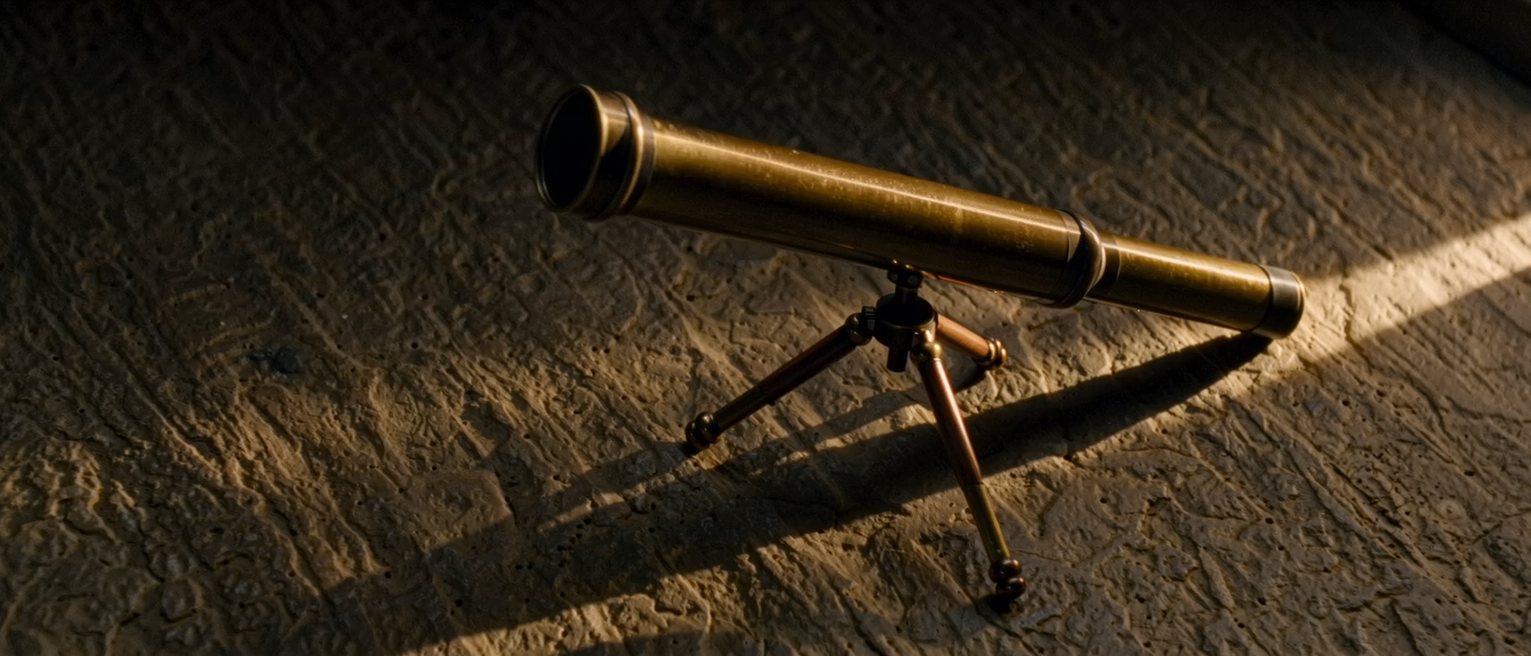
Insomnia, and attention that is not chosen
Hae-jun cannot sleep. It is established early and it is not a character quirk; it is the mechanism by which his attention works.
He is a man who cannot put a thing down until it is closed. That makes him excellent at his job and it means his thoroughness is not a decision he makes about any particular case — it is a condition he is in. When that condition lands on a person rather than a file, the person receives something that feels like total devotion and is actually compulsion pointed in her direction.
This matters for the month’s question more than the romance does. Being cared for when you are not being useful requires somebody to choose you, and compulsion is the opposite of choosing: it would have happened to whoever was in the frame. The intensity is maximal and the addressing is accidental.
It is worth holding that distinction against ordinary life, because the compulsive version is common and frequently mistaken for love. The partner who cannot let an argument rest is not demonstrating how much you matter. The person who texts constantly is not necessarily attending to you. Intensity is a measure of the sender’s internal state, not of how accurately they have seen the person in front of them.
And Seo-rae, who has never been the object of anybody’s sustained attention, has no reference class with which to tell the two apart. Neither do a great many people who are not in a Park Chan-wook film.
The mountain and the sea
The film is built in two movements and they are keyed to two landscapes, which is worth noticing because it is where the argument actually lives rather than in the dialogue.
The first death is on a mountain: a hard, dry, vertical place, where a body is found in daylight and the question is how it got there. The second half moves to the coast: fog, tide, a horizontal world in which edges are not fixed and things are covered and uncovered by water on a schedule nobody controls.
The mountain is the register of investigation — climbable, determinable, a problem with a solution. The sea is the register of what happens to these two people afterwards, where nothing has a fixed edge and the same ground is land and then is not.
That is also an unusually accurate picture of how an attachment of this kind proceeds. It begins as a question with an answer — who is she, what did she do — and it ends in a condition that has no answer and keeps moving, and the person inside it cannot say when the ground stopped being solid because the change was tidal rather than sudden.
The film’s last sequence uses the tide literally, and we will not describe it. What is worth saying in advance is that it is not a metaphor arriving at the end to explain the film. It is the second landscape completing an argument the first one started.
Distance as the accelerant
The atlas title for this piece names desire fed by distance, and the film is a study of exactly that, which is worth separating from the romance of it.
Everything between these two happens across a gap: a window, a case file, a language, a wall of professional obligation that neither can cross without destroying the thing that put them in contact. And the gap is not an obstacle to the feeling; it is the fuel.
This is a general property and not a Korean one. A person you cannot have remains perfect, because the ordinary disappointments that would correct the picture never arrive. Longing across distance requires no negotiation, no morning breath, no disagreement about money, no evening where one of you is boring. It is intimacy with the difficult parts removed, which is why it can feel more intense than anything available in a kitchen.
The essay in this Library on relationships bounded by an ending makes the neighbouring point. What this film adds is the warning attached: a feeling sustained entirely by distance has not been tested, and a person can spend years in one while believing she is in a relationship.
The tide at the end of the film is the same observation in an image. She goes to a place where the gap becomes literal and permanent, and the film declines to tell us whether that is love or catastrophe, because the honest answer is that at a certain level of distance they stop being distinguishable.
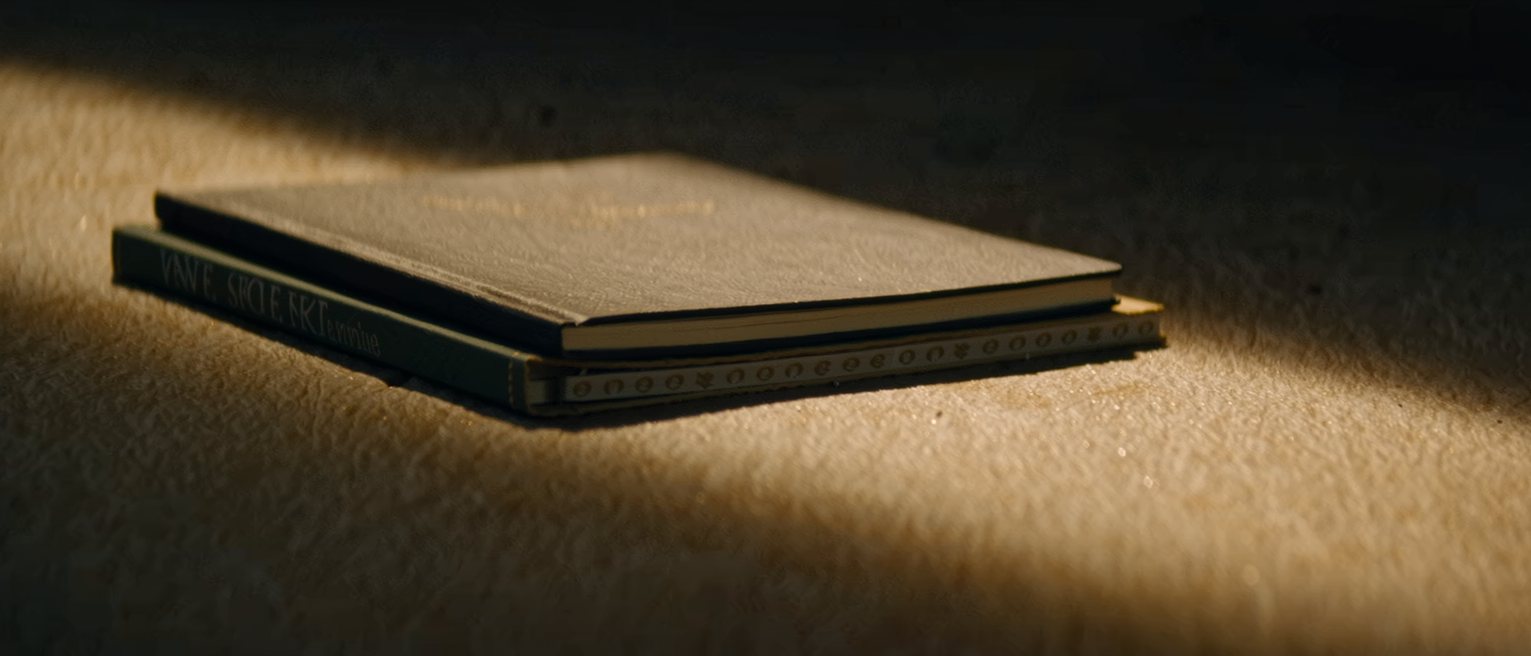
His obligation, her gift
Now the theme, stated directly, because the film performs an exchange that is worth naming.
Hae-jun gives Seo-rae nothing that costs him anything he was not already spending. He is on duty. The hours he sits outside her window are hours he owed the state, and his thoroughness is a professional virtue he applies to everybody.
She receives it as a gift. And it functions as one — it changes her, she reorganises her life around it — despite being, on his side, an obligation to somebody else entirely.
That asymmetry is more common in ordinary life than the plot makes it look. A great deal of what people experience as being cared for is the by-product of somebody else’s duty: the nurse who is thorough, the colleague who is conscientious, the professional whose competence feels like tenderness because tenderness has been scarce. None of that is fraudulent. It is simply not addressed to you, and the difference matters when you begin building on it.
The honest question the film raises, and does not answer, is whether care that was aimed elsewhere still counts. We think it counts as attention and not as care, and that the distinction is worth keeping precisely because the feeling is identical and the future is not.
The film is not a defence of the detective
One guard, because this film is often written about as a tragic romance in which two people are kept apart by circumstance.
Hae-jun surveils a woman he is attracted to, in a case he is supposed to be impartial about, and destroys evidence. His conduct is a serious professional failure and the film treats it as one — it is the thing that undoes him.
The romance and the abuse of position are not separable here, and a reading that finds the first beautiful while not noticing the second has taken the film less seriously than it takes itself. A man with institutional power over an immigrant woman under investigation is not in a situation where his feelings are the interesting variable.
That said, the film also refuses the tidy inverse. Seo-rae is not simply a victim of his attention; she reads him accurately, uses what she learns, and makes decisions of her own with full knowledge. Park Chan-wook gives her more agency than the surveillance plot would normally allow, and the essay would be flattening her to describe her only as watched.
Limits
The film is from 2022, directed by Park Chan-wook and co-written with Jeong Seo-kyeong. Credits, release details, awards and current availability should be verified at the publication gate per the atlas entry’s note on external works.
The plot description is deliberately partial and avoids the resolution. Readings of the ending differ substantially and the interpretation offered here — that at a certain distance love and catastrophe stop being distinguishable — is one among several serious ones.
The characterisation of Seo-rae’s Korean as slightly formal and literary reflects how the performance and dialogue have been widely discussed, including by the filmmakers. A viewer without Korean, this essay included, is relying on subtitling and on that commentary rather than on direct judgement of register.
The claim that people deprived of attention will accept forms of it that a better-supplied person would find alarming is a clinical and observational framing offered for recognition, not a measured finding, and it is not a diagnosis of anybody.
The essay makes no claim about Korean policing, immigration enforcement or the treatment of Chinese immigrants in Korea. Those are real subjects the film touches and this piece is not equipped to assess them.
What to take out of the cinema
The thing worth carrying is not the romance and not the warning about surveillance. It is a question with a very short form.
When was the last time somebody paid attention to you who did not need anything from you, and was not doing their job?
For a great many people the honest answer is a number of years, and the reason it is difficult to answer is not that people are unkind. It is that adult life is organised so that almost all sustained attention arrives attached to a function — a role, a duty, a transaction, a professional relationship — and attention with no function attached has nowhere to happen.
Notice also that the question is harder for the people who are best at caring for others. A woman who is competent, who anticipates what a room needs, who is the one everybody relies on, has arranged her life so that attention flows outward at a constant rate, and she is usually the last person anybody thinks to check on. Seo-rae is an extreme case of an ordinary shape: the better you are at attending, the less anybody notices that nobody is attending to you.
Seo-rae took the only version on offer and built something on it, and the film is honest about where that leads. The alternative is not to need less. It is to notice the difference between attention aimed at you and attention aimed past you, which is a distinction most people have never had enough of either kind to draw.
That is what an evening with Moonlight is, and we would describe it narrowly rather than grandly: a few hours in which the attention is aimed at you, on terms you set in advance, in which saying what you want is the activity rather than the risk, and in which nothing is inferred from your silence. Not devotion, which nobody can sell. Attention, unmistakably addressed, for a stated length of time — which turns out to be the thing most people have not had in a while.