Cinema
Love and Fortune and What Happens When We Ask Romance to Fix Every Form of Dissatisfaction
A woman in her late twenties has a job, a partner, a flat and prospects, and nothing in her life registers. The drama’s real subject is not who she becomes involved with. It is that the only dissatisfaction a woman of that age is permitted to report is romantic — so a deficit of sensation gets translated into a story about desire, because desire is the only currency the culture accepts.
A woman approaching thirty has a job that is fine, a partner who is not cruel, a flat of her own, and a future that looks like the futures around her. By every external measure the arrangement is working.
And she cannot feel any of it. Not unhappiness exactly — unhappiness would at least be a sensation. What the drama puts on screen is flatness: a life in which the days are adequate and nothing registers, and in which she has no language for the problem because there is no problem, in the sense of anything she could point at and name.
The month’s theme is sensuality without spectacle, and the sentence underneath it is: I do not want to perform sensuality, I want to feel it privately.
What this drama is actually about is what happens to that flatness when the only container a culture offers for it is romance.
A note on the premise, which this essay is not going to analyse
The relationship at the centre of the source work is between an adult woman and a high-school student, and that needs stating at the front rather than managed quietly later.
This essay is not going to analyse that relationship, is not going to treat it as a romance, and has nothing whatsoever to offer in its favour. An adult pursuing a minor is not a subject this Library examines for insight about desire, and the fact that the drama is unflattering about its protagonist does not convert the material into something worth reading for guidance. The law and the obvious ethics are not in question here and this essay does not entertain them as open.
The reason the work is still worth writing about is that its real subject is separable and is the thing the atlas commissioned: the mechanism by which a specific, nameless dissatisfaction gets converted into a romantic narrative. That mechanism is the drama’s genuine achievement, it is described below, and the analysis does not depend on who the nearest available object happened to be.
Where the object does matter is as evidence for the argument, and only in that one direction: a person routing a deficit of sensation through desire will attach it to whatever is nearest, and the more obviously unsuitable that attachment is, the clearer it becomes that the attachment was never the point. That is the single use this essay makes of the premise, and it is not a favourable one.
The only dissatisfaction a woman of that age is allowed to report
Consider what she is actually able to say out loud, and to whom.
Suppose she says: my life is fine and I cannot feel it. The available responses are well known. You are tired. You should exercise. Everybody feels like that. You have so much to be grateful for. Perhaps you should see someone. Each of those is a way of declining to treat the report as information, and after a few of them a person stops making it.
Now suppose she says: I think I might be in love with somebody. The reception is entirely different. That sentence has an apparatus behind it — narrative precedent, sympathy, curiosity, a whole culture of films and songs and friends who will sit down and take it seriously for an hour. It is a socially legible complaint with a recognised shape.
So there is a standing exchange rate between the two reports, and it runs one way. A flatness that nobody will receive can be converted into a desire that everybody will, and the conversion is not a lie. The feeling is real in both forms. What changes is only which version can be spoken.
And that is the drama’s actual discovery, stated without any of its plot. Romance is not the cause of this woman’s trouble. Romance is the only container the culture has issued her, and what she is doing is pouring something else into it because there is nowhere else to put it.
The object is nearly arbitrary, and the drama knows it
The series is unusual in refusing to make its central attachment admirable, explicable or fated, and that refusal is the most intelligent thing about it.
It does not supply the apparatus a love story normally supplies. There is no sequence demonstrating that these two understand each other, no scene establishing a shared interior, no evidence offered that this particular person was the one who could reach her. The attachment is presented as something that happened, and the drama declines to dignify it with a reason.
Which is the point, and it is a hard point to dramatise. When the function of an attachment is to convert an unspeakable condition into a speakable one, the identity of the object is almost immaterial. What is required of it is availability, difference from the current life, and enough intensity to produce a sensation. Compatibility is not on the list, because compatibility was never what the attachment was for.
And that explains something readers will recognise from outside their own lives — the friend whose choice of person makes no sense to anybody, including her. The choice is not being made on the criteria observers are applying. It is being made on whether the person produces a feeling in a life that has stopped producing any.
The drama is clear-eyed enough to let this be unflattering, which is rare. It does not rescue her with a reason and it does not punish her with a moral. It simply shows that the object is doing a job that has nothing to do with who the object is.
Aliveness sourced from a gaze is spectacle
Now the month’s theme, which turns out to be the whole diagnosis rather than a separate topic.
What she is short of is sensation — the experience of registering her own life, of something landing, of being vivid rather than operational. That is a physical deficit before it is a romantic one.
And the culture supplies exactly one licensed route to it for a woman in her late twenties: being wanted. Not wanting, which is suspect, but being the object of someone’s attention. Advertising knows this, fiction knows it, and the entire apparatus of looking one’s best is built on it. If you want to feel alive, be looked at by someone whose looking means something.
Which is spectacle, in the precise sense the month’s theme is pushing against. The aliveness is real and its source is external: it arrives through another person’s gaze, it requires an audience to exist, and it stops when the audience leaves. A woman who has only this channel is not in possession of her own sensation. She is renting it.
And the private sentence for the month is the correction, read exactly. I do not want to perform sensuality, I want to feel it privately. That is not a modest preference about discretion. It is a request for a supply of aliveness that does not require being observed — which, for most adults, does not currently exist.
Why the translation guarantees the wrong repair
Follow the mechanism through and it produces a specific, predictable failure, and naming it is the most useful thing this essay can do.
The actual deficit is sensation. The reported complaint is romantic. The remedy everybody prescribes — including the person herself — is therefore a relationship, or a different relationship, or an affair, or a departure.
She gets it. And the deficit is still there, because the deficit was never about who she was with. The new arrangement supplies an initial surge of sensation, which is what novelty does, and then settles, and the flatness returns on schedule.
At which point the conclusion available to her is that the relationship was wrong. Not that the diagnosis was wrong. And so the cycle restarts with a new object, and what looks from outside like romantic restlessness or an inability to settle is actually a measurement error being repeated with great persistence.
That is worth holding onto because it is testable from the inside. If every arrangement has eventually produced the same flatness, the variable is not the arrangement. And the version of the question that can actually be answered is not who should I be with but when did I last feel anything, and what was happening at the time.
What sensuality without spectacle would actually require
If the only available channel for aliveness runs through being desired, the practical question is what the other channels are. The honest answer is that they are not mysterious; they are simply unattended.
Sensation without an audience is mostly physical and mostly unglamorous. Temperature. Texture. Taste that is being paid attention to rather than consumed while doing something else. Music at a volume that does something to the body. Being touched without being watched — which includes being touched without being evaluated, and without the touching being a stage in anything.
None of that is an insight and all of it is skipped, and the reason it is skipped is not laziness. It produces no account of itself. A sensation nobody witnessed cannot be reported, which means it earns nothing socially, which means in a life organised around discharging obligations well it never reaches the top of any list.
And there is a harder requirement underneath. Attention to your own sensation takes a kind of privacy that is not the same as being alone: you can be entirely alone in a room and still be managing, planning and rehearsing, which is being watched by yourself. The condition required is an absence of evaluation, and a person who has spent fifteen years being assessed does not get that by closing a door.
Which is why the rarest version of this is the one that involves another person. Somebody present, attentive, and specifically not an audience — not because they are indifferent, but because nothing you feel in front of them is being scored. That arrangement is almost nowhere in ordinary adult life, and its absence is the reason the only remaining channel is the one that needs a gaze.

What to do with the month’s sentence
I do not want to perform sensuality. I want to feel it privately.
Three things follow, and the first is a translation check.
When a romantic want arrives with unusual force in an otherwise adequate life, run the substitution. Ask what the sentence would be if romance were not available as a container — if you had to report the condition without mentioning any person. Most of the time the underlying sentence is available immediately, and it is about sensation, or visibility, or having stopped being interesting to yourself.
Second, separate wanting from being wanted, because they are different supplies and the culture has merged them. Being wanted is an external supply and it is genuinely pleasant and it runs out when the supplier leaves. Wanting is yours, it does not require anybody’s participation to exist, and it is the one most women have had least practice at because it was never the socially rewarded half.
Third, notice that private sensation has no social yield, and stop using social yield as the criterion. An hour that produced a real physical experience and no account of itself was not a wasted hour; it is simply the only category of hour that the whole apparatus of modern life has no way of valuing.
None of that requires a decision about anybody. Which is the point: the romantic question was a translation, and answering the translated question has never once worked.
Limits
The series is from 2018 and adapted from Nitta Akira’s manga. Credits, cast, broadcaster, episode count, the manga’s publication details and current availability should all be verified at the publication gate, per the atlas entry’s note on external works, and the particulars here are described with less confidence than usual.
The plot is described in outline and no dialogue is quoted. Characters are described by situation rather than named.
The central relationship of the source work is between an adult and a high-school student. This essay does not analyse it, does not treat it as romance, and offers nothing in its favour; it is used only as evidence that the object of a converted dissatisfaction is nearly arbitrary. A reader who would prefer not to engage with the work at all has a good reason, and nothing in the argument below requires having seen it.
The claim that romance is the only socially legible container for this kind of dissatisfaction is a characterisation of how such reports are received rather than a measurement, and no figure is offered. It is neither uniform nor unique to Japan.
The account of aliveness sourced from being desired as a form of spectacle is this Library’s framing, applied to the drama rather than stated by it.
And nothing here is a clinical claim. Persistent flatness and inability to feel pleasure can have causes that have nothing to do with anything in this essay and that a doctor rather than a Library should be asked about. This house treats nothing, asserts no therapeutic effect, and this essay describes a cultural mechanism rather than a condition.
The thing that did not register
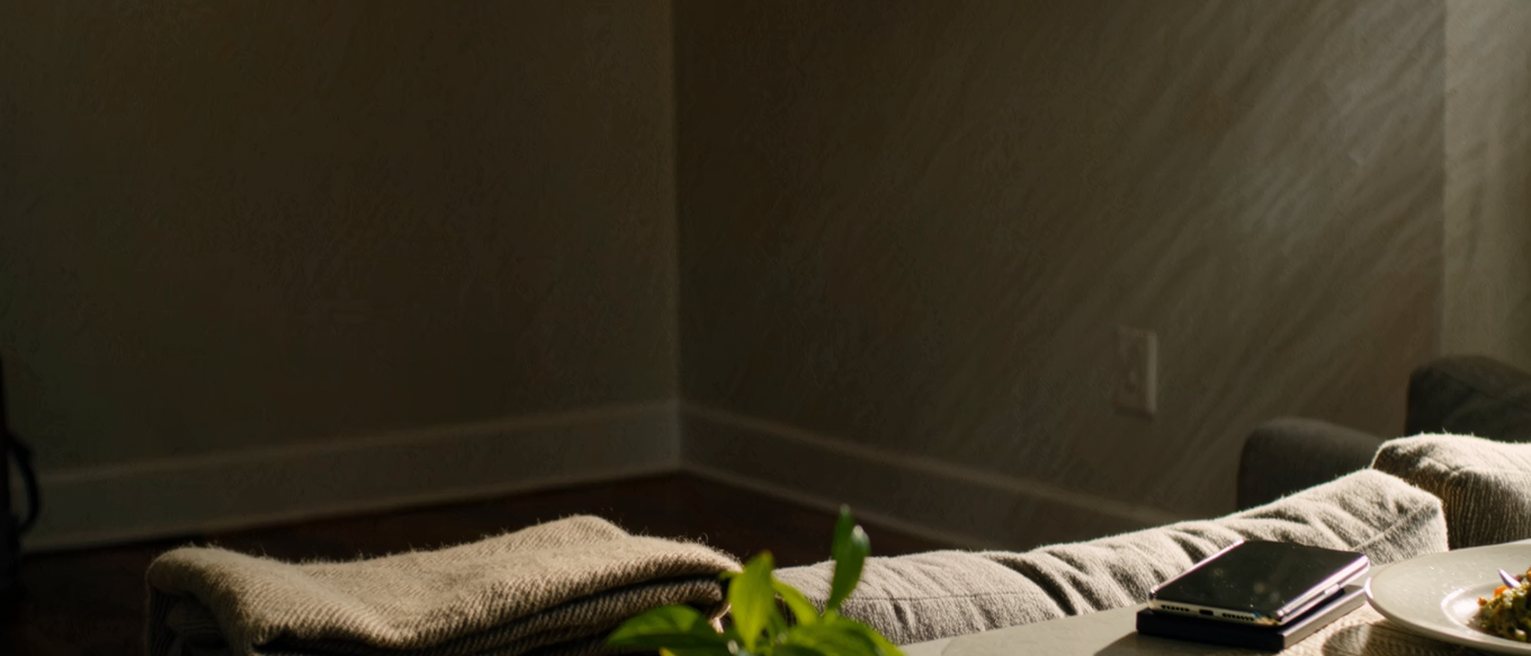
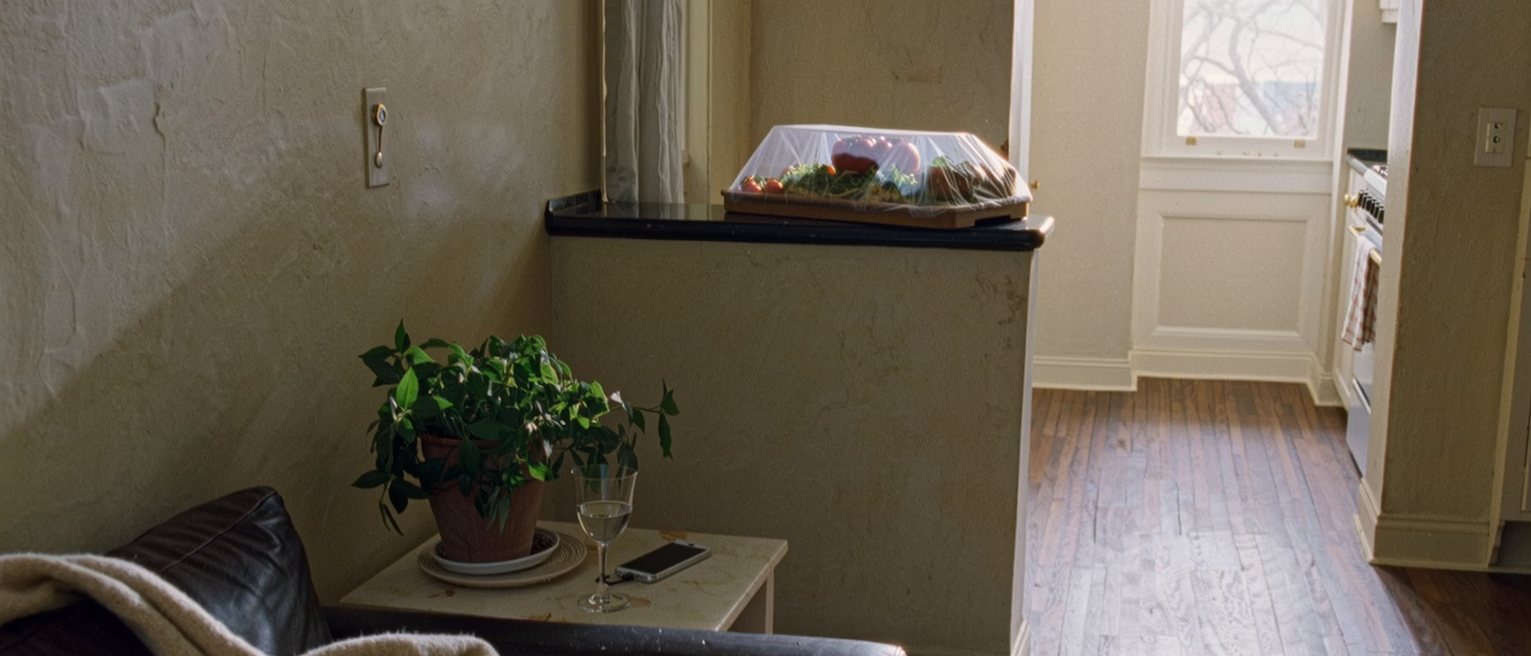
What stays from this drama is not the relationship. It is the ordinary footage around it: a woman at a desk, a woman on a train, a woman eating something while looking at a screen, a woman in a perfectly pleasant evening that is not reaching her.
That is the condition the whole thing is about, and it is almost never depicted, because it is not dramatic and there is nothing to photograph. A person whose life is adequate and who cannot feel it has no scene. Which is also why she has no sentence: the experience has no external features, so there is nothing to describe, so it gets described as the nearest available thing with a recognisable shape.
And the nearest available thing is always somebody. That is the entire error, and it is not her error — it is a property of the vocabulary she was issued.
What the condition actually calls for is not a person to want. It is an hour in which something lands. Heat, weight, texture, being attended to, a sensation that arrives and is noticed and is not immediately converted into information about a relationship.
That is what an evening at Moonlight is arranged to be, and this month is the reason to say it in these terms. Not romance and not performance: a stated number of hours with a beginning and an end, terms set in advance and set by you, physical attention that is not a stage in anything and is not being evaluated, nobody keeping score of how you respond, and nothing at all inferred from your silence. The aim is not to be desirable for an evening. It is to feel something, privately, and then to go home.