WELLBEING
The Erotic as Power, and What Audre Lorde Actually Said
The self-help tradition treats erotic energy as a fuel to be redirected into achievement. Lorde, in 1978, argued something better: it is not a fuel but a measure. Fuel runs out. A measure changes what you are able to tolerate, and never gives it back.
The self-help tradition has one story about erotic energy and abundance, and it is nearly a century old: the drive is a fuel, and successful people have learned to redirect it into work. Napoleon Hill devoted a chapter to it in 1937 and the idea has been recycled ever since, most recently by people who would be surprised to learn whose argument they are making.
There is a better account, it was written in 1978 by a Black lesbian feminist poet, and it is not a self-help argument at all. Audre Lorde’s claim is not that the erotic is a fuel. It is that the erotic is a measure — and the difference between those two words is the difference between a resource that runs out and one that reorganises everything it touches.
What she actually argued
Lorde delivered "Uses of the Erotic: The Erotic as Power" at a women’s history conference in 1978; it was published as a pamphlet that year and collected in Sister Outsider in 1984. Her first move is a definition most people skip: the erotic is not the pornographic. The pornographic, in her account, emphasises sensation while suppressing feeling — it is the erotic with the person taken out. Treating the two as the same thing is, she argues, exactly how the erotic gets made suspicious and therefore unavailable.
Her second move is the one that matters here. The erotic, for Lorde, is a capacity for deep feeling and satisfaction that is not confined to sex at all. It is present in work done well, in a sentence that lands, in physical effort, in any activity that is fully inhabited rather than merely completed. Her own example is famously domestic: helping her mother beat colour into margarine as a child, and the sensory pleasure of it.
And then the argument closes. Once a person knows, concretely, what genuine satisfaction feels like, she loses the capacity to accept its absence without noticing. Not through discipline — through incompatibility. Work that is merely tolerable becomes visibly tolerable. A relationship organised around convenience becomes visibly organised around convenience. Lorde’s word for what the erotic supplies is not energy. It is a measure.


Why a measure beats a fuel
The fuel model has an obvious failure mode: fuel is finite, requires replenishment, and makes the erotic instrumental — valuable because of what it produces elsewhere. That last part is the quiet insult. Under the fuel account, the feeling itself is not the point; it is raw material, and a person who simply enjoyed it without converting it into output has wasted it.
The measure model asks for nothing to be converted. It changes what you accept, which is a slower mechanism and a far more durable one. Nobody has to maintain a standard by effort; once it is known, it simply applies. This is also why it is not really possible to unlearn, and why people who describe a genuine change in their intimate life so often describe unrelated things changing afterwards — a job left, a friendship quietly ended, a habit of agreeing abandoned. They did not redirect anything. They stopped being able to not notice.
Compare this to the weak form of manifestation, which the somatic essay in this chamber defends as genuinely useful: naming a want changes what you notice. Lorde’s version is the same mechanism with the volume raised. Knowing the feeling changes what you can tolerate. Neither requires the universe to cooperate.
What gets left out when she is quoted
Lorde appears constantly in wellness material now, usually through two or three quotable sentences and never with the argument attached. It is worth naming what gets removed, because the removal is not incidental.
She was writing as a Black lesbian feminist, about labour, about who is required to be satisfied with less, and about the specific political usefulness of keeping people unfamiliar with their own capacity for satisfaction. Her essay is not a suggestion that you treat yourself better. It is an argument that a population which has never felt full is easier to govern and cheaper to employ, and that the erotic is therefore dangerous rather than merely pleasant.
Taking the resource and discarding the argument is, with some irony, exactly the operation she was describing. It is possible to quote her approvingly while performing the thing she objected to, and it happens on a great many retreat pages.
生きがい, and the diagram that is not Japanese
Japanese has a near neighbour to what Lorde is describing, and it has been badly mistranslated in a way worth correcting, since Japanese readers are routinely shown a foreign diagram and told it is their own heritage.
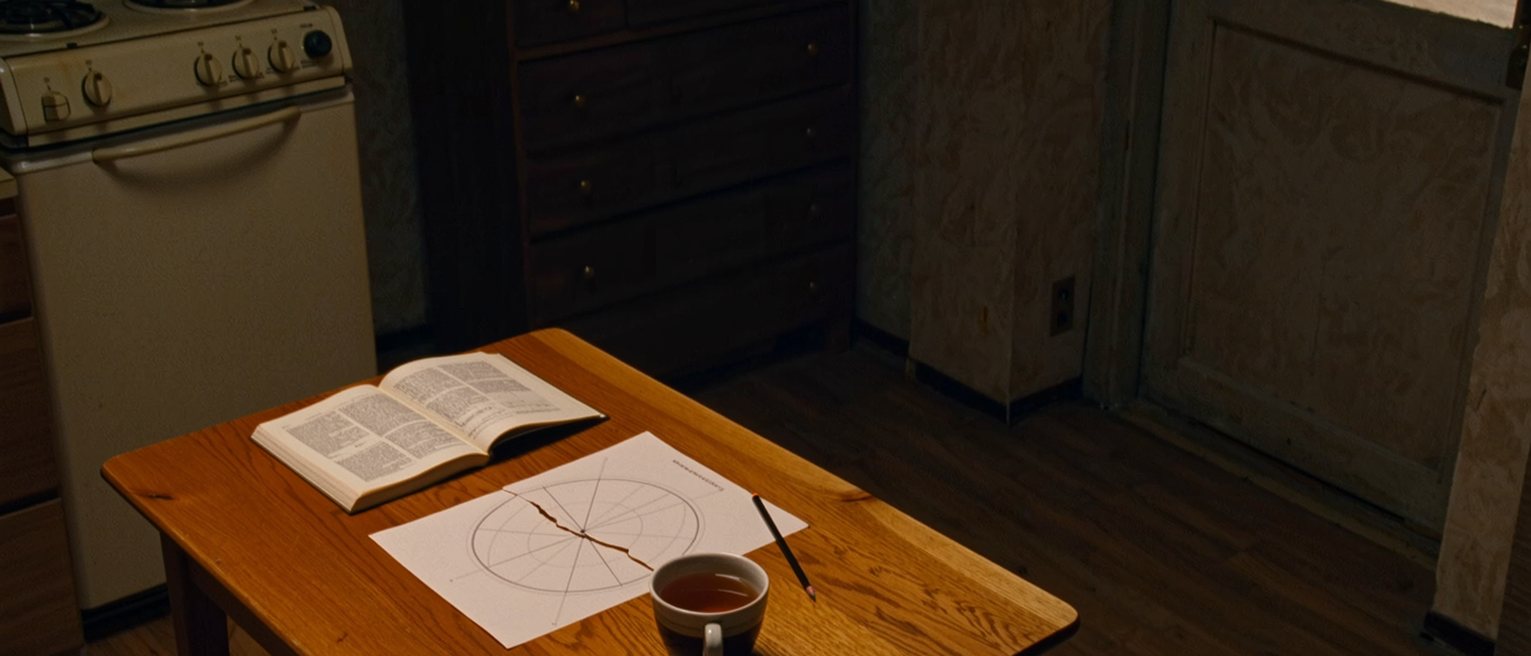
The four-circle diagram — what you love, what you are good at, what the world needs, what you can be paid for, with ikigai in the middle — is not Japanese. It descends from a purpose diagram published by the Spanish astrologer Andrés Zuzunaga around 2011, relabelled as ikigai a few years later by a British writer, and it spread from there into a thousand corporate presentations and back into Japan as an import.
The Japanese source is better and says something else entirely. 神谷美恵子’s 『生きがいについて』, published in 1966 and written out of her years working with Hansen’s disease patients at 長島愛生園, is not about locating a career at the intersection of four conditions. It is about what makes a life feel worth living under circumstances that offer no career at all — and ordinary Japanese usage follows it rather than the diagram. A person’s 生きがい is usually small and daily. Gardening. A grandchild. Morning coffee before anyone is awake. Nobody is required to be paid for it, and nobody is required to be good at it.
Set beside Lorde, the pairing is exact. Neither is about productivity. Both are about knowing the feeling of a life being inhabited rather than got through — and both hold that the knowing is what does the work, not what you subsequently produce with it.

What a house can and cannot supply here
Moonlight cannot give anybody a measure, and any house claiming to is selling the thing Lorde warned about. What it can do is narrower and is the only part that was ever purchasable: a few hours arranged so that the ordinary obstacles to noticing are absent — nothing to manage, nothing to decide, nobody to read, no outcome pending, and no assessment of any kind.
What a person does with that afterwards is entirely outside this house, and it is worth being honest that it is frequently inconvenient. People who reacquire the measure tend to make changes, and the changes are rarely confined to the part of life that prompted them. That is not a side effect being disclosed reluctantly. Under Lorde’s account it is the mechanism working.
Abundance, then, has been badly sold for a century. It was never a quantity arriving. It is the far less comfortable business of having once felt something fully, and being unable, afterwards, to pretend that the rest is fine. Lorde thought that made the erotic politically dangerous. She was right, and it is also the only version of the promise that has ever actually worked.
Education without claiming authority.
Moonlight separates history, modern interpretation and service application rather than blurring them. Nothing on this page is a claim of lineage, initiation or clinical effect; each section is labelled with the lens it is written from.