

TANTRA RESOURCES
Intimacy with Self
Receiving without repaying, rest that is maintenance rather than a reward, and why the list of things you do not want is always longer than the list of things you do.
There is a version of this subject that is mostly candles, and this is not it. Intimacy with yourself is not a consolation for not having someone. It is the ordinary, unglamorous business of being on speaking terms with your own senses — and it is the thing every other kind of closeness is built on top of, which is why a page about it comes before the pages about anybody else.
Most of what follows is not about sex. This chamber has separate essays for desire, for solitude, for what a woman knows about her own body alone in a room, and they are better at those subjects than a summary would be. What is left, and what nobody writes about, is smaller and harder: whether you can accept something without immediately repaying it, whether you can tell warm from wanted, whether you can say what you would like out loud, and what your own imagination is allowed to do without being held against you.
If you have ever finished a day off feeling that you failed at it, this page is for that.
Receiving is the harder half
Most adults are good at giving attention and poor at receiving it. Rest and attention can be valuable even when nothing is being achieved, fixed or performed — and learning to accept them without immediately reciprocating is a skill, not a character flaw you owe anybody an apology for.
Watch what happens in your own body the next time somebody does something kind for you. There is a small pressure to level the account — to compliment back, to pay for the next one, to say it was too much. That reflex feels like manners and it is doing something else as well: an unrepaid kindness leaves you holding something, and holding something means the other person has a small claim on you. Reciprocating instantly is a way of staying even. It is also a way of never quite letting the thing land.
In Japanese there is a more specific version of this, and it is not a fault. 遠慮 — holding back, declining first, not putting yourself forward — is a real courtesy and a real skill, and a woman who has it is easier to be around and kinder to work with. The difficulty is only what happens to any skill practised for thirty years: it automates. The declining stops being a decision made after noticing what you want, and starts firing before the wanting has been noticed at all. Asked what she would like, she answers honestly that she does not mind — and she is not lying. The information genuinely is not there.
Which means receiving is not fixed by permission. Being told that it is all right to want something does nothing to a reflex that fires upstream of wanting. What changes it is repetition in a setting where the usual cost is absent: somewhere nothing has to be returned, because the direction of attention was fixed before you arrived and is not yours to manage.
The trouble with having earned it
The usual permission slip for rest is that you deserve it. 自分へのご褒美 — a reward for yourself — is a warm phrase and it is doing something cold underneath, which is worth seeing clearly because almost every advertisement aimed at a tired woman is built on it.
A reward is payment for work completed. Accept the frame and you have conceded the premise: that a woman at rest is a woman who owes an explanation, and that the explanation is a ledger. It also has a failure mode built into it. A reward is revocable — you cannot draw on it in a week where you achieved nothing, snapped at somebody, missed the deadline. And a week like that is precisely the week it was needed.
The honest version is duller and holds in every week: a body needs the things a body needs, and needing them is not a claim about whether you were good. Sleep is not a prize. Warmth is not a prize. An hour in which nobody requires anything of you is maintenance, the same as eating, and nobody asks a tired person to justify dinner.
There is a second, quieter cost to the reward frame, and it explains why the bath so often does not work. Something taken as payment has to be enjoyed correctly, or the payment was wasted — so the hour acquires a standard to meet, and meeting a standard is the opposite of rest. You end the evening having performed relaxation and assessed the performance. That is not an argument against baths. It is an argument against owing anybody a receipt for one.

Sensual is not a smaller word for sexual
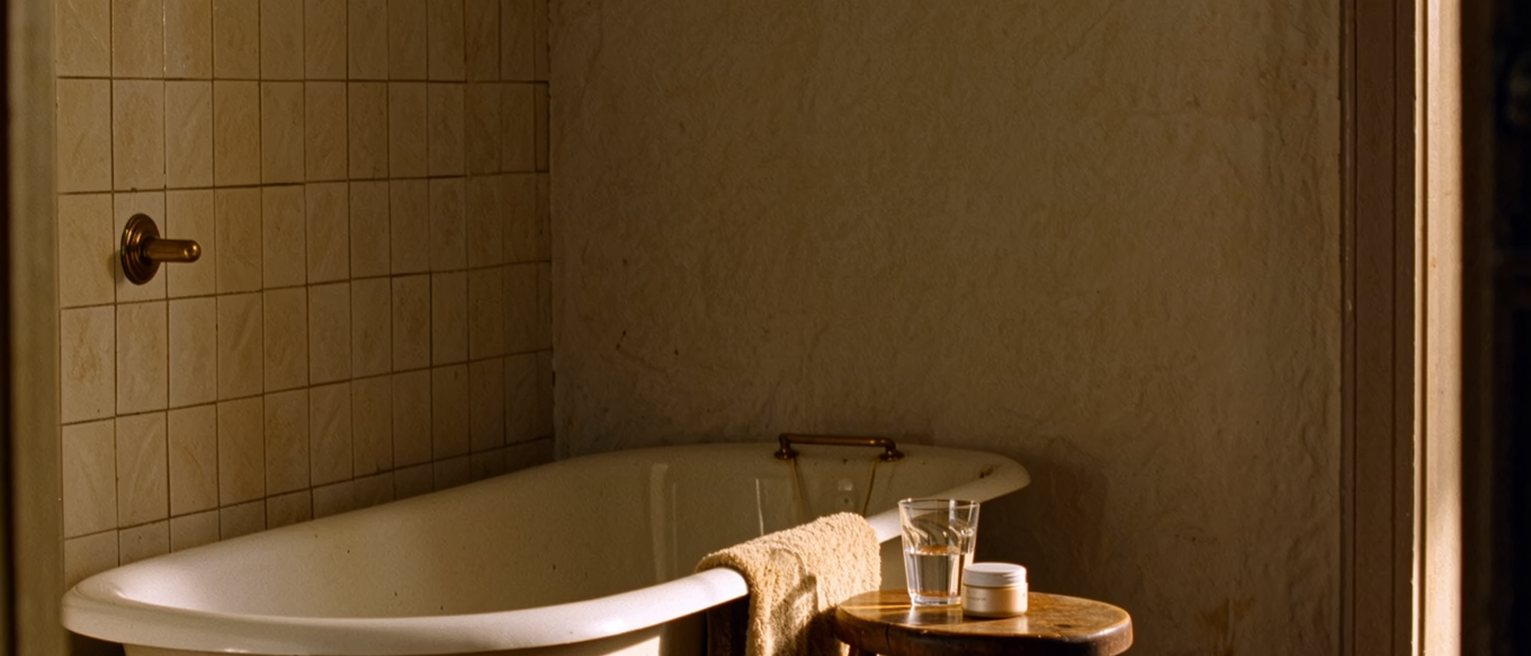
Sensuality means texture, warmth, scent, movement, weight, aesthetic pleasure, the feeling of your own body being comfortable. It does not automatically mean sexual activity — and treating the two as one word is one of the reasons many women stop noticing what they feel at all.
Follow what the collapse actually does. If sensual and sexual are the same category, then a woman who wants to be touched but does not want sex is holding a want with no name and no safe way to ask for it — so the accurate conclusion available to her is that she wants nothing. Whole years get filed under not being interested in that any more, when what is true is narrower and much more workable: she wanted weight and warmth and somebody unhurried, and the only word on offer meant something else.
Noticing again is slow and it starts lower down than anybody expects. Not with a question about desire — with fabric against skin, a room at the right temperature, the particular relief of a hand that stays put instead of moving on. These are not preliminaries to a more important sensation. They are the instrument being tuned: the same attention that registers the weight of a blanket is the attention everything else runs on, and it comes back the way a sense of smell comes back, gradually and without announcement.
A note for anyone who reads that and feels behind: the ability to read your own internal state is not a fixed trait you either have or lack. It is a channel, and it can be quiet for years for reasons that had nothing to do with you — illness, exhaustion, a decade of being needed at four in the morning, or simply the competition described in this chamber’s essay on being looked at, where attention spent watching yourself is attention unavailable for feeling anything. Quiet is not gone.
Why the no list is long and the yes list is short
Women arrive with a long list of things they do not want and a short list of things they do. This is so consistent that it is worth treating as information about the world rather than as a quirk of the women.
The two are not symmetrical, and the asymmetry is structural. A refusal comes with a defence anybody will accept — I am tired, I would rather not, it is not for me — and nobody interrogates it. A want has no such cover. Name one and you have put something of yours on the table where it can be declined, or granted badly, or repeated back to you later in an argument. Saying no risks a moment of friction. Saying what you would like risks finding out what it is worth.
So the short list is not timidity. It is an accurate reading of the risk, made by somebody who has been right about it before. Which is also why the usual advice — be more open, just say what you want — lands as one more demand. It asks her to take the risk and offers nothing on the other side of it.
What actually shortens the gap is not courage but consequence. Where a stated want is written down rather than reacted to, does not have to be defended, can be withdrawn without a reason, and never comes back as evidence, the risk of naming one drops to roughly nothing — and lists get longer on their own, without anybody being encouraged.
Boundaries are information, not refusals
Knowing what you do not want is as useful as knowing what you do. A boundary is not a failure of openness; it is a piece of self-knowledge with an edge on it, and it is the half of the picture most people can describe first.
So the Desire & Boundary Map takes both kinds with the same care, and the order does not matter: a page of NOs is a filled-in map, not an empty one. The list changes as trust does, nothing on it is ever used against you, and a want written there is a note about you rather than an instruction to anybody — the layers only narrow, which is set out in full on this chamber’s page about consent.
The useful thing about writing them down is not the record. It is that a boundary you can see has been moved out of your body, where it sits as vigilance, and onto a page, where it sits as a fact somebody else is now responsible for. Vigilance is expensive. Most women do not notice the running cost until an hour arrives with the cost removed, and something in the shoulders lets go that had not been asked to.
What you imagine is not a plan
A quieter thing people carry alone: the suspicion that their imagination has given them away. That a recurring fantasy is a confession, a preference, a diagnosis, or evidence about the kind of person they secretly are.
It is not. Survey work on fantasy content finds the same result repeatedly: a substantial share of people report fantasies about things they do not want to happen and would decline outright if offered. Imagining and wanting run on different systems, and they are not translations of each other. Imagination works by trying arrangements — including ones whose whole appeal depends on their being unreal, and on nobody, including you, having to live in them afterwards.
Which matters for an ordinary reason rather than a daring one. A woman auditing her own imagination for evidence against herself is running a court in her head at the exact moment she was supposed to be resting — and the court never acquits, because it is judging material that was never testimony. You are allowed to leave the room untidy. Nothing in there is a promise, and none of it is owed to anybody as a statement of who you are.

What this looks like on an ordinary Tuesday
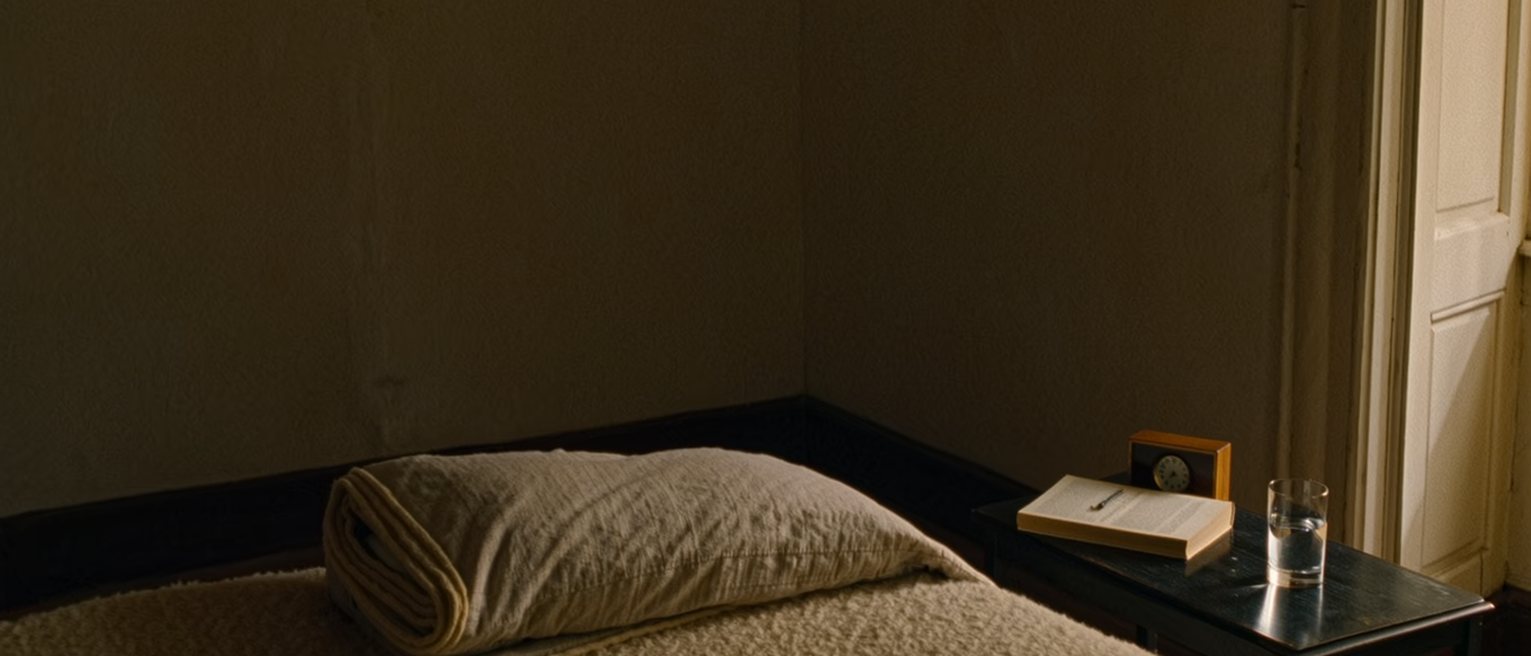
None of this needs an hour, a programme or a better life. It needs the thing you were already doing, done with the attention actually in it.
The water on your back in the shower, for the length of three breaths, instead of tomorrow’s meeting. The temperature of the mug against your palms before the first sip. Which of two jumpers actually feels better against your neck, asked as a real question with a real answer. What your shoulders are doing right now, which you can check without moving. Whether you are hungry or just tired, which are different and are constantly mistaken for one another.
Five seconds each. The point is not the pleasure, which is small, but the direction: attention travelling inwards on purpose, several times a day, in a life that spends most of its attention outwards on other people’s states. A channel that has been quiet for years does not reopen in one long evening. It reopens in seconds, repeated, until the reading comes back without being asked for.
And if you try this for a week and find nothing — no preference, no answer, a blank where the reading should be — that is not a failure and it is not a verdict on you. It is the most common starting position there is, and it is the reason the next part exists.
Where a house can help, and where it cannot
Several Moonlight Experiences exist purely to practise the first half of this page. JUST LISTEN; Head, Face & Deep Rest; Moonlight Embrace. In each, the direction of attention is fixed before you arrive, so you do not have to manage it — and that is the whole design, not a detail of it. Nothing has to be returned, nothing has to be enjoyed correctly, and there is no one whose evening you are responsible for.
The Desire & Boundary Map does the second half. It is the place a want can be written where it is not being asked for, and a boundary can be written where somebody else then carries it.
What a house cannot do is the ordinary Tuesday, and it would be dishonest to imply otherwise. An evening here can show a nervous system what the absence of vigilance feels like — which is genuinely useful, because you cannot aim at a state you have never been in — but the channel reopens in the seconds, at home, unattended and unpaid for. If this page is doing its job, most of what you take from it happens on days when nobody is being paid to be anywhere near you.
So: you are allowed to accept something without levelling the account. Rest is maintenance and not a prize, which means a bad week does not disqualify you from it. Warm and wanted are different words and you are entitled to the first without the second. Your no list being longer than your yes list is a sensible response to how the two have historically been treated, not a defect in you. And your imagination owes nobody a statement.
None of that is a programme, and there is nothing here to get right. It is a slower proposition than that, and a kinder one: that the person whose comfort you are least practised at consulting is the one who has to live in that body for the rest of her life — and that asking her, in seconds, several times a day, about the temperature of a mug, is where being on speaking terms with her begins.
Education without claiming authority.
Moonlight separates history, modern interpretation and service application rather than blurring them. Nothing on this page is a claim of lineage, initiation or clinical effect; each section is labelled with the lens it is written from.
Terms used on this page
Continue reading
A quiet next step
The reading letter
Twice a week. Three pieces, then one. Chosen from what you ask for, and nothing is sold to you.