

TANTRA RESOURCES
Fulfilled Singles
The readiness frame is a tax on the present, friendship is the form that starves quietest, and nobody is assigned to notice you — so the noticing has to be dated.
Single life can be complete, sensual, connected and deliberately chosen. That is the house position, and stating it is the easy part — the useful part is what follows from it, because a life treated as finished and a life treated as a draft are run differently, down to which plates get used on a Tuesday.
This page stays on that practical ground on purpose. What it is like to be an unmarried woman in Japan — the word that was used as an accusation, the one she took for herself, the statistic reported as a national crisis about her, and the genuinely hard structural parts where a hospital wants a family member and a landlord wants a guarantor — has its own long essay in this library, and it is better on all of that than a summary here would be.
What is left over is smaller and nobody writes it down: what quietly happens to a life that is waiting to start.
Not a waiting-room life
Moonlight does not treat single adulthood as an incomplete stage before a real relationship begins. A great deal of what is sold to single women is built on the opposite assumption, and it shows in the tone: fix this, and then you will be ready. This house starts from the premise that you are already a whole adult with a whole life.
The readiness frame deserves to be looked at directly, because it is not merely a tone — it is a tax, and it is charged on everything. If you are preparing, then every good thing you do has to earn its place as investment. The course improves your prospects. The exercise is maintenance of an asset. The nice dinner is a treat you have to have deserved. Enjoyment itself becomes slightly illegitimate unless it is also useful, because a rehearsal is not a thing anybody is supposed to enjoy — it is a thing you are supposed to be getting right.
So the frame does the one thing nobody notices it doing: it makes the present unenjoyable while promising the future. And it never expires on its own, because there is no date on which a person is declared ready. Women arrive at fifty having been preparing since twenty-six.
Dropping the frame changes what an evening is for. It is not a rehearsal for a partner who may or may not arrive, and it is not maintenance of your market value. It is time you chose, for yourself, now — which is a smaller claim than it sounds, and a much harder one to actually make.
The good plates
Look at what a provisional life looks like from the inside, because it never looks like sadness. It looks like sense.
The good plates are in the cupboard for guests who have not been invited this year. The flat is furnished adequately rather than properly, because proper furniture is for a proper home and this one is temporary — it has been temporary for nine years. The trip is postponed until there is somebody to take it with. The expensive coat is not bought, because it would be an odd thing to buy for a life like this. Nothing in that list is self-pity. Every item is a reasonable decision made by somebody who believes, correctly by her own reasoning, that the real version starts later and the resources should be saved for it.
The trouble is only that the resources being saved are not money. They are years, and the plates, and the evenings. Those do not keep. And the arithmetic has a cruelty in it that nobody says out loud: if the partner never arrives, the saving was for nothing — and if the partner does arrive, they arrive to a woman who has spent a decade practising not spending anything on herself, which is a habit that does not switch off at a wedding.
So: use the plates. Not as a gesture of defiance and not as self-care with a hashtag on it — simply because they are plates, and it is Tuesday, and you are the person who lives here.
Connection has several forms, and one of them quietly starves
Friendship, touch, culture, conversation, self-expression, community and private experience can all belong to a rich adult life. Romance is one form of connection among several, and treating it as the only one that counts leaves the others starved.
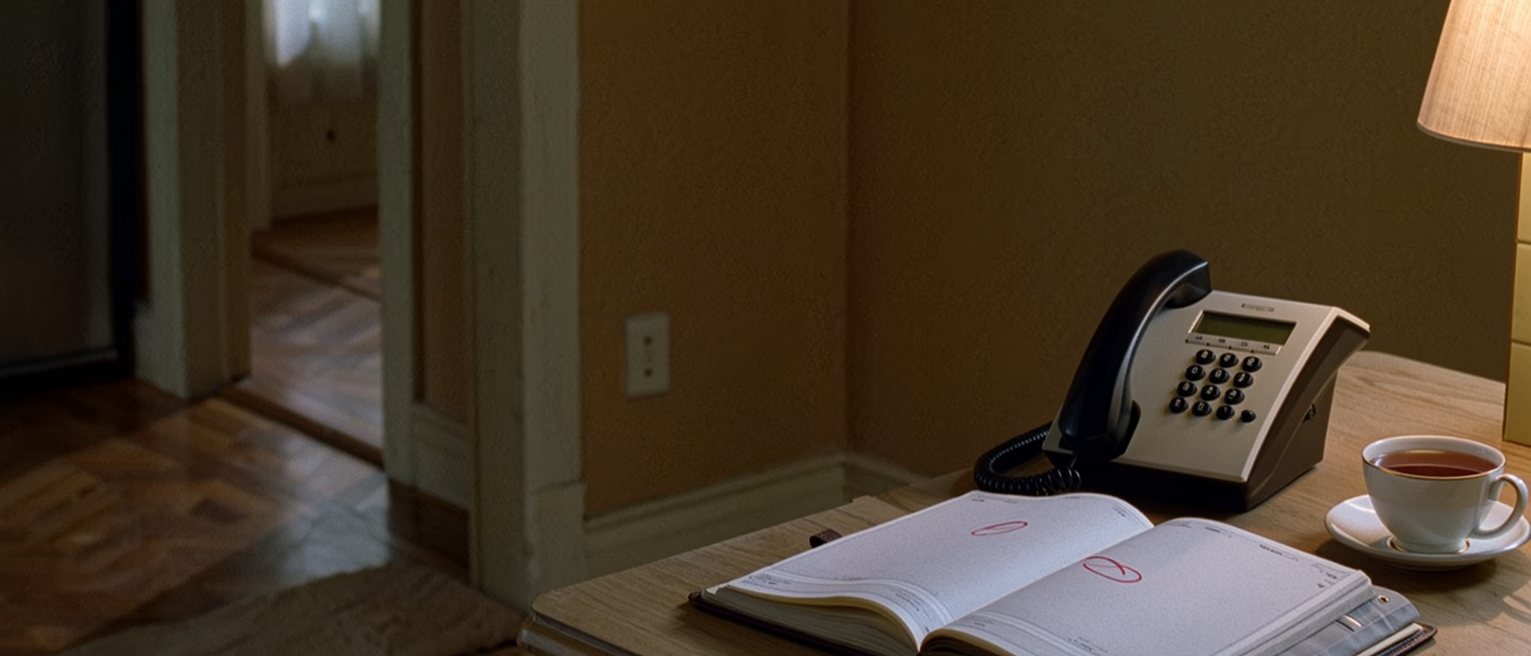
One of them starves faster than the rest, and it is worth naming because its loss is so often misread. Adult friendship has no structure holding it up. There is no ceremony, no anniversary, no shared address, no document, nothing that obliges either person to maintain it or marks the year it ended. So it is the first thing a demanding job eats, and it leaves without ever announcing itself — no argument, no decision, just a gap between messages that gets longer until writing one would need explaining.
And then the absence gets filed under the wrong heading. A woman with four dormant friendships and no partner concludes she is lonely because she is single — when a good share of what she is missing is not romantic at all, and is held by people who are still alive, still fond of her, and equally certain that too much time has passed for them to be the one to write.
Touch is the other one, and its supply in an adult life runs almost entirely through romance — which is how a woman who wants weight and warmth ends up being told, in effect, to find a partner or do without. This chamber has a whole essay on that, on the evidence behind it and on the market that has grown up around it in Japan. The practical note for this page is narrower: a want that has only one socially approved supplier is not thereby a smaller want, and arranging for it deliberately is not a sad substitute for a life. It is the ordinary adult act of not leaving a real need to chance.
This is why the Experiences are organised by kind of attention rather than by relationship status — rest, listening, body, closeness, connection, expression. You can walk through any of those doors without pretending to be looking for something else.
Nobody is assigned to notice you
Here is the most useful sentence on this page, and it is entirely unromantic. A partnered adult has a designated noticer: somebody structurally positioned to say you have been very quiet this week, or you look exhausted, or you have not eaten properly since Thursday. A single adult has nobody in that position by default. Not because she is unloved — because the role does not exist unless somebody is standing in it.
The consequence is specific. It is not that nobody cares; it is that a slow decline has no external alarm. Exhaustion that arrives over four months, a diet that quietly narrows, a month with no conversation that was not transactional, a body that has not been touched since the spring — every one of those is invisible from the inside precisely because it arrived slowly, and there is no one in the room whose job it is to look up.
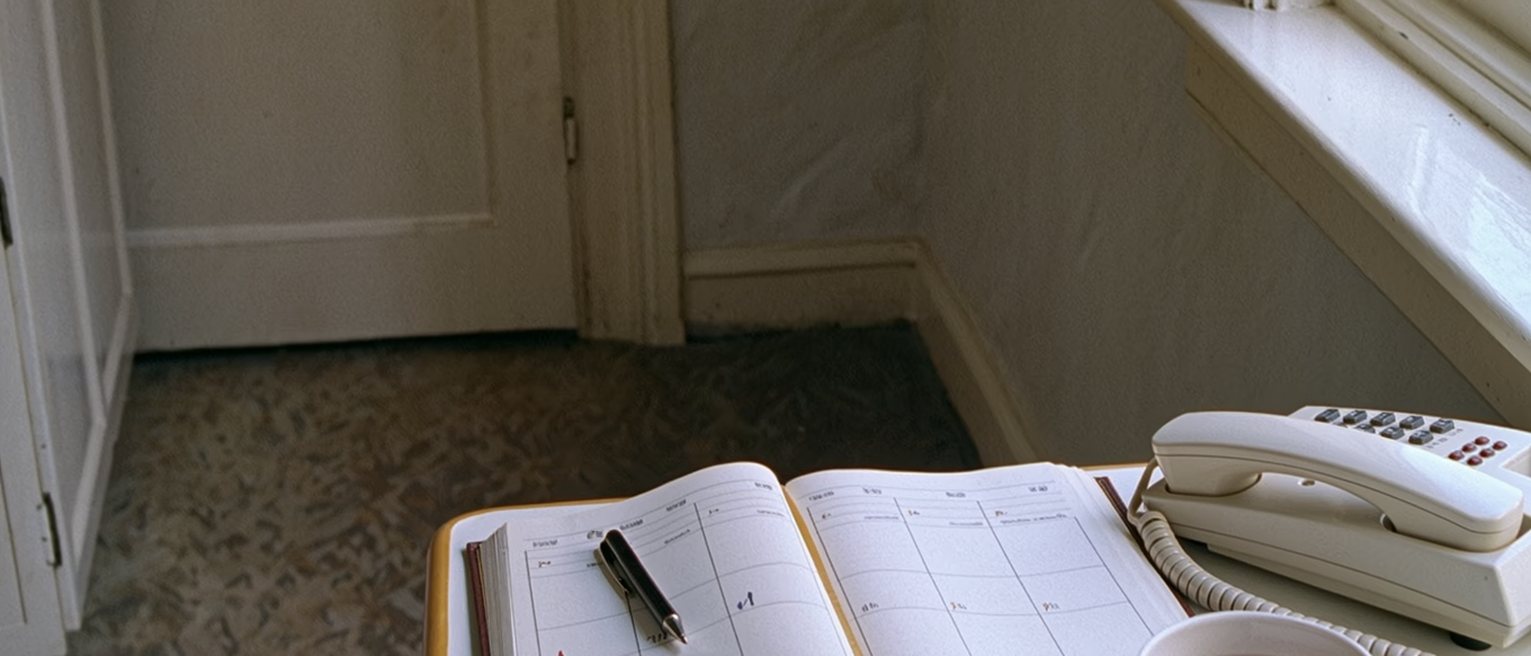
Which means the noticing has to be scheduled rather than waited for, and scheduled is the operative word. A standing dinner with a friend on the first Tuesday, a walk somebody expects you on, an appointment in a diary for something that is entirely about your own state — these work not because they are pleasant but because they are dated. A recurring commitment is an alarm. A vague intention to see people more is not.
None of this is a substitute for a partner, and it is not offered as one. It is the observation that one of the genuine functions of living with somebody is monitoring, that monitoring is separable from romance, and that a woman who arranges it deliberately is not compensating for anything. She is doing on purpose what partnered people get by accident.
Choice over deficit
The useful question is not what are you missing but what kind of experience or connection would add something meaningful now. The first produces a list of lacks; the second produces a decision.
The difference is not positive thinking. It is that a lack is a description of a gap between your life and somebody else’s, which no action closes — you can do nothing today that makes you not-single, so the list stays open and you carry it. A want is a description of your own state, and a want has a next step in it. The second question is answerable by you, tonight, without anybody else’s participation. That is the whole of its advantage, and it is a large one.
Moonlight Discovery exists for women who want to ask the second question without already knowing the answer. It is deliberately the least committed door in the house — and knowing you do not yet know is a perfectly respectable place to arrive from.
You do not owe anybody a narrative
Once or twice a year, usually somewhere you cannot leave, somebody asks. At the New Year gathering, across a desk, in the car on the way back from a wedding. And the reflex is to produce an account — a reason, a timeline, a wry line that ends the subject without costing anybody their comfort.
It is worth noticing what is actually being asked, because it is usually not a question. Sometimes it is conversation with no other material in it. Sometimes it is a person checking their own arithmetic out loud — somebody who made the expected choice and would like it confirmed that it was the right one. Occasionally it is genuine worry from somebody who loves you and has only one template for a good life. None of those three require information from you. Two of them are not about you at all.
The cost of answering well is the part nobody mentions. An explanation is a defence, and a defence implies a charge. Give a good account of yourself twice a year for fifteen years and you will have taught yourself, thoroughly and by repetition, that your life is the kind of thing that requires accounting for. The polished answer is the most expensive one, because it is the one you believe.
So the better move is not a better answer. It is a shorter one. まだですね, そうなんですよ, and then a question back about their grandchild, their knee, the traffic. Warm, unbothered, and carrying no material for a follow-up. It is not a clever technique and it will feel rude the first three times. It is simply what somebody who is not on trial sounds like.
And the question underneath it: what about later
Underneath the New Year question, and usually underneath a woman’s own three-in-the-morning version of it, is a real one that deserves a real answer rather than encouragement: what happens when I am old.
Two honest things about it. The first is that the practical parts are practical, and they are covered properly in this chamber’s essay on the unmarried woman in Japan — the hospital that wants a family member, the guarantor, the compounding financial picture. Those are real, they are structural rather than personal, and they respond to arrangements rather than to reassurance: the documents, the named contacts, the friend who has the key.
The second is less often said and worth saying plainly, because the fear is usually built on a comparison that does not hold. Marriage is not insurance against ending up alone. Women here outlive men by several years and tend to marry men older than themselves, so the statistically ordinary end of a Japanese marriage is a widow — and a widow of eighty who has spent fifty years without her own friendships, her own arrangements or her own key-holder is in a considerably harder position than a woman of eighty who has been building those since she was forty.
Which reframes the whole worry, and in a direction that is actually useful. The work that protects an old woman is the same work in both lives — friendships maintained on purpose, arrangements made in writing, somebody who notices. A partner does not do that work for you; at best he is one item in it, and he is an item with an expiry date. Starting now is not a consolation prize for the unmarried. It is the thing everybody ought to be doing, and you have the advantage of having no reason to put it off.
What an evening here is, and what it is not
An evening at Moonlight is one arrangement among the several this page has argued for, and it should be described as exactly that rather than as an answer.
What it is good at is narrow and real. It is an hour where somebody’s attention is entirely on your state, which is the thing a single life supplies least reliably. It is touch that is not routed through romance and does not have to become anything. It is dated, which makes it an alarm rather than an intention. And nothing in it requires you to be looking for a partner, to be recovering from one, or to explain which of those you are.
What it is not is a replacement for the friendships, and it would be a poor house that let you think otherwise. A paid hour is bounded by design — that boundedness is what makes it safe and is also its limit. The woman who leaves here and writes to the friend she has not written to in two years has got more out of the evening than the evening itself contained, and that is the correct outcome rather than an ironic one.
Nothing here argues that being single is better, and nothing here argues that wanting a partner is a failure of independence. Wanting one is ordinary, and this page would be dishonest if it implied otherwise.
What it argues is narrower: that whether or not somebody arrives, this is the life, and it is running now. The plates are yours. The friendships are still there and are waiting for somebody to write first. The noticing can be put in a diary. And the hour you choose for yourself is not a rehearsal for a life that starts later — it is the one you are actually in, on an ordinary Tuesday, with nobody coming to confirm that it counted.
Education without claiming authority.
Moonlight separates history, modern interpretation and service application rather than blurring them. Nothing on this page is a claim of lineage, initiation or clinical effect; each section is labelled with the lens it is written from.
Terms used on this page
Continue reading
A quiet next step
The reading letter
Twice a week. Three pieces, then one. Chosen from what you ask for, and nothing is sold to you.