Moonlight Journal
How Holiday Rituals Turn Intimacy Back Into Roles
A couple spends years negotiating a private arrangement that suits them, and then an occasion arrives and hands both of them a script neither wrote. Defaults are not defeated by renegotiation — they go dormant, and a ritual reactivates them. Which is why the festival of care is reliably the least cared-for day of the year.
A couple can spend a decade arriving at an arrangement that genuinely suits them. Who cooks, who decides, who is allowed to be tired, what is asked and what is assumed — none of it matching any particular template, all of it worked out between two specific people over a long time.
Then a date arrives on the calendar, and within about an hour both of them are behaving like characters in a form neither of them wrote.
She is in the kitchen. He is in the room with his father. Somebody is being deferred to who is not usually deferred to. Somebody is apologising for the food. A woman who has not been anybody’s subordinate since her twenties is pouring for people in order of seniority.
This is not a failure of the relationship, and it is not hypocrisy. It is what occasions do, and it is worth understanding mechanically rather than resenting, because the mechanism explains a great deal that otherwise looks like personal weakness.
A default is not defeated. It goes dormant
This Library has argued before that defaults arrive as a bundle rather than a list — that they come fused, and you cannot decline one item without discovering it was welded to others you had not examined.
What that argument did not say, and what occasions demonstrate, is that a default which has been successfully renegotiated does not disappear. It goes dormant. It remains available, fully intact, waiting for conditions in which it can run again.
A ritual supplies exactly those conditions. It is a form with parts in it, and the parts are older than the couple and known to everybody present. When the occasion begins, the form does not ask what the two of you worked out. It assigns.
And the assignment is startlingly fast. People who have not behaved a particular way in years find themselves doing it within minutes of arriving, and are often surprised at themselves afterwards — which is the clearest evidence that nothing was ever removed. The private arrangement is a newer layer sitting on top of an older one, and under load, the older one is what carries.
This also explains a pattern that couples find demoralising: that progress made at home does not seem to survive contact with families. It did survive. It is simply not what runs when the form is running, and the form only runs on certain days of the year.
The role wins because it has an audience
The reason the old layer wins is not that it is stronger. It is that it has witnesses and the new one does not.
A private arrangement is an agreement between two people, and it is legible only to them. Nobody else knows that in this household the cooking rotates, or that she does not do the calling, or that they decided years ago to stop pretending about a particular thing. From outside, none of it is visible.
A ritual is legible to everybody in the room, and everybody in the room has an expectation of what each part looks like when it is performed correctly. So the two systems are not competing on equal terms. One is being observed and scored in real time; the other exists only in the memory of the two people trying to hold onto it.
Which produces a point this Library has to add to its own earlier finding about boundaries. The argument there was that a boundary makes closeness selectable — that limits are what create the possibility of being let in. That holds for a relationship, where a limit can be stated to the one person it concerns.
A ritual is different, because a limit stated here is not addressed to a person. It is addressed to an audience: parents, siblings, in-laws, children, people who were not party to the agreement, who cannot be sat down with, and who will read the limit as a statement about the family rather than a preference about an evening. Audiences do not negotiate. They only notice.
So refusal inside a ritual is not the same act as refusal inside a relationship, and it is unfair to expect it to cost the same.
Work that has to be invisible cannot be thanked
There is a second mechanism, and it is the one that makes the day quietly corrosive rather than merely tiring.
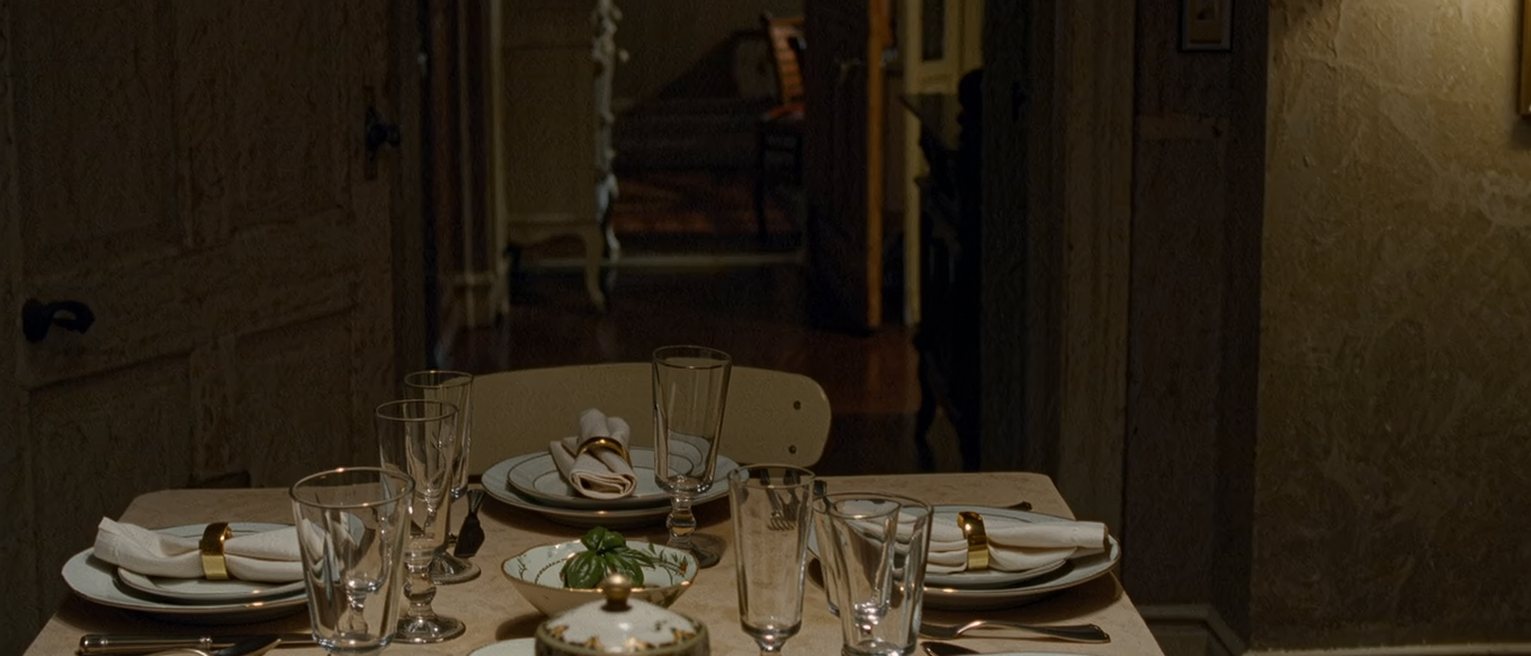
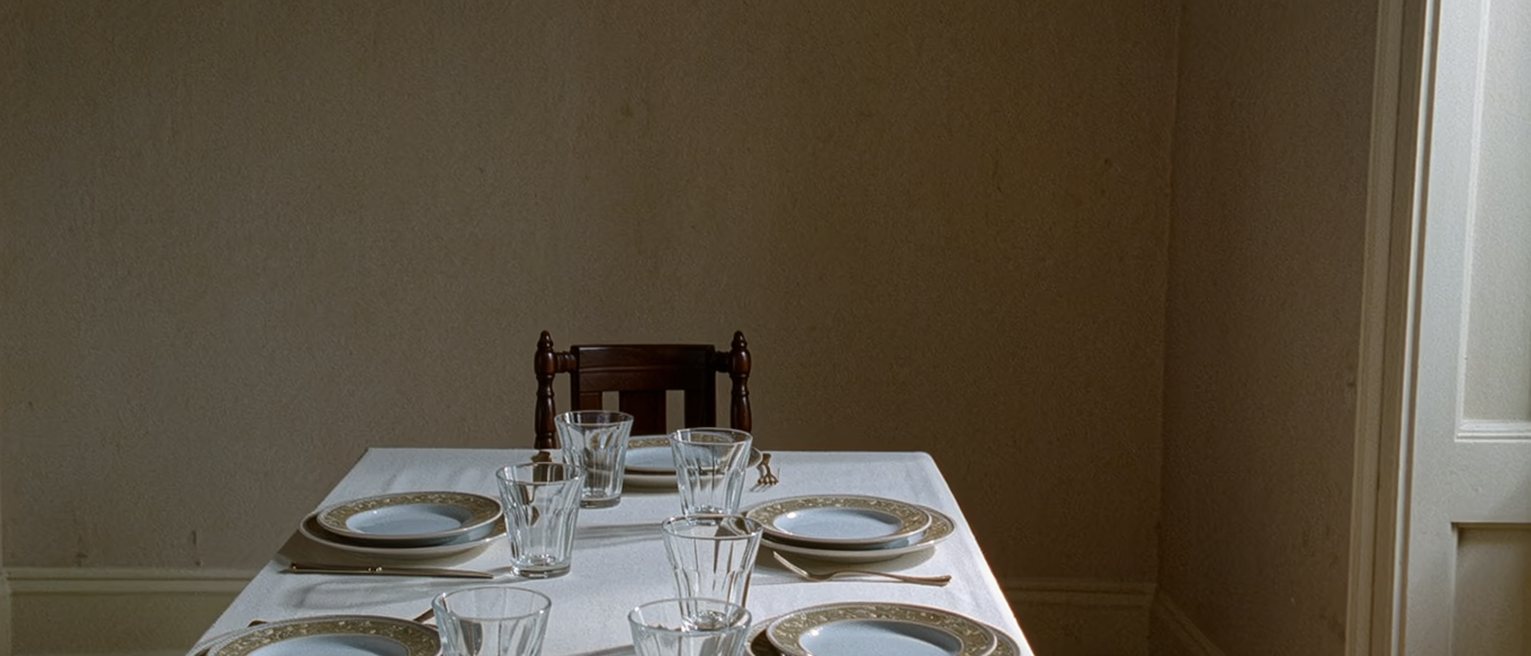
A ritual is valued by how effortless it appears. The meal should arrive as though it assembled itself, the house should look as though it is always like that, the atmosphere should seem to have occurred rather than to have been produced. Visible strain damages the occasion; a host who is obviously labouring makes everybody uncomfortable, and everybody present knows it.
Which requires the labour to be concealed. The preparation happens before anybody arrives, the management happens between rooms, and the entire apparatus is deliberately kept out of sight because putting it on display would spoil the thing it exists to produce.
And concealed labour cannot be thanked, because thanking it exposes the machinery. A guest who says, at length and in front of everyone, how much work this must have been is not being kind; they are pointing at the apparatus, and the usual response is a deflection, which is the correct social move and which also ensures the acknowledgement does not land.
So the person producing the occasion is structurally unthankable on the day. Not because the people around her are ungrateful — many of them are grateful, and several will say so — but because the form requires the work to be invisible, and you cannot thank somebody for something that is not supposed to be happening.
The most useful day of the year
Put those together and the month’s sentence arrives with unusual force. I want to be cared for when I am not being useful.
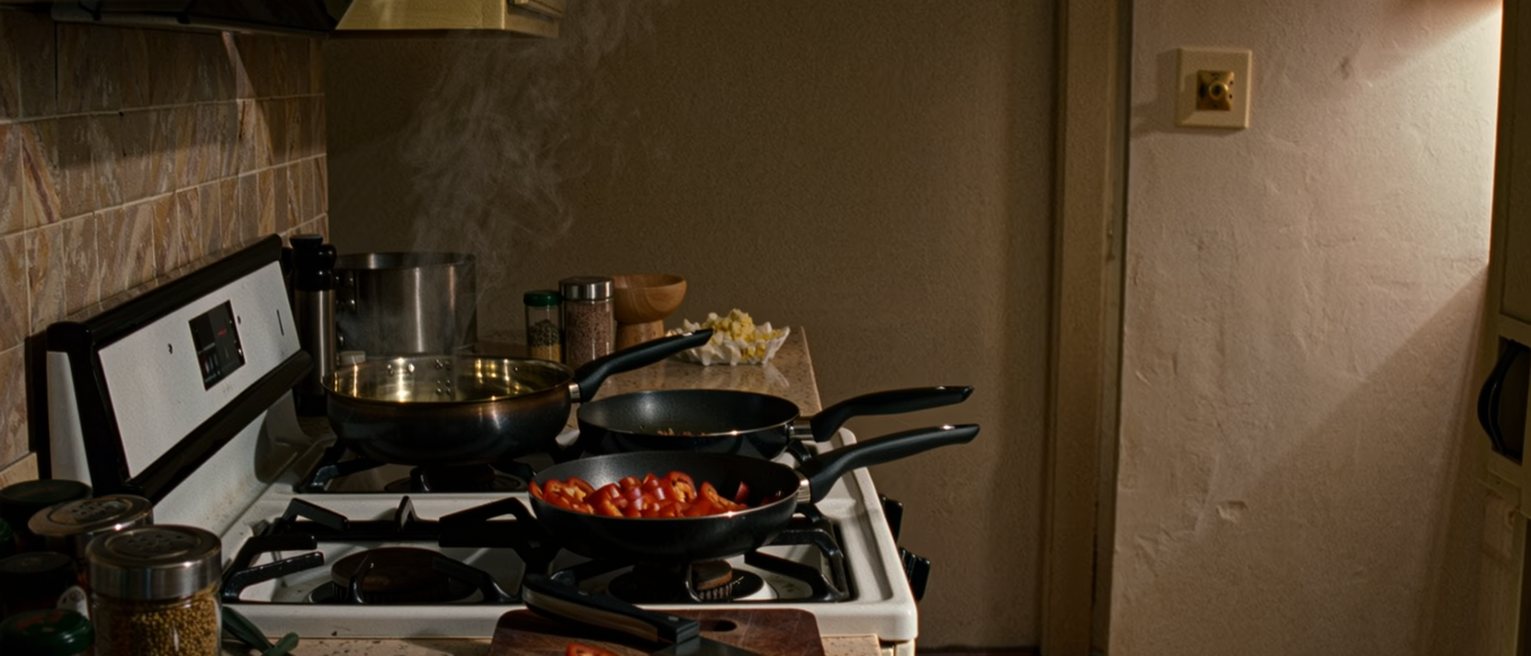
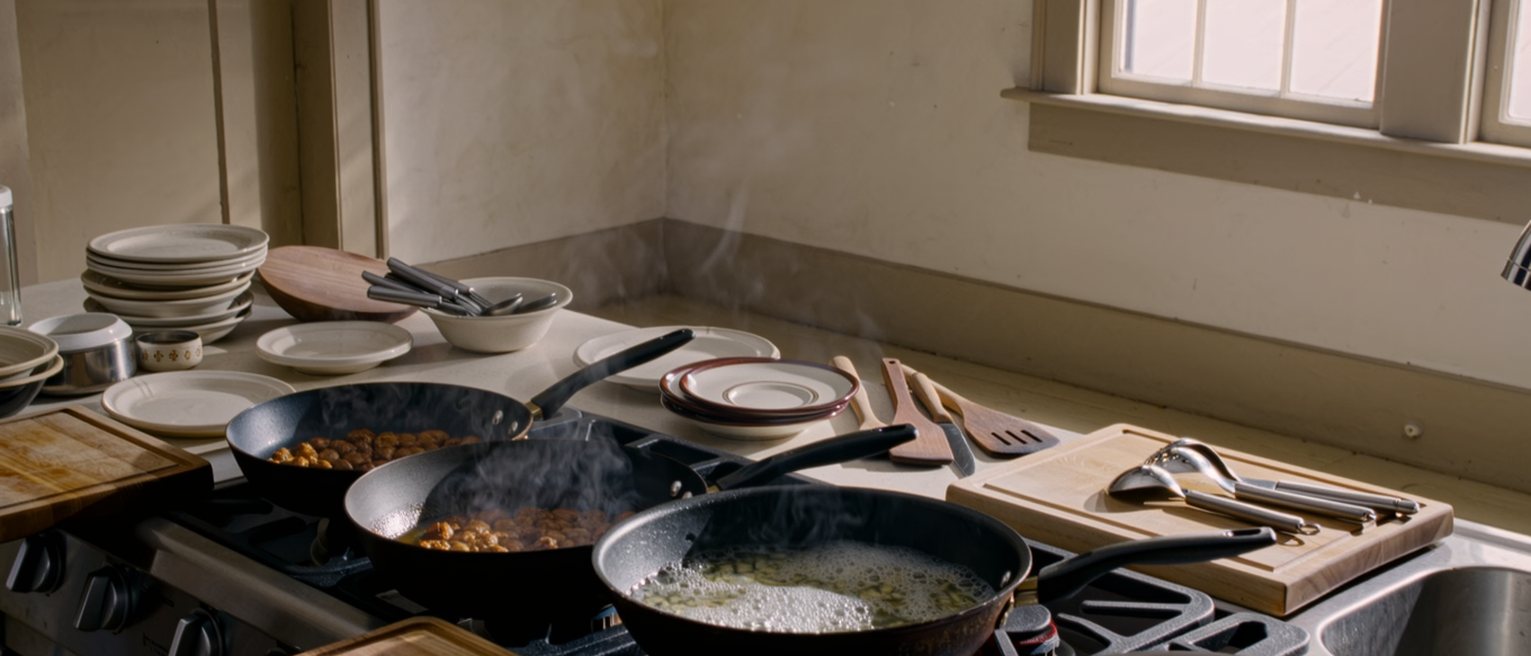
A holiday is the maximum-usefulness event of the calendar. Every hour of it has an output. Somebody is fed, somebody is received, somebody is driven, somebody is placated, a child is managed, an elderly relative is attended to, a gift is produced at the right moment with the right expression.
And an occasion that is nominally about togetherness turns out to be the day on which a person is most purely an operator. The role is not a way of being with people. It is a function performed in a room that contains people.
Which is why so many people feel lonelier on those days than on ordinary ones, and feel obscurely guilty about it, because the day is supposed to be the opposite. It is not a failure of feeling. She is surrounded by family and has not had a single exchange in nine hours that was not about the running of the event.
And this compounds with the previous section in a specific way. She is doing more than on any other day, the work is invisible by design, and the acknowledgement that would ordinarily attach to effort cannot attach. So the festival of care is reliably the least cared-for day of the year, and the mechanism that produces that is the form itself rather than anybody’s indifference.
Why opting out costs more here than anywhere else
The obvious response is to decline — to not host, not go, not perform the part. It is worth being honest about what that costs, because advice that ignores the cost is useless.
Declining inside a relationship costs a conversation, possibly a difficult one, with the person concerned. Declining inside a ritual costs standing, and not only your own.
A partner’s family may read it as his failure to manage his household. Children experience a reduced version of something their cousins are having in full. A parent who is ageing has a diminishing number of these left, and everybody in the room can count. None of those costs is imaginary, and none of them is paid by the person who declined alone.
Which is why the standard advice — just say no, you do not owe anybody your labour — lands so badly with the people it is aimed at. It is not that they lack the nerve. They have correctly assessed a bill that the advice does not mention.
So the useful move is almost never total refusal. It is to find the one part of the occasion where a limit can be set without the audience being able to read it as a statement about the family — and that part exists, in every version of every one of these occasions, because no form specifies everything.
What can actually be done on the day
Three things, and all of them are small on purpose, because the day is a bad environment for large interventions.
Allocate before the form starts running. Whatever is going to be shared has to be decided while the role is dormant — a week beforehand, in writing, at the level of specific tasks with names attached. During the occasion this conversation is impossible, because the role is live and any renegotiation attempted inside it reads to everybody present as a scene. This Library has argued the adjacent point before: terms can be settled in advance and wants cannot, so settle everything settleable while nobody is performing.
Take a bounded exemption rather than a general one. Not I am not doing this any more, which is a statement about the family, but I am not doing the cooking this year, or I am arriving on the second day. A bounded exemption has a shape, an end, and no implied verdict on anybody — which is the same property this Library identified in a gift, and it is why an audience can absorb it.
And do one thing as yourself rather than as the part. One conversation with somebody you actually want to talk to, held sitting down, not while carrying something. It is a small amount of the day and it is the only portion of it that will not be a function.
None of this dismantles the role, and pretending otherwise would be dishonest. It reduces the proportion of the day spent inside it, which is the achievable version.
Put the care in the aftermath
The most useful reframing in this essay is also the least romantic, and it follows directly from everything above.
Stop trying to be cared for on the occasion. The day is structurally unavailable: the role is running, the labour must stay invisible, and the audience is present. Expecting the day itself to deliver care is expecting a machine to do something it was not built for, and the disappointment when it does not is what turns these occasions into annual grievances.
Put the care in the aftermath instead, and put it there in advance.
That means deciding, before the occasion, what the day after contains and who is responsible for it. Not a vague intention to rest. A specific arrangement: this is the morning nobody wakes me, this is the afternoon you take them out, this is the evening we do not go anywhere and nothing is cooked.
The reason to fix it beforehand is that afterwards nobody has the resources to arrange anything, and an unallocated recovery day gets absorbed by the next obligation within about two hours. The queue does not pause for exhaustion.
And the asking is easier there too, for the reasons this Library set out alongside this piece. A request for the day after is bounded, has an end, and carries no accusation about the occasion itself — which makes it one of the few care requests in this whole territory that can be made without first litigating anything.
Where a place like this sits on that calendar
It is worth being exact about this, because the honest answer is unflattering to us in a specific way.
An arrangement like ours is structurally unavailable at the moment of peak need. On the occasion itself she cannot leave, is being observed, and has an output due every hour. Whatever we offer is irrelevant to the day that is actually hard.
What is available is the aftermath, and that is a real thing rather than a consolation: a bounded evening in which nothing is produced, nobody is received, no audience is present and nothing is due. For somebody coming out of several days of pure function, an hour with no output attached is not a small item.
But the risk this creates should be named plainly, because this essay has just spent several sections arguing that the occasion reassigns roles annually. A restorative aftermath makes the occasion survivable. Survivable occasions do not get renegotiated. So there is a real path on which something genuinely restful becomes the reason a household never has the conversation about who does the cooking next year.
The test is the one this Library keeps returning to: does the evening send you back with one specific thing to change before the next occasion, or does it simply make the current arrangement bearable for another twelve months? Both are possible, and only one of them is worth buying twice.
Limits
This essay is analysis rather than clinical or relationship counselling. It describes no treatment, promises no recovery, diagnoses nobody, and is not a substitute for a qualified professional where one is wanted.
The central claim — that a renegotiated default goes dormant rather than disappearing, and that a ritual supplies the conditions in which it runs again — is this Library’s own formulation, extending its published argument that defaults arrive fused as a bundle. It is reasoned rather than measured.
The account of why the older layer prevails, that it has an audience while a private arrangement is legible only to the two people in it, is interpretation. So is the extension it proposes to this Library’s earlier boundary finding: that a limit stated inside a ritual is addressed to spectators rather than to a person, and therefore costs differently.
The claim that concealed labour cannot be thanked without exposing the machinery is this Library’s argument and is explicitly not a claim that the people present are ungrateful.
No specific festival, national holiday, religion or family structure is described or evaluated here, and nothing in this essay is a claim about any particular culture’s families. The mechanisms are offered as general features of occasions with assigned parts, and readers will recognise different examples.
The practical suggestions are derived from the essay’s own reasoning rather than from evidence about outcomes, and nothing here should be read as instruction about how anybody ought to conduct their family obligations.
The self-assessment in the penultimate section, including the risk that a restorative aftermath can postpone a renegotiation, is stated against this house’s commercial interest.
No figure, proportion, statistic or study appears anywhere in this essay.
The day after
The thing worth carrying from this is that the difficulty is located in the form rather than in the people.
Nobody in that room decided that she would spend nine hours as a function. The occasion has parts in it, the parts are older than everybody present, and they are assigned automatically to whoever matches the shape. A family can be warm, generous and genuinely fond of her, and the mechanism still runs, because the mechanism is not made of anybody’s feelings about anybody.
Which means the useful work is not a confrontation and not an escape. It is allocation done a week early, one bounded exemption that an audience can absorb, one conversation held sitting down, and a day after that has been decided in advance and belongs to her.
I want to be cared for when I am not being useful. On an occasion built entirely out of usefulness, that sentence has nowhere to land — which is not a reason to give up on it. It is a reason to stop asking the one day of the year that is structurally incapable of answering.
The day after can answer. It is ordinary, unobserved, and nothing is due — which is the only set of conditions under which anybody has ever been cared for while producing nothing at all.