Moonlight Journal
Not Needing Words Was the Goal.It Is Also Where the Conversation Went.
A woman says her marriage has no conversation left in it, and she says it in a house where two people talk all day. What she means is more exact than it sounds. Every story she could tell him, he has heard. Every question he could ask her, he could answer himself. They have become each other’s archive, and a story cannot be told to its archive. The ideal she was raised on — to be understood without a word — was reached, and it turned out to be the same place the conversation ended.
A woman says, to a friend or to nobody, that there is no conversation left in her marriage. It is a strange thing to say in a house where two people talk from breakfast until the lights go off. Whose turn it is. What the school sent. Whether the thing has been paid. Which parent is worse this month. The talk is constant, and it is not what she means. What she means is more exact than the complaint sounds, and this essay is an attempt to say it exactly.
She means that nothing either of them says could surprise the other. Every story she could tell him, he has heard, and most of them he was there for. Every question he could put to her, he could answer himself, and so he does not put it. They have known each other so long and so well that they have become each other’s archive, and a story cannot be told to its archive. It can only be filed.
This essay is written from her side, on the workbook row named for conversation and connection, and it argues that the conversation did not die of neglect or of too little talking. It died of arrival. The ideal she was raised on — to be understood without having to say — was reached, and the place it was reached turned out to be the same place the conversation ended. This chamber has published on the question nobody in a couple is asking, on listening as something other than fixing, and on the hub of a family being the person nobody reaches. Those are credited, not repeated. What this essay adds is the archive, and what a stranger’s ear does that a husband’s cannot.
Two rooms in one film
The film seeded for this essay is cut between its couple’s beginning and its end, and the two are told through two conversations. In the beginning, on a bus and on a street and in a shop, they talk for hours. She asks him what it feels like to fall in love. He tells her things she has no way of knowing, and she watches him tell them. Neither of them knows what the other will say next, and the not knowing is the whole texture of it. It is the most connected either of them will ever be on screen.
At the end there is a motel room with a theme — a room bought to manufacture an occasion — and in it he wants to talk and she wants to sleep. Talk has become a demand. Every sentence he offers is one she has heard, every question is one she can see coming, and the room that was meant to make them strangers for a night only makes it plainer that they are not. She cannot be told anything by him, because there is nothing in him she has not already filed. The film does not blame either of them for that. It shows it as what happens to two people who have succeeded at knowing each other.
What the two rooms share is that both are full of words. The film is not about a couple who stopped talking. It is about a couple whose talk lost the one property it had at the start: that its next line was unknown. And it is precise about which of the two is more starved by that. He still wants to talk. She wants to sleep, because being talked at by one’s own archive is not a conversation, and she has stopped expecting it to become one.
The archive problem
The book seeded for this essay is a therapist’s account of affairs, and its most useful observation is not about sex. It is that the person who strays very often describes the lover not as better than the spouse but as someone who has not heard their stories — someone to whom they can be narrated for the first time. The affair is, on that reading, a search for a listener without an archive: a person in front of whom one is not already filed, and to whom one is therefore still tellable.
That diagnosis reaches past affairs and into every long marriage that has not had one. A spouse is the most complete archive a person has. He knows the childhood stories, the two versions of the job she left, the reason she does not speak to her brother, the thing she says when she is tired. There is honour in that; it is what long love builds. But an archive has a structural property: nothing can be added to it that it does not already hold. When she starts a story he has heard, he is not being rude in finishing it. He is being accurate.
This is why the advice to talk more so often produces more of the thing that is wrong. Talking more, to an archive, means filing faster. The conversation she is missing is not a quantity of words; it is a conversation with an outcome she cannot predict, in which what she says lands on someone who did not know it, and in which the person across from her might say something she could not have said for him. A marriage can lose that entirely and still be happy in every other respect. But she should not be told she has a communication problem when what she has is a complete record.
Understood without a word
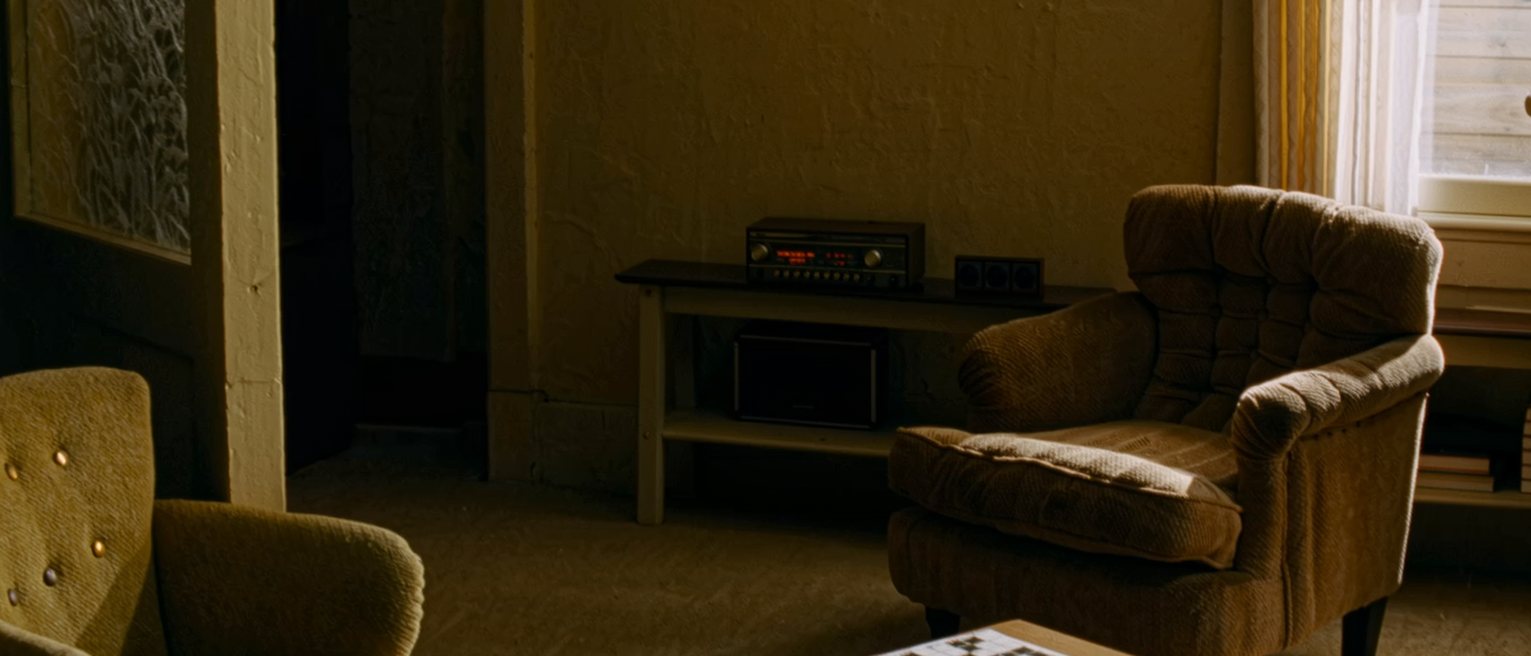
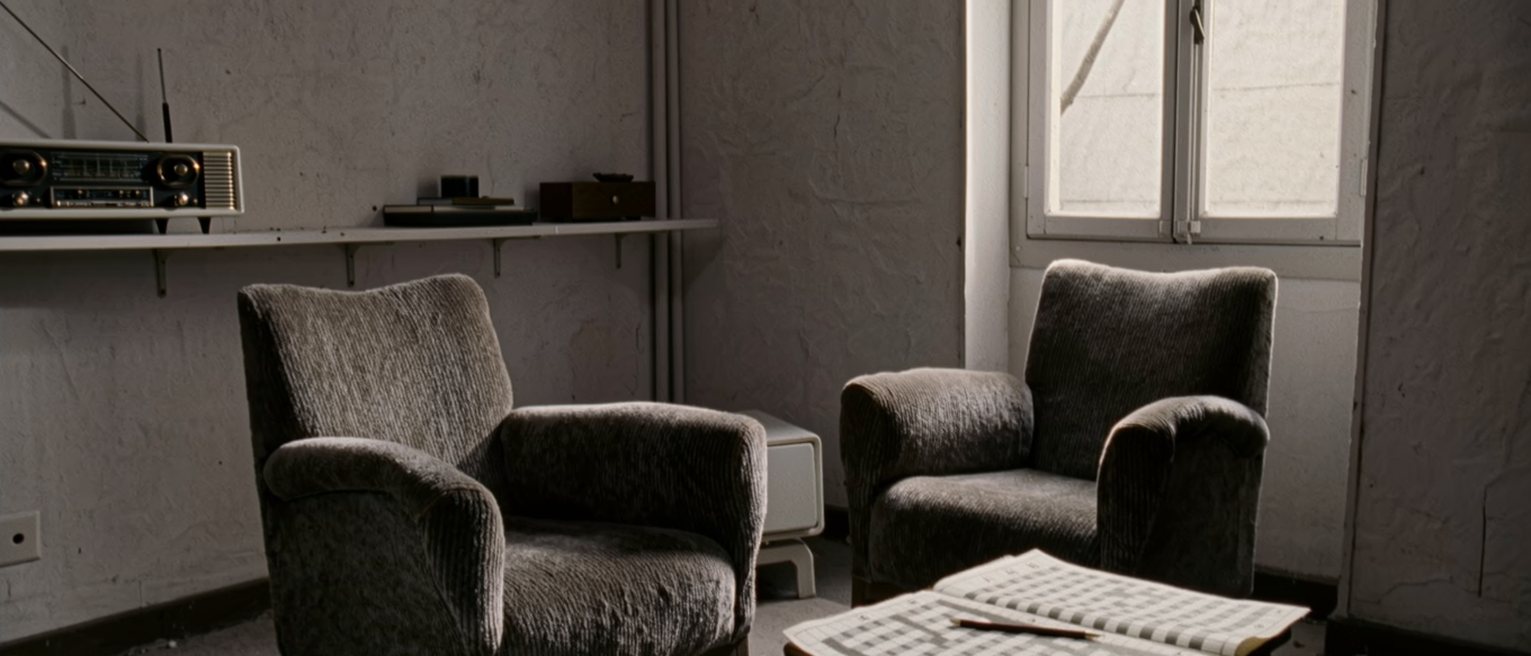
In this country there is a name for the ideal she was raised on, and it is a high one. To understand each other heart to heart, without speech. To be the kind of couple who do not need to say. The phrase for it is old, it is admired, and it is used, in ordinary talk, as a description of a marriage that has succeeded — the long-married pair who move around each other in a kitchen without a word, each already knowing what the other will reach for.
It is a real achievement and this essay does not mock it. But notice what the ideal does to the loss described above. It converts the end of conversation into evidence of arrival. A couple who no longer tell each other anything are not, under this ideal, a couple who have run out; they are a couple who no longer need to. The silence is filed under success. And a woman inside that silence, who feels that she is not being reached, has no licensed way to say so, because the thing she is missing is precisely the thing the ideal says a good marriage grows out of.
No claim is made here about how people in this country communicate, and none about national character. Every culture has a picture of what a finished marriage looks like, and most of the pictures are quiet. The observation is narrower: that the local picture makes the archive into the goal, so that a woman who has reached it and finds it empty has reached the thing she was told to want, and cannot easily explain why she wants to leave the room.
Closeness is made of the not-yet-known
A laboratory study, now well known, sat pairs of strangers across from each other and had them work through a fixed list of questions that grew steadily more personal, ending with disclosures most people have not made to anyone. The finding was that closeness could be manufactured — that after less than an hour of escalating disclosure two strangers reported feeling closer to each other than many people feel to the people they know best. The study was about the mechanism and not about romance, and it has been misused since. But the mechanism is the point here.
Closeness, on that finding, is produced by the transfer of something not yet known from one person to another, received. It is not produced by time spent, by shared history, or by knowing each other well; those are its residue. Which means that the very completeness a long marriage achieves is the condition under which the mechanism can no longer run. Two people who have disclosed everything cannot disclose. The strangers in the study had an advantage a couple of twenty years does not: every answer was new to the listener.
This chamber has argued that couples do not have a communication problem but a question nobody is asking, and that essay stands. This one adds the reason the question stays unasked in long marriages specifically: both of them believe they already know the answer. The question that would reconnect them is the one whose answer he would bet on, asked anyway, and lost. A woman who wants the conversation back is not asking for more talk. She is asking to be, for a moment, unknown to him again, so that something can pass.
Why a stranger’s ear is not a betrayal
Here is the thing the woman in this essay is drawn to, and it is worth naming carefully because the book seed names where it can lead. She is drawn to being heard by someone who does not already know. Not to a lover; to an ear without an archive. The pull is toward the beginning of the film — the bus, the street, the hours — and not toward the motel room, and the affair the book describes is what happens when that pull has no other place to go.
This chamber has argued that to be heard is not to be fixed, and that on the night a woman needs to talk she needs a word and not an answer. A stranger’s ear supplies both of those, but it supplies something the essays did not name: it supplies novelty of reception. Whatever she says, it is the first time the listener has heard it, and so she watches it land, and the landing is what tells her she is still tellable. That is a need, and it is not an erotic one, and it is not a criticism of her marriage. It is what an archive cannot give by definition.
The honest question is whether that need can be met without the affair. The answer this essay gives is yes, with conditions. It can be met by a friend who did not know her before. It can be met by a stranger on a long journey, which is why people tell their lives to strangers on trains. It can be met, within a stated scope and with the terms visible, by an arrangement whose whole design is a listener with no archive and no stake. And it can be met at home, which is the hardest case and the one the next section turns to, by a couple willing to manufacture the not-yet-known on purpose.

Making yourselves strangers on purpose
A couple who want the conversation back cannot un-know each other, and should not want to. What they can do is stop filing. The practical shape of that is small and feels artificial at first, because it is: it is a couple deciding to run the mechanism the strangers in the study ran for free. To ask the question whose answer one is sure of, and to listen as if one were not. To tell the other something that happened this week that one would normally not bother to tell, because the other would not be surprised. To let the story be told to the end without finishing it.
The hardest part is not the asking. It is tolerating the discovery that the archive was incomplete — that after twenty years there was an answer one did not have. Couples avoid the question less because it is boring than because it is dangerous: a wrong bet on what the other would say is a small proof that the other is not fully known, and a person who has organised a marriage around being fully known can experience that proof as a threat rather than as the return of the very thing that was missing.
This essay offers no technique beyond that and no promise that it works. Some marriages have filed everything and are content, and the woman who is not content in one of those is not wrong to want a room in which she is not on record. The claim is only that the conversation she is missing is not lost to time or to familiarity. It is lost to completeness, and completeness can be spent, deliberately, one unknown answer at a time.
What the house sells, and what it owes
It should be said first that this house sells the stranger’s ear. Among its offerings are evenings whose whole substance is that a woman is listened to by someone who has no archive of her and no stake in what she says, and the pull described above is the pull those evenings answer. A house that profits from her being unheard at home has a standing interest in her staying unheard there — in her bringing her stories here rather than learning to make herself tellable to the man she lives with. That interest is real and it is not small.
So the obligations are recorded. The house does not describe any evening as a replacement for the conversation at home, and it does not describe the marriage as the problem the evening solves. Where a woman says what she is missing is to be heard by her husband, the house says so back to her and does not redirect it. The listening is offered within a stated scope, with the terms visible, and with the book seed’s warning taken seriously: an ear without an archive is exactly what an affair is looking for, and the house’s design — bounded, paid, declared — is what makes it not one, and the house owes her that difference stated plainly rather than assumed.
The house also owes her the thing this essay has argued. The conversation did not leave her marriage because either of them failed at talking. It left because they succeeded at knowing, and the ideal she was raised on told her that was the goal. She is not wrong to feel that something ended when it was reached. An evening here can give her, for a few hours, the experience of being told to someone new. What it cannot do, and does not claim to, is make her new to him. That is a thing only the two of them can decide to do, and this house’s job is to say so.
What this essay does not claim
This essay is not couples therapy and describes no treatment. Where a marriage’s silence sits alongside contempt, fear, coercion or harm, the question is not one of conversation and this essay is not the reading that applies; the listening offered by this house is within a stated non-medical scope, and nothing here extends it. No claim is made that any marriage should continue, end or change.
The film is read as a film, for its two rooms and what each shows about talk, and nothing is claimed about its makers or performers. The book seed is a therapist’s account of affairs, and its diagnosis of the lover as a listener without an archive is borrowed and extended here to every long marriage, the extension stated as the essay’s own. The laboratory study is cited for its mechanism and not for its later reputation as a shortcut to love; no figure from it appears. The wordless-understanding ideal is read as a cultural picture of a finished marriage, with no claim about how people in this country communicate and none about national character. This Library’s essays on the unasked question, on listening, on the needed word and on the hub are credited and not restated.
The section on the house states first that the house sells the stranger’s ear and profits from a woman being unheard at home, and then records the obligations: no evening is sold as a replacement for the conversation at home, no marriage is described as the problem, a wish to be heard by her husband is said back and not redirected, and the difference between a bounded declared listening and an affair is stated rather than assumed. Nothing is promised. An archive can be spent one unknown answer at a time, and whether it is spent is not for this house to decide.