Moonlight Journal
Your Body Does Not Need More Accelerator.It Needs the Brakes Released.
The research on how women’s bodies respond runs on two pedals, and the difficulty is rarely a weak accelerator. It is a brake that the context keeps pressed — the demand to perform, to be evaluated, to give something back. What releases a brake is the removal of the thing it was guarding against, which is why touch with no agenda is not a lesser form of intimacy. It is the one setting in which the brake can come off.
A woman books an evening that is about her body and nothing else. No conversation to carry, no partner to attend to, no act at the end that the rest is leading toward. Stretching, pressure, warmth, a long slow relaxation. And she feels faintly that she has chosen the lesser thing — the consolation version, what one books when one is not up to the real thing.
This essay is written from her side, on the row named for this house’s own Experience, and it argues that she has the order backwards. Her body does not need more stimulation, more novelty, more of anything that pushes. What it needs, on the best available account of how women’s bodies actually respond, is for something to be taken off — and touch that asks nothing is the one setting in which that can happen.
This chamber has published on what an assisted stretch actually does, on deep rest as permission rather than sleep, and on the body that stops reporting when nobody acts on its reports. This essay adds the model that explains why those findings belong together, and why the evening she thinks of as the consolation version is the one her body was asking for.
Two pedals, not one
The book seeded for this essay popularised a model from sexual-response research that changes the question. Arousal and ease do not run on a single dial that is turned up or down. They run on two independent systems: an accelerator, which responds to everything the body reads as relevant and inviting, and a brake, which responds to everything the body reads as a reason not to — threat, evaluation, obligation, the wrong room, the wrong person, being watched.
The two are independent, and that is the whole point. A person can have a great deal of accelerator and still feel nothing, because the brake is pressed harder. And the research the model rests on found something specific about women: the variation between them is far more in brake sensitivity than in accelerator sensitivity. The common difficulty is not that not enough is happening. It is that something is holding the body back from responding to what is.
That reframes what a body-focused evening is for. The ordinary picture is stimulation — more input, more sensation, an accelerator pressed harder. The dual-control picture says that for most women that is the wrong pedal, and that the work is upstream: find what is pressing the brake, and remove it.
What presses the brake
The brake responds to context, and this chamber has already described most of the context a woman brings into a room. The stress response that the workday started and did not complete, so that she arrives mobilised. The giver script under which she is expected to attend to others, so that receiving reads as a defection. The observer position, in which attention sits outside her own body watching how she appears. The face that has been held in public all day. The guard reflex that hardens against a hand that has gone too far or too fast.
Every one of those is a brake. Not a metaphorical one — each is a reason the body has found to hold back, and the model says the body will keep holding as long as the reason stands. And the largest brake of all, in any setting that is or might become sexual, is the demand: the sense that something is expected, that the evening is leading somewhere, that her response will be evaluated and her non-response will be noticed.
This is why more accelerator so often fails her. Every additional thing that pushes is, in a context of demand, also a thing to be evaluated on, so it presses the brake at the same time it presses the accelerator, and the net movement is nothing. She leaves such an evening having been given a great deal and having felt very little, and concludes that the problem is in her.
What releases it
A brake is released by removing the thing it was guarding against. Not by pushing harder through it — the model is explicit that the two pedals do not cancel, and that a pressed brake wins — but by changing the context until the body no longer has the reason.
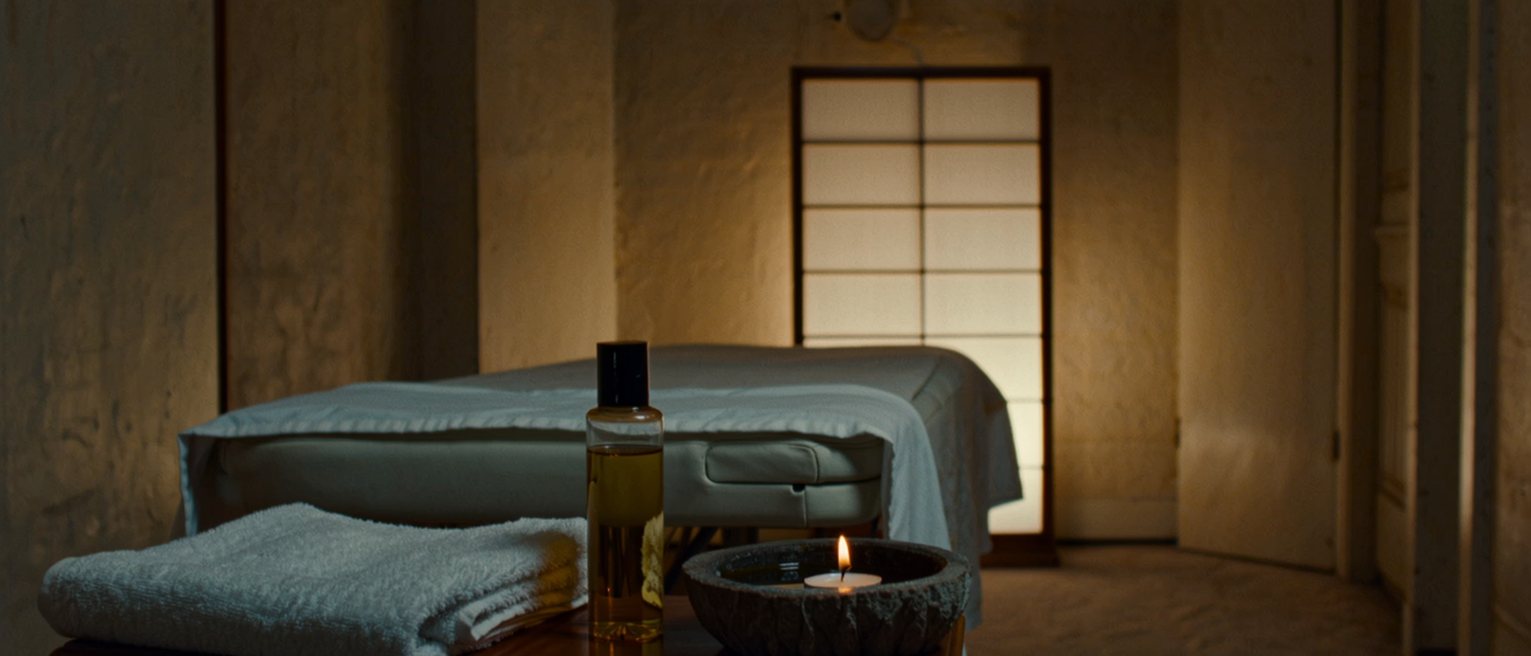
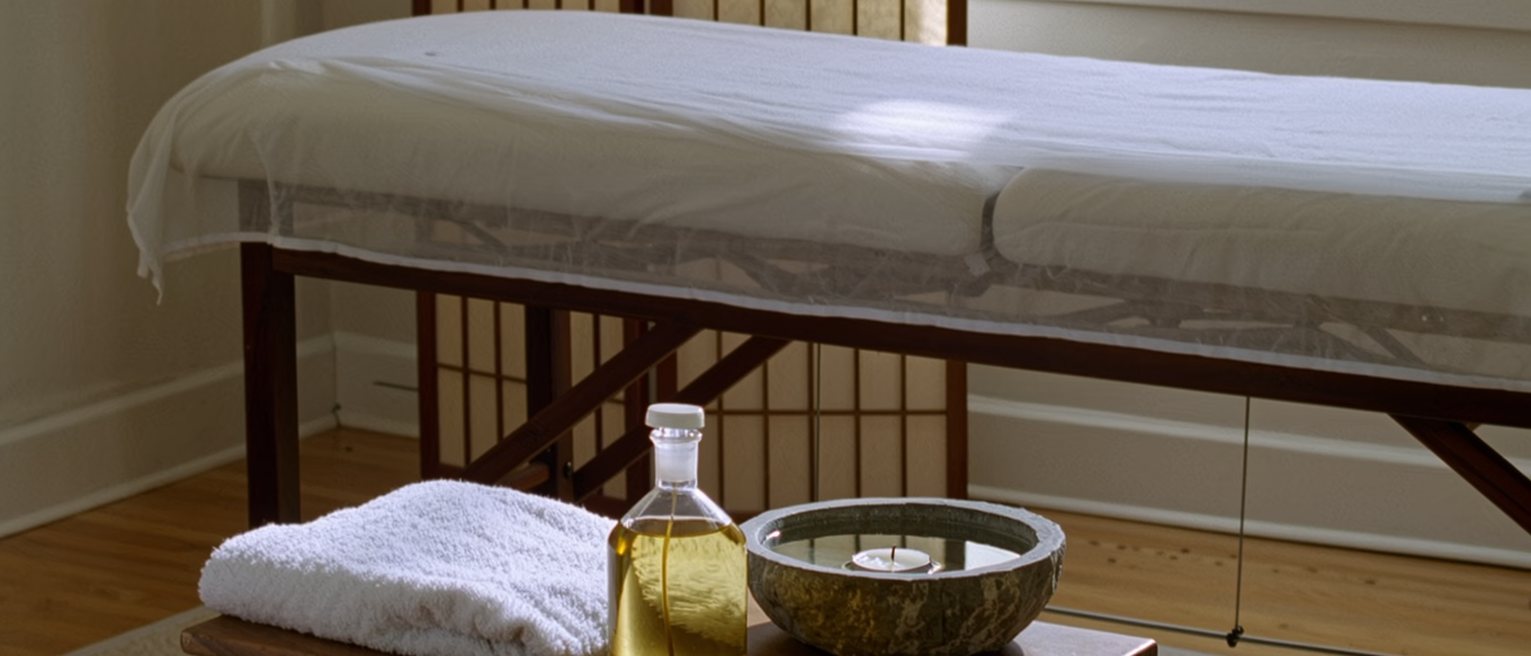
Consider what an evening built entirely around the body, with no sexual demand, removes. It removes the destination: nothing is being led toward, so nothing has to be arrived at. It removes evaluation: there is no performance to grade, because she is not performing anything. It removes reciprocity: nothing is expected back, which this chamber has found is the condition under which receiving stops feeling like a debt. It removes, if the practitioner is doing his work, the guard reflex, by never pushing past it. What is left is a body with the reasons for holding taken away one by one.
And this chamber has found that a body which has stopped reporting resumes when somebody acts on its reports. Touch that waits for the response and answers it is that action, sustained for an evening. The brake does not come off because the body was told to relax. It comes off because, for the first time in a long while, nothing is asking anything of it, and the body notices.
Reading an evening as a sequence of removals
It is worth walking through what an evening built around the body actually contains, because read through the model each element turns out to be a removal rather than an addition, and the order is not arbitrary.
It usually opens with being moved — assisted stretching, the limbs taken through their range by somebody else’s hands. This chamber has found what that does: it does not lengthen anything, it moves the point at which the body says no, and it does so only by waiting for the guard reflex to lift rather than pushing through it. In the language of this essay, the opening is the first brake being found and released — the bracing that a body under demand carries in its muscles — and it has to come first, because a braced body cannot receive anything that follows.
Then pressure, into the muscle and the layer beneath it. The muscle that has been held all day is not tense because it is short; it is tense because it has been holding, and this chamber has found that the face and the shoulders are where a person holds deliberately, in public, for hours. Pressure that arrives slowly, at the pace the body can read, is the second brake: the holding is met, and met without any demand that it stop, and the holding stops. Then warmth and oil across the skin, which this chamber has found engages a channel tuned to slow touch and to nothing else — no evaluation, no destination, only the report that something pleasant is happening at the surface.
And then, last, stillness — the long relaxation at the end, in which nothing further is done. This chamber has found that memory keeps the ending and discards the length, and the model adds why the ending matters here: it is the interval in which the body, with every brake released and nothing arriving, gets to find out what it is like to have no reason to hold. That is the part she will remember, and it is the part that could not have happened at the start, because at the start the reasons were still there.
The woman-centred part: why she reads it as the lesser thing
The reason she thinks of a body-focused evening as the consolation version is that the culture ranks intimacy by its destination. This chamber has argued that the male-facing transaction is organised around an act and the women-facing one around being attended to, and that the men’s script has no line for the second. Under the men’s script, an evening with no act at the end is an evening that did not get there.
The dual-control model says that for a body with the brake pressed, the evening that did not get there is the only one that could have. She was not choosing the lesser thing. She was choosing the setting in which her body could respond at all — and the sense that she should have wanted something more is the men’s script, applied to a body that runs on different pedals.
This chamber has also found that a working brake is not a broken one. A woman whose brake is pressed at home, in a context of demand, evaluation and unfinished stress, has a body that is reading the context accurately. Nothing about her needs fixing, and the word that the industry uses for this kind of evening — reset — should be handled with care, because it implies a body that was broken and is being restored to factory settings. It was never broken. It was braked, for reasons, and the evening is not a repair. It is a room with the reasons removed.
The Japanese version: the licensed reason for being touched
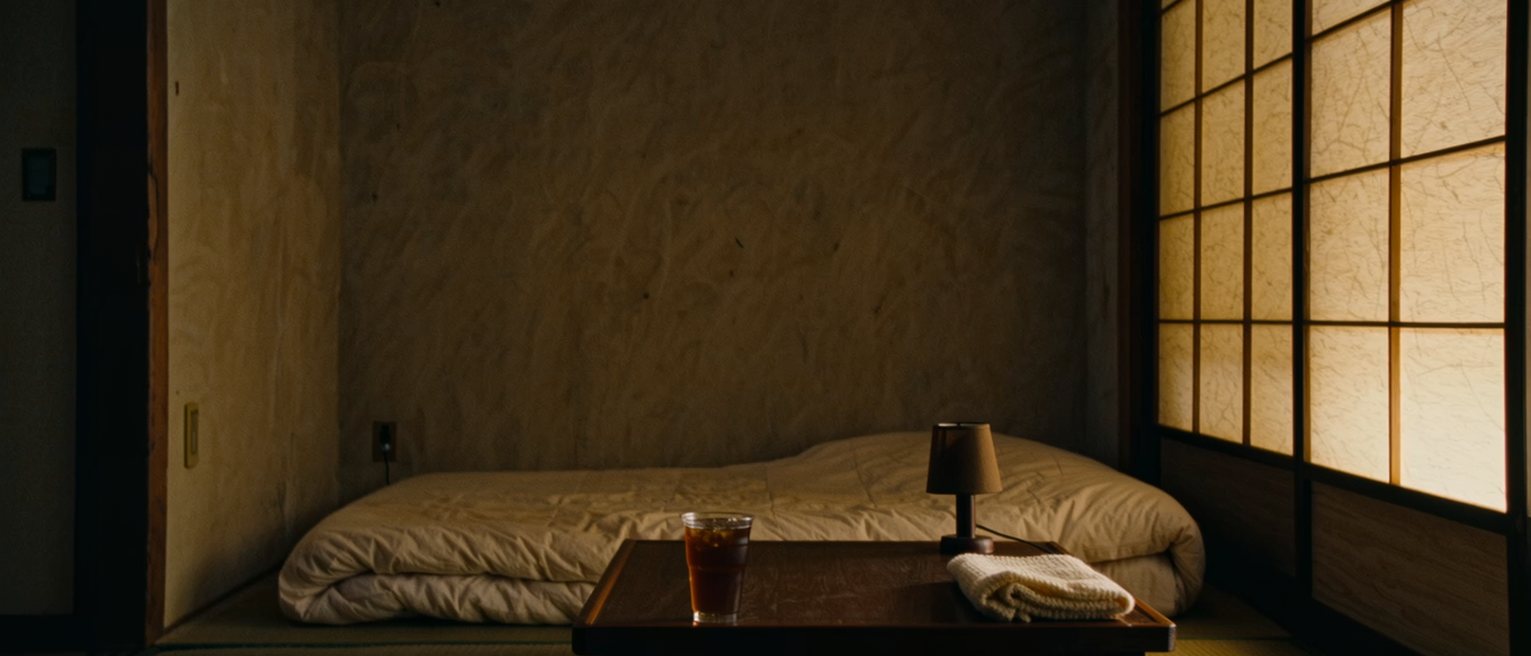
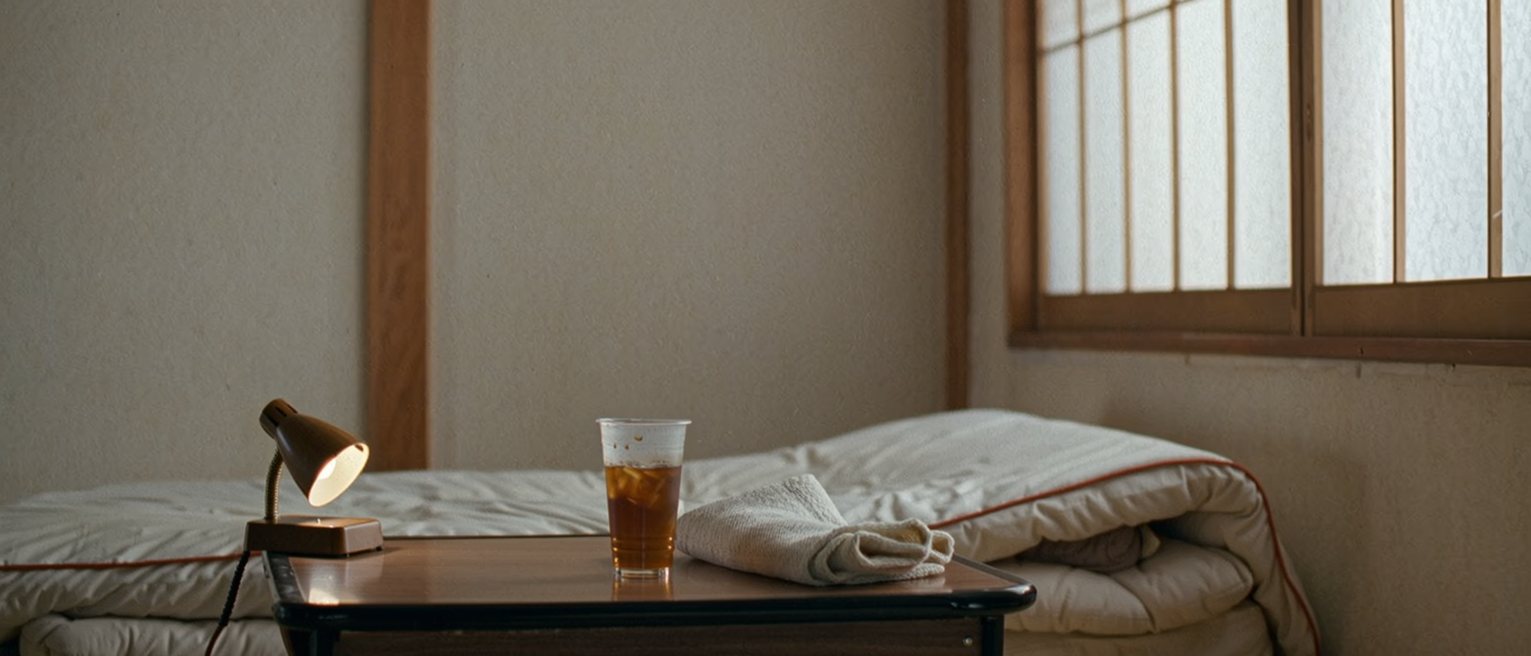
Japan has a socially complete answer to why a woman would book a body-focused evening, and it is the stiff shoulder. Shoulder stiffness, tiredness, a back that has been at a desk — these are the reasons for which a woman can be touched by a stranger, at length, without anybody asking a further question. This chamber has just found that the best reason is one nobody can pick up, and the stiff shoulder is that reason in its national form.
What is worth noticing is what the reason licenses and what it hides. It licenses the touch. It hides the brake. A woman who books bodywork for her shoulders can receive an hour of attention without having to say that she wanted to be attended to, and the shoulders are, very often, genuinely stiff — because a body that has been holding all day holds there. The reason is true and it is also a costume, and the costume is what lets the brake come off without anybody, including her, having to say what was pressing it.
This is not a claim that Japanese women are more braked than anybody else. The dual-control research finds brake sensitivity across every population it has studied. It is a claim about what a culture does when it supplies an unquestionable reason for exactly the thing the body needed and no vocabulary for the need itself.
A show about wellness that keeps adding accelerator
The series seeded for this essay is a wellness programme about couples and intimacy, and it is instructive in the way it fails. Its episodes are built around adding things — workshops, techniques, practices, a coach for each difficulty — and the couples who go through them are given more and more accelerator. Some of it helps. But the show never quite asks what is pressing the brake, and its most affecting moments are the ones where a participant, given permission to stop performing for the camera, simply cries.
The one episode that comes closest to this essay’s subject is a bodywork session, and what it shows, almost by accident, is a woman on a table with nothing expected of her whose body responds to that absence more than to any technique in the series. The show reads the moment as a breakthrough produced by the practitioner. The model says it was the brake coming off, and that the practitioner’s skill was in not pressing it.
What helps, including the part that favours the author
This essay does not prescribe bodywork, and its practical section is the same size as its claim.
The first move is the diagnostic the model supplies. When the body is not responding, the question is not what is missing but what is pressing — which of the brakes this essay has listed is on, and whether the setting she is in could remove it. That question can be asked at home, about an ordinary evening, and the answer is frequently a demand that could be taken off the table by saying so.
The second is to stop treating the body-focused evening as the lesser version. It is the version in which the brake can come off. A woman who knows that has a different relationship to what she is asking for, and can ask for it without the faint apology that comes from the men’s script.
And the part that favours the author. This essay sits on the row named for a product this house sells, and the product page already states the scope — relaxation and personal care, within a non-medical range, never treatment, correction or rehabilitation, no guaranteed outcome. This essay is the argument for why that scope is the honest one: a body that was braked for reasons is not a body that needs resetting, and a house that sells an evening under that name has a standing reason to imply the opposite, because a customer who believes her body is broken is a customer who needs a repair. So the obligations are these. Nothing published here may describe a client’s body as in need of correction, and the word reset is a name, not a diagnosis. Nothing here may promise that the brake will come off — the model says it comes off when the reasons are removed, and some reasons are not in this room. And a woman whose brake is pressed for reasons that hold at home has a body that is working, and the evening she can book here is a room with the reasons removed for a few hours, not a change to the reasons. The diagnostic above runs at home first, which is the trade this chamber keeps making.
What this does not claim
This essay is not clinical, sexual-health or medical guidance and describes no treatment. Where a body’s response is a source of distress, or where pain, injury or a medical condition is involved, the questions are clinical and this essay is not the relevant reading; the Experience it discusses is offered within a non-medical scope and this essay does not extend that scope.
The dual-control model is drawn from published sexual-response research and its popular presentation in the book seed, credited in the evidence ledger with their limits, including that the model was developed for sexual arousal and the essay extends it by inference to bodily ease more broadly, and that the finding about brake sensitivity concerns population variation rather than any individual. No figure, proportion or statistic appears anywhere in this essay.
The reading of the stiff shoulder as a licensed reason is a reading of a cultural convention; it makes no claim about Japanese women being more braked than anybody else and none about national character. The series is read for the way it adds accelerator and for one bodywork episode.
The section on this house states first that the essay sits on the row named for a product this house sells, that the product’s stated scope is the honest one, and that a house selling an evening called reset has a standing reason to imply a body is broken; it records the obligations that no client’s body is described as needing correction, that no release is promised, and that the diagnostic runs at home first.