Books
The Memory Police, and a Loss With Nobody Left to Notice It
A novel from 1994 about an island where things disappear, and where the people lose not only the thing but the capacity to remember that it existed. It is usually read as a book about surveillance. That reading is too narrow. What the book actually proposes is harder: that a loss you cannot name generates no complaint, no politics and no resistance, and that the police in the title have almost nothing to do.
A morning arrives on the island and everybody wakes knowing that something has gone. Not knowing what, exactly, and not for long. They go and find whatever they still have of it — the hats, the ribbons, the perfume, the roses — and they carry it out and burn it or let the river take it, and by the evening the thing is gone and so is the word, and so is whatever it was that the word used to open. Nobody argues. Nobody is dragged out of a doorway. The work is done by ordinary hands, sadly and competently, the way a family clears out the house of somebody who has died.
The book is Hisoyaka na kessho, published in Japan in 1994, and known in English since 2019 as The Memory Police. When it reached English-language readers it was read almost immediately as a novel about state surveillance, and the reading was not invented out of nothing: there is a police force in it, and it raids houses, and people it takes away do not come back.
But that reading is too narrow, and the narrowness costs the book its real subject. The more disturbing proposition in these pages is not about being watched. It is about consent to loss. The islanders do not resist the disappearances because they cannot: not out of fear, and not because they have been broken, but because there is genuinely nothing left in them to hold on with. A loss you cannot name has no politics. There is no sentence in which the grievance can be stated, because the noun has gone along with the object.
Which makes the Memory Police almost redundant. They are not the engine of the story; they are its cleanup. And the reason this Library has business with a fable about an island is that the fable states, more cleanly than any argument, the thing this publication keeps circling: a capacity you no longer have a word for is not experienced as a loss. It is experienced as normality.
What the book is, and how it reached English
Ogawa Yoko was born in Okayama in 1962 and graduated from Waseda. She took the Kaien Prize for new writers in 1988, and the Akutagawa Prize, announced in January 1991, for Ninshin karendaa, the novella published in English as Pregnancy Diary. In 2004 Hakase no aishita suushiki, known in English as The Housekeeper and the Professor, won both the Yomiuri Prize for Literature and the first Booksellers Award, and in the same year Burafuman no maisou took the Izumi Kyoka Prize. The Tanizaki Prize followed in 2006 for Miina no koushin, published in English as Mina’s Matchbox, and the Noma Prize in 2020 for Kobako.
Hisoyaka na kessho was published by Kodansha in January 1994. A Kodansha bunko edition followed in August 1999, and a reissued bunko in December 2020, after the English translation had made the book internationally visible. The title means something close to a quiet, or secret, crystallisation.
The English translation is by Stephen Snyder, who teaches Japanese studies at Middlebury College and has been the English translator across the body of Ogawa’s work available in the language. It appeared on 13 August 2019, from Pantheon in the United States and Harvill Secker in the United Kingdom, as The Memory Police.
Two pieces of recognition followed, and both are worth stating carefully, because both are routinely reported as something they were not. The book was a finalist for the 2019 National Book Award for Translated Literature. It did not win; that award went to Baron Wenckheim’s Homecoming by Laszlo Krasznahorkai, translated by Ottilie Mulzet. The book was then shortlisted for the 2020 International Booker Prize. It did not win that either; the prize, announced in August 2020 after a pandemic postponement, went to The Discomfort of Evening by Marieke Lucas Rijneveld, translated by Michele Hutchison. A finalist is not a winner, and a publication that cannot keep those apart has no standing to be careful about anything else.
The title changed, and the subject changed with it
The Japanese title contains no police. It names a process — a settling, a hardening into form — and it does so with a word, crystallisation, that describes the opposite of erasure. Something is becoming fixed. The French edition kept that sense. The English title names an institution instead.
This was not carelessness, and it is not a mistranslation. The Booker Prizes’ own reading guide to the book records that the original text refers repeatedly to a secret police, and separately to memory hunting as the activity they carry out, and that the translator collapsed the two ideas into a single coinage for speed and convenience. The author was consulted and approved it. As a solution to a real problem in a real book, it is defensible.
But a title is a reading instruction, and this one instructs. An institution has politics: it has officers, a hierarchy, a budget, an ideology, opponents. A process has physics: it has a rate and a direction and no opinion. Put the institution in the title and the reader arrives looking for the officers.
Reviewers noticed at the time. Writing for the Japan Society in the United Kingdom, Jill Dobson observed that the Orwellian English title creates the expectation of a political novel, when the book is in fact something more elusive and subtle, and suggested the better approach is to read it as a fable about memory rather than as a study of state oppression. Dylan Brown, writing in the Los Angeles Review of Books in October 2019, made a sharper version of the same complaint, arguing that the Orwellian framing supplied by the publisher risked concealing what the book actually does.
So the position here is narrow and specific. The English title is a good solution and it had a cost, and the cost was paid by the book. What follows tries to read the process rather than the institution.
Where the disappearance actually happens
Look closely at the sequence of events on a disappearance morning, because the order of operations is the entire argument.
First: the islanders wake already knowing. The knowledge arrives with the day, unexplained, like weather. Second: they locate whatever they still possess of the disappeared thing. Third: they destroy it or release it themselves. Hats are burned. Birds are let go. Roses go down the river. Human hands do this work, which the critic David Hebblethwaite noted in Strange Horizons as one of the novel’s most arresting features: for a physical object to leave the island, a person has to carry it out. Fourth, and last: what remains is not merely an absence of the object. The meaning goes too. Afterwards a survivor of the disappearance can hold the thing and reach nothing.
Only then do the Memory Police enter, and they enter for the residue. Their subject is not the population. It is the small number of people in whom the fourth step failed, who wake on a disappearance morning still able to reach what everyone else has released. The police search houses for such people and for the objects they have kept, and take them away, and that is the whole of their function.
Brown described them accurately as an ambient presence rather than a conventional antagonist: they arrive without warning, their motives are never explained, and they are unfailingly polite while doing it. That politeness is not decoration. A force that had to break a population would need to be loud. This one does not, because it is not breaking anything. It is tidying.
So the causal order is the opposite of the one the English title suggests. Forgetting does not follow enforcement. Enforcement follows forgetting, and exists only because forgetting is imperfect.
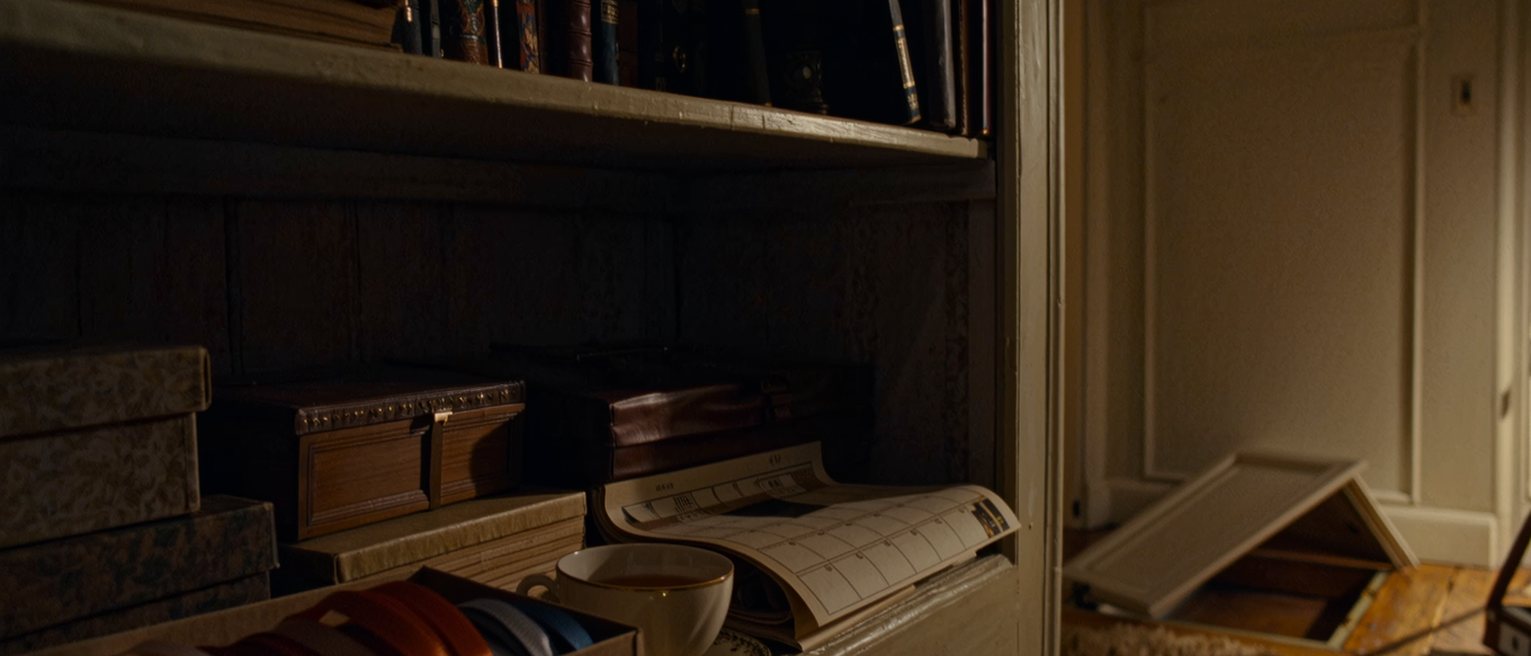

A loss you cannot name has no politics
Here is why that order matters, and it is a point about the conditions under which a complaint can exist at all.
To resist something you need a grievance. A grievance is a sentence with a specific shape: this was taken, it was mine, I want it back, and you are the one who took it. Every clause in that sentence requires a noun. Remove the noun and the sentence cannot be assembled — not badly, not partially, not at all. There is no degraded version of the complaint left to make.
On the island the noun goes with the thing, within the day. Which means the islanders compliance is not really compliance. Compliance implies a requirement that one could, in principle, fail to meet. There is no requirement here, and no failure, and nothing to be brave about. They are not submitting. They have nothing to submit with.
This is what makes the standard dystopian vocabulary useless for the book. Fear does not explain it, because the people are not frightened at the moment of loss. Apathy does not explain it, because they are not indifferent — they are attentive, careful, even ceremonious about the disposals. Indoctrination does not explain it, because nothing has been taught. The novel has quietly removed the one thing all three explanations share, which is a person who still holds the object in mind and then does or does not act on it.
And that is the sense in which the police are nearly redundant. A regime that had to suppress remembered grievances at scale would need to be enormous, and expensive, and visibly brutal, and would generate exactly the resistance it exists to stop. A regime that could take the word as well as the thing would need almost no enforcement at all. It would need a small unit for the remainder. Ogawa island is not a picture of surveillance. It is a picture of what surveillance is for, in the limit case where it has almost nothing left to do.
One guard, stated here rather than left for the end. This is a fable and its mechanism is invented. Human memory does not work like this, and nothing in this essay is a claim about cognition. The argument is about the conditions of complaint, not about the brain.
The room under the floor
The novel’s narrator is a novelist. Her editor, called only R, turns out to be one of the people in whom the forgetting does not take. With the help of an old family friend, a retired ferry mechanic, she builds him a hiding place in the space beneath her floor, reached through a trapdoor with a rug over it. The shorthand people use for this subplot — the writer in the floor — is not quite right until the last page, and the inaccuracy is worth keeping in view, because the correction is the point.
Ogawa has described the room as a debt. She has said that reading the diary of Anne Frank is what made her conscious of becoming a writer, and that she wanted to rebuild that story inside her own work; she has also described transplanting one specific detail, that the move into the hiding place happens on a rainy day, because in rain everybody walks quickly with their heads down and nobody looks. The room is an homage of that kind. It is not a representation of the Holocaust, and nothing here should be read as equating the two.
What the subplot does is the part readers find hardest, and it is hard because nothing is rescued.
Consider the inversion it sets up. R has memory and no world: he cannot leave the floor, cannot walk in the town, cannot use any of what he knows. She has a world and no memory. He tries to give hers back. He produces objects he has kept hidden, puts them into her hands, tells her what they were for and what they did. She holds them. Nothing comes. That scene is the novel’s real argument, and it is a failure scene — the proof the book offers is negative, delivered by the one character equipped to describe what has been lost, who is precisely the one character with no power to do anything about it.
There is also a power arrangement in the room that the book declines to resolve, and readers are right to find it uncomfortable. She keeps him. She feeds him, decides when the trapdoor opens, controls every condition of his existence. He is entirely dependent on her, and simultaneously he is the only person in the house who knows what anything means. She falls in love with him. He has a wife and a newborn child elsewhere on the island. The novel does not adjudicate any of this, does not punish it, and does not offer it as transgression. It reports it, at the same temperature as the disposals.
And then the ending, which is where the subplot pays and where the shorthand finally becomes accurate. As the disappearances stop taking objects and start taking bodies, it is the narrator who ends up in the hidden room. The writer, in the floor. The space built to preserve a man who could remember becomes the last place occupied by a woman who could not, and the final thing she does is tell him that he can come out now.
Readers arrive at that room expecting a resistance cell, and it is a container. No message is smuggled out. No testimony survives. No document is buried for a later generation. R comes out of the floor with his memory intact and no world left that it refers to, which is as exact a statement as the book makes of what a preserved memory is worth on its own.
The body goes last, and that is the argument made physical
Late in the book the disappearances stop being about objects. Calendars go, and the island is left in a winter that does not end. Novels and books go, and the narrator, who can no longer write, takes work as a typist. Then the losses reach the body. Left legs go. Right arms go. Voices go. The islanders are reduced to voices without bodies, and then to nothing.
What makes this passage almost unbearable is not the mutilation. It is the calm.
The reason for the calm is the whole thesis, stated in flesh. Because the concept goes with the capacity, a person who has lost a leg does not experience a lack. There is no limping towards a remembered gait. There is no phantom limb, because a phantom requires a standard, and the standard has been taken as well. The absence is complete in a way that ordinary loss never is: there is nothing left over to ache.
That is what a disappearance is in this book. Not a subtraction from a life that continues to have the shape it had, but a redrawing of the shape, so that nothing protrudes and nothing is missing. The islanders do not experience their losses as losses. They experience them as the current form of a life.
Which is why the word consent is both exactly right and slightly wrong for what happens on the island. It is right because there is no coercion at the moment of loss: nobody is made to give anything up, and the disposals are voluntary in every observable sense. It is wrong because consent requires an alternative that can be described and declined, and no such alternative exists. What is actually present is agreement of the flattest possible kind — the agreement of people who have nothing left to disagree with. If there is a horror in this novel, that is where it lives, and it is not in the trucks.
What this Library has already argued, and where this parts from it
This publication has been working the same seam for a long time, and the reader is entitled to see where this essay sits in relation to what has already been said here.
An earlier piece, The Word Was Built for Somebody Else, argued that a woman can describe with complete precision what she is looking for and still be unable to say the noun for it, because every available term was assembled around a different customer, and that the first barrier in such a case is grammatical rather than moral. A second, on the Annie Ernaux book published in English as Simple Passion, argued that what Ernaux achieves is the removal of shame from the register rather than from the content: a want set down with no stance taken towards it, in a tone that has no grammatical place to put shame, and that the register for doing that is thin. A third, on the vocabulary of receiving, argued that receiving well is a genuine skill with no honourable noun attached to it, so it can be practised but not claimed and not praised. A fourth, on what goes first when a partnership turns into logistics, argued that the earliest loss is invisible precisely because it is masked by an increase: a couple running a household talks more than it ever has, so nothing looks as though it is missing.
Now the difference, which is the reason this book earns a separate essay rather than a paragraph appended to one of those.
In all four of those arguments, the thing itself survives. The want is entirely intact; only the register for stating it is missing. The skill is exercised competently every day; only the praise is missing. The capacity for unpurposed talk sits there unused; only the noticing is missing. Every one of those is a problem of description, and problems of description have remedies. You can build a register. You can coin a noun. You can learn to notice what stopped. Somebody inside the situation still holds the thing that the vocabulary is failing to reach, and that person can be handed better vocabulary.
Ogawa proposes the limit case instead. Not a want that has no available register, but a want whose object has been erased. Not a capacity that goes unnamed, but a capacity that goes when the name does. On the island there is no remainder — nothing left over, badly described, waiting for a better word. The person who would use the better word is not there.
That is why none of the earlier remedies reaches this. You cannot hand somebody a word for a thing they do not have. And it is also why the fourth of those essays, on what disappears first, is the closest of the four and still not the same: an increase masking a loss is a problem of attention, and attention can in principle be redirected. Ogawa removes the attention along with the object.
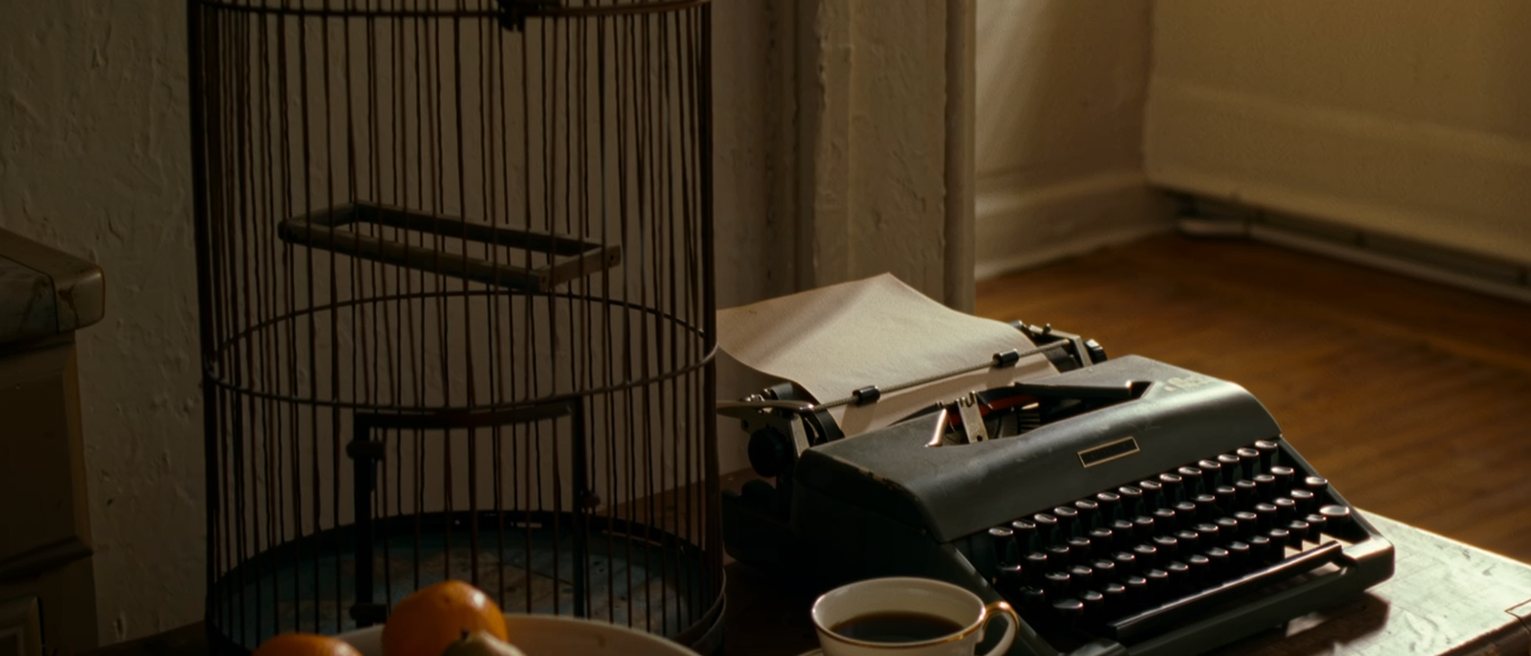

Nineteen ninety-four, and the moment the book was read in
The novel was published in Japan in January 1994 and reached English twenty-five years later, into a particular political weather in the United States and Britain, and the timing did a great deal of work that has nothing to do with the book.
Ogawa has been unusually direct about this. In a Japanese interview published in March 2020 she said that she had not written the book intending a political accusation, and had not set out to depict a pessimistic near future; she described her intention instead as depicting a past that lay before her own birth. She said in the same interview that after the translation appeared she was asked, by journalists in the United States, questions from a political angle that nobody had put to her in the preceding twenty-five years.
The translator has offered a matching account of the delay: that the gap between the Japanese and the English was a matter of publishing schedules and his own commitments rather than anything about the book, and that it turned out to be fortuitous, because the novel landed among readers who were experiencing a new kind of reality.
This Library treats all of that as reception rather than as meaning. What a book comes to mean for readers in another country at a particular moment is a real fact, and it is a fact about the readers. It is data about who was reading, and what they were frightened of, and which shelf the marketing chose. It is not a discovery about what is on the page.
The same discipline has to be applied to this essay, and it is applied here rather than left for the counter-reading to extract. A reading of this novel as a book about vocabulary is also an artefact — of a publication that has spent years arguing about words for things, and that was therefore primed to find the book confirming it. That does not make the reading wrong. It makes it a reading, produced by particular readers at a particular time, and it should be held with the same looseness as the surveillance reading it is arguing against.
A film adaptation was announced in 2020 and has been reported in development since, with a screenplay by Charlie Kaufman and Reed Morano directing. Nothing in this essay is a claim about that film, which this Library has not seen and whose release it has not confirmed.
The strongest case against the book, and against this essay
Four objections, at their full strength, and the last of them is not answered.
First: that a dystopia read as epistemology is evading its obvious politics. There is an armed state agency in this novel. It searches houses. It takes the narrator’s mother, a sculptor who kept remembering, and she does not come back. To announce that the interesting part is the epistemology is to walk past a woman who was disappeared by police, and it is a very comfortable move for a reader who would rather think about language than about a raid. The reply available here is narrow and does not dispose of the objection. This essay does not claim the police are unimportant; it claims they are downstream. But downstream is precisely what a person being taken out of her house does not experience, and an argument that is true at the level of the system can be obscene at the level of the arrest.
Second: that the passivity is a real aesthetic problem and not only a theme. A novel in which nobody resists is also a novel in which not very much happens, and readers who find it inert are not failing to understand it. It is always possible to defend a flat book by declaring the flatness thematic, and that defence is unfalsifiable in exactly the way that should make a reader suspicious. This essay has no way to distinguish, from outside, between a deliberately affectless novel and a novel that does not generate much. The published reception contains both readings from the same pages: Brown finds the real conflict in the struggle to keep cooking and walking the dog and being kind, and Dobson warns that more literal readers may simply find the book baffling and bleak. Both are honest responses, and this Library cannot arbitrate between them.
Third: that the Western reception distorted a 1994 Japanese novel, and that this essay is written from inside the distortion. The English title inserted an institution the Japanese title did not name. The publicity reached for Orwell. And an essay complaining about that frame is operating in it — written in a house that reads in both languages, but arguing against an English-language reception, using English-language reviews, in an argument that could not have been assembled without the mis-framing it objects to. There is no clean position outside this. The most that can be said is that the objection is noted rather than cancelled.
Fourth, and this is the one with no answer. An essay arguing that losing the word for something makes the loss invisible cannot be falsified by anybody who has lost it. That is its structure. If the evidence for the claim is that the people it concerns produce no evidence, then the absence of complaint has been converted into proof, and a proposition that is confirmed by silence is not a proposition that could turn out to be wrong. This is a genuine defect and it is not repaired by admitting it. What can be said is a narrowing and not a rebuttal: this essay is offered as a reading of a novel, the novel is a fable, and no reader should take away the proposition that she is missing something she cannot detect. That proposition is exactly the one this house has a commercial interest in, which is the subject of the next section.
What this house sells, and what it cannot claim
This house sells private companionship: bounded, scheduled, paid for. The interest it has in the argument above is direct and a reader is entitled to see it stated rather than to detect it.
The interest is unusually specific in this case, and worse than the ordinary kind. An argument that a capacity you no longer have a word for is not experienced as a loss is, read commercially, a machine for manufacturing demand out of contentment. It says, in effect, that not wanting something is not evidence of not needing it. That is a claim no business should be trusted with, and this business is making it.
So the constraints, stated as limits on what may be claimed rather than as reassurance. This house diagnoses nobody. Nothing in this essay says that a reader who feels no lack has one, or is mistaken about her own life, or has a condition that a paid evening addresses. This house claims no outcome of any kind: no restoration, no recovery, no return of anything. An evening confers no capacity and supplies no word.
And here is the version stated hardest against interest. If the argument in this essay is right, then no evening could ever tell a reader whether it applies to her, because the test would have to be administered by the one person structurally unable to run it. This house therefore cannot offer a way to check, and any business claiming it can is selling something other than what it says. That is not a caveat attached to an offer. It is the reason there is no offer in these pages.
This house also claims no relationship of any kind to the book or to anybody connected with it. Ogawa Yoko, Kodansha, Stephen Snyder, Pantheon, Harvill Secker, the prize bodies and every reviewer named here have no connection to this house, no knowledge of it, and no part in anything it says. Naming a book is discovery and nothing else; there is no arrangement behind it.
What this does not claim
This essay is a reading. It is not clinical guidance, it prescribes nothing, it promises no outcome, and it diagnoses no reader.
Nothing here is a claim about how human memory works. The island is a fable and its mechanism is invented; concepts do not vanish with objects, and no finding from psychology or neuroscience is invoked anywhere, because none is being relied on. Where the essay argues that a loss you cannot name generates no complaint, that is an argument about the conditions under which a grievance can be assembled in language, and it is this Library’s interpretive claim rather than a research result.
The publication facts are drawn from Kodansha’s listings, National Diet Library bibliographic records and publishers’ pages. The prize facts are drawn from the National Book Foundation and Booker Prize records: the book was a finalist for the 2019 National Book Award for Translated Literature and was shortlisted for the 2020 International Booker Prize, and it won neither. Where this essay names the winners of those two awards, it does so to make the distinction unmistakable and not to compare the books.
The account of how the English title was arrived at is taken from the Booker Prizes’ reading guide to the book. That page could not be retrieved directly at the time of writing and its content is reported here at one remove; a reader should treat that single detail as reported rather than inspected.
No passage of the book is quoted here in either language. The plot, the structure and the ending are described from the published record — publishers’ materials, prize-body summaries, reference entries and published reviews — rather than from a fresh reading of the Japanese text against the English, and a reader with either text in front of her may reasonably disagree with an emphasis or a detail of sequence.
Ogawa’s remarks about her own intentions are reported from a published interview and are what she has said. They are evidence about the author and not proof of what the book does, and an essay that took an author’s account of her intentions as settling the meaning of her novel would be making a different mistake from the one it is complaining about.
Nothing here is a statement about Japanese people, about Japanese readers, or about national character of any kind. The claims about reception concern what appeared in English-language press and prize culture in 2019 and 2020, and the claims about vocabulary concern conventions that languages and literary traditions supply ready-made.
The novel depicts no real person. Where this essay touches the diary of Anne Frank, it reports what Ogawa has publicly said about her debt to that book, and nothing here presents any comparison between the island of this fable and the historical events that diary records.
The fourth objection in the counter-reading is not answered anywhere in this essay. It stands.