Moonlight Journal
Admitting Nervousness Can Be the First Honest Form of Intimacy
Everywhere else, a physical signal that something matters is treated as data. Here it is treated as a defect to be managed — relax, do not be nervous — which asks a person to suppress the only real-time reading she has of whether the conditions are right. And saying it out loud is not a confession of weakness. It is the cheapest true thing that is also expensive to say.
A woman is about to do something she has not done, or has not done in a long time, and her body is behaving accordingly. Heart, hands, a slight unreality, the feeling of being one step behind her own speech.
And the entire available vocabulary for this treats it as a malfunction. Relax. Do not be nervous. There is nothing to be nervous about. Have a drink. The advice is uniformly about suppression, and it is offered kindly, by people who mean well.
It is worth noticing how strange that is. In almost every other domain, a physical signal that something matters is treated as information — the interview that makes your hands shake is the one you care about, and nobody suggests you would perform better by not caring.
The month’s private sentence is: I care less about doing it well than beginning safely. This essay is about the signal that tells you whether you are — and about why saying it out loud, far from being an admission of weakness, is usually the first honest thing that happens between two people.
A signal classified as noise
Start with what nervousness actually is, mechanically, because the suppression instruction depends on a mistake about it.
It is the body reporting that something is at stake. Not that something is wrong — that stakes are present. It arrives ahead of reasoning, which is why it cannot be argued with, and it is not under voluntary control, which is why the instruction to stop is not an instruction at all but a suggestion to perform its absence.
And that is the whole of the error. You cannot switch it off; you can only conceal it. So an instruction to not be nervous is, in practice, an instruction to add a second task — the management of appearances — on top of the first.
Which is a strange thing to ask of somebody at exactly the moment she most needs her attention available. Concealment is not free. It consumes the capacity that would otherwise be going into noticing what is happening, what she likes, whether she wants to continue.
So the standing advice does not calm anybody. It reallocates her attention from the event to her own performance, and then the event becomes harder to read — which is the specific outcome the advice was supposed to prevent.
It reports stakes, not danger
The reason nervousness gets mishandled is that it is ambiguous in a way most signals are not, and almost nobody is taught to disambiguate it.
It reports that something is at stake. It does not, on its own, say whether the stakes are of a kind you want. The same physiology attends the thing you have wanted for years and the thing you are about to let happen against your own judgement. That is why advice in both directions is available and both sounds wise: push through it, and trust your gut, are each correct about half the time.
So the useful work is not managing the feeling but reading what it is tracking. And there is a test, which can be run in the moment and takes about a minute.
Describe the situation out loud, plainly, to the other person or to yourself. Then notice which way the feeling moves.
Nervousness about exposure eases when named. Saying I am nervous, or this is new to me, or I have not done this in a long time, reliably lowers it — because the thing generating it was the effort of concealment, and the naming removes the effort. That is the signal of something that matters and is wanted.
Nervousness that is a warning does the opposite. Say it out loud and it intensifies, because naming makes the problem concrete rather than diffuse: it turns a vague unease into a sentence like I do not actually know this person, or I do not want this and I have not said so. Naming it does not relieve it; it clarifies it, and clarification is unpleasant when the thing being clarified is a genuine reason to stop.
That divergence is the most useful instrument in this essay. The same act — saying it — sorts the two cases, and it does so without requiring her to have worked out in advance which one she is in.
Why saying it is an act rather than a confession
Now the claim in the title, which sounds soft and is structural.
Consider what saying I am nervous actually does. It transmits information the speaker could have concealed. The concealment was available, was being performed successfully or nearly so, and would have cost the listener nothing. Disclosing it costs her something real: a position, a little standing, the option of being read as entirely composed.
That is the exact shape of a costly signal. Its credibility comes from the fact that it would not be worth faking, and its value comes from the fact that it was expensive to send.
Which is why it functions as the first available act of intimacy in a situation where nothing else is available yet. Two people who do not know each other well have no history to draw on and no accumulated knowledge to demonstrate. There is very little true and expensive that either can offer. Nervousness is the cheapest true thing that is nonetheless costly to say — which makes it, structurally, the earliest possible move in the direction of being known.
And there is a second property. It is a piece of accurate information about her internal state, delivered without a request attached. Nothing is being asked for. That is rare enough in ordinary conversation to be striking, and it is the difference between a disclosure and a demand.
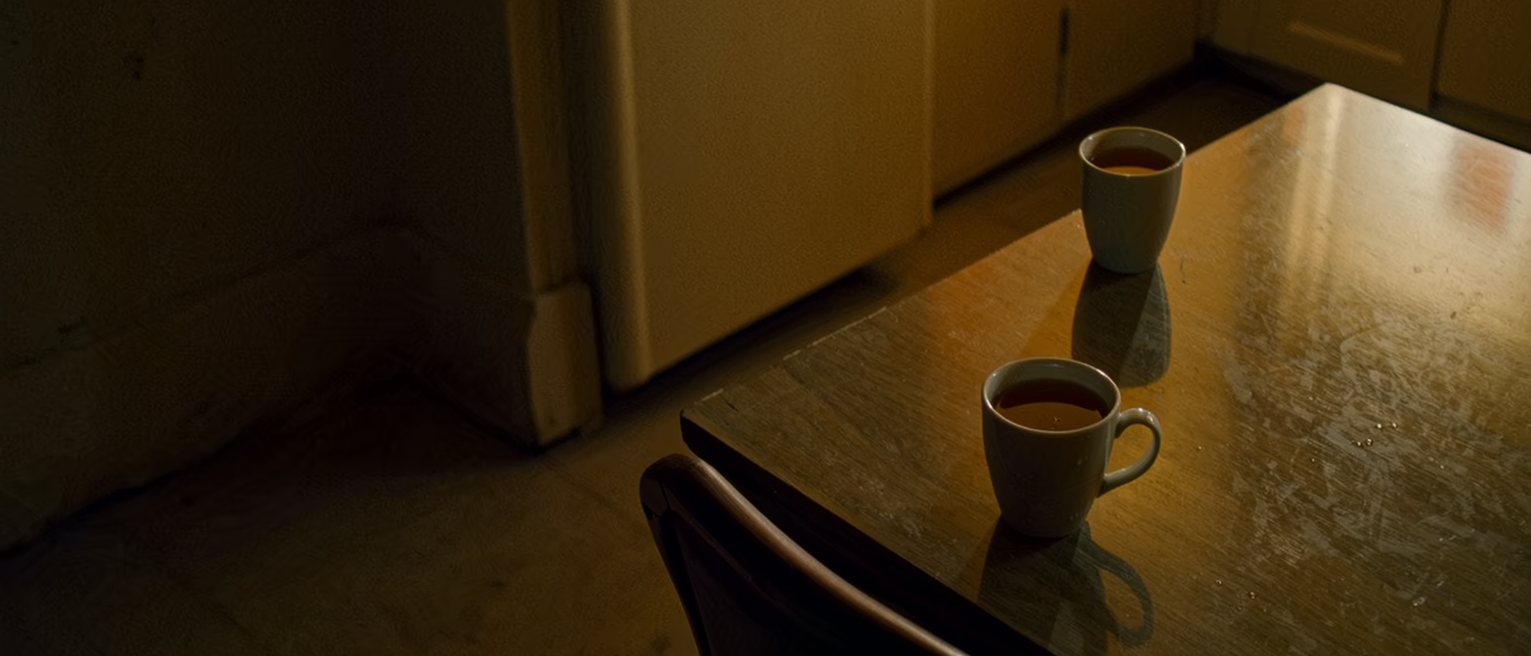
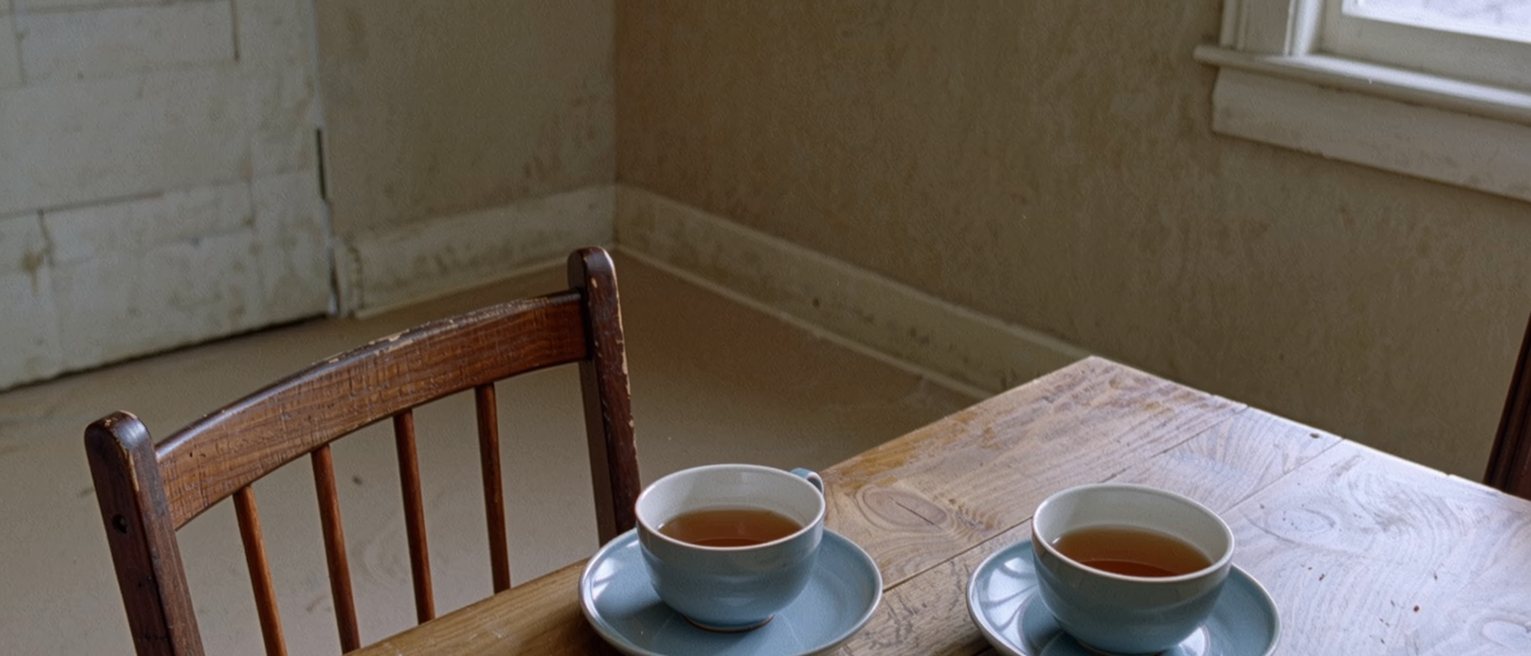
It is also a probe, and unlike a test it is a fair one
There is a second function running at the same time, and naming it makes the act more useful rather than less.
Saying I am nervous puts her, briefly, in the lower position. It hands the other person something they could be graceful with, or dismissive about, or could use. What they do next is the single most informative data point available that early — more informative than anything they could say about themselves, because it is a behaviour rather than a claim.
So it is a probe as well as a disclosure. And this chamber has written at length about probes of a different kind: the test, in which a person arranges a situation so that somebody’s behaviour reveals an answer without a question having been asked. That essay concluded that a test cannot produce what it tests for, because passing requires that the other person not be told, which is precisely the information they would need.
This is the opposite construction, and the contrast is worth making explicit. An admission of nervousness hands over the information. He now knows exactly what the situation is and what a decent response would look like. There is no unseen examination and nothing is being concealed in order to catch him out.
Which makes it a fair probe: it is informative about him and it is not a trap. If he responds well, she has learned something real and he has not been tricked into it. If he responds badly — with dismissal, with amusement, with an immediate push to proceed — she has learned something even more useful, at the cheapest price it will ever be available.
And that is why the act is worth making even in situations where the nervousness itself is mild. The information it returns about the other person is worth more than the composure it costs.
Where the suppression norm comes from
The instruction to conceal is not a private neurosis. It is taught, and it is worth seeing what it is for, because the reasons are real and they are about other rooms.
Composure is a professional and a class marker. The capacity to appear unaffected while something is at stake is rewarded almost everywhere it can be observed: in negotiations, in interviews, in courts, in front of clients, in any setting where visible nerves are read as a reason to doubt somebody’s competence. A person who has spent twenty years learning that has learned something genuinely valuable, and she did not learn it for no reason.
The trouble is that the skill does not announce its own boundaries. Nothing in the training says: this applies in rooms where you are being assessed, and is actively counterproductive in rooms where you are trying to be known. So it runs everywhere, including where it costs more than it earns.
And there is a second layer specific to this territory. The available script assigns nervousness to the young and the inexperienced — which this chamber described in the essay published alongside this one. So an adult admitting it is not merely revealing a feeling; she is making what feels like a status claim, in a culture that reads inexperience as a deficit. The reluctance is not vanity. It is an accurate reading of how the admission is likely to be filed.
Both of those are structural rather than personal, which is the point of naming them. She is not failing to be brave. She is applying a well-learned skill in a room where it does the wrong job, for reasons that made sense everywhere she learned it.
A social grace whose default runs the other way
There is a version of this with a particular cultural weight, and this chamber handles such cases the same way each time.
Some societies have developed to a high degree the practice of not visibly imposing one’s internal state on a shared space. Distress, irritation and anxiety are absorbed rather than displayed, and the result is a public life of remarkable steadiness — crowded places that stay habitable, difficulty that does not spill onto strangers, a form of consideration that operates continuously and largely unremarked.
That is a genuine achievement and nothing here suggests abandoning it. Nor is it unique; every society has some version, and the ones with the most developed version are not thereby less feeling.
The difficulty is narrower. A default practised continuously in public does not switch off at the door of a private room. The skill is not modular — somebody who has spent a lifetime not letting her state land on other people has trained the same reflex that would have to be overridden in order to say I am nervous to one person who has asked.
So the cost of the admission is higher wherever the norm is stronger, and it is higher for the people who are best at the norm. Which means the reluctance described in this essay is not evenly distributed, and treating it as a simple matter of willingness ignores that some people are being asked to override a great deal more than others.
The repair is not to discard the grace. It is to notice that the private room is a different room, and that a skill calibrated for a shared space is not automatically correct in one where two people are trying to find out about each other.
What concealment actually costs
Two costs, and neither is the one people expect.
The first falls on the other person, and it is the more surprising. Concealed nervousness deprives him of the information he would have needed to be careful. He cannot slow down for something he has not been told about. He cannot check in about a thing that is not visible. So a person who successfully conceals it frequently gets exactly the treatment she was afraid of — not because he is careless, but because she withheld the only input that would have changed his behaviour.
Which produces the bitter version of this pattern: the concealment causes the roughness it was adopted to protect against, and then appears to justify it retroactively, because the evening confirms that it was not safe to be open.
The second cost falls on her, afterwards, and it is about attribution. If she performed composure and the thing went badly, she cannot tell what went wrong. Was it the situation, the person, the act itself — or the fact that she spent the whole time managing an appearance and therefore never got to find out what she thought of any of it?
That ambiguity is expensive because it is unresolvable. A first occasion that could have been informative becomes a data point she cannot interpret, which is the specific loss this chamber has described elsewhere: an experiment run under maximum pressure yields unusable results.
How to say it, and how to receive it
The saying has three common failure modes, and all three come from adding something to it.
Do not explain. I am nervous because it has been a long time and my last relationship ended badly and I am not sure I am ready turns a disclosure into a case, and a case invites a verdict. The bare sentence is stronger and costs less.
Do not apologise. Sorry, I am being ridiculous reclassifies the information as a fault, and once it is a fault the other person’s job becomes reassurance rather than adjustment. That is a worse outcome and it is usually produced by the speaker.
Do not attach a request. I am nervous, so can we not do that is two different acts in one breath, and it lets the second be refused in a way that retroactively taxes the first. Say the thing. Let it sit. A request, if there is one, is a separate sentence with its own answer.
And for the person receiving it, the correct response is not reassurance. Do not be nervous is a refusal of the information — it declines the gift, tells her the signal was wrong, and returns her to managing appearances.
What works is acknowledgement plus a concrete offer. That makes sense, tell me if you want to slow down. Thank you for saying so; do you want to just sit for a while. The acknowledgement confirms the information was received and the offer converts it into something actionable — and this chamber has argued repeatedly that a specific proposal is answerable where a general sentiment is not.
What this house can supply, and the part it cannot
The placement here is narrow and the limit is more interesting than the offer, so it comes second.
A stated arrangement is one of the few settings in which saying I am nervous carries no consequence at all. Nothing is being assessed. Nobody is deciding whether she is a good prospect, whether this changes their view of her, whether it will be mentioned to anybody. The terms are already fixed, so the disclosure cannot alter them.
For somebody who has never said the sentence aloud, that is a real thing to be able to do once — and it produces the specific and useful discovery that the words can be said and the room does not change.
Now the limit, which follows directly from the argument above and deserves more weight than the offer.
The value of the act came from its cost. A costly signal is credible and moving because the speaker gave something up to send it. Here, nothing is given up: there is no standing to lose with somebody who has no stake in her, no risk that it changes how she is treated, no possibility of it being used. So what happens here is not the same act. It is the act with its defining property removed.
Which means this house can supply the practice and specifically not the thing itself. Saying it where it is free is rehearsal for saying it where it is not, and the second one is where the intimacy in the title actually occurs. A person who only ever says it in rooms where it costs nothing has learned the words and not yet made the move.
And the standing risk applies as always: a setting where the sentence is easy can become the only place it is ever said, which would leave her fluent in a disclosure she never makes to anybody it would matter to.
Limits
This essay is analysis rather than clinical guidance or counselling. It describes no treatment, promises no recovery and diagnoses nobody. Nothing here concerns anxiety as a clinical condition; persistent or disabling anxiety belongs with a qualified professional and is outside this Library’s field entirely.
The account of nervousness as reporting stakes rather than danger, and as arriving ahead of reasoning and outside voluntary control, is offered as a working description rather than as a physiological claim. This Library makes no claim about mechanism and cites no research.
The diagnostic proposed — that exposure-nervousness eases when named while warning-nervousness intensifies — is this Library’s own formulation. It is a way of asking a question rather than an instrument, it will not hold in every case, and nothing about it should override a person’s judgement about her own safety.
The claim that admitting nervousness functions as a costly signal, and that its credibility derives from what it costs to send, is a structural argument rather than a measured finding.
The contrast drawn with the test described elsewhere in this Library — that an admission hands over the information a test conceals — is an interpretation and is offered to distinguish a fair probe from an unfair one.
The account of composure as a professional and class marker, and of the script assigning nervousness to the young, is a structural reading rather than a claim about any particular workplace, group or person.
The section on a culturally developed practice of not imposing one’s state on shared space describes it as a genuine achievement, explicitly does not recommend abandoning it, names no group as deficient, and states that societies with the most developed version are not thereby less feeling. Its only claim is that a default practised continuously does not switch off in private, so the cost of disclosure is unevenly distributed.
The guidance on how to say it and how to receive it is derived from the essay’s own reasoning rather than from evidence about outcomes.
The commercial assessment states that the value of the act comes from its cost, that this house removes the cost and therefore supplies practice rather than the act, and that a setting where the sentence is free can become the only place it is said. That is stated against this house’s interest. No figure, proportion or statistic appears anywhere in this essay.
The first true sentence
I care less about doing it well than beginning safely.
Nervousness is the instrument that tells her whether she is beginning safely, in real time, while it is still possible to act on the reading. Suppressing it does not make the situation safer; it removes the gauge and leaves the conditions exactly as they were.
And saying it out loud does two things at once that nothing else available that early can do. It converts a private state into shared information, which is the entire content of the word intimacy at the point where two people have no history to draw on. And it returns a fast, honest reading of the other person, obtained fairly, at the cheapest price it will ever carry.
The sentence is three words and it is not a confession. It is the first thing in the whole encounter that is both true and expensive, which is the only combination that has ever been worth anything between two people.
And if it eases as she says it, she has her answer about which kind it was — and the evening can proceed with one fewer thing being managed and one more thing being known.