Moonlight Journal
Rest Got Sold Back to Her as a Product With a Scent.
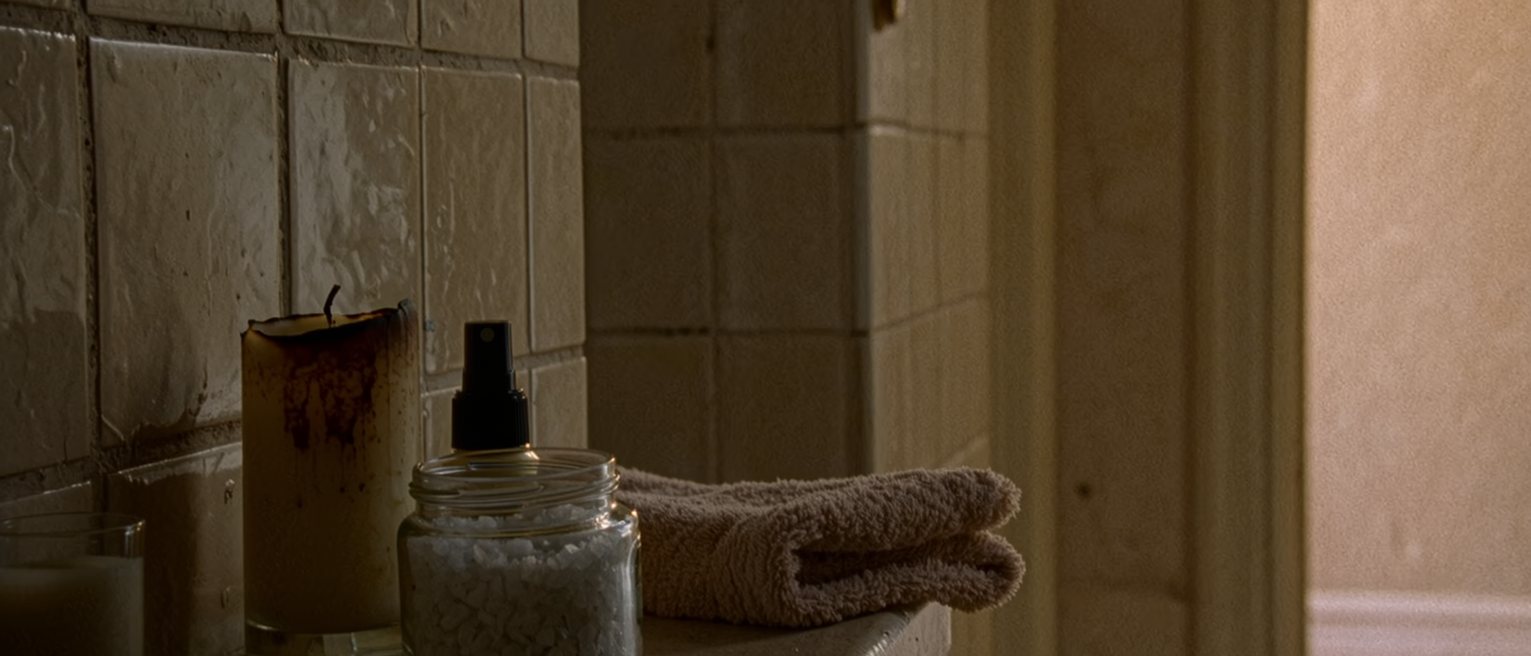
She has the bath salts, the candle, the pillow spray and the app, and she is lying in the bath at eleven at night not enjoying any of it. The failure is not her discipline. A body under stress starts a physiological process that has to be finished rather than paused, and finishing it takes a body doing something. What the market sells is the pause — cheap to manufacture, pleasant, and structurally incapable of closing what is open. Rest used to be a condition. It is now a product, and the product is aimed at the wrong end of the mechanism.
Eleven at night, and she is in the bath because the internet told her to be. There are salts in the water that cost more than the water heating. There is a candle she lit with some ceremony. Her phone is in the other room, which took a small act of will. And she is lying there with her jaw set, running a conversation from this afternoon, noticing that she is not enjoying this and adding that to the list of things she is doing wrong.
She has done everything the instruction said. That is the part worth sitting with. She has the products, she made the time, she performed the ritual, and thirty minutes later she will get out of the bath in exactly the state she got into it — which she will file, as she files most things, as evidence about herself.
This essay is written from her side, on the workbook row asking what modern life did to rest, and it wants to take that filing away from her. The failure is not in her discipline or her capacity to relax. It is in the mechanism, and specifically in the fact that the thing she has been sold is aimed at the wrong end of it. This chamber has already published that deep rest is permission rather than sleep, and that essay is the foundation here. What this one adds is what the market did once rest became something that could be sold.
The stressor is not the stress
The book seeded for this row makes one distinction that changes the whole picture, and it is simple enough to carry around. The stressor is the thing out there: the deadline, the mother-in-law, the email, the conversation this afternoon. The stress is what happens inside her body in response — a whole coordinated physiological event, involving heart rate and muscle and hormones and attention, which her body began without asking her and which is designed to be finished.
The crucial part is that these two are handled separately, and the body does not know the first one is over. Dealing with the stressor — replying to the email, getting through the appointment, having the conversation — removes the cause. It does not complete the process. Her body started something that, evolutionarily, ends with an action: running, fighting, and then arriving somewhere safe and being met. The email does not supply an ending. It simply stops being urgent, and the physiological event she started is left open, and then the next stressor arrives on top of it.
This is why the woman who sorts out everything in her life is often the least rested person in it. She is extremely good at the stressor. Nobody has ever told her that the stress is a separate job with its own completion, and nothing in an ordinary day supplies the completion, because the ordinary day is a sequence of stressors handled competently by someone who never gets to finish anything her body started.
The book’s account of what does complete the cycle is unglamorous and that is exactly why it is not what anybody is selling. Physical movement of the kind that actually raises the heart. Breathing done slowly enough to be deliberate. Laughing until it is not polite. Crying all the way through rather than stopping when it becomes inconvenient. Affection with someone she is not managing. A creative act with an ending. None of these is a product. Almost all of them take a body doing something, and several of them take another person.
What the market could and could not sell
Now the argument that belongs to this essay. Look at that list of completions and ask which parts of it can be packaged.
Movement cannot be sold as rest, because it is effort and the market is selling relief from effort. Crying cannot be sold. Laughing until it is not polite cannot be sold. Affection with someone she is not managing cannot be sold to most women, because most women do not have a person available on a Tuesday who requires nothing of them. What can be sold is the setting: the scent, the water, the low light, the texture, the app that speaks slowly. Those are cheap to manufacture, endlessly variable, giftable, and they photograph beautifully.
So the market sold her the setting, and the setting is not the mechanism. A bath is a pause. A pause is genuinely pleasant and it is not a completion — it stops the accumulation for half an hour without closing anything that is open. The industry did not lie to her, exactly. It sold her something real and let her believe it was the thing, because the thing it is not is something nobody can put in a jar.
And then the second move, which is the one this essay is actually angry about. When the product does not work, the failure is returned to her. She did not relax properly. She was not present enough. She needs a better routine, an earlier bedtime, a different scent, the more expensive version. An entire market is built on selling the pause, and when the pause does not close the cycle, the diagnosis offered is that she is doing rest wrong. She is not doing rest wrong. She has been sold the wrong end of a mechanism and then charged for the disappointment.

Why a scent is not nothing
Fairness requires the other half, because it would be easy to read the above as contempt for anything pleasant, and this house sells oil and warmth and would be a hypocrite twice over.
Smell is genuinely unusual among the senses in how directly it reaches the parts of the brain involved in emotion and memory, which is why a scent can return an entire afternoon from thirty years ago before she has identified what she is smelling. That is real, it is interesting, and it is not the claim the candle is making. A scent is an extraordinarily efficient context marker: it tells a body, quickly and without language, that it is in a different situation from the one it was in. Context is not nothing. This chamber has argued at length that context is most of what governs how a body responds.
So the honest account is this. The scent is a doorway and not a room. It can move a body from the register it was in into one where completion becomes possible — which is a genuine and useful thing to be able to do, and is roughly what a good ritual has always been for. What it cannot do is complete anything by itself, and the reason a woman in a nice-smelling bath can still be entirely un-rested is that she walked through the doorway and then lay still in a room where nothing else happened.
The Bodywork chamber carries the chemistry, the dilution and the safety, and none of that is restated here. What matters for this essay is only the category: a scent is an instrument for changing the situation a body thinks it is in. It is not a completion, and it is not a failure that it is not.
Rest that belongs to nobody else
There is a second mechanism running underneath the first, and it is the one this chamber has already named: deep rest is not sleep, it is permission. A body does not stand down because it is horizontal. It stands down when it is satisfied that nothing is going to be required of it, and that judgement is not hers to make consciously.
Every element of the bath scene at the top of this essay fails that test in a small way. She can hear the house. The door does not lock, or it does and she is listening anyway. She is thirty feet from a child who might call. Her phone is in the other room, which is not the same as being switched off, which is not the same as being unreachable. The body is extremely good at auditing this and it is not fooled by a candle.
This is why rest-as-product is aimed at the wrong thing twice over. It cannot complete the cycle, and it cannot supply the permission either, because permission is a fact about her circumstances and not about her purchases. Nothing in a jar can make her unreachable. The only things that can are structural: another adult who has taken responsibility for the hours, a door that closes on a room she is not responsible for, or a place that is not her house.
That is an uncomfortable conclusion for an essay to reach and it is the honest one. The reason rest has become a product is partly that products are profitable, and partly that the structural version is expensive, socially awkward to ask for, and requires other people to do something. It is much easier to buy a candle than to say out loud that you need three hours in which nobody may need you.
癒し as a category, 疲労回復 as a permission slip
This country built an entire commercial vocabulary around this, and it is worth reading because the words show exactly where the permission is and is not.
癒し names a market. It attaches to products, to music, to places, to a type of person. It is a warm word and a genuinely useful one, and — as this chamber has already argued in a different context — it is grammatically passive. To be healed. It licenses a woman to want an enormous amount without ever saying that she wants anything, which is precisely why it works and precisely what it costs.
疲労回復 does a related job from the other direction. Recovery from fatigue is an unimpeachable reason. It is physical, it is temporary, it implies a return to full function, and it makes no claim on anybody. A woman can say she is tired in a way she cannot say she is lonely, or under-touched, or that she would like an afternoon in which nobody requires anything of her. Tiredness is the licensed form of a much larger request, and the drink aisle of every convenience store is built on it.
No claim about national character is made here, and every market has its licensed vocabulary. The observation is narrower: where the only sayable version of the request is fatigue, the only purchasable answer will be fatigue relief — which is a product, which is a pause, which is the wrong end of the mechanism. The vocabulary and the market shape each other, and a woman standing in a pharmacy at eleven at night is standing inside both.

What she does not owe anybody
You do not owe anyone a good performance in the bath. If you have been lying in nice-smelling water feeling like you are failing at relaxing, you are not failing. You are noticing, correctly, that nothing has closed. That is your body being accurate, not your mind being ungrateful.
You do not owe anybody a reason for wanting rest that is bigger than tiredness, either. You are allowed to want an afternoon in which nobody can reach you, not because you are exhausted, not because you have earned it, and not because something is wrong with you. Wanting to be unreachable is not a symptom. It is a preference, and the fact that the only socially fluent way to ask for it is to be visibly worn out is a fact about the vocabulary rather than about you.
And you do not owe the market your conclusion that the failure was yours. It sold you a doorway and called it a room. That is a design problem in the product, and it has been dressed up as a discipline problem in you for as long as the category has existed.
What the house sells, and what it owes
It should be said before anything else that this house is in this market. It sells evenings organised around oil, warmth, low light and scent — the exact setting this essay has just described as the packageable half of the mechanism. Everything above could be read as an argument for buying a different product, and the house is the one selling it.
So the obligations are recorded. The house does not claim that any evening completes a stress cycle, and it does not describe any offering as a treatment for exhaustion or for anything else; the scope is stated and non-medical. Where what a woman actually needs is three hours in which her household does not need her, the house says so, including when that is not something the house can sell her — a woman whose real problem is that nobody else takes the evening is not helped by booking an evening, and a house that pretended otherwise would be selling the pause with a different label.
What the house can honestly claim is narrower and it is the part this essay has argued is scarce. An evening here is, by construction, a place where she is unreachable and nothing is required of her, and the attention is another person’s rather than a product — which puts it on the side of the list that cannot be put in a jar. That is a real difference and it is not a cure, and the distance between those two words is the whole of what the house owes her.
What this essay does not claim
This essay is not medical, clinical or psychological guidance and describes no treatment. Persistent exhaustion, sleep that does not restore, or fatigue with no clear cause are clinical questions and belong with someone qualified to investigate them, not with a bath or with an evening. Nothing here is aromatherapy safety advice — dilution, sensitisation, pregnancy and every other safety matter live in the Bodywork chamber and are deliberately not restated — and nothing here recommends any product, method or routine.
The distinction between the stressor and the stress, and the claim that the physiological cycle requires completion rather than removal of its cause, is taken from the book seeded for this row: a popular synthesis by an academic author, reported at the level of that synthesis, with no figure asserted and no claim that any listed activity is proven to do what it is described as doing. The remark about smell and memory is reported in general terms only, without a mechanism claim and without figures. The documentary is read for one thing — that women’s own accounts of their bodies are placed on the record — and nothing is claimed about its makers or participants. 癒し and 疲労回復 are read as market and permission vocabulary, with no claim about national character and with the explicit note that every market has its licensed words.
The section on the house names its position first — it sells precisely the packageable half of the mechanism — and then records the obligations: no claim to complete anything, no treatment framing, the stated non-medical scope, and an explicit admission that a woman whose real need is for her household to take an evening cannot be helped by buying one. Nothing is promised. The completion this essay describes is free, unglamorous, and mostly not for sale.