Cinema
Quartet and the Adult Art of What We Choose Not to Say
Four amateur musicians share a house and every one of them is lying about their past. The drama is often read as a defence of not-telling, which would put it against everything this Library has argued about silence. It is not against it. The four of them withhold their content and declare the fact of withholding, and that single difference separates discretion from the thing the month’s sentence calls keeping somebody alive on ambiguity.
Four adults who are not very good at their instruments form a string quartet and end up sharing a house. None of them has the life they have implied. One is using a name that is not hers and is surrounded by a disappearance nobody will discuss. One conceals a family and a history. One conceals money. One conceals a marriage that ended and a child.
What the drama does with that is unusual. It does not arrange a sequence of revelations. Nobody is unmasked, nobody confesses in a downpour, and the secrets are not converted into intimacy by being disclosed. They remain, and the four of them keep playing.
The month’s theme is what we owe each other, and the sentence underneath it is: I want to be kind without keeping someone alive on ambiguity. The Japanese uses the verb for keeping an animal, which is harsher and more accurate.
So this drama arrives as a direct challenge to something this Library has argued repeatedly, and the challenge is worth taking seriously rather than absorbing.
What this Library said about silence, and why this is not that
In an earlier Cinema essay, on a film by a different director, this Library was severe about not-telling. The argument was that declining to demand an account of somebody is a genuine virtue, and that withholding your own position while doing so is not restraint but avoidance wearing restraint’s clothes — and that the second silence is the one that destroys a marriage.
Quartet looks like the counter-case. Four people systematically not telling each other things, and the drama plainly on their side.
The resolution is a single distinction and it holds up under pressure. A declared secret and a concealed secret are different acts.
In the film, the husband’s silence was undeclared. His wife did not know that he knew. She was operating inside a situation whose actual shape had been withheld from her, and that is what made his discretion a deception rather than a courtesy.
In this drama the concealment is on the table. The four of them state, to each other, more or less explicitly, that everyone here is lying and nobody is going to be asked. The content is withheld. The fact of withholding is not. Which means nobody is operating on a false picture: each of them knows exactly what they do not know.
That is a stated term, and it is the same finding this chamber reached about a written marriage contract, arriving in an emotional register. The thing that makes an arrangement honest is not the volume of disclosure. It is whether both parties know what arrangement they are in.
The lemon, and kindness that did not check
The drama’s most quoted scene is a small argument about fried chicken: whether it is acceptable to squeeze lemon over a shared plate without asking the other people at the table.
It is played for comedy and it is doing real work. The person who squeezes is not being selfish — she is being considerate, in her own estimation, by improving the dish for everybody. The offence is not greed. It is having decided on somebody else’s behalf what they would like, and acted on it, and left them with an altered plate and no way to object without seeming petty.
That is the whole mechanism of imposed consideration, compressed into a condiment. Kindness that did not check is indistinguishable from imposition from the receiving end, because the receiving end gets the outcome either way.
And the drama is acute about why it is so hard to object. The considerate act creates a debt. Complaining about something somebody did for your benefit requires first disputing that it was for your benefit, which is a much larger and more hostile conversation than the lemon warrants. So the objection goes unmade, and the person who squeezed concludes the gesture was welcome.
Which is worth extracting, because it scales badly upward. The same structure covers every decision made on somebody’s behalf out of warmth — the conversation you spared her, the truth you judged she was not ready for, the choice you made because you knew what she would say. Each is a lemon over somebody else’s plate, and each arrives with a debt attached that makes it awkward to send back.
Keeping somebody alive on ambiguity
Now the month’s sentence, which is the sharpest thing in this month and names a cruelty that has almost no vocabulary.
The arrangement it describes is this. You are warm to somebody. You are responsive enough that hope remains reasonable. You do not say anything that could be held against you — no promise, no refusal, nothing that would let them conclude anything definite. And they stay, on that, for a long time.
The crucial feature, and the reason the sentence is so good, is that the motive is genuinely kindness. The person doing this is not manipulating anybody. She does not want to hurt him. Saying the clear thing would be unkind and would make her the author of somebody’s disappointment, and so she does not say it, and the warmth continues, and the ambiguity does the work that a refusal would have done, slowly, over years, at his expense.
The Japanese verb in the sentence is the one used for keeping an animal, and it is the right word. What is being maintained is a dependent in a state of waiting, fed just enough to continue.
And the cost distribution is the point. She experiences the situation as gentleness, because from inside it consists entirely of being nice. He experiences it as a life on hold. Neither of them is lying. The information required to end it is simply never issued, and the party who would have to issue it is the party for whom the current arrangement is comfortable.
The line: your content is yours, their decision is not
Put the two halves together and an ethical line falls out that is narrow enough to use.
Your own content is yours to withhold. Your history, your reasons, your interior, the parts of yourself you have not narrated — nobody is owed an account of those as the price of proximity, and a person who demands full disclosure as a condition is auditing rather than loving. This drama is right about that, and the four of them are entitled to their silences.
The other person’s ability to make a decision is not yours to withhold, and the distinction is that this second thing is not about you at all.
Whether he should keep waiting is his decision. It requires one input — whether there is anything to wait for — and that input is held by exactly one person. Withholding it is not discretion about your own interior; it is retaining a resource somebody else needs in order to act, and the reason it feels like kindness is that the discomfort of supplying it falls entirely on you while the cost of not supplying it falls entirely on him.
So the test is not how much you have disclosed. It is whether the other person can act. If what you are keeping back is a fact about yourself, keep it. If what you are keeping back is the thing he would use to decide what to do with his life, it was never a secret about you.
And that line is exactly the one the quartet does not cross. They withhold their pasts from each other, which is theirs to do. Not one of them is waiting on another for a verdict that is being withheld.
The music, which requires coordination and no disclosure
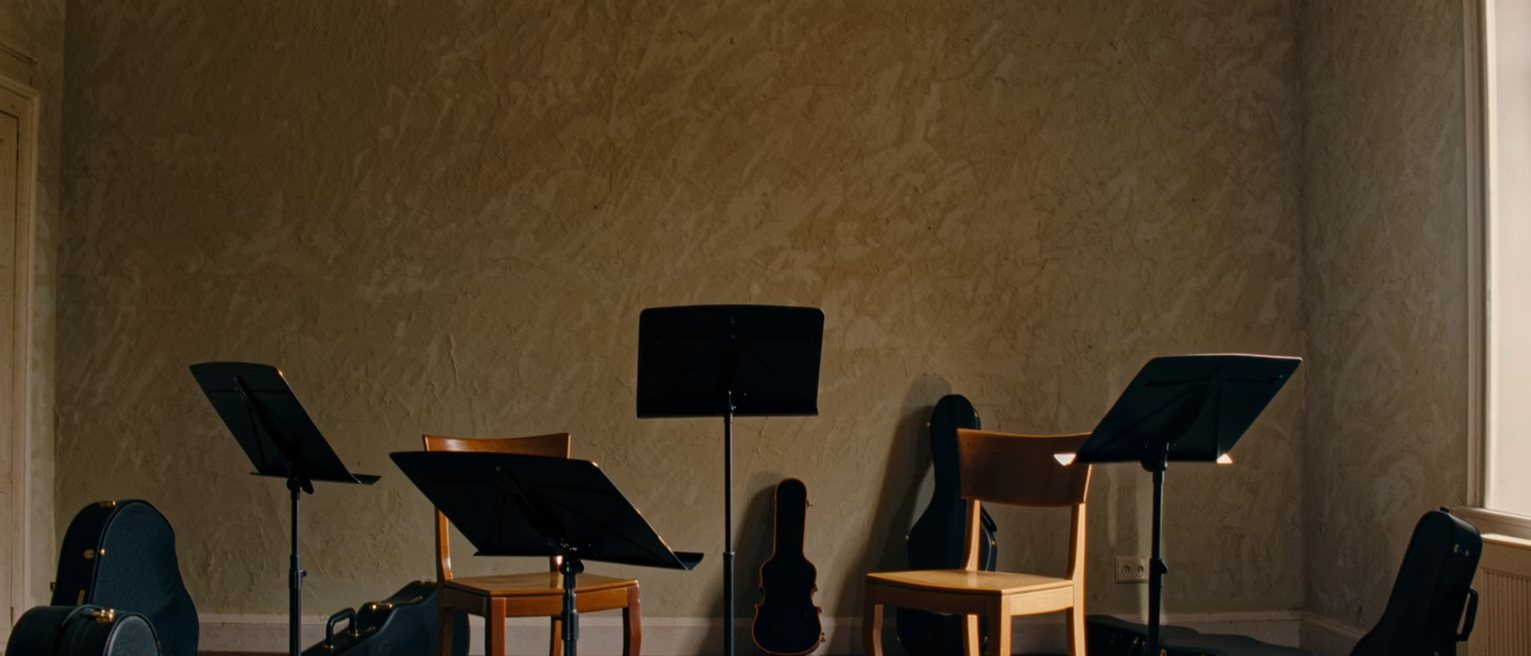
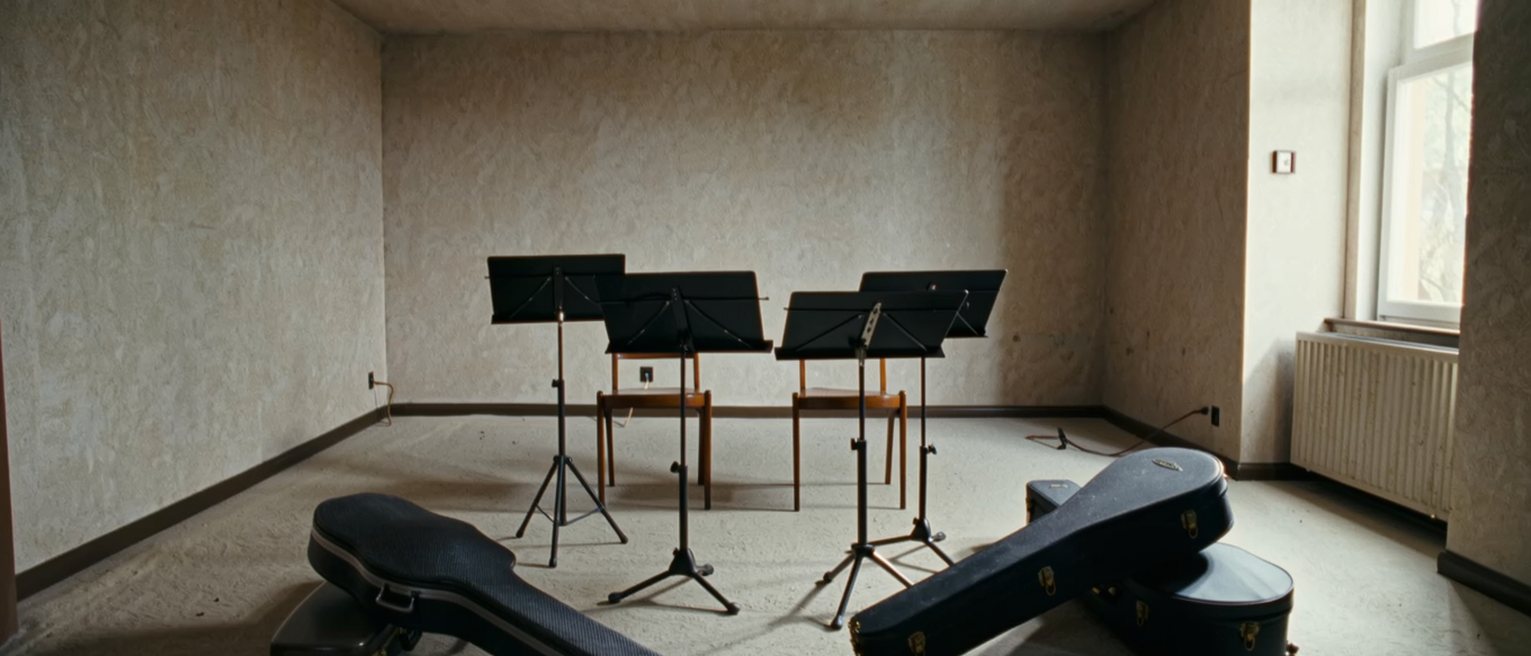
There is one activity in this drama during which nobody is concealing anything, and it is the most structurally interesting thing in it.
When they play, four people are in exact relation to each other. It demands continuous precise mutual attention, real-time adjustment, and a level of responsiveness that no conversation in the drama achieves. And it requires no biography whatsoever. You cannot play a quartet while lying, because there is nothing in it to lie about.
That is a genuine answer to the month’s question rather than an evasion of it. What we owe each other can be discharged entirely in the present tense. Four people who know almost nothing true about one another are nonetheless in a relation of continuous obligation while the music is running — to come in on time, to hold back when somebody else has the line, to match what they did not say they were about to do.
Which is a different model of intimacy from the confessional one, and it is worth naming because the confessional model is assumed to be the only serious kind. On the confessional model, closeness is a function of how much has been disclosed, and an undisclosed history is a deficit. On this model, closeness is a function of quality of attention in the present, and a history is simply not an input.
The drama does not claim one is better. It does show four people getting something real from the second that none of them can currently get from the first, and it does not require them to earn it by becoming honest about their pasts first.
What this essay is not saying
It is not saying secrets are fine in general, and the scale of this arrangement is doing a great deal of unacknowledged work.
Four adults sharing a house for a season owe each other very little structurally. No shared finances that depend on the truth. No children whose arrangements depend on it. No decisions either of them must make whose correct answer changes if the concealed thing is revealed. That is why declared concealment is survivable there.
Move the same arrangement into a marriage and it collapses, because withheld content starts changing what the other person should do. A spouse deciding whether to move city, have a child, take a job or stay needs inputs that a declared-but-undisclosed secret is actively denying them. The declaration no longer fixes it, because the problem was never that they lacked the fact of withholding. It is that they lack something required for a decision that is theirs to make.
It is also not saying the quartet is well. The drama declines to resolve anybody, nobody is healed by the arrangement, and the ending settles very little — which is the same honesty this Library noted in a novel about grief, and it is the reason the drama does not read as a lesson.
And it is not a defence of not-telling. The claim is narrower and goes the other way: not-telling is defensible only when the other person knows that is what is happening, and is not waiting on the thing being withheld.

What to do with the month’s sentence
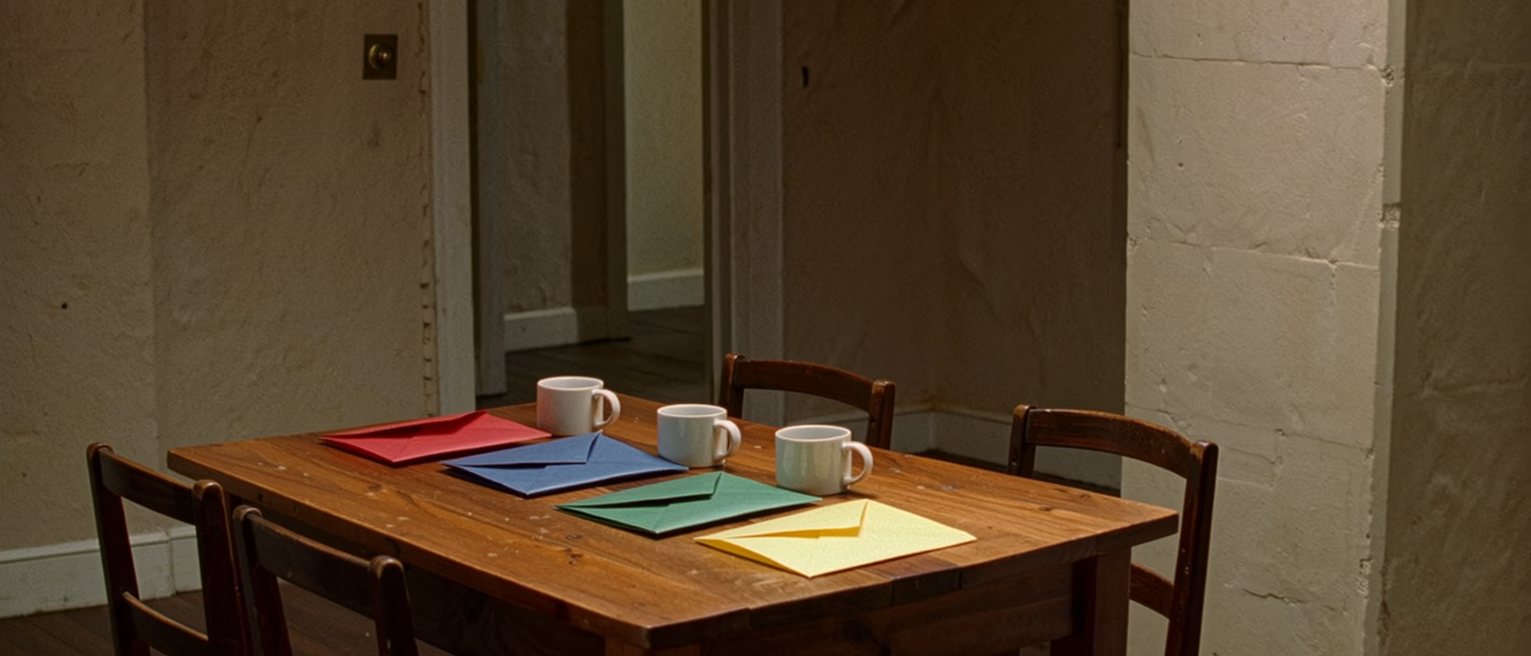
I want to be kind without keeping someone alive on ambiguity.
Three things, and the first is a test that takes a moment and is unpleasant.
Ask, of anybody you are being warm to without being clear with: is this person arranging any part of their life around an outcome I already know is not coming. If the answer is yes, the warmth is not kindness, regardless of how it feels to perform. That is not a moral judgement about your character; it is a statement about where the cost is currently sitting.
Second, separate the two things you are withholding, because they are usually tangled. One is your own content — why you feel as you do, what happened to you, what you are not ready to discuss. Keep it. The other is the verdict. Issue it.
Third, expect the clear sentence to feel crueller than the ambiguity and to be kinder. That inversion is the whole difficulty. A refusal produces a bad hour and ends a bad year; ambiguity produces no bad hour at all and that is precisely what recommends it to the person who would have to deliver the hour.
And the drama supplies the consolation, such as it is. You do not have to explain yourself in order to be clear. The sentence required is about what will not happen, not about why — and the why is yours to keep.
Limits
The series is from 2017, broadcast by TBS and written by Sakamoto Yūji, who also wrote a film covered earlier in this chamber. Credits, cast, episode count and current availability should be verified at the publication gate, per the atlas entry’s note on external works.
The plot is described in outline and no dialogue is quoted. Characters are described by their situation and instrument rather than named, and the concealments are summarised without detail so the drama is not spoiled past its premise.
The fried chicken scene is characterised rather than reproduced, and its exact content and framing should be checked against the series.
The central distinction — that a declared secret and a concealed secret are different acts — is this essay’s formulation. The drama dramatises something like it; it does not state it, and a viewer may reasonably read the quartet’s silences as less mutually acknowledged than this reading requires.
The ethical line between withholding your own content and withholding another person’s ability to decide is this Library’s argument rather than the drama’s, and it is a way of thinking rather than a rule with settled edges.
And nothing here is a clinical claim or a description of what helps. No therapeutic effect is asserted, this house treats nothing, and no figure about relationships appears anywhere in this essay.
What we owe, stated narrowly
What stays from this drama is not the secrets and not their eventual shapes. It is four people in a room producing something together that none of them could produce alone, while knowing almost nothing true about each other.
That is a strange image to find consoling and it is consoling, because it removes a requirement most people assume is load-bearing. You do not have to be known in order to be in real relation to somebody. The relation can be made entirely of attention in the present, and it can be excellent.
What it cannot be made of is a false picture. The quartet works because each of them knows the shape of what they are inside — including the shape of what they are not being told. Remove that and it is not a quartet, it is four people being managed by each other with the best intentions.
So the obligation the month is asking about turns out to be narrow and specific. Not disclosure. Not transparency. Just this: the other person is entitled to know what arrangement they are in, and entitled to whatever fact their own decisions depend on. Everything else is yours.
That is what an evening at Moonlight is arranged to be, and this month is the reason to state it in exactly these terms. You are not required to explain yourself, account for your history, or disclose anything to earn the attention — and the arrangement is stated completely, in advance, by you, with a beginning and an end that do not move, nothing implied beyond them, and nothing inferred from your silence. Bounded attention, with the boundary said out loud. Nobody being kept on ambiguity, in either direction.